
How Often Should You Brush a Border Collie?

Quick Answer
Brush your Border Collie once or twice a week during normal conditions. Increase brushing to several times a week or daily during heavy seasonal shedding, especially if your dog has a rough coat, develops tangles, or spends a lot of time outdoors. Adjust the schedule to your dog’s coat condition rather than following a rigid timetable.
Border Collies have a dense double coat that collects loose hair, dirt, and outdoor debris. Regular brushing helps remove that buildup, keeps longer hair from tangling, and gives you an opportunity to check the skin for irritation or hidden problems.
The right schedule depends on coat length, shedding, and lifestyle. A smooth-coated Border Collie may need less time spent detangling than a rough-coated dog with long feathering, but both varieties need regular attention.
How Often Should You Brush a Border Collie?
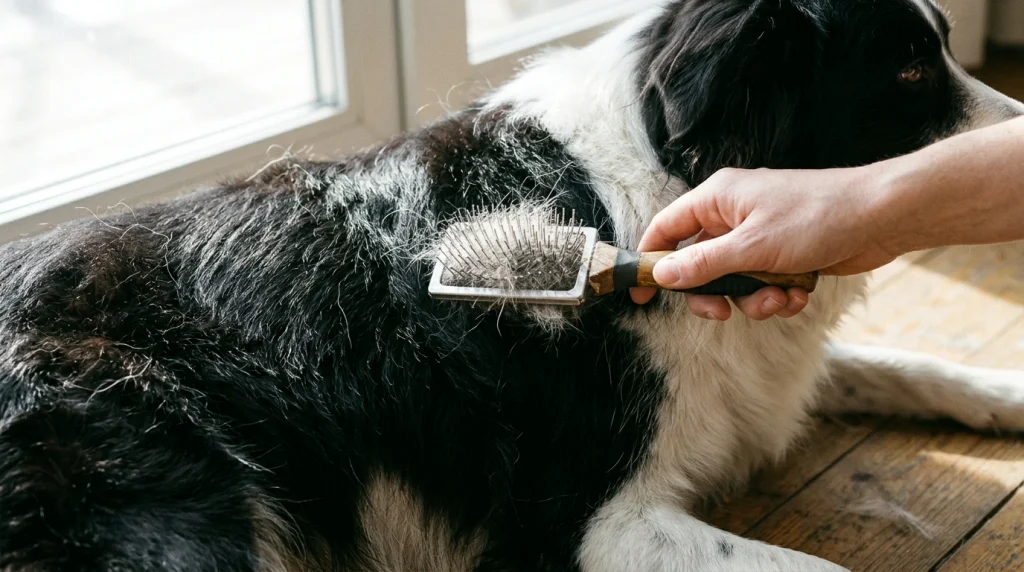
For most Border Collies, brushing once or twice a week is a reasonable starting point. Some dogs benefit from two or three sessions weekly, while those with longer feathering or heavy shedding may need daily brushing temporarily.
The American Kennel Club recommends brushing Border Collies with a pin brush once or twice a week, increasing the frequency during shedding season. Veterinary guidance from VCA Animal Hospitals also emphasizes adapting grooming to coat length and condition.
Use this schedule as a practical starting point, not a strict rule:
- Normal conditions: Brush once or twice a week.
- Long or easily tangled coat: Brush two or three times a week, checking problem areas between sessions.
- Heavy shedding: Brush more frequently, potentially daily while loose undercoat is coming out heavily.
- After outdoor adventures: Check for grass seeds, burrs, mud, and tangles, brushing as needed.
A short inspection on non-brushing days helps you catch knots before they become difficult to remove. If your dog’s coat remains smooth and free of tangles, you may not need a lengthy grooming session every day.
Does Coat Type Change How Often You Need to Brush?
Yes. Border Collies generally have either a rough coat or a smooth coat. Both are double coats, but their different hair lengths affect how easily tangles form and how much attention certain areas require.
Rough-coated Border Collies
Rough-coated Border Collies have medium-length hair with longer feathering around the chest, legs, belly, ears, and tail. These areas can catch burrs and develop knots through movement and friction.
Start with brushing once or twice weekly, then increase to two or three sessions if the feathering tangles easily. During heavy shedding, more frequent brushing may be necessary to remove loose undercoat before it accumulates.
Pay particular attention to behind the ears, under the front legs, around the collar, and beneath the tail. These spots can hide knots even when the outer coat looks tidy.
Smooth-coated Border Collies
Smooth-coated Border Collies have shorter hair that generally tangles less. Weekly brushing may be sufficient under normal conditions, although some dogs benefit from twice-weekly sessions.
Don’t assume a short coat means little shedding. Smooth-coated Border Collies also have a dense undercoat, so loose hair can accumulate on furniture and clothing, especially during seasonal coat changes.
The main difference is the amount of detangling required, not whether brushing is necessary. Both coat types benefit from routine inspections and appropriate brushing.
When Should You Brush More Frequently?
Increase brushing whenever loose hair, tangles, or debris begin building up faster than your usual routine can manage. Seasonal shedding is a common reason, but outdoor activity and individual coat condition also matter.
During seasonal shedding
Border Collies shed throughout the year, and many experience heavier shedding during seasonal coat changes, commonly in spring and autumn. During these periods, daily brushing may help remove loose undercoat before it spreads around the home or becomes trapped in longer hair.
Follow what your dog’s coat is doing rather than assuming every dog sheds on exactly the same schedule. Some dogs have a pronounced shedding period, while others lose hair more gradually.
After walks, hikes, and outdoor play
Check your Border Collie after running through grass, brush, woodland, or muddy areas. Seeds, burrs, twigs, and small tangles often collect around the legs, belly, tail, and ears.
Remove loose debris gently and inspect between the toes and around the ears. Grass seeds can penetrate skin or become lodged in sensitive areas, so seek veterinary help if a seed appears embedded or causes persistent discomfort.
When the coat starts to tangle
If a comb repeatedly catches behind the ears or beneath the legs, add targeted brushing to your routine. Address small, loose knots early instead of waiting for the next scheduled full grooming session.
However, more brushing is not always better. Repeatedly scraping the same patch can irritate skin and damage hair. Use gentle strokes and increase frequency only where the coat needs it.
How Long Should a Border Collie Brushing Session Last?
Many Border Collies can be brushed in about 5–15 minutes when their coats are in good condition. A rough-coated dog with dense feathering or a dog experiencing heavy shedding may need longer, while a quick inspection and brush of a smooth coat can take less time.
Instead of aiming for a fixed number of minutes, work until you have checked the important areas and removed manageable loose hair and debris.
A useful routine is:
- Inspect the coat: Run your fingers gently through the hair to find knots, debris, or sensitive areas.
- Brush in sections: Use controlled strokes in the direction of hair growth, paying attention to the undercoat.
- Check the feathering: Examine behind the ears, beneath the legs, around the tail, and across the chest.
- Finish with a comb: Where appropriate, use a metal comb to check whether longer hair separates easily without pulling.
If your dog becomes uncomfortable, stop and give them a break. Several short, positive sessions are more useful than forcing a long grooming session that creates fear or resistance.
Which Brush Should You Use for a Border Collie?
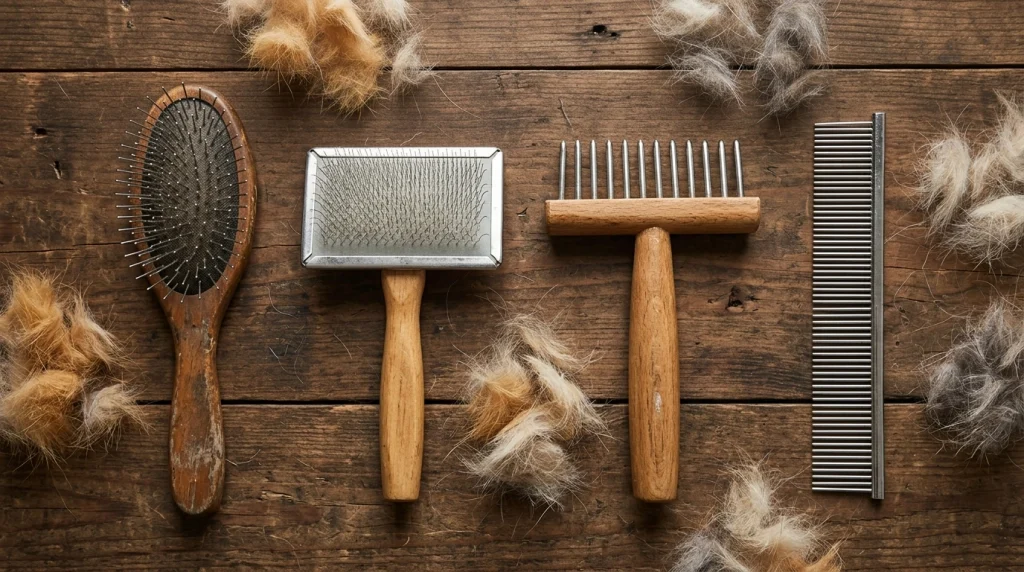
The best brush depends on the job. A pin brush works well for routine coat maintenance, a slicker brush can help with loose hair and minor tangles, and a suitable undercoat rake can help remove loose undercoat during heavier shedding.
- Pin brush: Useful for routine brushing, especially on longer feathering.
- Slicker brush: Helps remove loose hair and work through small tangles when used gently.
- Undercoat rake: Useful when loose undercoat builds up, particularly during seasonal shedding. Choose one appropriate for your dog’s coat and avoid excessive pressure.
- Metal comb: Helps locate hidden knots and check whether longer areas are fully detangled.
You don’t need to use every tool at every session. Start with the least aggressive tool that works, and stop if brushing causes redness, discomfort, or repeated snagging.
For more detail on tool selection and coat maintenance, see our guide to Border Collie grooming kit essentials.
How Can You Tell Whether Your Brushing Routine Is Working?
A suitable routine should leave your dog’s coat comfortable, reasonably clean, and free of developing mats. You should also be able to inspect the skin without finding persistent irritation caused by grooming.
Look for these signs:
- The brush removes loose hair without repeatedly catching or pulling.
- Longer feathering separates easily rather than forming tight knots.
- You can check behind the ears, under the legs, and around the tail without finding compacted mats.
- The skin does not become red, scratched, or painful after brushing.
If tangles keep returning between sessions, increase the frequency of targeted checks or review your technique. If the coat is already in good condition, you don’t need to keep brushing simply to remove every last loose hair.
Persistent itching, bald patches, sores, unusual skin odor, or sudden changes in coat quality warrant veterinary assessment. These signs may have causes that brushing alone cannot address.
What Brushing Mistakes Should You Avoid?
Most grooming problems arise from using too much force, missing hidden knots, or treating shedding as a reason to brush aggressively.
- Brushing only the surface: Part the coat and check beneath the top layer, particularly on rough-coated dogs.
- Pulling through tight mats: Don’t yank a brush or comb through a knot attached closely to the skin. Painful or extensive mats are better handled by a qualified groomer.
- Overusing undercoat tools: Use them when loose undercoat needs removal rather than repeatedly raking healthy coat.
- Ignoring sensitive areas: Work carefully around the ears, armpits, belly, and legs, where skin can be delicate.
- Shaving to control shedding: Routine shaving is not a substitute for brushing. A double coat provides protection, and substantial coat removal should be discussed with a veterinarian or qualified groomer when a medical or severe matting issue exists.
The American Kennel Club’s Border Collie breed guide describes both coat varieties as dense, weather-resistant double coats and recommends regular brushing with extra attention during shedding periods.
Related Product
Related Product
Dog Grooming Brush for Double Coats
A suitable pin or slicker brush can make routine coat maintenance easier. Choose one that fits your Border Collie’s coat length and use it gently.
As an Amazon Associate, we earn from qualifying purchases.
Frequently Asked Questions
Can I brush my Border Collie every day?
Yes. Gentle daily brushing is appropriate when your dog’s coat needs it, particularly during heavy shedding or when longer hair tangles easily. Daily brushing is not essential for every Border Collie throughout the year.
Is weekly brushing enough for a smooth-coated Border Collie?
Often, yes, if the coat stays free of tangles and loose undercoat is manageable. Increase brushing when shedding intensifies or outdoor activity leaves debris in the coat.
Should I brush my Border Collie before or after a bath?
Brush and detangle the coat before bathing so existing knots are easier to identify and manage. After bathing, dry the coat appropriately and brush again as needed to separate the hair and check for remaining tangles.
Do Border Collie puppies need the same brushing schedule?
Puppies benefit from gentle, brief grooming sessions that help them become comfortable with being handled. Build up gradually and focus on positive experiences rather than forcing a full adult grooming routine.
Why does my Border Collie still shed after brushing?
Border Collies naturally shed throughout the year, with heavier periods for many dogs during seasonal coat changes. Brushing removes loose hair but does not stop the normal hair-growth cycle, so some shedding between sessions is expected.
Should I brush my Border Collie if it has a tight mat?
Don’t force a brush through a tight mat, particularly if it pulls the skin or causes pain. A qualified groomer can assess difficult mats, while redness, wounds, or signs of skin infection warrant veterinary advice.
Conclusion
For most Border Collies, brushing once or twice a week is a sensible starting point. Rough-coated dogs may need more frequent attention to prevent tangles, while both rough- and smooth-coated dogs can benefit from extra brushing during heavy shedding.
Pay attention to the coat rather than following a rigid schedule. Check hidden areas, remove debris gently, and increase brushing when loose hair or knots begin to accumulate. Avoid pulling at tight mats or repeatedly brushing the same area with excessive pressure. A consistent, comfortable routine will help maintain your Border Collie’s coat while making grooming easier for both of you.