
Border Collie Bath Water Temperature: How Warm Should It Be?

Quick Answer
Use lukewarm water when bathing a Border Collie. It should feel comfortably warm on your inner forearm, never hot or noticeably cold, which matches general dog bathing guidance from the AKC.
Quick Temperature Check
- Use lukewarm water: It should feel gentle and comfortable against sensitive skin.
- Test your forearm: Your inner forearm is more temperature-sensitive than your palm.
- Avoid hot water: Human shower temperatures may feel too warm for your dog.
- Skip icy water: Cold water can make bath time uncomfortable and stressful.
- Keep it steady: Recheck the water whenever you adjust the faucet.
- Watch your dog: Shivering, frantic escape attempts, or unusual panting mean something needs changing.
My Simple Rule
- If I would describe the water as hot rather than gently warm, I cool it before wetting the dog.
Border Collies can bring half the yard into the house after one muddy run. I’ve learned that a good bath starts with something owners often overlook: the water temperature.
The safest approach is simple. Use comfortable lukewarm water, check it before your dog gets wet, and keep checking during the bath.
In This Guide
- What Is the Best Border Collie Bath Water Temperature?
- Why Does Water Temperature Matter for a Border Collie?
- How Can You Test Bath Water Without Guessing?
- Cold vs Lukewarm vs Hot Water
- Do Puppies and Sensitive Dogs Need Different Water?
- How Do You Bathe a Border Collie Safely?
- What Bath Temperature Mistakes Should You Avoid?
- How Do You Know the Water Is Too Hot or Cold?
- Frequently Asked Questions
- Final Takeaway
What Is the Best Border Collie Bath Water Temperature?
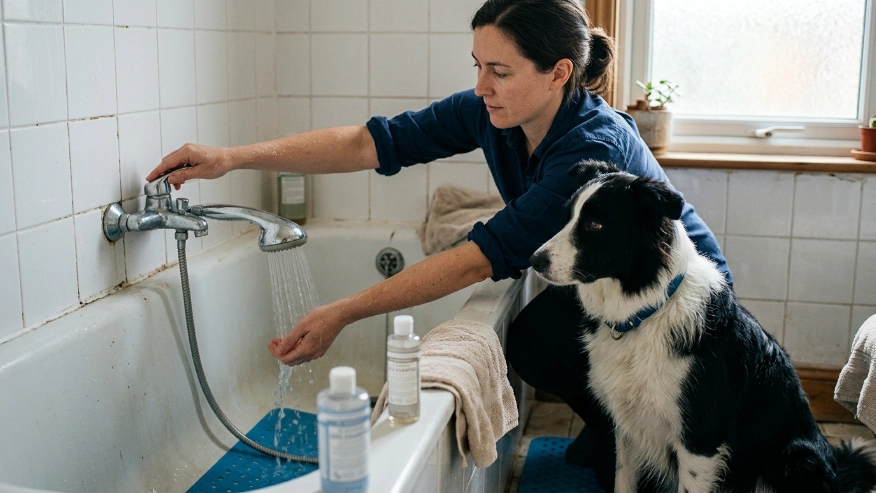
The best Border Collie bath water temperature is lukewarm. The water should feel pleasantly warm against your inner forearm without feeling hot, chilly, or uncomfortable.
As of 2026, major dog-care organizations generally describe safe bathing water as lukewarm, warm, or slightly warm rather than giving one universal Fahrenheit setting. That makes a careful skin test more useful than chasing one exact number.
Definition: Lukewarm bath water is water that feels mildly warm and comfortable against sensitive skin, without producing a hot, cold, or stinging sensation.
Don’t confuse bath temperature with your dog’s internal body temperature. A healthy dog normally runs warmer internally than a person, but bath water does not need to match that temperature.
I prefer using my inner forearm rather than my fingers. Fingers can tolerate temperatures that feel surprisingly strong against more sensitive skin.
Should You Use a Thermometer?
You can use one if it helps you stay consistent. However, there is no widely accepted veterinary rule saying every healthy Border Collie must be bathed at one exact Fahrenheit temperature.
If you do measure the water, treat the number as a secondary check. Your first goal remains comfortably lukewarm water and a relaxed dog.
- Comfortable: The water feels gentle against your forearm.
- Too warm: You instinctively want to pull your arm away.
- Too cold: The stream feels brisk, shocking, or unpleasant.
Why Does Water Temperature Matter for a Border Collie?
Water temperature matters because a Border Collie has more coat for water to penetrate than many short-coated dogs. Both rough and smooth Border Collies have dense, weather-resistant double coats according to the AKC Border Collie breed profile.
A double coat has a protective outer layer and a softer undercoat. Once saturated, that dense undercoat can hold considerable moisture close to the skin.
Hot Water Can Make Bathing Uncomfortable
Hot water isn’t needed to remove ordinary dirt. It can make an already nervous dog more uncomfortable and may be especially unpleasant on irritated skin.
Dogs also experience temperature differently from people. That steaming shower you enjoy after work is not a good reference point for your Border Collie.
- Start cooler: Begin at comfortably lukewarm rather than hot.
- Increase gently: Make small faucet adjustments if needed.
- Recheck often: Plumbing temperature can change during a bath.
Cold Water Is Not Automatically Better
Some owners switch to cold water during summer because their Border Collie seems warm. A normal cleaning bath still needs to be comfortable rather than deliberately chilly.
A wet double coat can take time to dry. Starting with uncomfortably cold water can make a nervous or young dog resist future baths.
The Double Coat Changes the Technique
The coat needs to become wet down to the skin before shampoo can clean evenly. Use a gentle stream and work through the fur with your fingers instead of blasting one area with high pressure.
Rinsing also takes longer than many owners expect. Part the coat with your fingers and keep rinsing until you cannot feel slippery shampoo residue.
How Can You Test Bath Water Without Guessing?
The easiest test is your inner forearm. PetMD also recommends testing water there because that area is more sensitive to temperature than your hands.
I test before my Border Collie enters the tub and again after every faucet adjustment. It takes seconds and prevents most temperature mistakes.
- Run the water first. Let the temperature settle before putting your dog beneath the stream.
- Use your inner forearm. Hold it under the water for several seconds rather than touching the stream briefly.
- Look for neutral warmth. The water should feel pleasantly mild, not excitingly warm like a shower.
- Adjust gradually. Small changes are safer than suddenly opening the hot tap.
- Test again. Recheck whenever the faucet position changes.
- Watch your dog. Body language gives you another immediate temperature check.
Test the Water Where It Reaches the Dog
Testing water at the faucet is not enough if you use a long hose or detachable sprayer. Check the stream coming from the actual nozzle.
Water can also change temperature while someone elsewhere in the house uses a sink, washing machine, or shower. Keep your hand close to the stream so you notice sudden changes quickly.
Start Away From the Face
I begin around the shoulders and body rather than spraying the face. Many Border Collies dislike water hitting their eyes, nose, or ears even when the temperature is perfect.
Use a damp washcloth around the face instead. Keep shampoo and running water away from the eyes and ear canals.
Cold vs Lukewarm vs Hot Water
Lukewarm water gives you the best balance for an ordinary Border Collie bath. It cleans without creating the temperature extremes associated with cold or hot water.
| Water Condition | How It Feels | Routine Bath Use | What to Do |
|---|---|---|---|
| Cold | Brisk or uncomfortable on your forearm | Not ideal for a normal bath | Add warmth gradually and retest |
| Lukewarm | Mild, neutral, pleasantly warm | Preferred for routine bathing | Keep temperature steady |
| Hot | Strong heat or urge to pull away | Avoid | Cool the water before bathing |
| Internal body temperature | Healthy dogs are commonly around 99.5–102.5°F internally | Not a bath-water target | Do not try to match bath water to rectal temperature |
The last row is important because owners sometimes assume a dog’s warmer body means warmer bath water is necessary. Internal temperature and comfortable skin exposure are different things.
A simple forearm test remains the most practical household method. PetMD’s dog bath-temperature guidance likewise recommends lukewarm water and testing it on the forearm first.
Do Puppies and Sensitive Dogs Need Different Water?
Yes, you should be more cautious with puppies, older dogs, and dogs with skin conditions. Lukewarm remains the basic goal, but these dogs may tolerate temperature changes less comfortably.
Border Collie Puppies
Puppies are learning whether grooming feels safe. One startlingly hot or cold bath can make the next session harder.
AKC puppy-grooming guidance emphasizes lukewarm water and gradual introductions. It also notes that a warm washcloth may be enough for very young puppies before regular shampoo bathing becomes necessary.
- Keep sessions short: Prepare everything before bringing the puppy in.
- Use gentle water: Avoid sudden sprays or temperature changes.
- Build confidence: Pair calm handling with praise and small rewards.
- Dry promptly: Don’t leave a young puppy sitting in a soaked coat.
Dogs With Skin Problems
If your Border Collie has redness, sores, recurring itching, or a diagnosed skin condition, follow your veterinarian’s bathing instructions. Medicated shampoos may also require specific application and contact times.
VCA recommends thoroughly wetting dogs with lukewarm water when using medicated shampoo. Their medicated bathing guidance also emphasizes following veterinary directions.
Vet note: Persistent itching, inflamed skin, open sores, unusual odor, or recurring infections deserve veterinary evaluation rather than repeated home bathing.
Older or Unwell Border Collies
An older dog may tire more quickly while standing in a tub. Use a nonslip surface, keep the room comfortably warm, and finish efficiently.
If your dog is weak, ill, recovering from surgery, or having trouble regulating body temperature, ask your veterinarian whether a full bath is appropriate. A spot clean may sometimes be easier on the dog.
How Do You Bathe a Border Collie Safely?
The best bath is organized before your Border Collie gets wet. Preparation is especially helpful with an athletic dog that may decide the bath is finished before you do.
The ASPCA’s dog grooming guidance also recommends brushing before bathing and using lukewarm water. I follow the same basic order.
- Brush before bathing. Remove loose coat, debris, and small tangles before water tightens them.
- Prepare the tub. Add a rubber mat or other secure nonslip surface.
- Gather supplies. Keep dog shampoo, towels, washcloths, and treats within reach.
- Set lukewarm water. Test the stream against your inner forearm.
- Wet the body slowly. Start around the shoulders and work through the dense coat.
- Apply dog shampoo. Massage gently through the coat without aggressively scrubbing the skin.
- Rinse thoroughly. Keep separating the fur until the water runs clean and the coat no longer feels soapy.
- Blot with towels. Press moisture from the coat instead of rubbing vigorously.
- Finish drying. If you use a dryer, choose a cool or low setting and keep the airflow moving.
Why Brushing First Helps
Loose undercoat can trap water, shampoo, and debris. Removing excess fur first lets water reach the skin more evenly.
Pay special attention behind the ears, around the hind legs, beneath the collar area, and along feathering. Small tangles can tighten once they become wet.
Why Rinsing Matters So Much
A Border Collie’s dense coat can hide shampoo residue. Don’t stop rinsing simply because you cannot see visible bubbles on the surface.
Use your fingers to separate the fur and feel near the skin. The coat should feel clean rather than slick with product.
Dry the Undercoat, Not Just the Surface
A rough-coated Border Collie can look dry while the undercoat remains damp. Press a clean towel into thicker areas to check for hidden moisture.
I use several absorbent towels rather than one soaked towel. This removes much more water before any dryer is needed.
Section Takeaway: Keep bath water comfortably lukewarm from start to finish, then rinse and dry the dense coat thoroughly. Temperature is only one part of making the bath safe and comfortable.
What Bath Temperature Mistakes Should You Avoid?
The most common mistakes happen because people judge bath water by their own preferences. A temperature that feels relaxing in your shower may not be appropriate for your dog.
- Using human shower temperature: Start milder than the water you would choose for yourself.
- Assuming summer means cold baths: Comfortable lukewarm water is still appropriate for routine cleaning.
- Adjusting the faucet under the dog: Move the spray away while changing temperature.
- Testing with fingertips only: Use your inner forearm for a more sensitive check.
- Ignoring temperature fluctuations: Recheck the stream during longer baths.
- Using high dryer heat afterward: Avoid replacing safe bath water with overly hot airflow.
Don’t Try to “Warm Up” a Nervous Dog With Hotter Water
If your Border Collie trembles because of anxiety, turning up the heat is not the solution. First decide whether the dog is frightened, cold, uncomfortable, or struggling on a slippery surface.
Slow handling, traction, treats, and shorter sessions usually make a bigger difference. Bath time should become predictable rather than intense.
Don’t Rush the Temperature Test
A half-second touch tells you less than several seconds of steady exposure. Let the stream run across your forearm long enough to notice whether warmth keeps building.
This matters when a water heater produces sudden temperature swings. Check again after every meaningful faucet adjustment.
How Do You Know the Water Is Too Hot or Cold?
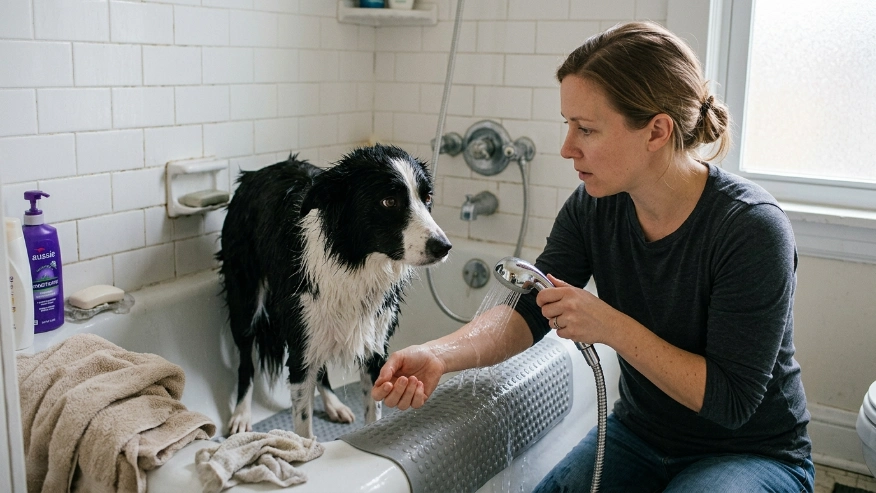
Your Border Collie cannot tell you the bath temperature in words, but body language can be clear. A sudden behavior change after the water starts deserves attention.
Possible Signs the Bath Is Uncomfortable
- Repeatedly trying to jump or scramble from the tub
- Sudden shivering or trembling
- Tucking the tail tightly
- Yelping when the stream touches one area
- Frantic movement that begins after a temperature change
- Unusual heavy panting in a warm bathing area
- Skin that appears unusually red after exposure to hot water
Stop the stream and test it again if these signs appear. Also check the floor for slipping, since fear and poor traction can look similar to temperature discomfort.
When Should You Call a Veterinarian?
A routine bath should not cause collapse, marked weakness, breathing difficulty, severe lethargy, or persistent distress. Those signs require more attention than simply changing the faucet.
Dogs with serious overheating or abnormally low body temperature may need urgent veterinary treatment. Do not use an ordinary bathing routine as a substitute for medical cooling or warming instructions.
Vet note: If your Border Collie seems ill before or after a bath, especially with weakness, breathing changes, collapse, severe shivering, or abnormal behavior, contact your veterinarian promptly.
Frequently Asked Questions
What exact temperature should Border Collie bath water be?
There isn’t one universally published Fahrenheit number required for a healthy Border Collie’s routine bath. Major dog-care guidance consistently recommends lukewarm or comfortably warm water rather than hot or cold water.
Can I use the same water temperature I use for my shower?
Don’t assume your preferred shower temperature is safe for your dog. Test the stream on your inner forearm first and cool it if it feels distinctly hot.
Should I give my Border Collie a cold bath during summer?
A routine cleaning bath doesn’t need to be cold just because the weather is warm. Use comfortable lukewarm water unless your veterinarian gives different instructions for a specific medical situation.
What temperature should I use for a Border Collie puppy?
Use gentle lukewarm water and introduce bathing gradually. Young puppies can be more sensitive to an unpleasant bathing experience, so keep the room warm and dry them promptly.
Does a rough-coated Border Collie need warmer water than a smooth-coated one?
No special hotter temperature is needed simply because the coat is longer. Both coat varieties have dense double coats, so the bigger concern is getting the coat properly wet, rinsed, and dried.
How much water should be in the bathtub?
You don’t need to submerge your Border Collie for a normal bath. The ASPCA describes using roughly three to four inches of lukewarm water when filling a tub or sink, while a handheld sprayer can also work well.
Can I use hot water to remove mud or grease faster?
Hot water isn’t necessary for ordinary mud. Use lukewarm water with an appropriate dog shampoo, allow the product to work through the coat, and rinse thoroughly instead.
Final Takeaway
For a Border Collie bath, keep the water lukewarm, steady, and comfortable. Test it on your inner forearm before wetting your dog and again whenever you adjust the faucet.
Don’t let the double coat fool you into using hotter water. Good brushing, thorough rinsing, gentle handling, and complete drying matter far more.
Once you find a calm routine, stay consistent. A predictable bath is easier for both you and your Border Collie.
