

Quick Answer
To calm a Border Collie during a bath, reduce noise, prevent slipping, use comfortable warm water, and reward calm behavior throughout the process. Most importantly, don’t force a frightened dog through the bath; gradual exposure and desensitization and counterconditioning can help build a better response over time.
Quick Steps for a Calmer Bath
- Exercise first: Take the edge off your Border Collie’s energy before bath time.
- Stop slipping: Put a rubber or non-slip mat under your dog’s feet.
- Reduce water pressure: Use a cup or gentle sprayer instead of blasting the coat.
- Reward often: Give tiny high-value treats while your dog stays relaxed.
- Protect the face: Wash around the head with a damp cloth rather than spraying it.
- Know when to stop: Pause if trembling, escape attempts, growling, or panic increases.
I’ve found that bathing a Border Collie gets much easier when I stop treating it as a cleaning job and start treating it as a training session. These smart, alert herding dogs notice every slippery surface, sudden sound, and change in water pressure.
The goal isn’t to make your Border Collie love water overnight. It’s to make each bath predictable, safe, and calm enough that the next one becomes easier.
In This Guide
- Why Do Border Collies Get Stressed During Baths?
- How Do You Prepare a Border Collie for a Calm Bath?
- How Do You Calm a Border Collie During the Bath?
- How Can You Tell When Your Border Collie Is Too Stressed?
- How Can You Train a Border Collie to Accept Baths?
- How Do You Rinse and Dry Without Causing More Stress?
- What Bath-Time Mistakes Make Border Collies More Anxious?
- When Does Bath Anxiety Need Professional Help?
- Frequently Asked Questions
Why Do Border Collies Get Stressed During Baths?
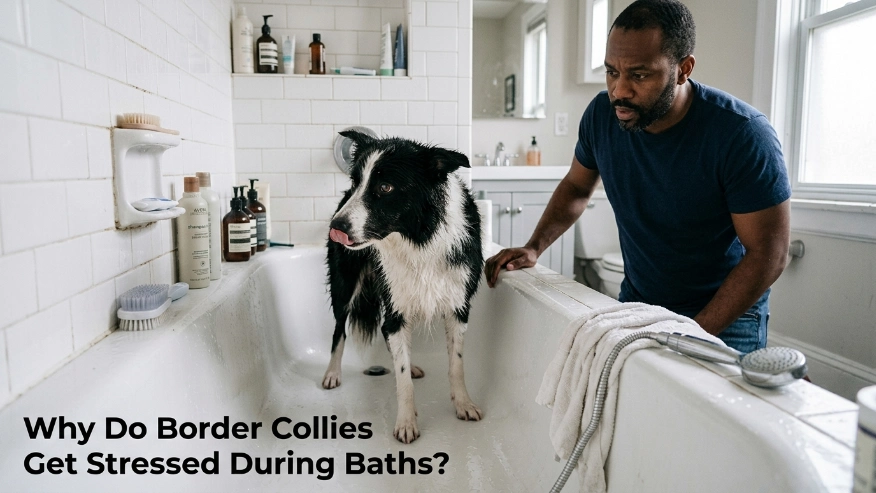
A Border Collie may resist bathing because the entire experience combines unfamiliar handling, slippery footing, running water, confinement, and strange sounds. One bad experience can also make the dog expect another bad experience.
Definition: Bath anxiety in a Border Collie is a fear or stress response connected with entering the bathing area, being restrained, getting wet, being shampooed, rinsing, drying, or a combination of these experiences.
Border Collies are working dogs that tend to pay close attention to movement and their surroundings. Their famous herding focus, sometimes called eye, reflects how carefully they can monitor what is happening around them.
That awareness is useful during training. It can become a problem when a loud shower head suddenly turns on beside them.
Why does slippery footing matter?
A bathtub feels completely different from grass, carpet, or a normal floor. When a dog can’t get secure footing, trying to escape may become a natural response.
I consider a non-slip mat one of the simplest bath-time improvements. It gives the dog something stable to stand on and removes one unnecessary source of worry.
Can a previous bad bath cause fear?
Yes. A frightening sound, cold spray, fall, painful mat, harsh restraint, or water entering the face can create a negative association with the bathing area.
I’ve worked on bath routines where the dog became tense before any water appeared. In those cases, the bathroom itself had become part of the fear pattern.
How Do You Prepare a Border Collie for a Calm Bath?
Prepare everything before bringing your Border Collie into the bathing area. A calm setup prevents you from leaving the dog alone, searching for shampoo, or suddenly changing the routine.
The PetMD guide to bathing dogs also recommends preparing the environment carefully, including secure footing and comfortable water temperature.
Set up these items first
- Non-slip mat: Give all four paws secure traction.
- Dog shampoo: Choose a product made specifically for dogs.
- Two absorbent towels: Keep them within arm’s reach.
- Cup or gentle sprayer: Avoid unnecessary water pressure.
- High-value treats: Use small pieces so you can reward frequently.
- Brush or comb: Remove loose fur and tangles before wetting the coat.
Should you exercise a Border Collie before bathing?
A short walk, sniffing session, or light training session can help take the edge off excess energy. Don’t exhaust your dog or start the bath while they’re overheated.
I prefer calm mental work over intense exercise right before bathing. Five to ten minutes of easy cues and sniffing can create a smoother transition indoors.
Brush the double coat first
Border Collies can have rough or smooth coats, but both are dense double coats. The American Kennel Club’s Border Collie breed guide recommends regular brushing to manage mats, tangles, dirt, and debris.
Wet mats can become harder to manage. I check behind the ears, around the legs, under the chest, and near the tail before starting the bath.
How Do You Calm a Border Collie During the Bath?
Keep the bath slow and predictable. Your Border Collie should be able to understand what happens next instead of facing a series of sudden surprises.
1. Start without rushing the water
Let your dog stand on the non-slip surface first. Reward a few seconds of relaxed standing before introducing water.
If simply entering the tub causes panic, don’t rush into shampooing. That dog needs bath training before a full wash.
2. Use comfortable warm water
Test the water before it touches the dog. It should feel comfortably warm rather than hot or cold.
I start around the lower legs and body instead of immediately wetting the head. That gives the dog time to adjust.
3. Keep water pressure low
A hard stream can startle a noise-sensitive Border Collie. A cup or low-pressure sprayer often works better.
Move steadily from one area to another. Random spraying tends to make the bath harder to predict.
4. Reward calm behavior
Use tiny treats for behaviors you want repeated. Reward standing still, looking at you, relaxing the body, or allowing a new area to be washed.
You don’t need to wait for perfect behavior. Reward small improvements.
5. Don’t spray the face
I use a damp cloth around the face instead. It gives me much more control around the eyes, nose, and ears.
If your dog hates head handling, leave that area until the body is finished. Avoid turning one difficult moment into a struggle.
How Can You Tell When Your Border Collie Is Too Stressed?
Watch body language instead of focusing only on whether the dog is standing still. A quiet dog can still feel frightened.
Stress exists on a spectrum. The earlier you notice it, the easier it is to lower the intensity.
| Stress Level | Possible Signs | What I Do |
|---|---|---|
| Relaxed | Loose body, takes treats, normal breathing, stays engaged | Continue slowly and reward |
| Mild stress | Lip licking, looking away, ears back, repeated shaking off | Reduce pressure and pause briefly |
| High stress | Trembling, heavy panting, frantic escape attempts, refusing food | Stop or simplify the bath |
| Safety concern | Growling, snapping, biting attempts, uncontrolled panic | End handling and seek professional guidance |
Should you punish growling?
No. Growling is useful communication that tells you the dog is uncomfortable and needs more space.
Punishment may stop the warning without solving the fear. I would rather know a dog is struggling before the situation escalates.
How Can You Train a Border Collie to Accept Baths?
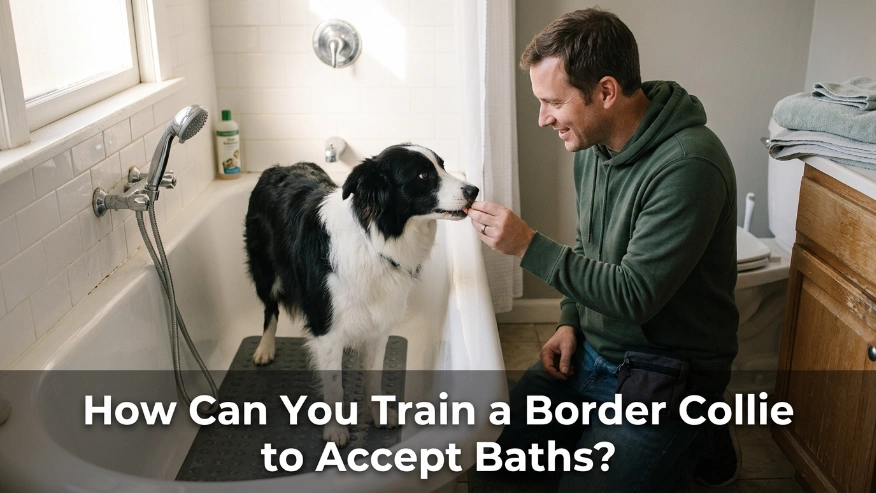
Don’t wait until your Border Collie is muddy to practice bath behavior. Short training sessions with no real bath can change how the dog feels about the entire routine.
This is where Border Collie intelligence becomes an advantage. They often learn patterns quickly when the steps stay consistent.
Use gradual exposure
Break the bath into small pieces. Move forward only while your dog remains comfortable enough to engage and take rewards.
- Bathroom: Walk into the room, reward, then leave.
- Empty tub: Let the dog step onto the dry non-slip mat.
- Handling: Touch the shoulders, legs, chest, and paws briefly.
- Water sound: Run water away from the dog at low pressure.
- Wet paws: Introduce a small amount of water.
- Wet body: Gradually increase how much of the coat gets wet.
- Short wash: Practice one easy body area before attempting a full bath.
A practice session may last only two to five minutes. Short success is more useful than a long struggle.
Pair the scary thing with something good
Behavior professionals call this counterconditioning. The idea is simple: the dog experiences a mild version of the trigger while something enjoyable happens.
For example, water turns on quietly and chicken appears. Water turns off and the treats stop.
I don’t increase the difficulty until the dog looks comfortable at the current level. That patience often saves time later.
How Do You Rinse and Dry Without Causing More Stress?
Rinsing and drying can be harder than shampooing because they involve more water, more handling, and sometimes a noisy dryer. Keep the same calm routine through the entire process.
Rinse the coat thoroughly
A Border Collie’s dense undercoat can hold shampoo. Work through the coat carefully and keep rinsing until you no longer feel product remaining.
Don’t rush because your dog is getting impatient. Instead, use short pauses and rewards while finishing the rinse.
Press with towels instead of rubbing hard
After the bath, I press an absorbent towel into the coat instead of scrubbing back and forth. Hard rubbing can tangle longer feathering and excite an already restless dog.
A second dry towel helps more than trying to squeeze every drop into the first one.
Introduce a dryer gradually
If you use a dryer, avoid surprising the dog with sudden close-range airflow. Start farther away and use a comfortable low or cool setting.
Some Border Collies find dryer noise much harder than water. In that case, dryer training deserves its own short sessions.
What Bath-Time Mistakes Make Border Collies More Anxious?
Most difficult baths aren’t caused by one big mistake. They usually become harder because several small stressors pile up.
- Dragging the dog into the tub: This can make the bathing area predict conflict.
- Using a slippery surface: Unstable footing can increase scrambling and escape attempts.
- Turning on loud water suddenly: Give the dog time to adjust to the sound.
- Spraying the face: Many dogs find direct face spraying unpleasant.
- Holding the dog too tightly: Heavy restraint can increase panic.
- Ignoring early stress signals: Mild discomfort can become intense fear.
- Making every practice session a full bath: Training is easier when some tub visits involve no washing.
- Using human shampoo: Choose products formulated for dogs instead.
The ASPCA’s dog grooming guidance also recommends using grooming products designed for dogs and paying attention to skin irritation or persistent problems.
Don’t turn speed into the main goal
Finishing quickly sounds helpful, but rushing often creates rough handling and sudden movements. I focus more on keeping the dog under its stress limit.
A calm 12-minute bath can be better training than a frantic five-minute bath. The next bath matters too.
When Does Bath Anxiety Need Professional Help?
Mild bath hesitation can often improve with gradual training. Severe panic, aggression, or a sudden change in behavior deserves more attention.
Talk with your veterinarian if the fear appears suddenly
Pain can change how a dog responds to touch and handling. If a previously comfortable Border Collie suddenly fights bathing, consider whether sore skin, ears, joints, paws, or another medical problem could be involved.
Vet note: Sudden behavior changes, painful skin, persistent itching, redness, sores, odor, or discharge should be discussed with your veterinarian rather than treated as a simple training issue.
Get behavior help for severe fear
A qualified trainer or veterinary behavior professional can help when the dog panics, tries to bite, or cannot stay below their fear threshold. Forcing repeated baths through severe fear can make the association stronger.
The VCA grooming and coat care guide also advises professional veterinary or grooming help when coat or skin problems go beyond normal home care.
Consider a professional groomer
Some dogs do better with an experienced groomer who has the right equipment and handling skills. Tell the groomer about your Border Collie’s fear before the appointment.
For severe anxiety, don’t assume a groomer can simply overpower the problem. Your veterinarian may need to help you create a safer plan first.
Frequently Asked Questions
Why does my Border Collie hate baths?
Your Border Collie may dislike baths because of slippery footing, running water, noise, restraint, unfamiliar handling, or a previous frightening experience. Watch what happens before the strongest reaction because the trigger may be the tub, sprayer, face washing, or dryer rather than water itself.
How do I get my Border Collie into the bath without forcing them?
Practice entering the dry bath area before bath day. Put down a non-slip mat, reward your dog for approaching and stepping inside, then let them leave before they become worried.
Can treats help calm a Border Collie during a bath?
Yes, treats can help create a positive association when your dog is calm enough to eat. Use small, high-value rewards throughout the process rather than saving one large treat until the end.
Should I exercise my Border Collie before a bath?
A short walk, sniffing session, or calm training session can help reduce excess energy before bathing. Avoid intense exercise immediately before the bath, especially when the dog is hot or heavily panting.
What water temperature is best for a Border Collie bath?
Use comfortably warm water rather than very hot or cold water. Test it before wetting your dog, then introduce the water gradually instead of suddenly spraying the entire body.
How do I calm a Border Collie that is scared of the shower head?
Turn the shower head into a separate training exercise. Begin with the sound or water flow at a distance, reward relaxed behavior, and gradually move closer over several sessions without forcing the dog past their comfort level.
What should I do if my Border Collie growls during a bath?
Stop increasing the pressure and give the dog space. Growling is a warning that your dog is uncomfortable, so severe or repeated reactions should be addressed with a veterinarian or qualified behavior professional rather than punishment.
My biggest bath-time lesson is simple: calm comes from predictability, not restraint. When I slow the process down, protect the dog’s footing, reward small wins, and listen to early stress signals, bath time usually becomes easier from one session to the next.
As of 2026, that’s still the approach I’d choose before reaching for gimmicks or trying to force a frightened Border Collie through the tub. Start small, keep the experience safe, and give your dog a reason to trust what happens next.
