
Border Collie Puppy Bathing Frequency: How Often Should You Bathe Your Pup?

Quick Answer
Most healthy Border Collie puppies don’t need a full bath every week. I use about every 4–8 weeks as a practical starting point, then adjust for mud, odor, skin condition, and activity. The AKC’s dog bathing guidance also stresses that coat type and condition matter more than one fixed schedule.
My Puppy Bathing Rule
- Normal indoor life: Start around every 6–8 weeks if the coat stays clean.
- Active outdoor puppy: A full bath around every 4–6 weeks may make more sense.
- Muddy paws: Rinse or wipe the dirty areas instead of automatically giving a full bath.
- Strong odor: Check the skin and coat before reaching for shampoo again.
- Skin trouble: Ask your veterinarian before changing shampoos or increasing bath frequency.
One More Tip
- Brush first, rinse well, and dry the dense coat thoroughly after every full bath.
Border Collie puppies have a special talent for finding mud five minutes after I clean them. That doesn’t mean they need shampoo every time they come back dirty.
Over the years, I’ve found that brushing and spot cleaning solve far more messes than full baths. This guide explains the routine I use for both rough- and smooth-coated Border Collie pups.
In This Guide
- How Often Should You Bathe a Border Collie Puppy?
- Why Doesn’t a Border Collie Puppy Need Constant Baths?
- What Bathing Schedule Works by Age and Activity?
- When Should You Bathe Your Puppy Sooner?
- How Do You Bathe a Border Collie Puppy Safely?
- How Do You Keep a Border Collie Puppy Clean Between Baths?
- Are You Bathing Your Border Collie Puppy Too Often?
- Border Collie Puppy Bathing FAQ
- The Simple Bathing Rule I Use
How Often Should You Bathe a Border Collie Puppy?
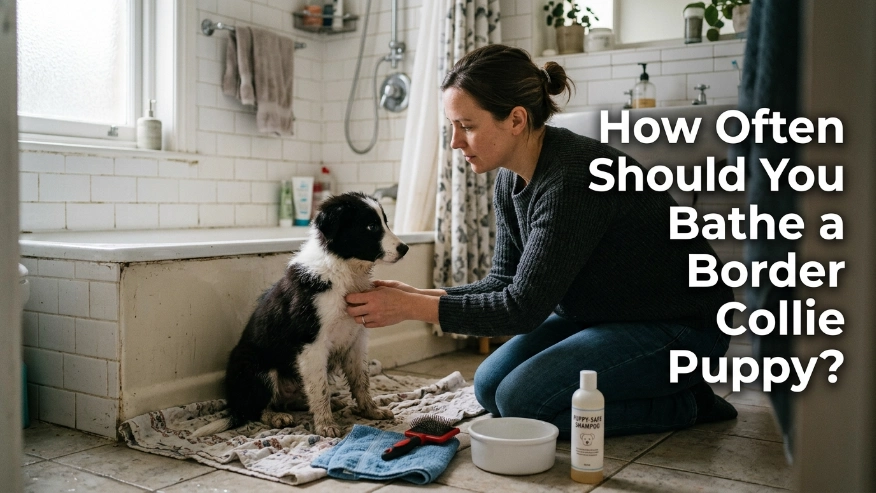
For a healthy Border Collie puppy, I normally start with a full bath every 4–8 weeks. I move within that range based on what the puppy has been doing.
Border Collie puppy bathing frequency simply means how often you wash the puppy’s entire coat with water and dog shampoo. It does not include wiping paws, rinsing mud from the belly, or brushing out dry dirt.
There isn’t one perfect number
A puppy that spends most days indoors may go six or eight weeks without needing shampoo. A farm puppy running through wet grass and livestock areas can become dirty much sooner.
- Clean coat and normal smell: Wait until a bath is useful.
- Light dust: Brush the coat first.
- Muddy feet: Rinse the feet and lower legs.
- Sticky or greasy mess: A proper bath may be the easiest answer.
- Persistent odor: Check for a skin or ear problem instead of repeatedly shampooing.
As of 2026, I still prefer this condition-based approach over automatically bathing on the same day every week. Border Collies simply don’t need to smell like shampoo all the time.
I once had a young pup who came inside brown from the knees down after almost every rainy training session. Washing his entire body each time would have meant several baths a week.
A bucket of lukewarm water, a towel, and five minutes of brushing worked better. His back and shoulders stayed completely dry.
Why Doesn’t a Border Collie Puppy Need Constant Baths?
Border Collies have a double coat, meaning they have an outer layer plus a softer insulating undercoat. Both rough- and smooth-coated Border Collies have this basic coat structure.
The AKC Border Collie breed profile describes both coat types as dense and weather-resistant. That coat can hold loose hair and dirt, but much of it comes out through brushing.
Brushing does much of the cleaning
I think new owners sometimes underestimate a good brush. Dried dirt often falls straight out of a Border Collie’s coat once you work through it carefully.
- Rough coat: Pay attention to feathering around the legs, chest, belly, and tail.
- Smooth coat: Loose undercoat still needs regular removal even though the outer hair is shorter.
- Shedding periods: Increase brushing as loose undercoat starts coming out.
- After outdoor play: Check burrs, seeds, twigs, and mud before they become tangled.
For normal maintenance, brushing once or twice a week is a useful baseline. During heavier shedding, I check the coat much more often.
Frequent shampooing isn’t a substitute for brushing. If anything, washing a tangled coat can make the drying and combing job harder.
What Bathing Schedule Works by Age and Activity?
I treat the schedule below as a starting point, not a veterinary prescription. Your puppy’s coat, lifestyle, skin, and tolerance should always decide the final timing.
| Puppy Stage or Lifestyle | Practical Starting Point | What I Watch |
|---|---|---|
| Young puppy settling at home | Only when needed; often 6–8 weeks | Stress, temperature, dirt, skin condition |
| Active puppy with regular outdoor play | About every 4–6 weeks | Mud, odor, sticky debris |
| Mostly indoor puppy | About every 6–8 weeks or as needed | Coat feel and smell |
| Muddy walk | No automatic full bath | Rinse paws, legs, and belly first |
| Heavy shedding period | Keep baths need-based | Increase brushing instead |
Bath training matters too
I don’t wait for a disaster before introducing a puppy to the tub. Short, calm practice sessions make future baths far easier.
- Let the puppy stand in the empty tub.
- Reward calm behavior.
- Touch paws, chest, and legs gently.
- Introduce a small amount of lukewarm water.
- End while the puppy is still relaxed.
This isn’t a full bath. It’s simply teaching the puppy that the bathroom isn’t a wrestling arena.
Vet note: Very young, unwell, chilled, or skin-sensitive puppies may need individual bathing advice. Ask your veterinarian if you’re unsure when to give the first full bath.
When Should You Bathe Your Puppy Sooner?
The calendar becomes less important when your puppy gets into something unpleasant. Some messes should come off quickly.
- Sticky substances: Sap, grease, food, and similar residue can cling deep in the coat.
- Feces or urine: Clean contaminated fur promptly.
- Heavy mud: A full wash may be easier when dirt reaches the skin.
- Strong outdoor odor: A bath can help if brushing and rinsing don’t remove it.
- Unknown substance: Stop and identify it before using random cleaners.
Odor can mean something else
A Border Collie shouldn’t need another bath every few days just because the smell keeps returning. Persistent odor can sometimes point to a skin or ear issue.
Look for redness, flakes, greasy patches, sores, hair loss, constant licking, or repeated scratching. Those signs change the situation from ordinary grooming to a health question.
Vet note: Contact your veterinarian when odor comes with itching, redness, discharge, sores, hair loss, or other skin changes.
How Do You Bathe a Border Collie Puppy Safely?
A good puppy bath should be calm, quick, and thorough. The rinsing and drying matter just as much as the shampoo.
1. Brush before adding water
Remove loose fur, dried mud, and small tangles first. Water can tighten existing knots and make them harder to work through.
2. Use lukewarm water
I test the water before bringing the puppy in. It should feel comfortably warm, never hot.
3. Use shampoo made for dogs
Choose a gentle dog or puppy formula rather than human shampoo. The AKC shampoo guide also recommends selecting products based on the dog’s skin and coat needs.
4. Wet the coat to the skin
A Border Collie’s outer coat can make the puppy look wet before the undercoat is properly soaked. Work slowly rather than blasting the pup with a strong spray.
5. Protect the face and ears
Keep shampoo away from the eyes, nose, mouth, and ear openings. I clean the face separately with a damp cloth when needed.
6. Rinse longer than you think
Leftover shampoo can irritate the skin. I keep rinsing until the water runs completely clean and the coat no longer feels slippery.
7. Dry the double coat well
Press towels into the coat instead of rubbing hard. The AKC’s dog drying guidance notes that vigorous rubbing can create tangles.
If you use a pet dryer, introduce the sound gradually and avoid excessive heat. Keep strong airflow away from the puppy’s face and ears.
How Do You Keep a Border Collie Puppy Clean Between Baths?
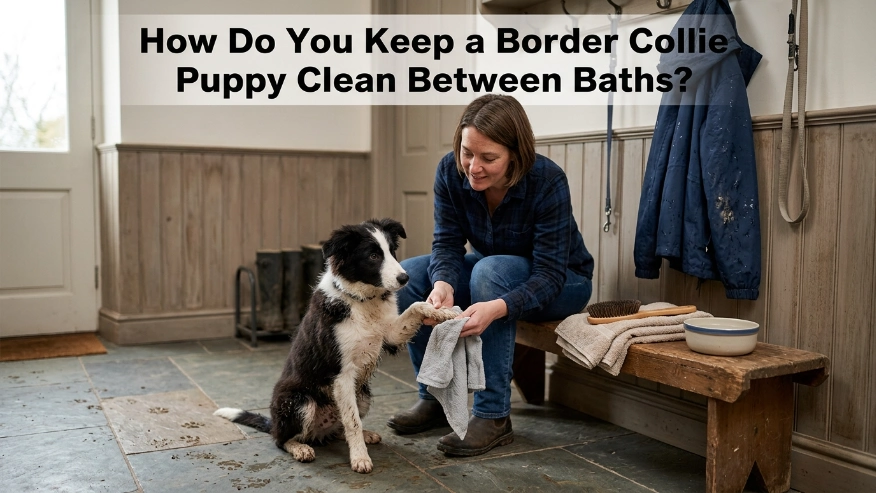
This is where most of my puppy cleaning happens. A full bath is only one tool in the grooming routine.
- Brush regularly: Remove loose hair, dry soil, seeds, and small debris.
- Rinse muddy paws: Use plain lukewarm water after dirty walks.
- Wipe the belly: A damp cloth works well after wet grass or shallow mud.
- Dry wet feet: Pay attention between the toes.
- Check feathering: Rough-coated puppies collect debris behind their legs and around the tail.
- Clean bedding: A clean puppy won’t stay clean for long on dirty blankets.
Let mud dry when it’s safe
This trick saves me a surprising amount of work. Clean, ordinary mud often brushes out more easily after it dries.
I wouldn’t use that method for chemicals, sewage, feces, oil, or anything potentially harmful. Those need a different response.
Build handling skills while grooming
Use these short cleanups to teach your puppy to accept touch. Handle the paws, look around the ears, lift the tail, and gently inspect the coat.
Keep sessions short and reward calm behavior. That small investment makes grooming much easier when your Border Collie grows into an energetic adult.
Are You Bathing Your Border Collie Puppy Too Often?
More bathing isn’t always better. If the puppy is clean but the skin starts looking worse, reconsider the routine.
The ASPCA’s dog grooming guidance notes that grooming products can irritate some dogs and recommends dog-specific products. Skin abnormalities should also be discussed with a veterinarian.
Signs that make me reassess the routine
- Dry flakes: The skin looks unusually dry after repeated baths.
- New itching: Scratching increases after bathing or after using a new product.
- Red skin: Areas become pink or irritated.
- Dull coat: The coat feels unusually dry or rough.
- Bath anxiety: Frequent washing is making the puppy increasingly frightened.
- Recurring smell: Odor returns quickly despite repeated shampooing.
Don’t automatically assume shampoo is the cause of every symptom. Fleas, allergies, infections, parasites, and other problems can also affect a puppy’s skin.
This is one reason I avoid trying five different grooming products in a week. If something looks wrong, I want to know what changed.
Vet note: Persistent itching, scabs, bald areas, swelling, discharge, sores, or inflamed skin deserve veterinary attention rather than more frequent bathing.
Border Collie Puppy Bathing FAQ
Can I bathe my Border Collie puppy every week?
A healthy Border Collie puppy usually doesn’t need a weekly shampoo bath unless lifestyle, coat condition, or veterinary treatment calls for it. For ordinary dirt, I try brushing, paw rinsing, or spot cleaning first.
How often should I bathe an 8-week-old Border Collie?
I wouldn’t bathe an eight-week-old puppy just because a certain number of days has passed. Bathe only when necessary, keep the puppy warm, use a gentle dog-safe product, and dry the coat thoroughly.
Can I wash my Border Collie’s paws every day?
You can rinse dirty paws with plain lukewarm water when needed. Dry them afterward, especially between the toes, and watch for redness if frequent cleaning becomes part of the daily routine.
Do smooth-coated Border Collie puppies need fewer baths?
Not automatically. Smooth Border Collies have shorter outer hair, but they still have a dense double coat, so activity, dirt, odor, and skin condition remain more useful guides than hair length alone.
Should I bathe my puppy after every muddy walk?
No. If only the paws, legs, or belly are muddy, rinse or wipe those areas and leave the clean parts of the coat alone.
What shampoo should I use on a Border Collie puppy?
Use a gentle shampoo formulated for dogs or puppies. Avoid experimenting with human shampoos or strongly scented products, especially if your puppy has dry, itchy, or sensitive skin.
Why does my Border Collie still smell after a bath?
Check whether the coat dried completely and inspect the ears and skin. If a strong smell quickly returns or comes with itching, redness, discharge, or greasy skin, contact your veterinarian.
The Simple Bathing Rule I Use
For most healthy Border Collie puppies, I start around one full bath every 4–8 weeks and adjust from there. An active outdoor pup may need washing sooner, while a clean indoor pup may comfortably go longer.
More importantly, I don’t confuse dirt with a need for shampoo. Brushing, paw rinses, belly wipes, clean bedding, and good drying handle most everyday puppy messes.
- Brush: At least once or twice weekly, and more during heavy shedding.
- Spot clean: Whenever paws or the underside get muddy.
- Full bath: When the whole coat genuinely needs cleaning.
- Check skin: Before increasing bathing because of itching or odor.
- Call your vet: When skin or ear symptoms persist.
The goal isn’t to keep your Border Collie puppy freshly shampooed every day. It’s to keep the coat clean, the skin comfortable, and bath time calm enough that your puppy won’t dread the next one.
