

Quick Answer
You don’t need to bathe your Border Collie after every hike. I give a full bath when the coat is muddy, oily, smelly, covered with irritating debris, or contaminated by questionable water; otherwise, brushing and spot cleaning are usually enough for this weather-resistant double-coated breed.
My post-hike decision checklist
- Dry dust: Let the coat dry, then brush the dirt out.
- Dirty paws: Rinse or wipe the feet instead of bathing the whole dog.
- Heavy mud: Use a proper bath if mud has reached the undercoat.
- Lake or creek water: Rinse the coat well when the water quality is questionable.
- Ticks or burrs: Inspect and remove these before deciding whether a bath is needed.
- Skin irritation: Stop experimenting with products and contact your veterinarian if symptoms persist.
One rule I always follow
- Check the coat, paws, ears, belly, armpits, and collar area before putting your dog away for the day.
If you’re wondering whether to bathe a Border Collie after hiking, the amount of dirt matters more than the hike itself. Border Collies can collect an impressive mix of dust, grass seeds, burrs, mud, and water without necessarily needing shampoo.
I’ve found that a five-minute inspection often saves me from giving an unnecessary bath. This guide explains exactly what I check, when I rinse, when I shampoo, and when I leave the coat alone.
In This Guide
- Does a Border Collie Need a Bath After Every Hike?
- How Do You Know If a Full Bath Is Needed?
- What Should You Check After a Hike?
- How Should You Bathe a Border Collie After Hiking?
- How Do You Dry a Border Collie’s Double Coat?
- When Should You Skip the Full Bath?
- When Does Post-Hike Irritation Need a Vet?
- My Simple Border Collie Post-Hike Routine
- Frequently Asked Questions
Does a Border Collie Need a Bath After Every Hike?
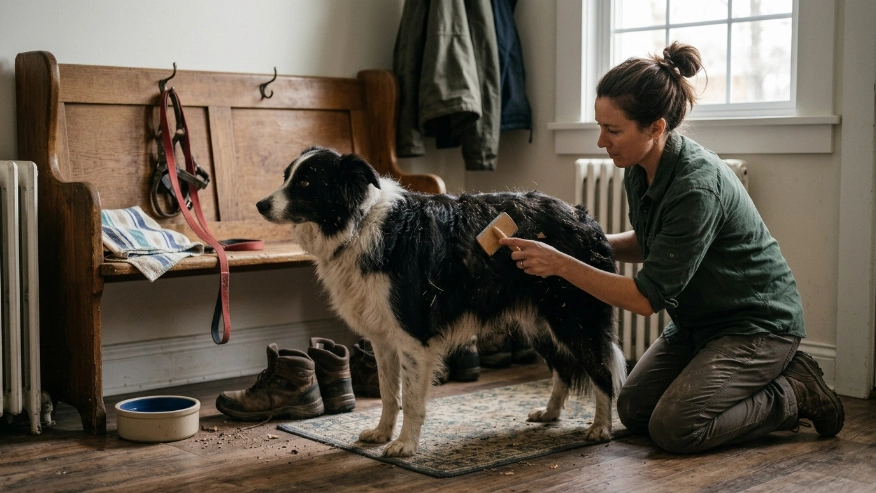
No. A healthy Border Collie normally doesn’t need shampoo simply because it spent a few hours on a trail.
Border Collies have a double coat. That means they have an outer layer of guard hairs plus a softer undercoat underneath.
Definition: A Border Collie’s double coat is a two-layer coat designed to provide insulation and protection from outdoor conditions. Both rough-coated and smooth-coated Border Collies have this basic coat structure.
The coat can hold plenty of loose dirt. Much of that dirt comes out once the hair dries and gets brushed properly.
I learned this after bathing a muddy dog too quickly. A few times, I later realized the same dirt would have brushed away after 30 minutes of drying.
Bathing should be based on condition, not mileage
A two-mile muddy walk can justify a bath. A six-mile dry hike may require nothing more than brushing and a paw check.
I look at the dog’s skin and coat instead of the distance on my hiking app. That approach has been much more practical.
The AKC’s dog bathing guidance also emphasizes that bathing frequency varies with coat and lifestyle. Excessive washing can interfere with the natural condition of the coat.
- Clean, dry coat: Brush and inspect.
- Dusty coat: Let it dry, then brush.
- Muddy paws: Rinse the feet and lower legs.
- Wet mud in the undercoat: Consider a full bath.
- Strong odor or sticky contamination: Shampoo may be appropriate.
Section Takeaway: Don’t automatically bathe after every hike. Let the condition of your Border Collie’s coat decide what level of cleaning is needed.
How Do You Know If a Full Bath Is Needed?
I use three levels of post-hike cleaning: brushing, a targeted rinse, or a complete bath. Full shampoo is the last option, not the first.
| Coat Condition | What I Do | Typical Hands-On Time |
|---|---|---|
| Dry dust, loose leaves | Brush after drying | 3–5 minutes |
| Dirty paws or lower legs | Targeted lukewarm rinse | 5–10 minutes |
| Heavy wet mud through coat | Full bath and drying | 15–25+ minutes |
| Burrs or plant debris | Remove and brush first | 5–15 minutes |
| Dirty creek or pond exposure | Thorough fresh-water rinse; shampoo if needed | 10–20+ minutes |
When I choose a full bath
I shampoo when mud is packed close to the skin or the dog has rolled in something unpleasant. I also clean more thoroughly after contact with questionable stagnant water.
A bad smell that remains after the coat dries can also change my decision. I first check the skin and ears because shampoo won’t solve every odor problem.
When a rinse is enough
A plain-water rinse works well after wet grass, clean sand, or muddy feet. It removes surface debris without turning every adventure into bath day.
That’s useful with an active Border Collie. Some dogs hit trails several times each week.
What Should You Check After a Hike?
Cleaning isn’t my first post-hike job. I inspect the dog before reaching for shampoo.
PetMD’s outdoor dog guidance recommends checking dogs for unwanted hitchhikers and signs of irritation after outdoor adventures. That habit matters on wooded and grassy trails.
My head-to-tail inspection
- Ears: Look around the outer ear for dirt, plant material, redness, or ticks.
- Face: Check around the eyes and muzzle for seeds, dirt, and small debris.
- Neck: Remove the collar or harness and inspect underneath it.
- Armpits: Feel through the hair where debris and tangles can hide.
- Belly: Check the thinly covered skin for redness, scratches, or bites.
- Groin: Inspect carefully for ticks and irritation.
- Legs: Run your fingers through feathering on rough-coated dogs.
- Paws: Check pads, nails, and spaces between toes.
- Tail: Look through the feathering for burrs and tangled vegetation.
I do this before getting the coat completely wet. Plant material is often easier to locate when I can still separate dry hair with my fingers.
Don’t forget the paws
Paws often need more attention than the rest of the dog. Gravel, mud, tiny twigs, and plant material can collect between the toes.
I rinse muddy paws with lukewarm water. Then I dry between the toes instead of leaving them damp.
Section Takeaway: A bath should never replace a physical post-hike inspection. Check the skin, paws, ears, collar area, and hidden parts of the coat first.
How Should You Bathe a Border Collie After Hiking?
If a full bath is justified, I keep the process simple. The goal is to remove dirt without creating another coat problem.
The AKC’s double-coat grooming guidance supports regular brushing as an important part of maintaining dogs with this type of coat. That matters before and after messy outdoor trips.
1. Remove obvious debris first
I pick out loose leaves, twigs, and easy burrs before turning on the water. I don’t aggressively pull anything tangled close to the skin.
If something appears embedded in the skin, paw, eye area, or ear canal, I stop. That’s a different problem from ordinary grooming.
2. Brush manageable tangles
I gently separate loose tangles before soaking the coat. Water can make some mats harder to handle.
A pin brush and suitable comb work well for my routine. I pay extra attention behind the ears, legs, chest, and tail feathering.
3. Use lukewarm water
I wet the coat gradually rather than spraying full pressure at the dog’s face. The dense undercoat can take longer to saturate than it appears.
I use my fingers to part the hair and check that water has reached dirty areas. There’s no benefit in shampooing only the outer tips.
4. Use dog shampoo when shampoo is needed
I use a mild product made for dogs and follow its label. Human shampoo isn’t part of my Border Collie bathing routine.
More shampoo isn’t better. A small amount worked through the dirty areas is easier to rinse completely.
5. Rinse thoroughly
This is the step I never rush. A thick Border Collie coat can hide shampoo surprisingly well.
I keep rinsing while separating the coat with my fingers. I finish only when the water runs clear and the hair feels free of product.
Drying matters almost as much as washing. A coat that feels dry on top may still hold moisture near the skin.
I start with towels and press the coat instead of rubbing it into tangles. Then I separate thicker areas with my fingers while checking for trapped moisture.
My drying routine
- Let the dog shake off excess water in a safe area.
- Blot the coat with absorbent towels.
- Pay extra attention to the neck, chest, belly, armpits, and hindquarters.
- Dry the feet and spaces between the toes.
- Keep the dog somewhere warm until the undercoat is dry.
- Brush again once the coat is comfortable to work through.
I avoid blasting hot air against the skin. Heat isn’t necessary for good drying.
For owners who regularly bathe active dogs, proper airflow can make drying easier. The key is comfort, control, and checking the undercoat rather than judging only the surface.
When Should You Skip the Full Bath?
I skip shampoo whenever the problem can be solved with a smaller amount of cleaning. This keeps post-hike care fast and practical.
Skip shampoo for ordinary dry dirt
Dust often looks worse immediately after a trail walk. Once the coat dries, much of it can be brushed out.
This is especially noticeable on feathering around the legs and underside. I give the coat time before deciding it’s filthy.
Spot-clean small areas
If only the paws and belly are dirty, I wash only those areas. There’s no reason to soak the dog’s back, neck, and tail too.
- Wipe dusty legs with a damp towel.
- Rinse mud from paws with lukewarm water.
- Brush dried soil from the coat.
- Use a clean damp cloth around minor surface dirt.
As of 2026, my approach remains simple: use the least aggressive cleaning method that gets the dog comfortably clean. A hiking schedule shouldn’t automatically become a shampoo schedule.
When Does Post-Hike Irritation Need a Vet?
A bath isn’t the right answer for every skin or coat problem. Persistent redness, pain, swelling, discharge, or intense itching deserves more attention.
The American Veterinary Medical Association’s pet-care resources are a good starting point for general preventive-care information. The ASPCA and veterinary resources such as PetMD can also help owners recognize when a problem needs professional evaluation.
Signs I wouldn’t treat as ordinary trail dirt
- Persistent or increasing redness
- Swelling around the face or paws
- Repeated scratching or chewing
- Open wounds or bleeding
- Sudden limping
- Eye squinting or obvious eye irritation
- Persistent head shaking or ear pain
- Unusual discharge or a strong odor from the skin or ears
- A deeply embedded foreign object
Shampoo can also irritate already-sensitive skin. I don’t keep trying new products when a dog’s skin is clearly getting worse.
Vet note: Contact your own veterinarian if your Border Collie develops persistent skin irritation, pain, swelling, wounds, significant itching, or other concerning symptoms after a hike.
Section Takeaway: Treat ordinary dirt as grooming, but treat persistent pain or skin changes as a health issue. When symptoms don’t settle, veterinary advice is safer than repeated bathing.
My Simple Border Collie Post-Hike Routine
I’ve found that consistency makes this much easier. My routine takes only a few minutes after a normal dry hike.
For a clean, dry hike
- Offer water and let the dog settle.
- Remove the harness or collar for inspection.
- Check for ticks, burrs, seeds, scratches, and sore spots.
- Inspect each paw and between the toes.
- Brush loose dirt from the dry coat.
- Skip the bath if everything looks normal.
For a muddy hike
- Remove larger debris before wetting the coat.
- Decide whether the mud is surface-level or packed into the undercoat.
- Rinse only dirty legs and paws when possible.
- Use dog shampoo if the whole coat genuinely needs cleaning.
- Rinse until no product remains.
- Dry the undercoat, paws, and hidden areas carefully.
For a wet trail or swimming day
I inspect the dog first and rinse away questionable residue with clean water. I pay close attention to ears, skin folds, paws, and areas under hiking gear.
I also check the instructions for any flea or tick product my dog is using. Some topical products have specific bathing or swimming directions that should be followed.
One mistake I stopped making
My early mistake was thinking “dirty dog” automatically meant “shampoo.” Border Collies spend a lot of time outdoors, so that approach can turn into frequent unnecessary baths.
Now I ask one question: What am I trying to remove? If the answer is loose dust, a brush usually gets the first chance.
Section Takeaway: Inspect first, clean only what needs cleaning, and dry thoroughly. That routine keeps post-hike grooming manageable even when you’re on the trail several times a week.
Frequently Asked Questions
Should I bathe my Border Collie every time we go hiking?
No. If your Border Collie returns with a dry coat and only light dust, brushing and a careful body check may be enough. Save a full bath for substantial mud, strong odors, sticky material, questionable water exposure, or dirt that has worked deeply into the coat.
Can I rinse my Border Collie with just water after hiking?
Yes, a plain lukewarm-water rinse can be useful when the paws, belly, or lower legs are dirty but shampoo isn’t necessary. Dry the rinsed areas afterward, especially between the toes and in thick sections of the double coat.
Should I bathe my Border Collie after swimming in a creek?
A clean fresh-water rinse is a sensible option after swimming, especially if you’re unsure about the water quality. A complete shampoo bath isn’t automatically necessary, but inspect the coat, skin, paws, and ears and clean more thoroughly when contamination or heavy dirt is present.
Should I check my Border Collie for ticks before or after bathing?
I check before bathing and look again while drying and brushing. Run your fingers through the coat and inspect the ears, neck, armpits, belly, groin, legs, paws, tail, and areas beneath the collar or harness.
Can I let mud dry and brush it off?
Yes, when the mud is ordinary surface dirt and your dog’s skin is comfortable. Dried soil often brushes from a Border Collie’s outer coat surprisingly well, making a full bath unnecessary.
How do I keep my Border Collie clean if we hike several times a week?
Use brushing, paw rinses, damp towels, and targeted cleaning between full baths. Inspect the coat after every outing and reserve shampoo for times when your dog is genuinely dirty rather than bathing on a fixed post-hike schedule.
What should I do if my Border Collie starts itching after a hike?
Check the skin and coat for burrs, bites, ticks, plant material, redness, and other obvious irritants. If itching is intense, continues, causes skin damage, or appears with swelling, wounds, pain, or other symptoms, contact your veterinarian rather than repeatedly shampooing the dog.
Final Takeaway: Clean the Dog You Have in Front of You
You don’t need to automatically bathe a Border Collie after hiking. Start with a careful inspection, then choose brushing, spot cleaning, rinsing, or a full bath based on what you find.
That’s the routine I prefer for an active Border Collie. It keeps trail dirt under control without treating every outdoor adventure like an emergency bath day.
