

Quick Answer
Yes, you can bathe a Border Collie in winter, but I recommend doing it indoors and only when needed. Their weather-resistant double coat can hold moisture near the skin, so thorough drying matters more during cold weather.
My winter bath rules
- Bathe when needed: Don’t wash your Border Collie just because a calendar says it’s bath day.
- Stay indoors: Use a warm, draft-free bathroom or utility room.
- Use lukewarm water: Avoid water that feels hot or cold against your wrist.
- Choose dog shampoo: A mild, moisturizing formula is useful when winter air dries the skin.
- Dry completely: Pay special attention to the dense undercoat, belly, paws, and areas behind the ears.
- Delay outdoor time: Keep your dog warm indoors until the coat is fully dry.
Before choosing a full bath
- Try brushing, paw rinsing, or spot cleaning if only one area is dirty.
If you’re wondering how to bathe a Border Collie in winter, the bath itself isn’t usually the hardest part. Keeping that thick coat warm and getting the undercoat completely dry takes more care.
I’ve found that winter grooming works best when I ask one question first: does the dog truly need a full bath? This guide explains how I make that decision and handle the bath safely.
In This Guide
- Can You Bathe a Border Collie in Winter?
- How Often Should You Bathe a Border Collie in Winter?
- How Do You Bathe a Border Collie Safely in Winter?
- How Should You Dry a Border Collie After a Winter Bath?
- When Should You Skip a Winter Bath?
- How Can You Keep a Border Collie Clean Between Baths?
- Does Every Winter Mess Require a Full Bath?
- What Winter Bathing Mistakes Should You Avoid?
- Frequently Asked Questions
- Final Takeaway
Can You Bathe a Border Collie in Winter?
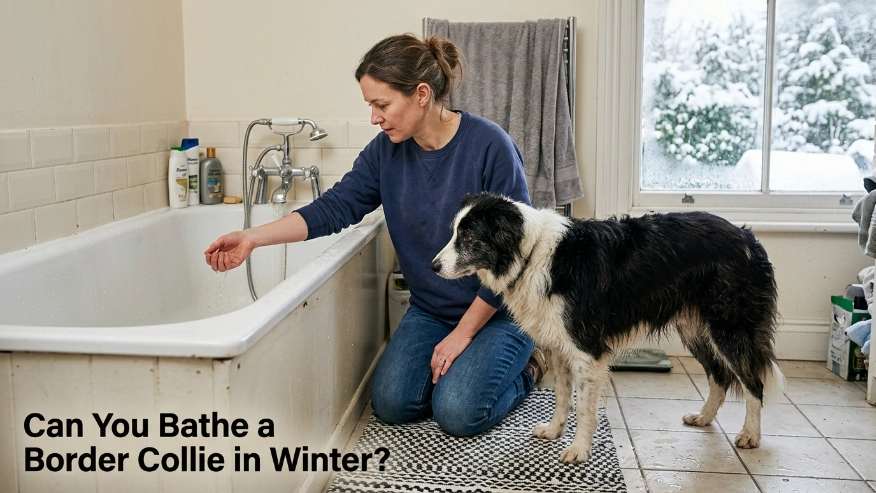
Yes. A healthy Border Collie can be bathed during winter when you provide a warm indoor space and dry the coat thoroughly afterward.
The bigger concern isn’t the season itself. It’s leaving a dense coat wet while the dog is exposed to cold air.
Why the Border Collie’s coat matters
A Border Collie’s double coat has a softer insulating undercoat beneath protective outer hairs. Both rough-coated and smooth-coated Border Collies have this basic double-coat structure.
The American Kennel Club describes both coat varieties as dense and weather-resistant. Regular brushing also helps remove mats, dirt, and debris.
You can read more about grooming double-coated dogs before changing your dog’s winter grooming routine.
Wet is different from cold
A dry winter coat can help insulate a Border Collie. A soaked coat is a different situation because water reaches deep into the undercoat.
That’s why I plan winter baths when I know I have enough time to rinse and dry the dog without rushing.
- Rough coats: Longer feathering can stay damp around the chest, legs, and tail.
- Smooth coats: They may dry faster on the surface, but the undercoat still deserves attention.
- Thick seasonal coats: Dense winter undercoat can hide damp spots close to the skin.
How Often Should You Bathe a Border Collie in Winter?
There isn’t one perfect winter bathing schedule for every Border Collie. Activity level, mud, odor, skin condition, and coat type matter more than a fixed date.
In winter, I usually lean toward bathing only when the dog needs it. Brushing and small cleanups often handle ordinary dirt.
Signs a full bath may be useful
- A persistent dirty or unpleasant odor remains after brushing.
- Mud or grime has reached several areas of the coat.
- The coat feels greasy or heavily soiled.
- Your dog rolled in something that needs to be washed away.
- Your veterinarian has prescribed a bathing routine for a skin condition.
Why I avoid unnecessary winter baths
Cold outdoor air and dry indoor heating can already make winter uncomfortable for some dogs’ skin. Frequent washing may add to dryness, especially with a harsh shampoo.
The ASPCA’s cold-weather guidance recommends bathing pets as little as possible during cold spells and discussing moisturizing products with a veterinarian when needed.
That doesn’t mean winter bathing is forbidden. It means each bath should have a reason.
How Do You Bathe a Border Collie Safely in Winter?
A safe winter bath starts before the water turns on. I prepare the room, towels, shampoo, and drying setup first.
This keeps the dog from standing wet while I search for supplies.
1. Brush before getting the coat wet
Brush out loose fur, debris, and small tangles first. Water can tighten existing mats and make them harder to remove.
Focus on the chest, feathering, back legs, tail, and behind the ears on rough-coated dogs.
2. Use a warm indoor location
Choose a bathroom, shower, tub, or utility sink that is free from cold drafts. Put a non-slip mat under your dog’s feet.
Close nearby doors or windows if cold air is entering the room.
3. Use lukewarm water
I test the water against my inner wrist before wetting the dog. It should feel comfortably warm, not hot.
Wet the coat gradually, giving the water enough time to reach the dense undercoat.
4. Apply dog-specific shampoo
Use a shampoo designed for dogs. Human products aren’t formulated for canine skin and can be irritating.
A gentle moisturizing dog shampoo may be useful for dogs prone to winter dryness. Ask your veterinarian about medicated products if your dog has an existing skin problem.
5. Rinse longer than you think
Thick coats trap shampoo surprisingly well. I keep rinsing until the water runs clear and I can’t feel slippery product near the skin.
Check the belly, armpits, chest, neck, and back legs carefully.
How Should You Dry a Border Collie After a Winter Bath?
Drying is the step I take most seriously in cold weather. A coat that feels dry on top may still be damp underneath.
Start with towels, then check the undercoat with your fingers before allowing the dog into a colder area.
Towel dry without hard rubbing
Press a large absorbent towel into the coat to pull out moisture. Hard rubbing can create tangles in longer feathering.
I often switch to a second dry towel once the first becomes soaked.
Use a dryer carefully
If your Border Collie accepts a dryer, use a cool or low-warm setting. Keep the airflow moving instead of holding it against one area.
Work through the coat in sections. Stop if your dog becomes stressed or the skin starts feeling too warm.
Check the hidden damp areas
- Behind the ears
- Under the collar area
- Chest and armpits
- Belly
- Back legs and feathering
- Tail
- Between the toes
PetMD’s winter dog grooming guidance also recommends indoor bathing and keeping dogs warm while they dry.
I don’t send a freshly bathed Border Collie straight into snow or freezing air. The dog stays inside until the coat feels dry down to the skin.
When Should You Skip a Winter Bath?
Delay a routine bath when you can’t keep your Border Collie warm during and after it. A quick cosmetic wash isn’t worth creating a cold, stressful drying problem.
Spot cleaning is often enough until conditions improve.
I would postpone a routine bath when:
- The home is cold because the heating system isn’t working.
- The only available bathing area is outdoors.
- You can’t dry the coat properly afterward.
- Your dog is already shivering or struggling to stay warm.
- Your dog is sick, weak, or recovering from a medical problem.
- The skin is inflamed, bleeding, painful, or covered with unexplained sores.
What about puppies and senior Border Collies?
Puppies, seniors, and dogs with health problems may have different tolerance for cold and bathing stress. I use extra care with these dogs and keep the whole process short and calm.
If you’re unsure whether bathing is appropriate, your veterinarian can assess your dog’s age, skin, health, and individual risk.
Vet note: New redness, open sores, hair loss, strong skin odor, ongoing itching, or pain deserves veterinary advice rather than repeated home bathing.
How Can You Keep a Border Collie Clean Between Baths?
A Border Collie doesn’t need a full shampoo bath after every messy winter walk. Small cleaning habits often do the job faster.
This is especially helpful when road salt, slush, or mud only affects the lower body.
My between-bath winter routine
- Brush dried dirt: Let ordinary mud dry, then brush loose material from the coat.
- Rinse dirty paws: Use clean lukewarm water when paws contact salt or grime.
- Wipe the belly: A damp cloth can remove splash marks without soaking the entire dog.
- Dry between toes: Check for trapped moisture, snow, and debris.
- Remove snow clumps: Gently clear packed snow from feathering and paws after outdoor activity.
ASPCA winter guidance also recommends cleaning and drying the feet and stomach after walks where pets may contact ice, salt, or de-icing chemicals.
These quick cleanups preserve bath day for times when the whole coat is genuinely dirty.
Does Every Winter Mess Require a Full Bath?
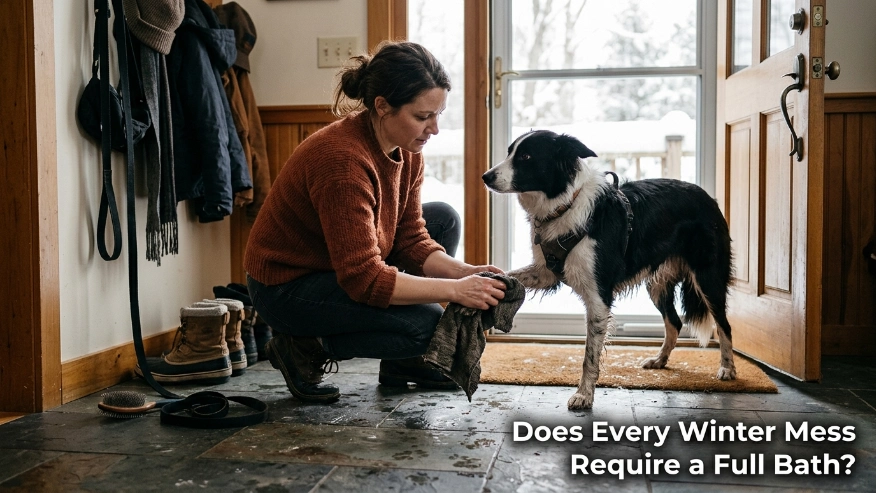
No. I choose the smallest cleaning method that solves the problem.
This keeps winter grooming simpler and reduces the time your Border Collie spends wet.
| Situation | Full Bath? | What I Would Do |
|---|---|---|
| Dry dirt on the outer coat | Usually no | Let it dry and brush thoroughly |
| Muddy paws | No | Rinse paws and dry between toes |
| Road salt on feet or belly | Usually no | Rinse or wipe affected areas promptly |
| Heavy mud across the body | Often yes | Indoor bath followed by complete drying |
| Persistent odor and greasy coat | Possibly | Bathe if dirty; investigate recurring odor |
| Red, sore, or itchy skin | Not automatically | Ask a veterinarian before trying new products |
As of 2026, this is still the approach I favor: clean what’s dirty rather than automatically soaking the whole coat.
What Winter Bathing Mistakes Should You Avoid?
Most winter bathing trouble comes from rushing. The dog gets washed quickly, but preparation or drying gets skipped.
A few simple changes make the process safer and easier.
Bathing outside in cold weather
An outdoor hose bath is a poor winter choice. Use a sheltered indoor space where you can control water temperature and drafts.
Using water that’s too hot
Hot water doesn’t make the dog safer from cold weather. It can make bath time uncomfortable and may bother sensitive skin.
Using human shampoo
Stick with products formulated for dogs. If your Border Collie has allergies or another skin condition, ask your veterinarian which formula is appropriate.
Assuming the surface coat is dry
This is the mistake I watch for most with double coats. Push your fingers through the fur and check close to the skin.
Sending the dog outside immediately
Give your Border Collie time to become completely dry indoors. A quick bathroom check can prevent a damp undercoat from going unnoticed.
Shaving the coat to make drying easier
Don’t shave a normal Border Collie coat just to simplify winter grooming. The double coat plays an important protective role, and regular brushing is the better maintenance tool.
Frequently Asked Questions
Is it safe to bathe a Border Collie when it’s snowing?
Yes, if you bathe your dog indoors and can keep them warm until completely dry. The weather outside matters mainly because a wet dog should not be moved straight into freezing or snowy conditions.
Should I use warmer water during a winter bath?
Use comfortably lukewarm water rather than hot water. Test it against your wrist before wetting your dog, and keep the room itself comfortably warm.
Can a Border Collie air-dry in winter?
Air-drying can work in a warm indoor environment, but a dense undercoat may take a long time to dry. Towel drying first and checking the coat close to the skin helps prevent hidden damp areas.
Should I bathe my Border Collie after every snowy walk?
No. Most snowy walks only require drying the dog and cleaning the paws, belly, or feathering as needed. A full shampoo bath makes more sense when the overall coat becomes dirty or contaminated.
Can winter baths make a Border Collie’s skin dry?
Winter air can already contribute to dry skin, and excessive bathing may make dryness worse for some dogs. Use an appropriate dog shampoo and speak with your veterinarian if dryness, itching, flakes, or redness continues.
Do smooth-coated Border Collies need the same winter bath care?
Yes. Their outer coat is shorter, but smooth Border Collies still have a double coat. They may seem to dry faster, yet you should still check the undercoat before outdoor activity.
What should I do if my Border Collie smells bad soon after bathing?
First make sure the coat and skin are fully dry. If strong odor keeps returning, especially with itching, redness, discharge, or sore skin, contact your veterinarian instead of repeatedly shampooing the dog.
Final Takeaway
You can safely bathe a Border Collie in winter. The key is to bathe indoors, use lukewarm water, rinse carefully, and get the dense coat completely dry before your dog returns outside.
I also wouldn’t turn winter bathing into a rigid schedule. Brush regularly, clean paws and muddy areas between baths, and save a full wash for the times your Border Collie genuinely needs one.
If you notice ongoing itching, redness, sores, hair loss, or unusual odor, speak with your veterinarian. A grooming problem can sometimes be a skin problem that shampoo alone won’t solve.
