
How to Bathe a Double-Coated Border Collie Safely

Quick Answer
You can safely bathe a double-coated Border Collie without damaging the coat. Brush first, use lukewarm water and dog shampoo, rinse deeply, and dry the dense undercoat completely while preserving the protective coat described in this double-coated dog grooming guide.
The basic bath routine
- Brush first: Remove loose undercoat, debris, and tangles before getting the coat wet.
- Use warm water: Keep the water comfortably lukewarm rather than hot or cold.
- Choose dog shampoo: Use a mild product made for canine skin and coats.
- Rinse deeply: Work through the thick coat until no shampoo remains.
- Dry completely: Towel-blot first, then use cool or low airflow if your dog accepts a dryer.
How often?
- For a healthy adult, I use roughly 6–8 weeks as a practical starting point, then adjust for mud, odor, activity, skin condition, and veterinary advice.
Trying to bathe a double coated Border Collie can feel harder than washing a short-haired dog. Water has to pass through the outer coat, reach the undercoat, and then come back out during drying.
I’ve found that preparation matters more than using lots of shampoo. Once the loose coat is brushed out and everything is within reach, bath time becomes much easier.
In This Guide
- What Is a Border Collie’s Double Coat?
- How Often Should You Bathe a Double-Coated Border Collie?
- What Do You Need Before Bathing?
- How Do You Bathe a Double-Coated Border Collie?
- How Should You Dry the Double Coat?
- Which Border Collie Bathing Mistakes Should You Avoid?
- When Does a Coat or Skin Problem Need a Vet?
- Frequently Asked Questions
- Final Takeaway
What Is a Border Collie’s Double Coat?
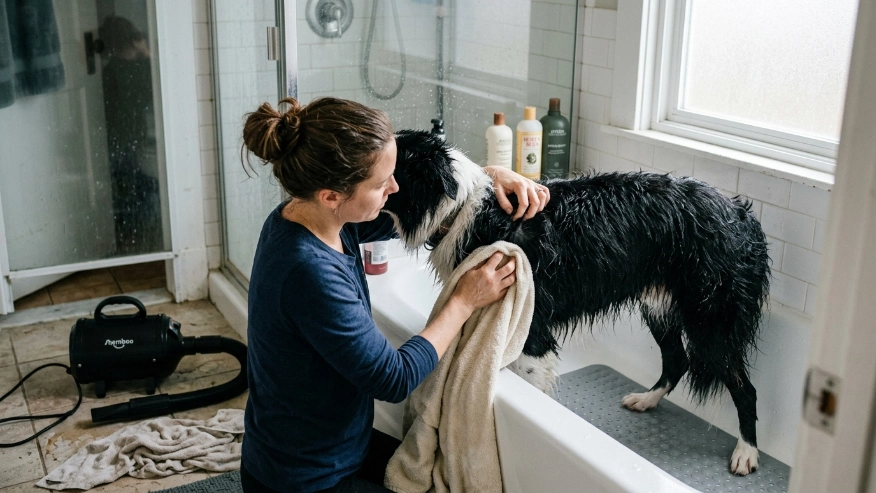
A Border Collie’s double coat has two functional layers. The softer undercoat provides insulation, while the tougher outer hairs help protect the skin and repel moisture and debris.
Definition: A Border Collie’s double coat is a coat made from a dense insulating undercoat covered by longer protective hairs often called guard hairs.
Both rough-coated and smooth-coated Border Collies have double coats. Rough coats look longer and more feathered, while smooth coats sit closer to the body.
The American Kennel Club describes both Border Collie coat varieties as dense and weather-resistant. It also recommends regular brushing to control mats, tangles, dirt, and loose hair.
You can review the breed’s coat and grooming characteristics on the AKC Border Collie breed profile.
Why does the double coat change bath time?
A dense undercoat can hold more water than the surface suggests. A dog may feel almost dry across the back while remaining damp close to the skin.
That is why I focus on three things during every bath:
- Penetration: Water and diluted shampoo must reach through the coat.
- Rinsing: Soap must come back out of both coat layers.
- Drying: Moisture hidden in the undercoat needs time to escape.
Brushing also matters because wetting a tangled coat can tighten existing knots. Removing loose undercoat first makes washing and rinsing noticeably easier.
How Often Should You Bathe a Double-Coated Border Collie?
There isn’t one perfect schedule for every Border Collie. For a healthy adult, roughly every 6–8 weeks is a useful starting point, but the dog’s lifestyle should decide the final timing.
I don’t automatically bathe a dog because a calendar says bath day has arrived. I look at the coat first.
| Situation | Practical Approach | What I Check First |
|---|---|---|
| Clean indoor dog | About every 6–8 weeks as needed | Odor, oiliness, debris |
| Muddy working dog | Bathe sooner when brushing or rinsing isn’t enough | Mud near skin and legs |
| Heavy shedding period | Increase brushing before increasing baths | Loose packed undercoat |
| Persistent odor or itching | Investigate the cause instead of repeatedly shampooing | Skin, ears, paws, redness |
| Medicated bathing plan | Follow the veterinarian’s schedule | Treatment instructions |
Can you bathe a muddy Border Collie sooner?
Yes. A dog covered in mud, manure, salt, sticky residue, or something unsafe shouldn’t stay dirty simply to preserve a fixed bath schedule.
Sometimes I can let dry mud fall out and brush the coat. Other times, a proper rinse or full bath is the cleaner option.
Frequent outdoor activity also means checking paws, belly fur, feathering, and the area beneath the tail. These areas often get dirty before the dog’s back does.
What Do You Need Before Bathing?
Have everything beside you before the dog gets wet. Leaving a wet Border Collie alone in a slippery tub while searching for a towel is an easy mistake to avoid.
My basic setup includes:
- Non-slip mat: Gives the dog secure footing.
- Dog shampoo: Choose a mild formula designed for canine skin.
- Brush and comb: Remove loose hair and find tangles beforehand.
- Handheld sprayer or cup: Helps saturate and rinse the coat.
- Several towels: Double coats can soak through one quickly.
- Dryer if tolerated: Cool or low airflow helps move moisture from the undercoat.
- Small treats: Useful for reinforcing calm behavior.
Should you brush a Border Collie before bathing?
Yes. I consider brushing one of the most important preparation steps, especially during seasonal shedding.
Work gently through the coat with an appropriate brush or comb. Pay extra attention behind the ears, around the neck, the feathering, rear legs, and tail.
Don’t aggressively rake the same area again and again. Grooming should remove loose coat without scraping or irritating the skin.
What shampoo should you use?
Use shampoo made for dogs rather than human shampoo. A mild canine formula is usually the simplest choice for routine bathing.
If your Border Collie has recurring itching, sores, unusual scaling, or a diagnosed skin condition, ask your veterinarian which product to use. Medicated products may require specific contact times and schedules.
The PetMD dog bathing guide also recommends preparing pet-safe shampoo, a non-slip surface, towels, and grooming tools before starting.
How Do You Bathe a Double-Coated Border Collie?
Start with a brushed coat and a calm dog. Then work methodically from wetting to rinsing rather than rushing through the thick fur.
- Secure the footing. Place your Border Collie on a non-slip mat and keep the bathing area calm.
- Test the water. Use comfortably lukewarm water and check it against your wrist or forearm.
- Wet the body slowly. Begin around the shoulders and work backward, allowing water to move through the outer coat.
- Keep water away from the face. Use a damp cloth around the eyes and muzzle instead of spraying directly.
- Apply dog shampoo. Work it through the coat gently without rough circular scrubbing that creates tangles.
- Clean high-contact areas. Pay attention to the chest, legs, paws, belly, rear feathering, and underside of the tail.
- Rinse thoroughly. Keep rinsing until the water runs clear and you can’t feel slippery shampoo near the skin.
- Check again. Separate the hair with your fingers around thick areas and rinse any remaining product.
How do you get water through a thick coat?
Don’t blast one spot with high pressure. I use a steady flow while separating the hair with my free hand.
The goal is to reach the undercoat without frightening the dog. Moving slowly also gives you time to notice mats, bumps, redness, or sensitive spots.
How long should rinsing take?
Rinse until you are confident no shampoo remains. With a rough-coated Border Collie, rinsing often takes longer than the initial shampooing.
I check the neck, armpits, belly, rear legs, and tail base twice. Product can hide easily in dense or feathered areas.
Section Takeaway: A good Border Collie bath is mostly preparation, gentle washing, and patient rinsing. Don’t judge cleanliness by the surface coat alone.
How Should You Dry the Double Coat?
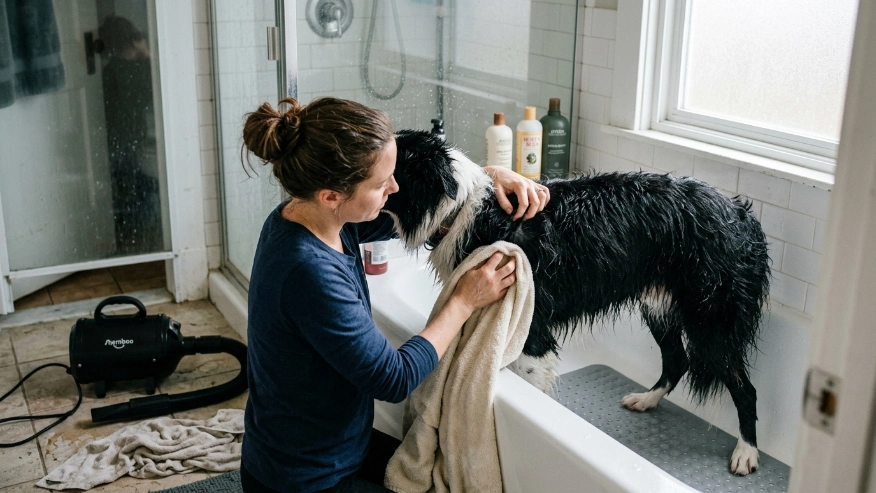
Drying is just as important as washing. A dense Border Collie undercoat can remain damp long after the outer hairs look dry.
Start by blotting, not rubbing
Let your dog shake first if the area is safe. Then press absorbent towels against the coat to pull out water.
Avoid vigorous rubbing. Hard towel rubbing can twist longer rough-coat hair into tangles.
Can you use a blow dryer?
You can use a dryer if your Border Collie is comfortable with it. Choose cool or low heat, keep the airflow moving, and never concentrate hot air against one patch of skin.
I introduce dryer noise from a distance with younger or nervous dogs. Forcing a frightened dog through a loud drying session can make the next bath much harder.
How can you tell whether the undercoat is dry?
Separate the coat with your fingers and feel close to the skin. Check the neck, chest, armpits, belly, rear legs, and tail area rather than touching only the top layer.
If the undercoat still feels cool and damp, keep drying gently. Brush only as much as needed to separate the coat and help airflow move through it.
Which Border Collie Bathing Mistakes Should You Avoid?
The most common mistakes aren’t complicated. They usually come from rushing, overhandling the coat, or assuming a double coat behaves like short single-layer fur.
- Skipping pre-bath brushing: Existing tangles can tighten after they become wet.
- Using human shampoo: Stick with products designed for canine skin unless your veterinarian directs otherwise.
- Using hot water: Warm and comfortable is enough.
- Scrubbing aggressively: Rough circular rubbing can create tangles in longer coat areas.
- Rinsing too quickly: Dense fur can hide shampoo close to the skin.
- Leaving the undercoat wet: Check beneath the surface before calling the job finished.
- Using high dryer heat: Choose cool or low settings and keep the dryer moving.
- Shaving for convenience: Routine bathing doesn’t require removing the protective double coat.
Should you shave a Border Collie’s double coat?
Routine coat maintenance generally focuses on brushing and removing loose undercoat, not shaving the dog. The outer and inner coat layers perform different protective functions.
There are situations where a veterinarian or professional groomer may need to clip an area for medical treatment or severe matting. That is different from routinely shaving a healthy coat because the weather is hot.
When Does a Coat or Skin Problem Need a Vet?
A bath should remove ordinary dirt and odor. If problems return quickly or you notice clear skin changes, another bath may not solve the cause.
Watch for signs such as:
- Persistent scratching or chewing
- Red or inflamed skin
- Open sores or crusting
- Unusual hair loss
- Strong odor that returns soon after bathing
- Pain when you touch the coat or skin
- Repeated ear odor, discharge, or head shaking
Parasites, allergies, infections, moisture, and other medical problems can produce similar outward signs. A veterinarian can examine the dog instead of relying on repeated shampooing.
Vet note: If your Border Collie has ongoing itching, redness, sores, hair loss, pain, or persistent odor, ask your veterinarian for an examination and treatment plan.
Frequently Asked Questions
How often should a double-coated Border Collie be bathed?
For many healthy adults, about every 6–8 weeks is a practical starting point. Adjust that schedule for mud, swimming, work, odor, skin condition, climate, and veterinary instructions instead of treating the number as a strict rule.
Can I bathe my Border Collie every week?
A healthy Border Collie usually doesn’t need a routine weekly bath. If a veterinarian has prescribed frequent medicated bathing, follow that treatment schedule and use the exact product and contact time recommended.
Can I use human shampoo on my Border Collie?
For routine bathing, use shampoo formulated for dogs. If your Border Collie has sensitive, itchy, or medically treated skin, choose a product with your veterinarian’s guidance rather than experimenting with human products.
Should I brush my Border Collie before or after a bath?
Brush before bathing to remove debris, loose undercoat, and tangles. Once the coat is clean and partly dry, gentle brushing can also help separate hairs and finish the grooming session.
Can I air-dry my Border Collie?
Air drying may work in suitable conditions, but a dense undercoat can stay wet longer than expected. Check near the skin and keep your dog somewhere comfortably warm until the entire coat has dried.
Does a smooth-coated Border Collie need different bathing care?
The smooth coat is shorter, so washing and drying may feel easier. However, smooth Border Collies still have a double coat and need proper brushing, thorough rinsing, and complete drying.
Should I bathe my Border Collie more during shedding season?
Not automatically. I increase brushing first because removing loose undercoat often solves the biggest grooming problem without adding extra baths.
Final Takeaway
Bathing a double-coated Border Collie doesn’t require a complicated routine. Brush before the bath, use lukewarm water and dog-safe shampoo, rinse patiently, and make sure the undercoat dries completely.
Let your dog’s condition determine the schedule rather than chasing a fixed date. Between baths, consistent brushing usually does more for a Border Collie’s coat than unnecessary washing.
Once you learn how the undercoat behaves when wet, the whole process becomes easier. Keep bath time calm and predictable, and your Border Collie is much more likely to cooperate next time.