

Quick Answer
Outdoor Border Collie bathing is safe when the weather is mild, the ground is secure, and you can use comfortable lukewarm water. Because a Border Collie has a dense weather-resistant double coat, thorough rinsing and drying matter just as much as washing.
Quick outdoor bathing steps
- Choose a safe spot: Use shade, good drainage, and a nonslip surface.
- Brush first: Remove loose coat, dried dirt, burrs, and tangles.
- Check the water: Use lukewarm water that feels comfortable on your inner forearm.
- Wash gently: Use dog-safe shampoo and keep product away from the eyes and ears.
- Rinse deeply: Part the coat so clean water reaches the undercoat.
- Dry completely: Towel-blot first, then use gentle airflow if needed.
Bathing a Border Collie outside can be easier than wrestling a muddy dog through the house. I especially like an outdoor setup after wet walks, yard play, and muddy adventures.
Still, outdoor bathing needs more planning than simply turning on a garden hose. Water temperature, traction, weather, shampoo, and drying all affect how comfortable the bath feels.
In This Guide
- What Is Outdoor Border Collie Bathing?
- When Is It Safe to Bathe a Border Collie Outside?
- What Do You Need for an Outdoor Border Collie Bath?
- How Do You Bathe a Border Collie Outdoors Step by Step?
- Hose vs Tub vs Portable Shower: Which Works Best?
- How Do You Protect the Coat and Skin Outdoors?
- How Should You Dry a Border Collie After an Outdoor Bath?
- What Outdoor Bathing Mistakes Should You Avoid?
- Frequently Asked Questions
- Final Takeaway
What Is Outdoor Border Collie Bathing?
Outdoor Border Collie bathing means washing your dog outside instead of using an indoor bathtub or shower. You might use a hose, portable dog shower, raised wash station, or outdoor tub.
A Border Collie’s double coat is a two-layer coat made of a softer undercoat beneath protective outer hairs. Both rough-coated and smooth-coated Border Collies have this coat structure.
- Rough coat: Longer hair and feathering can hold more water and debris.
- Smooth coat: Shorter outer hair dries faster, but the undercoat can still stay damp.
- Seasonal coat: Loose undercoat can make washing and rinsing slower during shedding periods.
This is why I treat an outdoor Border Collie bath as a full grooming job. Getting the top of the coat wet is only the beginning.
The water must reach the skin without harsh pressure. Shampoo must also rinse completely from both coat layers.
When Is It Safe to Bathe a Border Collie Outside?
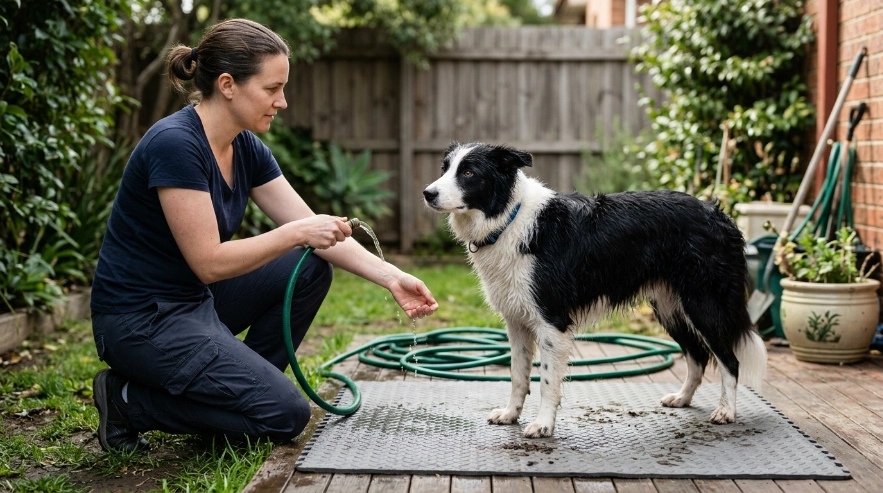
Outdoor bathing works best in mild weather when your Border Collie can stay comfortable during washing and drying. Avoid conditions that make the dog excessively hot, chilled, or stressed.
Choose shade instead of strong sun
A shady spot usually makes bath time more comfortable. Direct summer sun can also heat concrete, decks, hoses, and metal equipment.
Before starting, I place my hand on the bathing surface. If I would not want to stand barefoot there, I move the setup.
Check the water before it touches your dog
Don’t assume hose water is comfortable. Water sitting inside a hose in the sun can initially come out surprisingly warm.
Let it run first. Then test the stream against your inner forearm until it feels comfortably lukewarm.
- Too hot: Stop and allow cooler water to run.
- Too cold: Use a warm-water connection or another bathing method.
- Comfortably lukewarm: Continue while checking it during the bath.
The ASPCA dog grooming guidance also stresses using products designed for dogs and watching for skin problems during routine grooming.
Skip outdoor bathing during poor weather
Cold wind and cool temperatures can make a soaked double coat uncomfortable. A hot day can create the opposite problem.
Move indoors if you cannot keep your dog comfortable from the first rinse through the final drying stage.
What Do You Need for an Outdoor Border Collie Bath?
Preparation matters because a wet Border Collie is rarely interested in waiting while you search for another towel. I arrange everything before bringing the dog into the wash area.
- Dog-safe shampoo: Choose a product made specifically for dogs.
- Gentle water source: A hose sprayer, outdoor shower, or filled tub can work.
- Nonslip mat: Give your dog secure footing.
- Brush and comb: Remove loose coat and tangles before washing.
- Several towels: One towel often becomes soaked quickly.
- Damp washcloth: Clean around the face without spraying it.
- Treats: Reward calm standing and handling.
- Leash if needed: Use gentle control without tightly restraining a frightened dog.
I also keep shampoo within arm’s reach. Walking away from a wet dog creates an easy chance for an escape across the yard.
Use dog shampoo, not your own shampoo
Human shampoo is not my routine choice for a Border Collie. Products formulated for dogs are designed with canine skin and coat care in mind.
The ASPCA recommends choosing grooming products made for the correct animal species. If your dog has sensitive skin, ask your veterinarian which product is suitable.
How Do You Bathe a Border Collie Outdoors Step by Step?
The easiest outdoor bath follows a predictable order. I prepare first, then move through the coat methodically instead of rushing.
1. Brush the dry coat
Remove dry mud, dead hair, grass, seeds, and loose debris before adding water. Work through small tangles gently.
Regular brushing is especially important for this breed. The AKC recommends routine brushing for Border Collies and more frequent coat care during shedding periods.
2. Secure the bathing area
Place a rubber mat or another nonslip surface under your dog. Good footing often reduces nervous scrambling.
Keep the area free from sharp objects, garden chemicals, tools, and anything the dog could knock over.
3. Run and test the water
Let water that has been sitting in an outdoor hose run before use. Test the final stream on your inner forearm.
The goal is gentle, comfortable warmth. You do not need steaming water to remove normal dirt.
4. Wet the body slowly
Start around the shoulders rather than spraying your dog’s face. Work toward the back, chest, belly, legs, and tail.
Use your fingers to separate thick fur. Make sure water reaches the undercoat instead of rolling across the outer surface.
5. Apply dog-safe shampoo
Follow the shampoo label for dilution and contact instructions. Massage gently rather than scratching the skin with your nails.
Keep shampoo away from the eyes, nose, mouth, and inside the ears. I use a damp cloth for the face.
6. Rinse more thoroughly than you think
This is where I spend the most attention. A Border Collie’s topcoat can look clean while shampoo still hides underneath.
- Separate the fur around the shoulders.
- Check beneath the chest.
- Rinse inside and behind the legs.
- Check the belly and rear feathering.
- Continue until the coat no longer feels slippery or soapy.
Residual grooming products can irritate some dogs. The rinse should leave clean water moving freely through the coat.
7. Let your dog shake safely
Move away from slippery surfaces before allowing a big shake. That first shake removes a useful amount of surface water.
Have towels ready immediately afterward. Don’t let the dog race through dirt while still dripping wet.
Section Takeaway: A successful outdoor bath is less about scrubbing and more about preparation, gentle water, complete rinsing, and keeping your Border Collie comfortable.
Hose vs Tub vs Portable Shower: Which Works Best?
The best outdoor bathing method depends on your water supply and your dog’s confidence. Temperature control matters more than convenience.
| Method | Water Control | Best For | Main Concern |
|---|---|---|---|
| Garden hose | Depends on the water connection | Quick muddy-dog cleanup | Water may be too hot or cold |
| Outdoor tub | Easy to test before use | Dogs that dislike spray | Water becomes dirty during washing |
| Portable dog shower | Usually easier to direct gently | Camping and travel setups | Limited water capacity |
| Warm outdoor faucet | Best when hot and cold can be mixed | Regular home grooming | Temperature still needs checking |
I prefer a gentle sprayer with controllable temperature. It gives me enough pressure to rinse the undercoat without blasting the dog.
A powerful nozzle rarely makes the bath better. More pressure can make a water-sensitive Border Collie harder to handle.
How Do You Protect the Coat and Skin Outdoors?
Protecting a Border Collie’s coat starts before shampoo touches it. Regular brushing removes loose hair and reduces the amount of debris trapped near the skin.
Don’t shampoo every small patch of mud
A complete bath is not always necessary. Sometimes paws, legs, or the belly are the only dirty areas.
A plain-water rinse or targeted wash can be enough for a minor mess. This also avoids turning every muddy walk into a full shampoo session.
Bath frequency should depend on coat condition, lifestyle, and individual needs. The AKC’s bathing guidance notes that there is no single bathing schedule that suits every dog.
Don’t shave the double coat for easier bathing
The double coat serves an important protective role. Cutting it extremely short is not a good shortcut for making outdoor washing easier.
Instead, maintain the coat with brushing and careful removal of loose undercoat. This keeps water and airflow moving through the coat more effectively.
Watch the skin as you wash
Parting wet fur gives you a chance to see areas that are normally hidden. Pay attention to redness, sores, scabs, hair loss, unusual odor, or irritated patches.
The ASPCA recommends veterinary evaluation when abnormal skin or hair changes appear, especially when scratching, licking, or biting becomes excessive.
Vet note: If your Border Collie has persistent itching, open sores, recurring odor, skin inflammation, hair loss, or a diagnosed skin problem, ask your veterinarian about bathing frequency and shampoo choice.
For general pet-health questions, the American Veterinary Medical Association pet-care resources are also a useful starting point.
Section Takeaway: Shampoo only when it is useful, maintain the undercoat with regular brushing, and treat unusual skin changes as a health issue rather than simply a grooming problem.
How Should You Dry a Border Collie After an Outdoor Bath?
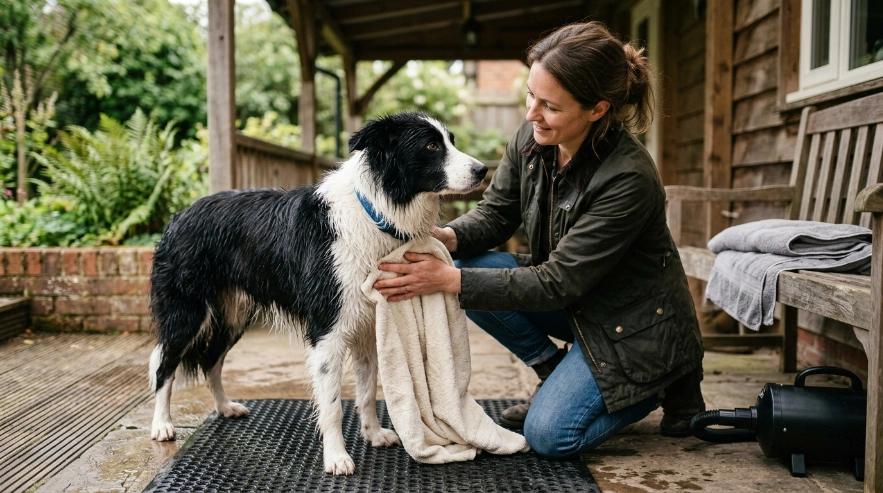
Drying is especially important after an outdoor bath because the ground may still be dusty, grassy, or muddy. A wet dog can become dirty again within seconds.
Start with towel blotting
Press towels into the coat to absorb water. Avoid aggressive back-and-forth rubbing through long feathering.
I switch to a dry towel once the first one becomes saturated. Several towels work better than trying to finish with one soaked towel.
Check beneath the outer coat
A Border Collie can look dry from several feet away while the undercoat remains damp. Use your fingers to check near the skin.
- Behind the ears
- Under the collar area
- Chest and shoulders
- Armpits
- Belly
- Rear legs and feathering
- Base of the tail
Use airflow carefully
If your Border Collie accepts a dryer, use comfortable cool or low-temperature airflow. Keep the airflow moving rather than aiming it at one spot.
Don’t replace a gentle bath with excessive dryer heat. Stop if your dog becomes frightened or uncomfortable.
As of 2026, fancy grooming equipment still does not replace the basics. Towels, safe airflow, patience, and checking the undercoat remain the parts that matter most.
What Outdoor Bathing Mistakes Should You Avoid?
Most outdoor bathing problems come from rushing the setup. I have found that the easiest baths start before the dog gets wet.
- Using hose water without testing it: Let stored water run out first.
- Bathing on hot pavement: Check the surface with your own hand or bare foot.
- Using strong water pressure: A gentle stream is easier for most dogs to tolerate.
- Skipping pre-bath brushing: Loose fur and tangles become harder to manage when soaked.
- Using human shampoo: Choose a shampoo made for dogs.
- Spraying the face: Use a damp washcloth instead.
- Rushing the rinse: Check underneath the visible outer coat.
- Leaving the undercoat damp: Feel near the skin before deciding your dog is dry.
- Bathing too often for convenience: Use targeted rinsing for small muddy areas when appropriate.
- Forcing a frightened dog: Shorten the session and work on gradual bath training.
One mistake is assuming an athletic Border Collie will tolerate anything because the breed loves outdoor activity. A dog that happily runs through a creek may still dislike a hose pointed at its body.
Keep the routine predictable. Calm handling usually works better than adding more restraint or pressure.
Frequently Asked Questions
Can I bathe my Border Collie outside with a garden hose?
Yes, if you can keep the water comfortable and the pressure gentle. Run the hose first, test the stream on your inner forearm, and avoid using water that feels distinctly hot or cold.
Is cold hose water safe for a Border Collie?
Cold water may be uncomfortable, especially in cool weather or for puppies and older dogs. For a routine bath, comfortable lukewarm water is a better target.
Can I bathe a Border Collie outside in summer?
Yes, but use shade and check the ground before starting. Pavement, decking, hoses, and metal surfaces can become hot in direct sun.
Should I brush my Border Collie before an outdoor bath?
Yes. Pre-bath brushing removes loose undercoat, dried dirt, plant debris, and small tangles before water makes the coat harder to work through.
How often should I give my Border Collie an outdoor bath?
There is no single schedule for every Border Collie. Bathe based on dirt, odor, coat condition, lifestyle, and any instructions from your veterinarian rather than automatically shampooing after every outdoor adventure.
Can I let my Border Collie dry naturally outside?
A short period outside can help after thorough towel drying when conditions are comfortably warm and clean. However, check the undercoat because it may remain damp long after the surface looks dry.
When should I stop bathing and call a veterinarian?
Stop and seek veterinary advice if you notice significant skin inflammation, open sores, unexplained hair loss, persistent odor, severe itching, weakness, breathing trouble, or unusual distress. Repeated shampooing should not replace diagnosis of an ongoing health problem.
Vet note: A veterinarian should guide medicated bathing schedules and treatment for diagnosed skin conditions.
Final Takeaway
Outdoor Border Collie bathing can be simple when you control the environment. Choose shade, secure footing, lukewarm water, dog-safe shampoo, a gentle rinse, and enough time for complete drying.
The double coat deserves extra attention. Brush before bathing, rinse beneath the visible outer fur, and check that the undercoat is dry before your Border Collie heads back to normal activity.
I find that preparation makes the biggest difference. Set everything out first, keep the routine calm, and make each bath predictable enough that your Border Collie knows what happens next.