
Signs Your Border Collie Needs a Bath: 9 Clear Clues

Quick Answer
Common signs your Border Collie needs a bath include a strong doggy smell, greasy fur, visible mud, a sticky coat, and dirt that brushing cannot remove. Because the Border Collie’s double coat can hold dirt beneath the surface, I also check the undercoat before deciding.
Signs I Look For
- Strong odor: The coat smells unpleasant even after brushing and drying.
- Greasy fur: The coat feels oily, heavy, or sticky instead of light.
- Visible dirt: Mud, dust, or grime remains trapped in the coat.
- Dirty skin: Parting the fur reveals debris close to the skin.
- Messy paws: Mud, road grime, or other material will not wipe away.
- Something unpleasant: Your dog rolled in waste, stagnant water, or another dirty substance.
Before You Fill the Tub
- Brush the coat first. If the dirt and odor disappear, a full bath may not be needed.
I don’t bathe a Border Collie just because a certain number of days has passed. I look at the coat, smell, skin, paws, and what the dog has been doing.
That matters with this breed. A Border Collie’s dense double coat can look clean on top while hiding dust, moisture, and debris underneath.
In This Guide
- What Are the Main Signs a Border Collie Needs a Bath?
- Does a Strong Doggy Smell Mean It’s Bath Time?
- What Does a Dirty Border Collie Coat Feel Like?
- When Do Mud and Outdoor Dirt Require a Full Bath?
- Does Scratching Mean My Border Collie Needs a Bath?
- Bath, Brush, or Spot Clean: Which Does Your Dog Need?
- How Often Should a Border Collie Be Bathed?
- How Do You Bathe a Border Collie Safely?
- Frequently Asked Questions
- Final Takeaway
What Are the Main Signs a Border Collie Needs a Bath?
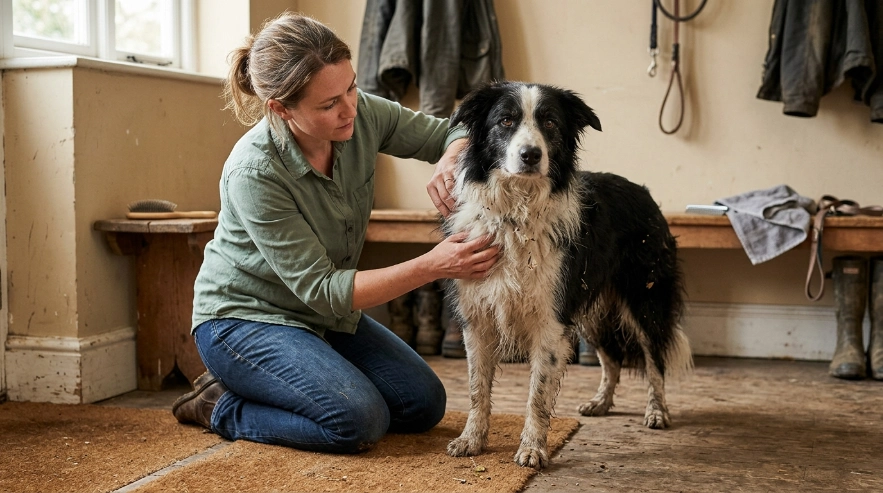
A Border Collie usually needs a bath when dirt, odor, oil, or an unwanted substance has built up enough that normal brushing cannot fix it.
I use the condition of the dog rather than a strict calendar.
Definition: A Border Collie’s need for a bath is the point when normal dry grooming no longer keeps the coat and skin comfortably clean.
These are the nine signs I pay the most attention to:
- A noticeable doggy odor stays after brushing.
- The coat feels greasy when you run your hand through it.
- Mud or dirt is trapped close to the skin.
- The fur feels sticky from food, sap, grime, or another substance.
- The white parts of the coat look dull from actual dirt rather than natural coloring.
- The paws and lower legs stay dirty after wiping.
- Your dog rolled in something foul such as animal waste or stagnant muck.
- The coat contains environmental residue that you want to wash away after an unusually dirty outing.
- Brushing and spot cleaning no longer work well enough.
The last clue is one of the most useful. Border Collies often need brushing more often than they need shampoo.
Both rough-coated and smooth-coated Border Collies have a double coat. The dense layer underneath deserves attention when you check for dirt.
Check below the surface
I part the coat with my fingers in several places. I check the neck, chest, belly, rear legs, and the fur behind the ears.
A clean-looking topcoat does not always tell the whole story.
- Look for fine dust near the skin.
- Feel for oily or sticky areas.
- Check for dried mud around the legs.
- Look for burrs or plant material.
- Smell the coat close to the skin rather than from several feet away.
If the coat looks and feels normal after brushing, I usually skip the bath.
Does a Strong Doggy Smell Mean It’s Bath Time?
Yes, a persistent dirty-dog smell is one of the clearest practical signs that a bath may help. First, make sure the odor is coming from the coat.
A normal outdoor smell after exercise is different from a strong odor that stays after the dog is dry and brushed.
Try this quick odor check
- Let the coat dry completely if your dog was wet.
- Brush out loose fur, dust, and debris.
- Smell the neck, shoulders, sides, and back.
- Check the paws and rear separately.
- Check whether the ears or mouth are the true source.
If the coat still smells dirty, I consider a bath reasonable.
If the odor comes mainly from an ear, mouth, sore, or irritated patch of skin, I don’t try to solve that problem with repeated shampooing.
Watch for an unusual skin odor
An unusually strong or recurring odor can sometimes occur with skin problems. Bathing may hide the smell briefly without dealing with the cause.
Vet note: If odor comes with redness, sores, discharge, hair loss, or ongoing itching, ask your veterinarian to examine your dog.
What Does a Dirty Border Collie Coat Feel Like?
A healthy Border Collie coat normally feels fairly clean, springy, and separate rather than oily or glued together. Dirt can change that texture.
I often notice the change by touch before the coat looks dirty.
Greasy or heavy fur
Run your fingers through the hair along the shoulders and back. The fur should not leave your fingers feeling coated with grime.
A greasy coat can be a reason to bathe when your dog has simply become dirty. Repeated oiliness can deserve a closer look.
Sticky areas
Sticky fur is another clear reason to clean the dog. Common outdoor messes can cling tightly to a rough Border Collie’s feathering.
- Food residue
- Tree sap
- Mud mixed with organic debris
- Unknown sticky substances
- Dirty water residue
I don’t pull hard at sticky hair. I first work out what is on the coat and choose the safest way to remove it.
Coat comparison
| What You Notice | Likely First Step | Full Bath? |
|---|---|---|
| Loose dust on the surface | Brush thoroughly | Usually no |
| Small muddy paws | Rinse or spot clean paws | Usually no |
| Greasy coat and odor | Brush, then shampoo | Often yes |
| Mud through the undercoat | Brush loose material, then wash | Often yes |
| Rolled in something foul | Wash promptly | Yes |
| Red, sore, or flaky skin | Investigate the skin problem | Ask your vet first |
When Do Mud and Outdoor Dirt Require a Full Bath?
Not every muddy walk requires shampoo. Dry mud often brushes out of a Border Collie’s coat better than many new owners expect.
This is one reason I don’t immediately put a muddy dog into the tub.
Let ordinary mud dry first
If the mud is harmless and your dog is comfortable, let the coat dry. Then brush the loose dirt outdoors.
Sometimes that removes most of the mess in minutes.
I move to a bath when:
- Mud has reached the undercoat.
- The belly and legs are heavily coated.
- A dirty smell remains after brushing.
- The coat still feels gritty.
- Your dog has been in filthy or contaminated material.
- Simple paw rinsing will not solve the problem.
Active Border Collies get dirty in predictable places
Working, hiking, and sport dogs often collect grime around the chest, belly, tail, and rear feathering. Those areas sit close to wet grass and mud.
My first check after a dirty outing is usually the paws and underside, not the back.
Sometimes only those areas need cleaning.
Does Scratching Mean My Border Collie Needs a Bath?
Not automatically. Scratching can have many causes, so I would not treat itching alone as proof that a Border Collie is dirty.
PetMD notes that skin changes can have many possible causes and recommends veterinary guidance when a dog’s skin changes. Their overview of dry and flaky skin in dogs also warns that excessive bathing can contribute to dryness.
Look at the skin before reaching for shampoo
Part the coat and inspect the areas your dog keeps scratching.
- Is the skin red?
- Do you see flakes?
- Are there scabs or sores?
- Is hair thinning in one spot?
- Do you see fleas or flea dirt?
- Is the area wet or producing discharge?
If you only find loose outdoor debris, gentle grooming may help. If the skin itself looks abnormal, repeated bathing can make diagnosis harder.
Using random shampoos is not my first choice for an unexplained skin problem.
Vet note: Persistent itching, redness, scabs, hair loss, skin odor, swelling, or broken skin deserves veterinary advice rather than repeated home bathing.
Human shampoo is not my shortcut
When a bath is needed, I use a shampoo made for dogs. Human products are not formulated for the same skin and coat needs.
The AKC’s guidance on choosing dog shampoo also describes Border Collies as double-coated dogs whose shampoo must reach through the coat.
Bath, Brush, or Spot Clean: Which Does Your Dog Need?
The best cleaning method is the least intensive one that solves the problem. A complete shampoo bath is only one tool.
This simple decision process saves me from washing a whole Border Collie for one dirty paw.
Choose brushing when:
- The coat contains dry dust.
- Mud has dried and loosens easily.
- Your dog is shedding heavily.
- The coat has small tangles or loose debris.
- There is no strong odor or greasy feel.
Choose spot cleaning when:
- Only the paws are muddy.
- The belly has a small dirty patch.
- One leg needs rinsing.
- A little food has dried on the coat.
- Your dog needs a quick cleanup between baths.
Choose a full bath when:
- Dirt covers several parts of the body.
- The undercoat feels dirty.
- Odor remains after brushing.
- The coat feels greasy or sticky.
- Your dog rolled in something foul.
- Spot cleaning would take more effort than washing the dog.
This approach matters because Border Collies benefit from regular coat care even when they do not need regular shampooing.
How Often Should a Border Collie Be Bathed?
There isn’t one perfect bathing interval for every Border Collie. Coat condition, activity, environment, season, and skin health all change how often a bath makes sense.
As of 2026, veterinary guidance still emphasizes that dog bathing frequency depends on the individual animal rather than one universal schedule.
PetMD’s guide to how often dogs should be bathed explains that breed, coat type, lifestyle, season, and health all affect frequency.
Why Border Collies don’t need constant shampooing
A Border Collie has a weather-resistant double coat. Regular brushing removes loose hair, tangles, dirt, and debris without soaking the entire coat.
The AKC recommends brushing a Border Collie about once or twice weekly, with more frequent brushing when needed. Daily brushing may be useful during heavy shedding periods.
Let lifestyle change the schedule
A house dog walking mainly on clean sidewalks may stay clean for a long time. A farm dog or hiking companion can get dirty much sooner.
Instead of counting days, I ask:
- Does the dog smell dirty?
- Does the coat feel greasy?
- Is visible dirt trapped underneath?
- Did the dog get into something unpleasant?
- Can normal brushing fix the problem?
If everything looks, feels, and smells normal, I don’t create a bath problem where there isn’t one.
How Do You Bathe a Border Collie Safely?
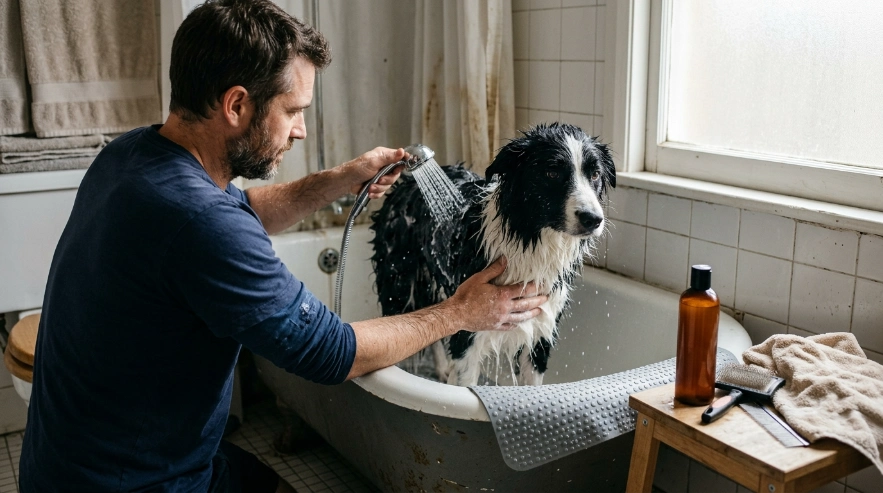
When the signs say it’s time, preparation makes the bath easier. The biggest challenge is getting a dense double coat wet, clean, rinsed, and properly dried.
1. Brush before adding water
I remove loose fur, debris, and tangles first. Wetting tangled hair can make the grooming job harder.
2. Use lukewarm water
The water should feel comfortably warm rather than hot. I also use a non-slip surface so the dog can stand securely.
3. Wet the coat thoroughly
Don’t stop when the outer hairs look wet. Work the water through the coat so it reaches beneath the top layer.
4. Use dog-specific shampoo
Apply the product according to its directions. Work it through the dirty areas without aggressively scrubbing the skin.
5. Protect the face and ears
I avoid spraying shampoo or water directly into the eyes and ears. A damp cloth gives me more control around the face.
6. Rinse longer than you think
A Border Collie’s dense coat can hide shampoo. I keep rinsing until the coat feels clean and no suds remain.
PetMD’s current dog-bathing guidance similarly stresses thorough rinsing and careful cleaning around the face.
7. Dry the undercoat
I start by pressing water from the fur with absorbent towels rather than rubbing hard. Rough rubbing can encourage tangles.
A dryer can help if the dog tolerates it, but I keep the setting cool or low and avoid concentrating heat on one area.
8. Check the skin as you dry
Bath time gives you a good chance to notice changes hidden by the coat. Look for redness, unusual bumps, sores, or irritated patches.
Vet note: Don’t use medicated shampoo unless your veterinarian has recommended the product and bathing schedule for your dog’s condition.
Frequently Asked Questions
How can I tell if my Border Collie is dirty enough for a bath?
Check for persistent odor, greasy fur, embedded mud, sticky residue, or dirt close to the skin. Brush first. If brushing and spot cleaning restore the coat, you can often postpone a full bath.
Should I bathe my Border Collie when the dog starts smelling?
A dirty coat smell that remains after your dog is dry and brushed is a reasonable reason for bathing. If the smell comes from the ears, mouth, or irritated skin, identify that source rather than assuming shampoo will solve it.
Can I bathe my Border Collie every week?
Most healthy Border Collies do not need a full shampoo bath simply because another week has passed. Bathing needs vary with lifestyle and skin health, so use coat condition and veterinary advice rather than a rigid weekly routine.
Can I just rinse mud off without shampoo?
Yes. A water rinse can be enough for muddy paws or legs when there is no oil, odor, or sticky material. Dry the coat well afterward, especially where the undercoat becomes wet.
Why does my Border Collie still smell after a bath?
First make sure the dense coat dried fully and that all shampoo was rinsed out. If a strong odor returns quickly or comes with itching, redness, discharge, or greasy skin, speak with your veterinarian.
Should I bathe a Border Collie that is scratching a lot?
Don’t assume itching means the dog is dirty. Check the skin for redness, flakes, sores, parasites, or hair loss. Unexplained or persistent itching is a reason to ask your vet before experimenting with shampoos.
Do rough and smooth Border Collies need different bathing schedules?
Both coat varieties have dense double coats, so neither needs bathing purely based on hair length. Rough coats may collect more visible debris and tangles, while each dog’s activity and skin condition remain more useful guides.
Final Takeaway
The best signs your Border Collie needs a bath are practical ones: persistent odor, oily fur, embedded dirt, sticky material, or a mess that brushing cannot remove.
I always try brushing or a small spot clean first when the problem is minor.
Once a full bath is needed, use dog-safe shampoo, rinse the dense coat thoroughly, and dry it carefully. If the problem looks like skin disease rather than simple dirt, let your veterinarian guide the next step.