

Quick Answer
To bathe a Border Collie at home, brush the coat first, use lukewarm water and dog-safe shampoo, rinse thoroughly, then dry the dense undercoat completely. Keep the process calm and avoid getting shampoo or water inside the eyes and ears. General dog care guidance from the ASPCA is also useful when building a safe home grooming routine.
Quick bathing steps
- Brush first: Remove loose fur, small tangles, burrs, and surface dirt before the coat gets wet.
- Prepare supplies: Put shampoo, towels, a non-slip mat, treats, and drying equipment within reach.
- Wet slowly: Use comfortable lukewarm water and soak the coat down to the skin.
- Wash gently: Massage dog shampoo through the coat without aggressively scrubbing or tangling the hair.
- Rinse completely: Keep rinsing until the water runs clear and the coat no longer feels slippery.
- Dry fully: Blot with towels, then finish drying the undercoat before your dog goes outside.
One important rule
- If your Border Collie has open sores, severe redness, unusual odor, discharge, or persistent itching, contact your veterinarian before treating the problem with repeated baths.
Bathing a Border Collie at home isn’t difficult, but their coat needs more attention than a short-haired dog’s coat. The biggest challenge is getting water through the dense fur and then getting that fur completely dry.
I recommend thinking of bath time as part of the whole grooming routine. Brushing, washing, rinsing, and drying all matter if you want a clean coat without creating new tangles.
As of 2026, the basic home-bathing approach remains simple: use products made for dogs, work gently, and let your dog’s skin condition determine when veterinary advice is needed.
In This Guide
- What should you know before bathing a Border Collie?
- What do you need to bathe a Border Collie at home?
- How do you bathe a Border Collie step by step?
- How should you clean the face, ears, paws, and underside?
- How do you dry a Border Collie’s double coat?
- How often should you bathe a Border Collie?
- What Border Collie bathing mistakes should you avoid?
- When does a skin problem need veterinary care?
- Frequently asked questions
What Should You Know Before Bathing a Border Collie?
A Border Collie has a coat designed to protect the skin from changing outdoor conditions. That means you should clean it without treating every bit of dirt as a reason for another full shampoo bath.
A Border Collie’s double coat is a two-layer coat made of protective outer hair and a softer insulating undercoat. Rough-coated dogs have visibly longer feathering, while smooth-coated Border Collies carry shorter hair.
The American Kennel Club’s Border Collie breed information describes the breed as highly energetic and work-oriented. That active lifestyle helps explain why mud, grass, dust, and outdoor debris can become regular grooming problems.
Brush before adding water
Water tightens existing tangles and makes loose undercoat harder to handle. I recommend doing a complete coat check before turning on the water.
- Brush the back and sides: Remove loose surface hair first.
- Check behind the ears: Fine hair here can tangle easily.
- Inspect the legs: Look for burrs, mud, grass seeds, and knots.
- Check the tail: Separate longer hair before it becomes wet.
- Look under the collar: Friction can hide small tangles near the neck.
Don’t force a brush through a tight mat. Work from the outer edge in small sections, or ask a professional groomer for help if the mat sits close to the skin.
Make the bathing area safe
A wet tub or shower floor can become slippery. Place a non-slip mat under your dog before you begin.
Close the bathroom door if your dog tends to escape when wet. Keep shampoo and towels close enough that you never have to leave the dog unattended.
What Do You Need to Bathe a Border Collie at Home?
You don’t need a professional grooming room. A few well-chosen supplies make the job faster and keep your Border Collie more comfortable.
- Dog shampoo: Choose a gentle formula made specifically for dogs.
- Conditioner: Optional, but useful for longer rough coats that tangle easily.
- Slicker brush: Helpful for loose fur and light tangles before bathing.
- Metal comb: Useful for checking whether small knots remain.
- Several towels: A Border Collie’s coat can hold more water than it first appears.
- Non-slip mat: Gives your dog better footing in the tub or shower.
- Cup or gentle sprayer: Helps you control where the water goes.
- Dog-safe dryer: Optional, but helpful for a thick undercoat.
- Small treats: Useful for rewarding calm behavior during each stage.
Can you use human shampoo?
I wouldn’t use regular human shampoo for routine Border Collie bathing. Products formulated for dogs are the safer choice for canine skin and coat care.
If your veterinarian prescribed a medicated shampoo, follow its directions instead of your normal routine. Contact time and rinsing instructions can differ between products.
Home bath, spot cleaning, or another option?
Not every dirty coat requires shampoo from nose to tail. Match the cleaning method to what happened that day.
| Situation | Best approach | Shampoo? | Main priority |
|---|---|---|---|
| Light dust or dry dirt | Brush thoroughly | Usually no | Remove debris without unnecessary washing |
| Muddy paws and lower legs | Targeted rinse or spot wash | Only if needed | Clean dirty areas and dry between toes |
| Dirty, greasy, or smelly whole coat | Full home bath | Yes | Complete rinsing and drying |
| Tight mats or difficult coat condition | Professional grooming help | Depends | Avoid pulling or damaging skin |
| Red, sore, or infected-looking skin | Veterinary guidance | Only as advised | Identify the medical cause first |
How Do You Bathe a Border Collie Step by Step?
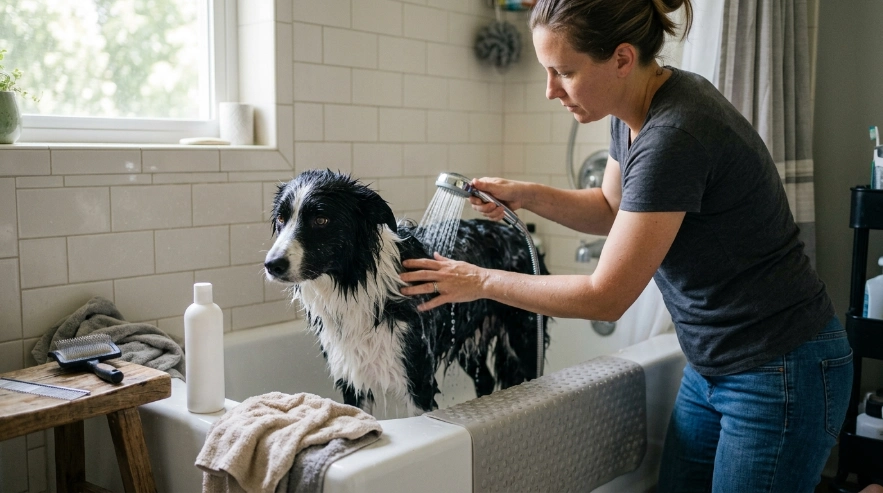
The easiest home bath follows the same order every time. A predictable routine also helps a nervous Border Collie learn what happens next.
1. Brush and inspect the coat
Start while the coat is completely dry. Brush in sections and feel through the fur with your fingers for hidden knots, bumps, or debris.
Check the skin as you work. Stop if you discover a painful area that needs closer attention.
2. Test the water
Use comfortably lukewarm water rather than hot water. Test it on your wrist or forearm before wetting your dog.
Start low on the body instead of spraying the head immediately. Many dogs stay calmer when the water is introduced gradually.
3. Wet the coat down to the skin
A quick spray across the outer coat isn’t enough. Use your free hand to separate the fur while the water works into the undercoat.
Move from the shoulders toward the back, chest, belly, legs, and tail. Keep direct water pressure away from the eyes and ear canals.
4. Apply shampoo in sections
Follow the dilution and application directions on your shampoo bottle. Some concentrated grooming shampoos should be diluted before use.
Massage rather than aggressively scrubbing the hair in circles. Rough scrubbing can twist longer fur together and create extra tangles.
- Wash the neck and shoulders.
- Move across the back and sides.
- Clean the chest and underside.
- Wash each leg and paw.
- Finish with the tail and dirty feathering.
5. Rinse longer than you think you need to
Incomplete rinsing is one of the easiest home-bathing mistakes to make. Dense fur can hide shampoo even when the outer coat looks clean.
Separate the coat with your fingers while rinsing. Continue until the water runs clear and the hair no longer feels soapy or unusually slippery.
How Should You Clean the Face, Ears, Paws, and Underside?
Sensitive areas need more control than the back and sides. Slow down here instead of using the same spray technique everywhere.
Face and eyes
I prefer a damp cloth for most routine face cleaning. It gives you more control around the eyes, nose, and mouth.
If facial fur needs shampoo, use only a dog-safe product suitable for that area. Keep soap away from the eyes and rinse carefully.
Ears
Don’t intentionally fill the ear canal with bath water. Clean only the outer visible area unless your veterinarian has shown you how to use a canine ear-cleaning product.
After bathing, check the ear flap and nearby fur for trapped moisture. Dry the outside gently with a clean towel.
Paws and lower legs
Border Collies that run through fields and trails often bring home mud between the toes and around the lower legs. Spread the toes gently so you can rinse away grit without pulling the hair.
- Check between toes: Look for mud, burrs, and small debris.
- Inspect paw pads: Notice cuts, tenderness, swelling, or foreign material.
- Rinse thoroughly: Remove all shampoo from dense paw hair.
- Dry carefully: Don’t leave the spaces between toes soaking wet.
Chest, belly, and rear feathering
These areas can collect dirt while remaining hidden when the dog stands normally. Use one hand to lift or separate longer fur and the other to control the water.
Be gentle around the groin and other sensitive skin. You don’t need hard scrubbing to get the area clean.
How Do You Dry a Border Collie’s Double Coat?
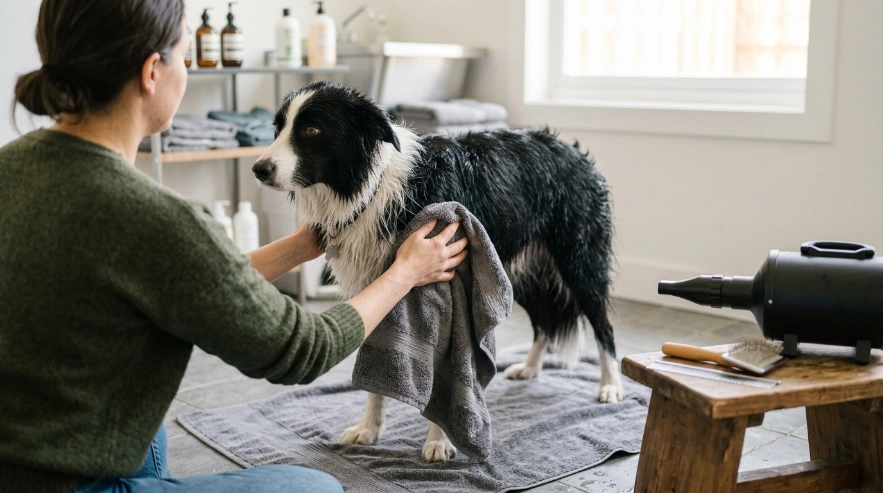
Drying matters almost as much as washing. A rough-coated Border Collie may feel dry on top while the undercoat remains noticeably damp.
Start by blotting
Let your dog shake first if the room can handle it. Then press towels against the coat to absorb water instead of rubbing aggressively.
Rubbing long coat back and forth can encourage tangles. Blot the chest, belly, legs, tail, and neck in sections.
Use a dryer carefully
If you use a dryer, choose a dog-safe setup with comfortable airflow and temperature. Keep the airflow moving instead of concentrating heat on one patch of skin.
Some Border Collies dislike dryer noise at first. Introduce the sound gradually and reward calm behavior instead of forcing a frightened dog to stay beside it.
Check the undercoat before finishing
Run your fingers down through the coat toward the skin. Pay special attention behind the ears, under the neck, around the chest, and near dense rear feathering.
Finish with a gentle brush once the coat is nearly or completely dry. This separates the hair and helps you find tangles created during washing.
My practical test is simple: don’t judge dryness from the surface alone. Feel several dense sections close to the skin before calling the job finished.
How Often Should You Bathe a Border Collie?
There isn’t one perfect calendar for every Border Collie. Bathing frequency should reflect coat condition, activity, environment, skin health, and veterinary recommendations.
Border Collie Hub’s existing grooming content commonly places routine bathing several weeks apart rather than treating it as a daily or weekly requirement. A dog that stays relatively clean may need fewer full baths than a dog regularly working in mud or swimming outdoors.
Signs a bath may be useful
- Noticeable odor: The coat smells dirty after normal brushing.
- Greasy feel: Fur feels oily or coated rather than simply dusty.
- Heavy mud: Dirt has worked through several areas of the coat.
- Sticky contamination: Something on the fur can’t be removed safely by brushing.
- Veterinary instructions: Your vet recommends a medicated bathing schedule for a diagnosed skin problem.
When a full bath may be unnecessary
A Border Collie with dusty fur after a dry walk may only need brushing. Muddy paws can often be handled with a targeted rinse.
This approach keeps home grooming practical. You clean what needs cleaning without automatically shampooing the entire dog.
Vet note: If your dog’s skin condition requires medicated shampoo or frequent bathing, follow your veterinarian’s schedule rather than a general grooming timetable.
What Border Collie Bathing Mistakes Should You Avoid?
Most home-bathing problems come from rushing one stage. The bath itself is straightforward once you avoid a few common errors.
Bathing before removing tangles
Water can make existing tangles more difficult to work through. Brush and inspect first whenever the coat condition allows it.
Using the wrong shampoo
Choose a shampoo formulated for dogs. If your Border Collie has known allergies or recurring skin trouble, ask your veterinarian which product fits that condition.
Applying hot water
Comfortably lukewarm water is the safer home-bathing choice. Always check the temperature before directing water onto your dog.
Leaving shampoo behind
Don’t stop rinsing because the visible foam has disappeared. Work your fingers into the undercoat and check several sections closely.
Rubbing the wet coat aggressively
Hard towel rubbing can turn long wet fur into a tangle. Press and blot with towels instead.
Letting a thick undercoat stay wet
Check close to the skin before deciding the coat is dry. Pay extra attention to dense or feathered areas that hold moisture longer.
Forcing a frightened dog
A nervous Border Collie can learn to tolerate bathing through short, positive practice. Introduce the tub, water, handling, and dryer gradually if any stage causes fear.
Use food rewards and calm handling rather than wrestling the dog through the process. A slower first few sessions can make future baths much easier.
When Does a Skin Problem Need Veterinary Care?
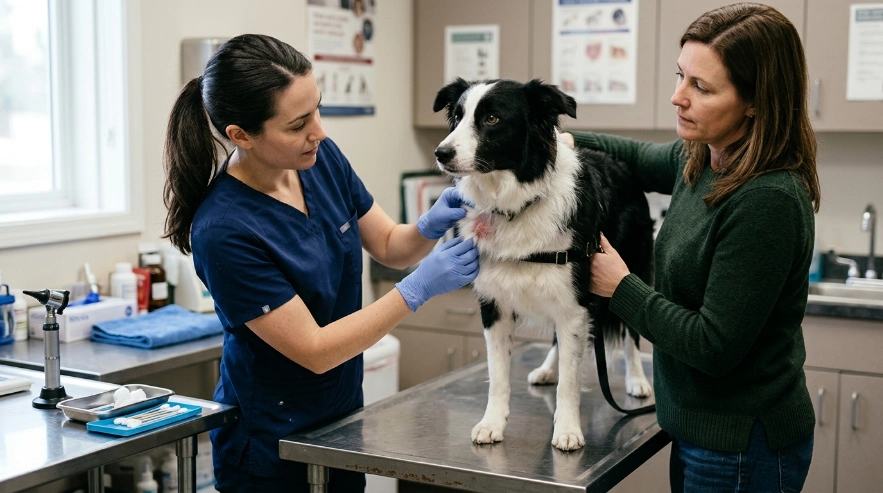
A bath can remove ordinary dirt, but it isn’t a diagnosis or treatment for every skin problem. Repeated bathing can also hide the real reason a dog keeps smelling, scratching, or developing irritated areas.
The American Veterinary Medical Association’s pet-care resources are a useful starting point for understanding when professional veterinary care matters.
Call your veterinarian when you notice concerning changes
- Persistent itching: Your dog repeatedly scratches, chews, or rubs the same areas.
- Red or inflamed skin: Irritation remains after ordinary dirt has been removed.
- Open sores: The skin is broken, bleeding, crusted, or painful.
- Unusual odor: A strong smell returns quickly after cleaning.
- Hair loss: Bald or thinning patches develop without an obvious grooming cause.
- Ear discharge: You see unusual debris, redness, moisture, or odor inside the ear.
- Pain: Your dog flinches, cries, guards an area, or resists normal handling.
Don’t assume stronger shampoo is the answer. Skin irritation may have several possible causes, and the correct treatment depends on identifying the problem.
Also avoid putting medicated, antiseptic, antifungal, or other treatment products on your dog simply because another dog improved with them. Your veterinarian can tell you whether a treatment is suitable for your Border Collie.
Vet note: Seek veterinary advice for persistent or worsening skin, ear, paw, or coat problems, especially when your dog shows pain or significant behavior changes.
Frequently Asked Questions About Bathing a Border Collie at Home
Can I bathe my Border Collie in a bathtub?
Yes. A household bathtub can work well if your Border Collie fits comfortably and you add a non-slip surface. Keep supplies within reach, introduce the water slowly, and never leave your dog unattended in the tub.
Can I use a shower to wash my Border Collie?
Yes. A handheld shower sprayer can make rinsing a dense coat easier because you can control the direction of the water. Keep the pressure gentle around sensitive areas and avoid directing water into the eyes or ears.
Should I brush my Border Collie before or after a bath?
Brush before the bath to remove loose fur, debris, and manageable tangles. After the coat is properly dried, a second gentle brushing can separate the hair and reveal any small knots that developed during washing.
Can I let my Border Collie air dry?
Air drying may work in suitable conditions, but don’t assume the undercoat is dry because the surface looks dry. Check the coat close to the skin, especially on rough-coated Border Collies, and keep your dog comfortably warm until drying is complete.
What should I do if my Border Collie hates baths?
Break bathing into smaller training sessions. Practice entering the dry tub, standing on the mat, hearing running water, and accepting gentle handling separately while rewarding calm behavior before attempting a complete bath.
Should I bathe my Border Collie after every muddy walk?
Usually, a full shampoo bath isn’t necessary for a little mud. Let dry dirt brush out when practical, or rinse only muddy paws and lower legs when those are the only areas that need cleaning.
Why does my Border Collie still smell after a bath?
First check whether the dense undercoat was fully rinsed and dried. If a strong odor continues, returns quickly, or comes with itching, redness, ear problems, or skin changes, contact your veterinarian instead of repeatedly shampooing the dog.
The Bottom Line
Learning how to bathe a Border Collie at home comes down to preparation and patience. Brush first, use dog-safe shampoo, rinse deeply, protect sensitive areas, and make sure the undercoat dries completely.
You also don’t need to turn every muddy walk into a full bath. Spot cleaning, brushing, and paw rinsing can handle many everyday messes.
Keep bath time predictable and reward calm behavior. With repetition, the routine can become another simple part of caring for an active Border Collie.
If the problem looks more like a skin condition than ordinary dirt, involve your veterinarian. A clean coat matters, but comfortable, healthy skin matters more.
