

Quick Answer
The best time to bathe a Border Collie is when the coat is noticeably dirty, smelly, greasy, or covered with something that brushing cannot remove. For many healthy Border Collies, a full bath about every 6–8 weeks is a practical starting point, although activity, weather, coat condition, and skin health matter more than the calendar. The AKC Border Collie breed guide confirms that both rough and smooth Border Collies have dense, weather-resistant double coats that need regular grooming.
Quick Bath-Timing Checklist
- Check the coat: Bathe when brushing no longer removes dirt, odor, or greasy buildup.
- Brush first: Remove loose undercoat, tangles, burrs, and debris before getting the coat wet.
- Choose a warm period: Bathe when you have enough time to dry the dense undercoat completely.
- Adjust for activity: Mud, pond water, salt, manure, or foul substances may justify an earlier bath.
- Watch the skin: Persistent itching, redness, flakes, sores, or unusual odor deserve veterinary advice instead of repeated baths.
My Simple Rule
- Use the condition of your Border Collie’s coat and skin as your main guide, not a rigid bathing schedule.
Finding the best time to bathe a Border Collie isn’t as simple as choosing every Saturday or the first day of each month. Border Collies have a dense double coat, and that coat usually needs brushing more often than it needs shampoo.
I’ve found that bath timing becomes much easier once you stop watching the calendar. Look at the coat, smell it, feel it, and think about what your dog has been doing outside.
In This Guide
- What Is the Best Time to Bathe a Border Collie?
- How Often Should You Bathe a Border Collie?
- Is Morning or Evening Better for Bathing?
- Should You Bathe Before or After Brushing and Exercise?
- Does Season or Coat Type Change Bath Timing?
- How Can You Tell Your Border Collie Needs a Bath?
- How Should You Bathe and Dry a Border Collie?
- Frequently Asked Questions
What Is the Best Time to Bathe a Border Collie?
The best time is when your Border Collie genuinely needs cleaning and you can dry the coat thoroughly afterward. A mildly dusty coat usually needs brushing, not an immediate full bath.
A Border Collie’s bathing schedule is the interval between full shampoo-and-rinse baths based on coat condition, lifestyle, season, and skin health. It doesn’t have to follow a fixed weekly calendar.
Choose a day when you have enough drying time
A Border Collie’s double coat can hold moisture beneath the surface. The topcoat may feel dry while the dense undercoat is still damp.
That makes timing important. I prefer bathing earlier in the day when possible because there is plenty of time for brushing, washing, towel drying, and final drying.
Bath after serious dirt, not every little mess
A Border Collie that runs through dry grass may only need brushing. One that rolls in foul material or comes home coated in sticky mud needs more attention.
Common reasons to move bath day forward include:
- Thick mud reaching the undercoat
- Strong persistent odor
- Greasy or sticky coat
- Dirty pond or stagnant-water exposure
- Road salt or irritating material on the coat
- Feces, urine, manure, or other contamination
Small muddy areas don’t always justify soaking the whole dog. Paws, legs, belly, and tail can often be rinsed separately.
Don’t bathe just because the calendar says so
Dog bathing frequency varies widely with breed, lifestyle, coat, season, and health. PetMD also notes that there isn’t one universal bathing interval for every dog.
You can read its broader guidance on how often dogs should be bathed when comparing general recommendations.
My own approach is simple. If the coat feels clean, smells normal, and the skin looks comfortable, I don’t shampoo a Border Collie just to satisfy a date on the calendar.
Section Takeaway: Bathe according to coat condition and lifestyle. Choose a time when you can complete the entire drying process without rushing.
How Often Should You Bathe a Border Collie?
For many healthy adult Border Collies, roughly every 6–8 weeks works as a reasonable starting point. Some dogs need fewer baths, while active dogs may occasionally need them sooner.
The goal is to keep the dog clean without turning shampooing into an unnecessarily frequent routine.
| Situation | Practical Bath Timing | What to Do Between Baths |
|---|---|---|
| Healthy indoor companion | About every 6–8 weeks if needed | Brush 1–2 times weekly |
| Highly active outdoor dog | As dirt and odor require | Brush after outdoor sessions and rinse dirty areas |
| Heavy seasonal shedding | Bath when coat condition justifies it | Increase brushing, often daily |
| Rolled in foul material | Bathe promptly | Check skin and coat for remaining contamination |
| Skin condition | Follow veterinary schedule | Use prescribed products exactly as directed |
Why not bathe every week?
A healthy Border Collie usually doesn’t need a routine shampoo bath every seven days. Excessive bathing with inappropriate products can contribute to dryness or irritation.
The coat already has a useful defense system. Frequent brushing removes loose fur, dirt, grass, dust, and small debris without repeatedly shampooing the skin.
What about a working Border Collie?
Farm, agility, hiking, and working dogs may get dirty more often. That still doesn’t mean every training session requires shampoo.
I separate ordinary dirt from genuine contamination. Dry soil usually brushes out, while swamp water, manure, greasy substances, or heavy mud may call for washing.
Is Morning or Evening Better for Bathing a Border Collie?
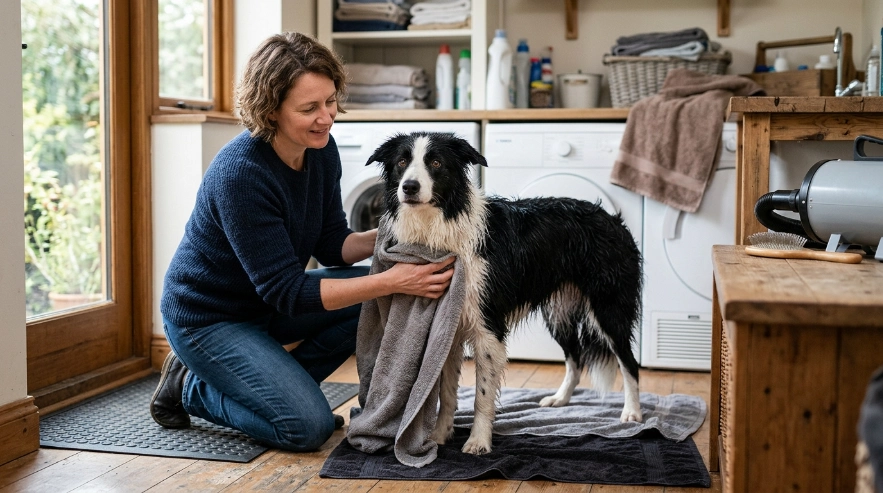
Morning or early afternoon is usually the easiest time because you have several hours available for complete drying. The exact clock time matters less than warmth, comfort, and drying time.
Morning baths have a practical advantage
If I have a choice, I bathe earlier rather than shortly before bedtime. A dense coat takes time to rinse, towel dry, brush, and finish drying.
An earlier bath also gives you time to check hidden areas such as:
- Behind the ears
- Armpits
- Chest feathering
- Belly
- Inner thighs
- Tail and rear feathering
Those spots can stay damp longer than the back and shoulders.
Avoid bathing immediately before going outside
Don’t schedule a bath five minutes before a muddy walk. Give the coat time to dry completely first.
Cold or wet weather makes this especially important. Keep the dog comfortably indoors until the undercoat is dry.
Should You Bathe Before or After Brushing and Exercise?
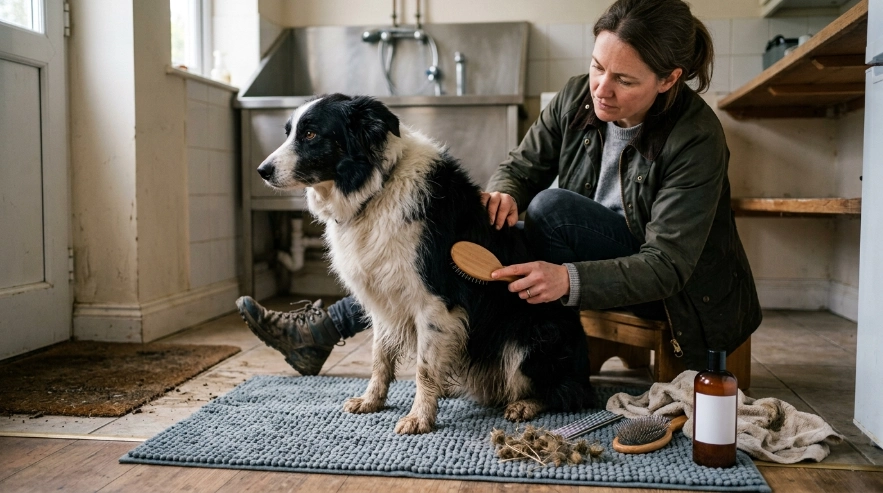
Brush before the bath, and schedule the bath after dirty exercise rather than before it. This order makes the grooming session more efficient.
Always check and brush the coat first
Brushing first removes loose undercoat and helps you find tangles before they tighten when wet. It also exposes hidden burrs, seeds, sticks, and debris.
VCA recommends dealing with tangles before bathing because wetting can make some tangles harder to remove. Its dog grooming and coat-care guidance also emphasizes that bathing needs vary with coat and lifestyle.
My basic order is:
- Inspect the skin and coat.
- Remove burrs and obvious debris.
- Brush loose fur from the undercoat.
- Work through manageable tangles.
- Bathe with lukewarm water.
- Rinse thoroughly.
- Dry the undercoat completely.
Bath after the messy adventure
If your Border Collie is going hiking, swimming, herding, or running through wet fields, do those activities before the planned bath. Otherwise, you may wash the dog twice.
I also avoid intense exercise immediately after bathing. Let the coat dry and the dog settle first.
Does Season or Coat Type Change Bath Timing?
Yes. Season changes how much your Border Collie sheds, how quickly the dog gets dirty, and how easy the coat is to dry.
Both rough-coated and smooth-coated Border Collies have double coats. Coat length changes grooming convenience, but it doesn’t remove the need to care for the undercoat.
Spring and fall shedding
Border Collies can shed heavily during seasonal coat changes. Brushing becomes especially valuable during these periods.
A bath can help loosen dead hair when the dog genuinely needs washing. However, bathing isn’t a replacement for brushing out the shedding undercoat.
The most useful seasonal routine is usually:
- Brush more often: Remove loose undercoat before it forms tangles.
- Inspect the skin: Heavy fur can hide irritation and parasites.
- Bathe when needed: Combine the bath with a thorough grooming session.
- Dry carefully: Separate the coat so moisture doesn’t remain trapped near the skin.
Summer
Summer can mean dust, swimming, hiking, pollen, and muddy adventures. Your dog may need more spot cleaning or occasional earlier baths.
Don’t assume hot weather means weekly shampooing. Activity and coat condition remain better guides.
Winter
Winter bathing requires a little more planning because drying can take longer. Choose a warm indoor environment and allow enough time before outdoor exercise.
Road salt deserves special attention. Washing affected paws and lower legs may be more sensible than giving a full-body bath every time.
Rough coat vs smooth coat
A rough coat has more visible feathering around areas such as the chest, legs, and tail. These sections can collect mud and form tangles more easily.
The smooth variety is shorter, but its double coat still sheds and traps debris. Both types benefit from consistent brushing.
When choosing shampoo, use a product formulated for dogs. AKC’s guidance on choosing dog shampoo specifically discusses the needs of double-coated breeds, including Border Collies.
Section Takeaway: Seasons change grooming workload more than they change the basic rule. Brush frequently and let actual dirt, odor, and coat condition determine bath day.
How Can You Tell Your Border Collie Needs a Bath?
Odor, greasy fur, sticky dirt, and contamination are stronger reasons for bathing than an arbitrary date. A normal dog smell after exercise doesn’t automatically mean shampoo is necessary.
Signs a bath probably makes sense
- Persistent unpleasant odor after brushing
- Greasy or sticky coat texture
- Heavy dirt reaching beneath the outer coat
- Dried mud covering large sections of the body
- Foul material rolled into the coat
- Substances that could irritate the skin
When brushing is probably enough
- Loose dry soil on the outer coat
- Small amounts of grass or leaves
- Normal seasonal shedding
- A little dust after outdoor play
- Minor surface dirt that releases easily
When a smell may mean something else
A persistent unusual odor can sometimes come from the skin, ears, mouth, or another health problem. Repeated shampooing may hide the smell temporarily without addressing its cause.
Pay attention to redness, sores, hair loss, intense scratching, greasy patches, crusting, or repeated licking. Those signs deserve more than another bath.
Vet note: If your Border Collie has ongoing itching, inflamed skin, sores, hair loss, or recurring unusual odor, ask your veterinarian before changing bathing frequency or using medicated products.
Medicated bathing follows different rules
A veterinarian may recommend much more frequent bathing for certain skin conditions. That schedule shouldn’t be confused with normal cosmetic bathing.
VCA explains that medicated shampoo baths may sometimes be prescribed weekly, depending on the condition and treatment plan.
Follow the prescribed shampoo, contact time, frequency, and rinsing instructions. Don’t copy another dog’s medical bathing routine.
How Should You Bathe and Dry a Border Collie at the Right Time?
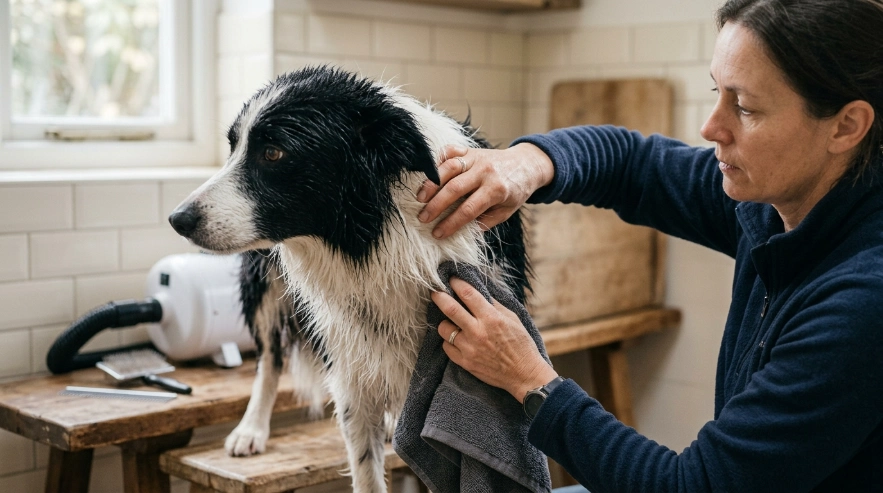
Good timing won’t help if the bathing process leaves shampoo or moisture trapped in the coat. Preparation, rinsing, and drying matter just as much.
Before the bath
Gather everything before bringing your Border Collie into the bathing area. This reduces interruptions and helps nervous dogs stay settled.
- Dog-safe shampoo
- Several absorbent towels
- Pin brush or suitable grooming brush
- Comb
- Non-slip bath mat
- Cup or gentle sprayer
- Treats for calm behavior
Use lukewarm water
Lukewarm water is comfortable for most dogs and easier to work with than temperature extremes. Test it before soaking the coat.
Wet the coat gradually. Avoid blasting water directly into the eyes, nose, or ear canals.
Work shampoo through the double coat
A Border Collie’s outer coat can make it easy to shampoo only the surface. Work the product gently toward the skin without aggressively scrubbing.
Use only a dog-formulated shampoo unless your veterinarian prescribes something specific. Human shampoo isn’t a good routine substitute.
Rinse longer than you think
Thick coats hold suds. Continue rinsing until the water runs clear and you can’t feel slippery shampoo residue.
I spend extra time around feathering, armpits, belly, rear legs, and the base of the tail. Those areas are easy to miss.
Dry the undercoat, not just the surface
Start by pressing towels into the coat. Avoid aggressive rubbing that twists longer hair into tangles.
If your dog comfortably accepts a dryer, use a suitable low or cool setting and keep the airflow moving. Never hold concentrated heat against one patch of skin.
Brush gently as the coat dries. Check dense areas with your fingers before assuming the job is finished.
One lesson I’ve learned with double-coated dogs is that “looks dry” and “is dry” aren’t always the same thing. Feeling down toward the skin gives you a much better answer.
Frequently Asked Questions About Border Collie Bath Timing
Can I bathe my Border Collie once a week?
A healthy Border Collie usually doesn’t need a routine weekly shampoo bath. Frequent bathing may be appropriate for a veterinarian-directed skin treatment, but ordinary grooming needs are generally better handled with regular brushing and baths when the coat becomes dirty.
Is every 6–8 weeks good for a Border Collie?
For many healthy Border Collies, every 6–8 weeks is a useful starting point rather than a strict rule. An indoor dog may need fewer baths, while a muddy working or hiking dog may occasionally need one sooner.
Should I bathe my Border Collie during shedding season?
You can bathe during shedding season when the coat needs cleaning. Brush thoroughly before the bath, because removing loose undercoat first makes washing and drying easier. Continue regular brushing afterward as the remaining loose coat releases.
Should I bathe my Border Collie after swimming?
It depends on the water. A clean-water swim may only require a rinse and thorough drying, while dirty ponds, saltwater, algae-contaminated water, or foul-smelling water may justify a more complete wash.
Can I bathe my Border Collie at night?
Yes, provided you have enough time to dry the dog completely before bedtime. Morning or early afternoon is often more convenient because a dense double coat can take time to dry all the way to the skin.
Can I use human shampoo on my Border Collie?
Human shampoo isn’t recommended for routine dog bathing. Use a shampoo formulated for dogs because canine skin differs from human skin. Ask your veterinarian for product guidance if your Border Collie has allergies, dryness, or another skin problem.
What if my Border Collie smells bad soon after a bath?
A recurring strong odor may indicate that another issue needs attention rather than another immediate bath. Check the skin and ears, and contact your veterinarian if odor comes with redness, itching, discharge, sores, greasy skin, or hair loss.
Vet note: Persistent skin or coat changes should be evaluated by your veterinarian, especially when normal grooming doesn’t solve the problem.
The best time to bathe a Border Collie is when the dog needs it—not simply when the calendar says bath day.
For many healthy adults, starting around a 6–8 week interval works well. Adjust that timing for outdoor activity, mud, swimming, shedding, coat condition, weather, and your dog’s individual skin needs.
Above all, brush regularly. A well-maintained Border Collie coat often needs far fewer full baths than new owners expect.
