

Quick Answer
To rinse a Border Collie’s thick coat, use a gentle stream of lukewarm water and work from the neck toward the tail, then rinse the chest, belly, legs, and feathering separately. Keep rinsing until the water runs clear and you can no longer feel slippery shampoo residue near the skin. Because the Border Collie has a dense double coat, part the hair with your fingers so water reaches the undercoat instead of flowing only across the surface.
Quick rinsing steps
- Use lukewarm water: Keep the water comfortable rather than hot or cold.
- Lower the pressure: A controlled spray penetrates the coat without frightening your dog.
- Part the coat: Use your free hand to expose the dense undercoat while rinsing.
- Follow sections: Rinse the back, sides, chest, belly, legs, tail, and feathering methodically.
- Check for residue: The coat should feel clean rather than slick, sticky, or soapy.
- Dry completely: Remove trapped moisture from the dense coat after the bath.
Rinsing a Border Collie can take longer than washing one. Their thick working-dog coat can hide shampoo close to the skin even when the outer hair looks clean.
I use a section-by-section approach instead of spraying randomly. It is slower for the first minute, but it makes the final rinse much more reliable.
In This Guide
- Why Is a Border Collie’s Thick Coat Hard to Rinse?
- What Do You Need Before Rinsing a Border Collie?
- How Do You Rinse a Border Collie’s Thick Coat Step by Step?
- How Can You Tell All the Shampoo Is Out?
- Which Rinsing Method Works Best for a Thick Coat?
- What Border Collie Rinsing Mistakes Should You Avoid?
- What Should You Do After Rinsing?
- Frequently Asked Questions
Why Is a Border Collie’s Thick Coat Hard to Rinse?
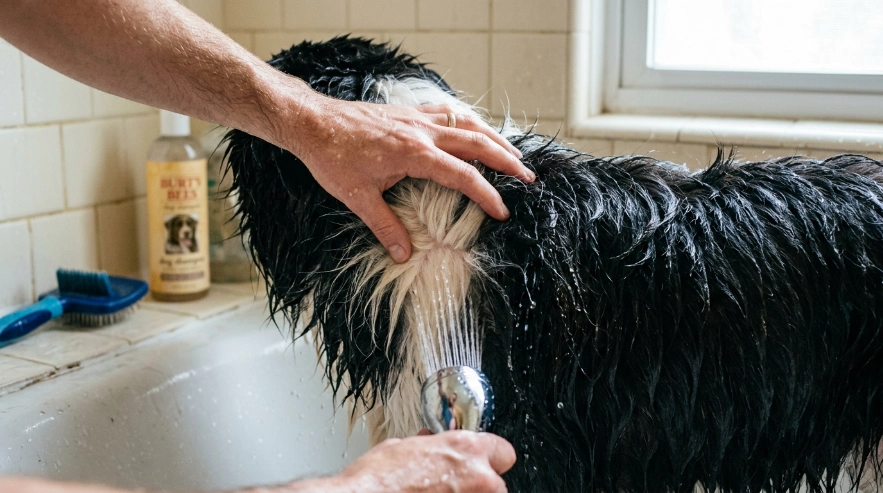
A Border Collie is harder to rinse than many short-coated dogs because water must move through two layers of hair. The outer coat can look soaked while portions of the undercoat remain soapy.
Definition: A Border Collie’s double coat is made of an outer layer of protective guard hairs plus a softer, denser undercoat.
Both rough-coated and smooth-coated Border Collies have dense, weather-resistant double coats. The rough variety simply gives you more length and feathering to work through.
The AKC’s guidance on double-coated dogs identifies Border Collies among breeds with medium double coats. That density is useful outdoors, but it changes how you handle bath water.
Water can ride over the topcoat
If you point a sprayer straight down the dog’s back, much of the water may travel along the outer hairs. Shampoo underneath can stay behind.
Instead, use one hand to separate the coat. Aim the water into the opening so it reaches the skin and pushes product outward.
Feathering holds extra product
The chest, back legs, belly, and tail often need more attention. Longer hair in these areas can hold diluted shampoo after the main body seems finished.
- Neck and ruff: Check beneath the thicker hair around the shoulders.
- Armpits: Lift each front leg gently and rinse underneath.
- Rear feathering: Separate long hair behind the thighs.
- Tail: Rinse from the base toward the tip.
- Belly: Use lower pressure because many dogs are sensitive there.
Heavy seasonal shedding can make the problem worse because loose undercoat packs together. A good pre-bath brushing makes water movement easier.
What Do You Need Before Rinsing a Border Collie?
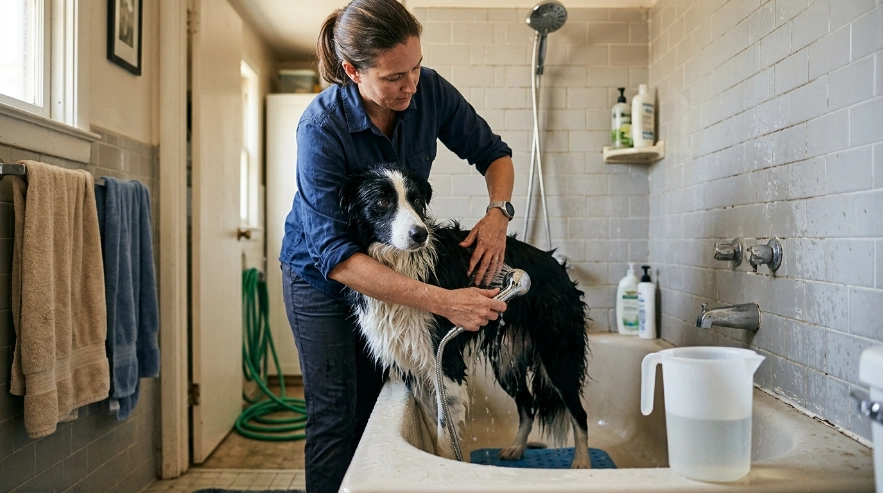
You do not need complicated grooming equipment. You do need enough control to direct water through the coat instead of simply soaking its surface.
The ASPCA’s dog grooming guidance recommends brushing first, using lukewarm water, and controlling the rinse with a spray hose, pitcher, or similar tool.
Set up these basic supplies
- Handheld shower sprayer: The easiest option for reaching the undercoat.
- Large cup or pitcher: Useful when your dog dislikes a sprayer.
- Non-slip bath mat: Helps a Border Collie keep secure footing.
- Dog shampoo: Use a product intended for dogs, following its label.
- Two or three towels: Thick coats hold much more water than they appear to.
- Comb or suitable brush: Use it before bathing to remove loose coat and tangles.
Brush before the bath
Do not ignore this step. Water tightens some tangles and makes a packed undercoat harder to rinse clean.
Pay special attention behind the ears, beneath the collar area, under the legs, and through the rear feathering. These are easy places to miss during a quick brush.
Keep the water comfortably lukewarm
Test the water against your wrist before spraying your dog. It should feel comfortably warm, never hot.
Keep the pressure gentle around sensitive areas. Strong water pressure is unnecessary if you part the coat correctly.
How Do You Rinse a Border Collie’s Thick Coat Step by Step?
The easiest way to rinse a Border Collie thoroughly is to follow the same order every time. Start high on the body and work downward so clean water carries shampoo away.
1. Start at the neck and shoulders
Begin behind the head rather than spraying directly into the face. Hold the nozzle close enough to control the stream without pressing it against the skin.
Use your other hand to open the coat in small sections. Watch the water reach the base of the hair before moving on.
2. Follow the back toward the tail
Move slowly along the spine and upper sides. Do not make one fast pass and assume that the coat underneath is clean.
Run your fingers against the direction of hair growth as you rinse. This exposes the dense layer beneath the guard hairs.
3. Rinse each side separately
Work from the ribs downward toward the belly. Let gravity help carry diluted shampoo away from areas you have already rinsed.
I like to divide each side into three imaginary zones: shoulder, ribs, and rear quarter. That simple pattern makes missed spots easier to notice.
4. Rinse the chest and front legs
The chest can be surprisingly dense, especially on a rough-coated Border Collie. Separate the hair with your fingers and rinse from the upper chest downward.
Lift one front leg at a time to reach the armpit. Keep your movements slow so your dog stays balanced.
5. Clean the belly carefully
Reduce the water pressure for the belly and groin. Many dogs dislike a strong spray in these areas.
Use your hand as a shield if necessary. You can direct water across your fingers and into the coat rather than spraying sensitive skin directly.
6. Give the rear legs and feathering extra time
Shampoo often hides behind the thighs and inside long feathering. Squeeze the coat gently while rinsing so diluted product moves toward the ends.
Do not twist or aggressively wring the hair. A gentle downward squeeze is enough.
7. Rinse the tail from base to tip
Lift the tail only as far as your dog finds comfortable. Separate the hair near the base before moving down its length.
A rough-coated Border Collie’s tail can hold more product than expected. Check it twice before finishing.
8. Handle the head last
Avoid spraying water into the eyes, ears, or nose. For many dogs, a damp washcloth gives you better control around the face.
If shampoo was used around the head according to the product instructions, rinse it carefully with a gentle stream directed away from the eyes and ears.
9. Make one final full-body rinse
After every section feels clean, make a slower final pass from neck to tail. This catches diluted shampoo that may have flowed into lower sections.
For a typical adult Border Collie, I would rather spend another minute checking than finish while the coat still feels slippery. Thick hair makes visual inspection alone unreliable.
Section Takeaway: Rinse in a fixed order and part the coat as you work. Reaching the undercoat matters more than simply spraying more water over the top.
How Can You Tell All the Shampoo Is Out?
Do not judge the rinse only by whether you can see bubbles. A thick coat may hide diluted shampoo after visible foam has disappeared.
VCA’s dog grooming and coat-care guidance specifically recommends thoroughly rinsing shampoo from the coat.
Use three simple checks
- Water check: Runoff should appear clear, without foam or cloudy streaks.
- Touch check: Hair near the skin should not feel slick, slimy, sticky, or coated.
- Section check: Recheck the armpits, chest, belly, rear feathering, and tail base.
Your fingers are especially useful here. Part the coat and rub a small wet section between your fingertips.
If it still feels unusually slippery, rinse that area again. Do not try to solve leftover shampoo by drying the coat harder.
What about medicated shampoo?
Medicated products may require a specific contact time before rinsing. Follow the label and your veterinarian’s directions rather than using the routine-bath method automatically.
Vet note: If your Border Collie uses medicated shampoo for itching, infection, allergies, or another skin condition, ask your veterinarian how long the product should remain on the coat and how it should be rinsed.
Which Rinsing Method Works Best for a Thick Coat?
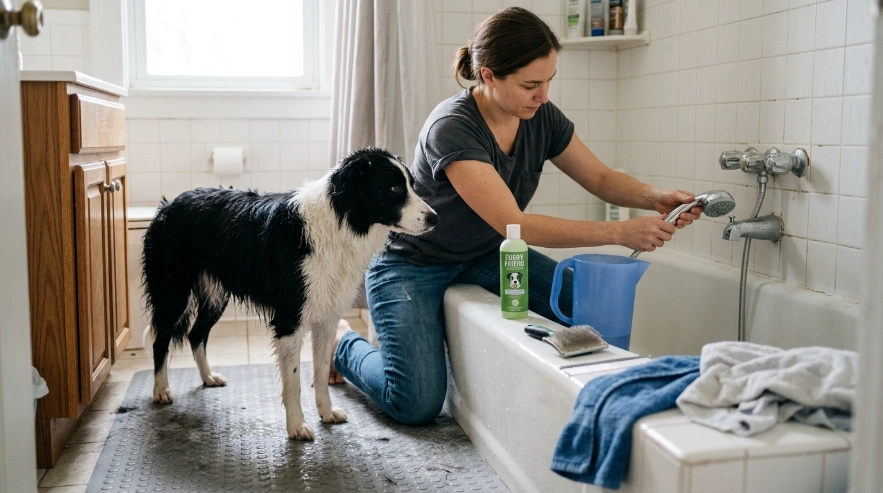
A handheld sprayer is usually the easiest option because you can aim water directly into parted sections. A pitcher still works, but it takes more repetitions.
| Rinsing Method | Control | Undercoat Access | Best Use |
|---|---|---|---|
| Handheld shower sprayer | High | Excellent when coat is parted | Most adult Border Collies |
| Large pitcher or cup | Moderate | Good with repeated pours | Dogs nervous around sprayers |
| Fixed showerhead | Lower | Moderate | Dogs comfortable standing under water |
| Outdoor hose | Varies | Can be good | Only when water temperature and pressure are comfortable |
The tool matters less than your technique. Even a powerful sprayer can leave shampoo behind if you never separate the coat.
As a practical estimate, a smooth-coated Border Collie may rinse faster than a heavily feathered rough coat. Coat density, shedding, shampoo amount, and water flow all change the actual time.
What Border Collie Rinsing Mistakes Should You Avoid?
Most rinsing problems come from rushing or using too much product. More shampoo does not automatically create a cleaner dog.
Avoid these common mistakes
- Rinsing only the surface: Part the coat so water reaches the undercoat.
- Using excessive shampoo: Extra product takes longer to remove from dense hair.
- Missing hidden areas: Recheck armpits, chest, belly, groin, tail base, and leg feathering.
- Using hot water: Keep bath water comfortably lukewarm.
- Using excessive pressure: Strong spray can make bath time stressful without improving the rinse.
- Spraying the face directly: Protect the eyes, ears, nose, and mouth.
- Ending when bubbles disappear: Use touch and clear-water checks too.
Do not ignore packed or matted hair
Severe mats make normal rinsing difficult because water cannot move freely through the coat. They can also keep moisture close to the skin.
Do not aggressively pull tight mats during a bath. For heavy matting or a coat packed against the skin, a professional groomer is often the safer choice.
Do not shave the double coat just to simplify bathing
Border Collies rely on their double coat for normal protection. Routine shaving is not a substitute for brushing and proper coat maintenance.
As of 2026, the practical approach remains simple: maintain the coat, brush out loose hair, bathe when needed, rinse thoroughly, and dry the dense layers afterward.
What Should You Do After Rinsing?
Once the shampoo is gone, remove as much water as possible before your Border Collie leaves the bath. A saturated double coat can stay damp beneath the surface long after the outer hair feels better.
Let excess water drain first
Give your dog a moment to stand while water runs from the coat. Then gently press your hands along the body to move more water toward the ends of the hair.
Avoid aggressive rubbing at this stage. Rough towel action can create tangles in longer feathering.
Use towels by pressing, not scrubbing
Place a towel against the coat and press firmly enough to absorb moisture. Switch to a dry towel once the first becomes saturated.
Pay special attention to the chest, belly, rear legs, and tail. Those areas commonly remain wet longest.
Check the undercoat while drying
Part the hair with your fingers after towel drying. The outer coat may feel nearly dry while the undercoat remains noticeably damp.
Keep your Border Collie somewhere comfortably warm until fully dry. Avoid leaving a freshly bathed dog wet in cold conditions.
Watch the skin afterward
A clean rinse should leave the coat comfortable and free of obvious residue. Persistent scratching, redness, unusual odor, or irritated skin deserves closer attention.
Vet note: Contact your veterinarian if skin irritation continues after bathing, especially when you see redness, sores, hair loss, discharge, or repeated intense scratching.
Frequently Asked Questions
How long does it take to rinse a Border Collie’s thick coat?
There is no fixed rinse time. Coat type, undercoat density, shedding, shampoo amount, and water pressure all matter, so focus on clear runoff and a residue-free feel instead of stopping after a set number of minutes.
Why does my Border Collie still feel slippery after rinsing?
A slippery or coated feeling can mean shampoo remains beneath the outer coat. Part the hair, direct clean lukewarm water toward the skin, and rinse that section until the unusual slick feeling disappears.
Should I rinse a rough-coated Border Collie longer than a smooth-coated one?
Often, yes. Both coat varieties are double coated, but the longer feathering of a rough coat gives shampoo and water more hair to move through, especially around the chest, legs, belly, and tail.
Can I rinse my Border Collie with a garden hose?
You can if the water temperature and pressure are comfortable and the weather is appropriate. A handheld indoor sprayer usually provides better temperature control and makes it easier to reach the undercoat.
Can leftover shampoo make a Border Collie itchy?
Product left in the coat can irritate sensitive skin, so thorough rinsing matters. If itching is persistent, severe, or accompanied by redness, sores, odor, or hair loss, contact your veterinarian rather than assuming shampoo is the only cause.
Should I use conditioner on a Border Collie?
A dog-safe conditioner may be appropriate when the product suits your dog’s coat and skin. Follow the label carefully and rinse out any rinse-out conditioner thoroughly unless the product specifically says it is leave-in.
Do I need to rinse my Border Collie twice?
You do not need two completely separate rinses if the first one is thorough. However, a final full-body pass after section-by-section rinsing is an easy way to catch diluted shampoo that moved into the belly, legs, or feathering.
The main rule is simple: do not stop rinsing just because the outside of your Border Collie looks clean. Part the thick coat, reach the undercoat, check hidden areas, and finish only when the water and coat both feel free of shampoo.
A careful rinse also makes the rest of bath day easier. Once the coat is truly clean, remove excess water, dry the dense undercoat thoroughly, and give your Border Collie a quiet place to settle.