

Quick Answer
If shampoo was left on your Border Collie, rinse the coat again with plenty of lukewarm water. Keep rinsing until the water runs clear and the coat no longer feels slippery, soapy, or unusually sticky; proper rinsing after shampooing helps prevent dryness and flaking.
What to do now
- Rinse again: Use lukewarm water and work it through the outer coat and dense undercoat.
- Check hidden areas: Rinse the neck, chest, belly, armpits, tail base, and back legs carefully.
- Skip more shampoo: You normally need water, not another round of cleanser.
- Dry completely: Towel-dry first, then make sure the undercoat does not stay damp.
- Watch the skin: Look for persistent redness, scratching, licking, swelling, or discomfort.
Get veterinary help promptly if
- Your dog develops facial swelling, hives, repeated vomiting, breathing trouble, collapse, severe skin pain, or another rapidly worsening reaction.
I know that sinking feeling when a freshly bathed Border Collie starts scratching and you suddenly wonder whether you rinsed enough. Their thick coat can look perfectly clean while still holding product close to the skin.
If you’re dealing with shampoo left on a Border Collie, the good news is that prompt rinsing often solves the immediate problem. This guide covers what to do, what symptoms matter, and when a veterinarian should get involved.
In This Guide
- What Should I Do If Shampoo Was Left on My Border Collie?
- How Can I Tell If Shampoo Is Still in My Border Collie’s Coat?
- Why Does a Border Collie’s Double Coat Make Rinsing Harder?
- What Can Happen If Shampoo Dries on a Border Collie?
- Does the Type of Shampoo Change What You Should Do?
- When Should I Call a Vet?
- How Do You Rinse and Dry a Border Collie Properly?
- Frequently Asked Questions
- Final Takeaway
What Should I Do If Shampoo Was Left on My Border Collie?
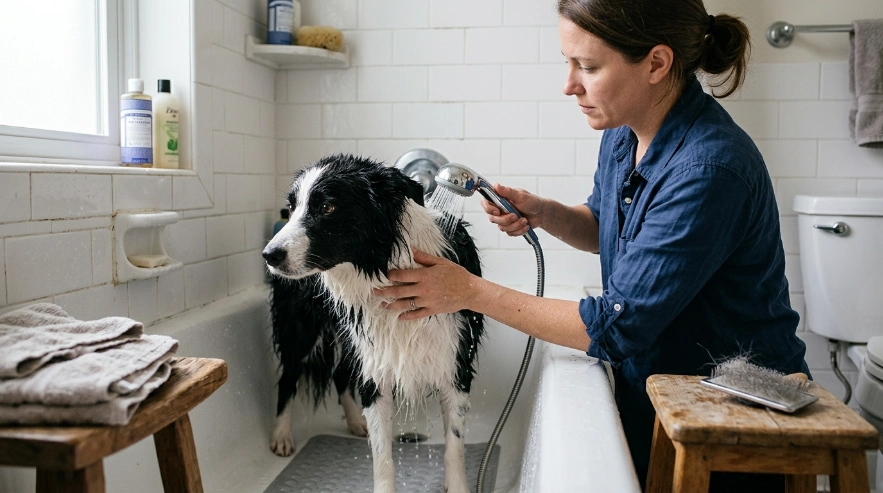
Rinse your Border Collie again as soon as you notice the residue. Plain lukewarm water is usually the first step when ordinary dog shampoo was not rinsed completely.
Don’t add another cleanser to remove the first one. Extra shampoo can make the rinsing job harder.
Use lukewarm running water
Wet the coat down to the skin rather than spraying only across the surface. Use your fingers to gently separate the hair so water reaches the dense undercoat.
I usually rinse in sections instead of moving the sprayer randomly. It makes missed spots much easier to avoid.
- Start behind the ears and around the neck while keeping water out of the ear canals.
- Move across the shoulders and along both sides of the body.
- Rinse the chest, belly, and armpit areas.
- Work through the rear legs, feathering, and tail.
- Run your hands through the coat and check for slippery areas.
Don’t scrub already irritated skin aggressively. Gentle water flow and your fingertips are enough.
Rinse longer than you think you need
There isn’t one correct number of minutes for every Border Collie. Coat density, water pressure, dog size, and the amount of shampoo all change the rinsing time.
Use the coat itself as your guide. Continue until you can’t produce new suds when you squeeze and massage wet sections.
Vet note: If your dog’s skin already looks painful, raw, swollen, blistered, or severely inflamed, contact your veterinarian instead of repeatedly washing the area.
How Can I Tell If Shampoo Is Still in My Border Collie’s Coat?
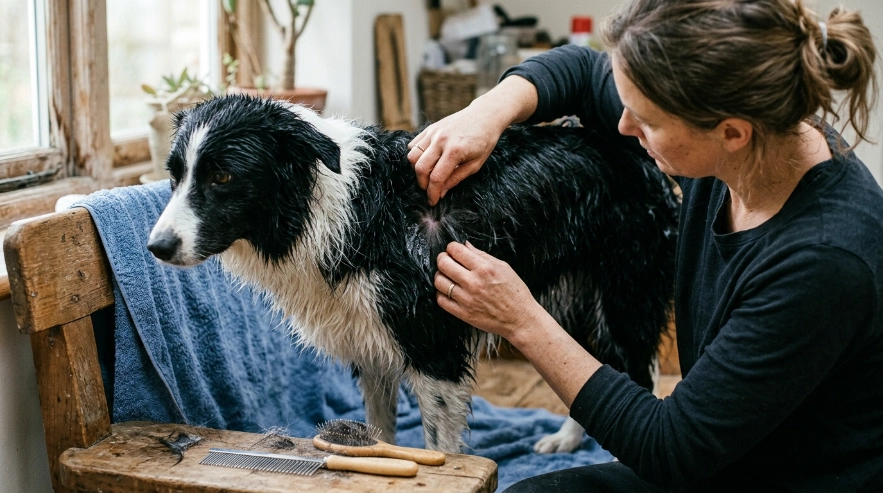
Shampoo residue often changes how the coat or skin feels before you see an obvious problem. Check your Border Collie with your hands as well as your eyes.
Shampoo residue on a Border Collie is cleanser that remains on the hair or skin after the bath instead of being completely washed away. It may be trapped beneath the outer coat where it’s difficult to see.
Signs you may not have rinsed enough
- Slippery coat: Wet hair still feels slick after several passes with clean water.
- New suds: Massaging a wet section creates bubbles or foam.
- Sticky texture: Drying hair feels coated, stiff, tacky, or unusually heavy.
- Flaking: White flakes appear near the skin after the coat dries.
- Fresh scratching: Your dog begins scratching soon after the bath.
- Licking or chewing: Your Border Collie repeatedly focuses on one freshly washed area.
- Redness: Skin looks pinker or more irritated than it did before bathing.
Scratching after a bath doesn’t prove shampoo residue caused it. Allergies, parasites, existing dermatitis, grooming friction, and other skin problems can produce similar signs.
If rinsing doesn’t improve the problem, don’t keep assuming shampoo is the cause. A veterinarian can help identify what is irritating the skin.
Why Does a Border Collie’s Double Coat Make Rinsing Harder?
Border Collies have dense, weather-resistant double coats, which means water has to pass through more than the visible outer hair. The AKC Border Collie breed information describes both rough and smooth varieties as double-coated.
The outer hairs can shed water while the softer undercoat holds moisture and product closer to the skin. That’s useful outdoors but inconvenient at bath time.
Rough and smooth coats both need careful rinsing
A rough-coated Border Collie’s longer feathering makes trapped product easier to imagine. However, a smooth-coated Border Collie can still have a substantial undercoat.
Don’t judge rinsing only by hair length. Your goal is clean skin beneath the coat.
Pay attention to dense and folded areas
I’ve found that the obvious back and sides are rarely the places worth worrying about most. It’s the less visible areas that deserve a second check.
- Behind and below the ears
- Under a collar area
- Chest and neck ruff
- Armpits
- Under the belly
- Inside and behind the rear legs
- Tail base and thick tail feathering
Part the coat with one hand while directing water with the other. That simple habit gets water closer to the skin instead of letting it roll across the surface.
What Can Happen If Shampoo Dries on a Border Collie?
Residual shampoo can contribute to dry, flaky, irritated skin. It may also trigger scratching or licking in a dog that finds the remaining product uncomfortable.
How serious the situation becomes depends partly on the product. A small amount of mild dog shampoo is a different situation from an improperly used medicated or pest-control product.
Mild irritation may appear first
Watch for dryness, flaking, mild redness, scratching, or repeated licking. These signs deserve attention even when your dog otherwise behaves normally.
Scratching can create a second problem if the dog damages its own skin. Broken or inflamed skin should be evaluated if it persists or worsens.
Wet undercoat creates another concern
After rinsing, don’t leave the dense undercoat soaked for hours. Thorough drying matters because prolonged dampness against irritated skin can make skin problems harder to manage.
Blot and squeeze water with towels instead of vigorously rubbing the coat. If you use a dryer, keep the airflow comfortable and avoid concentrating high heat on the skin.
Vet note: Persistent itching, redness, hair loss, odor, discharge, sores, or moist painful patches warrant veterinary advice because shampoo residue may not be the only cause.
Does the Type of Shampoo Change What You Should Do?
Yes. The exact product matters because ordinary dog shampoo, human shampoo, and medicated shampoo aren’t interchangeable.
Check the bottle before deciding what comes next. Keep the packaging available if you need to call your veterinarian.
| Product | Main concern | First response | When to contact a vet |
|---|---|---|---|
| Regular dog shampoo | Residue may dry or irritate skin. | Rinse thoroughly with lukewarm water. | If irritation persists, spreads, or becomes painful. |
| Human shampoo | It isn’t formulated for canine skin and may cause dryness or irritation. | Rinse it out completely and monitor the skin. | If noticeable irritation or other symptoms develop. |
| Medicated shampoo | Required contact and rinsing instructions depend on the active ingredients. | Follow the label or prescribing veterinarian’s directions. | If exposure exceeded directions substantially or your dog reacts. |
What if it was human shampoo?
Rinse it out rather than leaving it on the coat. PetMD’s veterinary guidance on human shampoo explains that human products can alter canine skin pH and contribute to dryness or irritation.
Don’t try to “balance” the mistake with another home product. Clean lukewarm water is the safer immediate approach.
What if it was medicated shampoo?
Read the directions before changing the treatment plan. Some medicated shampoos require a defined skin-contact period before they are thoroughly rinsed.
VCA notes that medicated products may need about 5–10 minutes of contact depending on instructions. Its medicated shampoo bathing guidance also stresses removing residual shampoo afterward.
Vet note: If a prescription or medicated shampoo was left on much longer than directed, call the veterinarian who recommended it and have the product name and active ingredients ready.
When Should I Call a Vet?
Call your veterinarian when symptoms are significant, persistent, or worsening despite rinsing. Seek urgent care for signs suggesting a serious allergic or toxic reaction.
Get prompt veterinary help for these signs
- Facial swelling: Especially swelling around the muzzle, eyelids, lips, or ears.
- Hives: Raised bumps that appear suddenly across the skin.
- Breathing trouble: Labored breathing, wheezing, or obvious respiratory distress requires urgent attention.
- Repeated vomiting: Particularly when it follows exposure to a new grooming product.
- Collapse or weakness: Treat sudden severe changes as an emergency.
- Severe skin reaction: Extensive swelling, raw skin, blistering, intense pain, or rapidly spreading redness needs professional evaluation.
Veterinary-reviewed information on allergic reactions in dogs includes itching, hives, facial swelling, gastrointestinal signs, and respiratory problems among possible symptoms. Severe reactions can become emergencies.
If your dog appears normal after another thorough rinse, you can monitor closely. Check the skin several times over the next day instead of focusing only on the coat’s appearance.
Keep your shampoo bottle available. The product name, ingredients, and directions can help your veterinarian assess an unusual reaction.
Vet note: Don’t give a human antihistamine, cream, pain reliever, or other medication unless your veterinarian specifically tells you what to use and how much.
How Do You Rinse and Dry a Border Collie Properly?
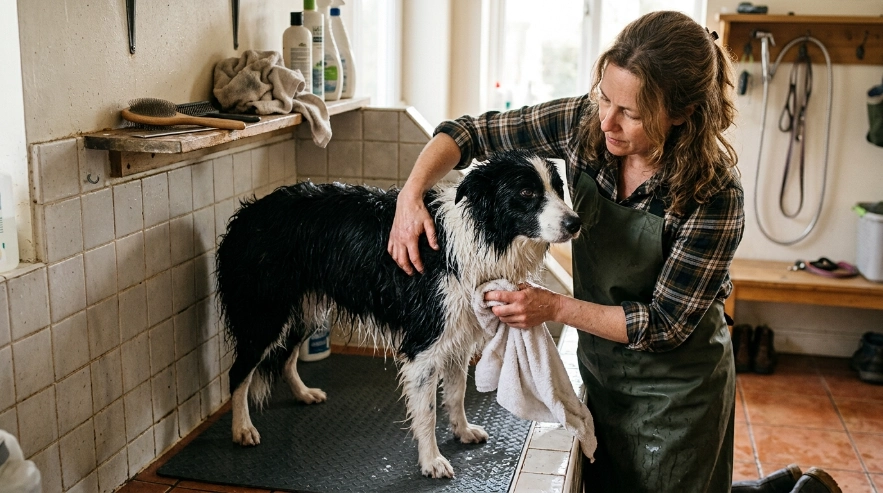
A good Border Collie bath is mostly preparation and rinsing. Using less shampoo and systematically working through the double coat can prevent most leftover-product problems.
Before the bath
Brush out loose undercoat and tangles first. Mats can make it harder for water to move evenly through the coat.
- Use a dog-specific shampoo suited to your dog’s skin and coat.
- Read dilution instructions before getting the dog wet.
- Keep towels within reach.
- Use a non-slip bathing surface.
- Keep water comfortably lukewarm.
During shampooing
Use only enough product to clean the coat. More foam doesn’t necessarily mean a cleaner Border Collie.
Work the shampoo gently down toward the skin without aggressively tangling long feathering. Keep shampoo and rinse water away from the eyes and inside of the ears.
During rinsing
Move from one body section to the next. Part thick hair so the water reaches the undercoat.
A practical final check is to turn the water off and massage several coat sections with wet hands. If new suds appear or an area feels distinctly slick, rinse that section again.
After the bath
Let your Border Collie shake, then squeeze excess water from longer hair with towels. Avoid rough rubbing that twists the hair into tangles.
Make sure the undercoat dries as well as the surface. Brush only when appropriate for the coat’s condition and avoid pulling through wet mats.
My simple residue-prevention routine
My rule is to spend less time producing a huge lather and more time getting clean water through the coat. That shift makes home bathing much easier.
- Brush before bathing.
- Wet the coat completely before adding shampoo.
- Use the amount recommended on the product.
- Rinse systematically from neck to tail.
- Check dense areas with your fingers.
- Do one final clean-water rinse.
- Dry the undercoat thoroughly.
As of 2026, current veterinary and AKC grooming guidance continues to emphasize using suitable dog products and rinsing shampoo thoroughly. That basic habit matters even more with a dense Border Collie coat.
Frequently Asked Questions
Is it bad to leave shampoo on a Border Collie?
Ordinary rinse-out shampoo shouldn’t intentionally remain on the coat. Residue can contribute to dryness, flaking, itching, or irritation, so rinse your Border Collie again with lukewarm water if you suspect shampoo remains.
What should I do if my Border Collie is itching after a bath?
Check for leftover shampoo and rinse the coat thoroughly again. If itching continues, becomes intense, or comes with redness, sores, swelling, hair loss, or other symptoms, contact your veterinarian because another skin problem may be responsible.
Can I just wipe leftover shampoo off with a towel?
A towel may remove surface moisture but won’t reliably remove shampoo trapped in a dense undercoat. Use clean water to rinse the coat down to the skin, then towel-dry afterward.
Should I shampoo my Border Collie again to remove residue?
Usually not when the problem is simply leftover ordinary dog shampoo. More shampoo adds more cleanser that must be removed, so a thorough water-only rinse makes more sense.
How long should I rinse my Border Collie?
There is no universal minute count because coat thickness, water pressure, shampoo amount, and body size vary. Rinse until the coat no longer feels soapy or slick and massaging wet sections doesn’t create fresh suds.
What if shampoo was left on my Border Collie overnight?
Rinse the coat thoroughly once you notice it and inspect the skin. Contact your veterinarian if your dog has persistent redness, significant itching, swelling, painful skin, vomiting, breathing changes, or any rapidly worsening symptom.
Does a smooth-coated Border Collie need as much rinsing?
Yes, a smooth Border Collie still has a double coat even though the outer hair is shorter. Make sure clean water reaches the undercoat rather than assuming the shorter appearance means shampoo can’t become trapped.
Final Takeaway
If shampoo was left on your Border Collie, don’t panic and don’t add more products. Give the coat another careful rinse with lukewarm water, working all the way through the double coat.
Then dry your dog thoroughly and monitor the skin. Mild residue problems may settle after proper rinsing, but persistent irritation deserves veterinary attention.
Pay particular attention to facial swelling, hives, vomiting, breathing problems, severe skin changes, weakness, or collapse. Those aren’t symptoms to manage with another home bath.
The easiest prevention is also the simplest: use an appropriate dog shampoo, use only what you need, and make the rinse the longest part of bath time.