

Quick Answer
A Border Collie can take roughly 1–4 hours or longer to dry naturally after a full bath, depending on coat type, room humidity, airflow, and how much water you remove first. A rough-coated Border Collie usually takes longer because moisture can remain deep in the undercoat even when the surface feels dry. The ASPCA dog grooming guidance recommends drying dogs thoroughly after bathing.
Fastest Safe Drying Routine
- Let them shake: Give your Border Collie a moment to shake off loose water.
- Press with towels: Squeeze and blot the coat instead of rubbing it into tangles.
- Work in sections: Dry the neck, chest, belly, legs, rear, and tail separately.
- Use cool airflow: A dog dryer on a cool or low-heat setting can speed the process.
- Check the undercoat: Part the fur and feel close to the skin before calling the dog dry.
One Important Rule
- Do not use very hot airflow to rush the process. Comfortable, moving airflow is safer than concentrated heat.
Border Collie drying time surprised me the first few times I handled a thoroughly wet double coat. The back can feel almost dry while the chest and undercoat are still holding plenty of moisture.
That hidden dampness matters. This guide explains realistic drying times, faster methods, and how to tell when your Border Collie is truly dry.
In This Guide
- How Long Does a Border Collie Take to Dry?
- Why Does a Border Collie’s Double Coat Dry Slowly?
- What Is the Fastest Safe Way to Dry a Border Collie?
- Can You Let a Border Collie Air-Dry?
- Can You Use a Hair Dryer on a Border Collie?
- How Do You Know When a Border Collie Is Fully Dry?
- What Happens If a Border Collie Stays Damp?
- What Changes Border Collie Drying Time?
- Frequently Asked Questions
How Long Does a Border Collie Take to Dry?
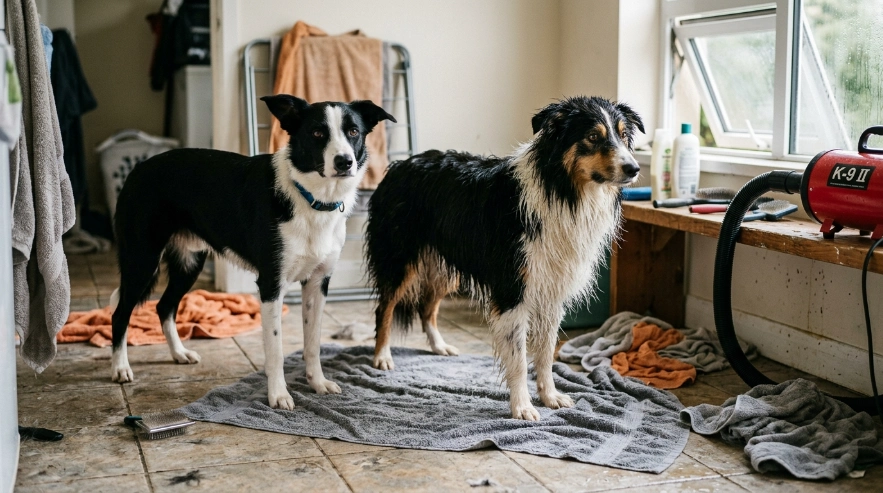
A fully wet Border Collie commonly needs about 1–4 hours or more to air-dry indoors. Rough coats, thick undercoats, cool rooms, and humid weather can push drying toward the longer end.
There is no official veterinary drying-time chart for Border Collies. I treat these figures as practical home-grooming estimates rather than fixed medical standards.
A Border Collie’s drying time is the period from leaving the bath until the coat and undercoat feel dry close to the skin.
| Coat and Method | Practical Estimate | What to Expect |
|---|---|---|
| Smooth coat, well towel-dried | About 1–2 hours | Shorter outer hair releases moisture faster. |
| Rough coat, well towel-dried | About 2–4 hours | Feathering and undercoat hold more water. |
| Dense coat in humid conditions | 4+ hours | Low evaporation slows the final stage. |
| Towel plus suitable dog dryer | Often 20–60 minutes | Coat thickness and dryer airflow matter. |
The biggest mistake is checking only the dog’s back. That area often dries before the chest, belly, armpits, rear legs, and tail base.
Why Does a Border Collie’s Double Coat Dry Slowly?
Border Collies have a double coat consisting of an outer coat and a softer undercoat. The American Kennel Club Border Collie profile identifies both rough and smooth coat varieties.
The undercoat is the part that often tricks owners. Moisture can remain near the skin after the outer hairs look fluffy and almost dry.
Why does the undercoat hold moisture?
Dense undercoat creates many layers of hair around the skin. Water gets trapped between those fibers and needs time or airflow to escape.
- Neck: Thick fur around the collar area can stay damp.
- Chest: Longer hair and feathering often hold extra water.
- Armpits: Limited airflow can slow evaporation.
- Rear legs: Dense feathering can remain wet well after the back dries.
- Tail: Long hair can hold surprising amounts of moisture.
Do rough-coated Border Collies take longer?
Usually, yes. A rough-coated dog normally has more length and feathering to dry than a smooth-coated Border Collie.
That does not mean every smooth coat dries quickly. A short-looking coat can still hide a dense undercoat.
What Is the Fastest Safe Way to Dry a Border Collie?
The fastest practical method combines water removal with steady airflow. I get better results by removing as much water as possible before switching on a dryer.
- Let your dog shake. Step back and allow a natural shake before toweling.
- Use an absorbent towel. Press firmly around the back, sides, chest, and belly.
- Blot the legs and tail. These areas can drip after the body looks only damp.
- Switch towels if necessary. A saturated towel stops absorbing much water.
- Use cool or low-heat airflow. Keep the nozzle moving across the coat.
- Separate thick fur. Use your fingers so airflow can reach deeper layers.
- Check the skin. Stop only when hidden areas no longer feel wet or clammy.
Should you rub the coat with a towel?
I avoid aggressive back-and-forth rubbing. It can twist longer hairs together and make tangles harder to brush later.
Pressing, squeezing, and blotting works better. It removes water while keeping the hair reasonably aligned.
Should you brush while drying?
Gentle brushing can help separate coat layers once the fur is no longer dripping. Never pull hard through wet tangles.
A pin brush, slicker brush, or comb may help depending on your dog’s coat. Stop if the tool catches or causes discomfort.
Can You Let a Border Collie Air-Dry?
Yes, a healthy Border Collie can air-dry in a comfortably warm indoor space. The process works best after thorough towel drying and with good room airflow.
I would not simply release a soaking wet Border Collie into the house. First remove enough water that the coat is damp rather than dripping.
When is air-drying reasonable?
- The room is comfortably warm.
- The dog is healthy and comfortable.
- The coat was thoroughly rinsed.
- Several towels removed most surface water.
- There is steady air movement around the dog.
- You can check the undercoat during drying.
When should you help the coat dry faster?
Cold weather, high humidity, heavy feathering, and an especially dense undercoat can make natural drying slow. A suitable dryer can shorten the damp period.
As of 2026, I still prefer a simple rule: comfort matters more than speed. I would rather use moderate airflow longer than blast the skin with excessive heat.
Can You Use a Hair Dryer on a Border Collie?
You can use controlled airflow, but high heat is unnecessary. A pet dryer with adjustable airflow is usually easier to manage on a double coat.
PetMD’s guidance on introducing dogs to dryers recommends starting slowly and using low settings while the dog becomes comfortable with the sound and airflow.
How should you introduce a dryer?
- Start with the dryer several feet away.
- Use a low setting first.
- Reward calm behavior.
- Move gradually closer over several sessions.
- Keep air away from the eyes and ear canals.
- Stop if your dog becomes highly distressed.
Border Collies often notice tiny environmental changes. A loud dryer appearing suddenly beside the head can be overwhelming.
I start near the shoulder or side instead. Once the dog relaxes, I work around the body in sections.
How hot should the dryer be?
Use cool or comfortably warm airflow rather than strong heat. Keep the air moving instead of holding it against one patch of skin.
Check the temperature with your hand frequently. If the airflow feels uncomfortable against your skin, reduce the heat.
How Do You Know When a Border Collie Is Fully Dry?
A Border Collie is dry when both the visible outer coat and the hair near the skin feel dry. A fluffy surface alone is not enough.
I use my fingertips like a simple moisture check. I part the fur and touch the deeper coat rather than sliding my palm over the top.
Check these areas before you finish
- Behind the ears: Dense fur can hide damp patches.
- Under the collar area: Thick neck hair dries slowly.
- Armpits: These sheltered areas get little natural airflow.
- Chest: Rough coats often carry heavy feathering here.
- Belly: Hair may remain cool and damp underneath.
- Rear legs: Check through the feathering.
- Tail base: Dense hair can hold moisture near the skin.
Wet hair tends to feel cooler, heavier, and more clumped together. Dry hair separates more easily and feels lighter near the roots.
What Happens If a Border Collie Stays Damp?
A little remaining moisture is not automatically an emergency. Problems become more likely when dense areas stay damp for extended periods and the skin becomes irritated.
VCA’s dog grooming and coat-care guidance emphasizes thoroughly rinsing shampoo and taking appropriate care of thick coats during bathing.
Watch for these post-bath problems
- Musty odor: Persistent dampness can create an unpleasant smell.
- Tangles: Wet feathering can twist and tighten as it dries.
- Itching: Moisture or shampoo residue may irritate sensitive skin.
- Redness: Inflamed skin deserves closer attention.
- Moist sores: Painful, wet skin lesions need veterinary assessment.
The ASPCA notes that thick-coated and long-haired dogs can be more prone to hot spots. Swimming, rain exposure, matting, and poor grooming can contribute.
Vet note: Contact your veterinarian if you find persistent redness, strong odor, sores, hair loss, discharge, or significant itching beneath the coat.
Why does shampoo residue matter?
A wet-looking coat is not always wet from water alone. Shampoo left close to the skin can leave the hair slippery or sticky.
Rinse until the water runs clean and the fur no longer feels coated. With a Border Collie, I usually check the chest and rear legs twice.
What Changes Border Collie Drying Time?
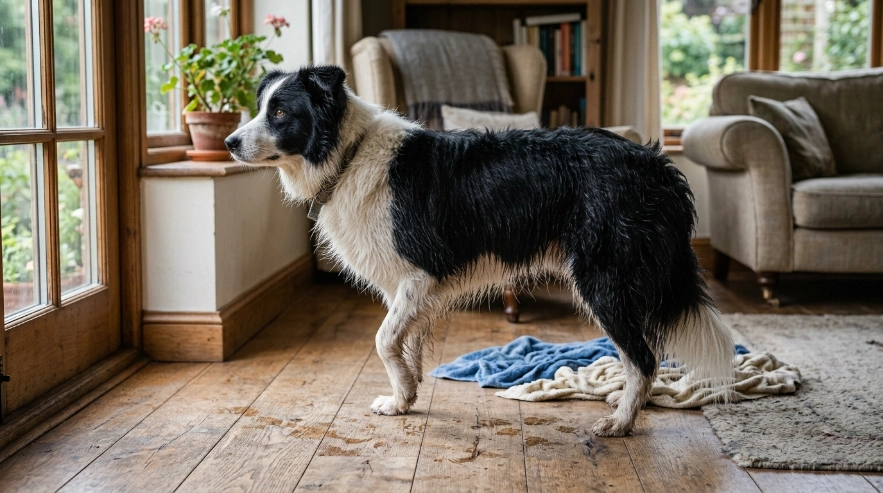
Coat type is important, but it is only one factor. Drying time can change considerably from one bath to another.
| Factor | Likely Effect | What Helps |
|---|---|---|
| Rough coat | Usually slower | Dry feathering in sections. |
| Smooth coat | Often faster | Still check the undercoat. |
| Heavy seasonal undercoat | Slower | Brush loose coat before bathing. |
| High humidity | Slower evaporation | Improve indoor airflow. |
| Several dry towels | Faster | Replace towels as they saturate. |
| Controlled pet dryer | Much faster | Use moving, moderate airflow. |
Do puppies dry differently?
Puppies may have less coat than mature adults, but they can become uncomfortable more quickly. Keep the room warm and make the drying session calm.
Short sessions also help a puppy learn that grooming is normal. That training pays off when the adult coat becomes denser.
What about older Border Collies?
Senior dogs may dislike standing through a long grooming session. Use supportive footing and let them change position when needed.
Vet note: A senior dog that shivers, seems weak, has painful skin, or cannot regulate body temperature normally should be discussed with your veterinarian.
Frequently Asked Questions
How long should I towel-dry my Border Collie?
Towel-dry until the coat stops dripping and feels only damp. This often takes several minutes and may require two or more towels for a rough-coated adult.
Can my Border Collie sleep while still damp?
I prefer to get the coat dry near the skin before bedtime, especially around the chest, armpits, belly, and tail. Thick damp fur pressed against bedding gets less airflow and can stay wet longer.
Why does my Border Collie still feel wet after an hour?
The undercoat may still contain moisture even when the outer coat looks dry. High humidity, heavy feathering, insufficient towel drying, or limited airflow can also extend drying time.
Is a rough-coated Border Collie harder to dry than a smooth coat?
Usually. Rough-coated Border Collies have longer hair and more feathering to dry, although both varieties can have substantial undercoat. Always check down to the skin rather than judging by hair length alone.
Can I use a human hair dryer on my Border Collie?
A human dryer can produce concentrated heat, so use extreme care if that is your only option. Choose the coolest practical setting, keep it moving, maintain distance, and stop if the dog becomes uncomfortable.
Should I brush my Border Collie before or after drying?
Brush before bathing to remove loose hair and tangles. After the coat is mostly dry, gentle brushing can separate the hair and help you find damp sections or hidden knots.
Why does my Border Collie smell after drying?
A lingering odor may mean part of the undercoat is still damp, shampoo was not fully rinsed, or a skin or ear problem is present. Persistent odor with itching or redness deserves veterinary attention.
The main takeaway: Border Collie drying time is less about watching the clock and more about checking the entire double coat. A dog may need roughly 1–4 hours or longer to air-dry, while careful toweling and controlled airflow can shorten the process considerably.
Always finish by parting the coat and checking the skin. If the chest, armpits, belly, rear legs, and tail base are dry and comfortable, your Border Collie is ready to get back to being a Border Collie.