

Quick Answer
Yes, you can sometimes bathe a Border Collie with a skin infection, and medicated bathing may even be part of treatment. However, the safest approach depends on what caused the infection, so have persistent, painful, spreading, or oozing skin problems evaluated by a veterinarian and review reliable guidance on skin infections in dogs before attempting repeated home treatment.
What to do before bath time
- Check the skin: Look for redness, bumps, crusts, moist areas, discharge, hair loss, odor, or bleeding.
- Ask about shampoo: Use a medicated product only when it matches the condition your veterinarian suspects or diagnoses.
- Avoid human shampoo: Choose products formulated for canine skin rather than household or human cleansers.
- Rinse completely: Shampoo residue can irritate already-sensitive skin.
- Dry the undercoat: A Border Collie’s dense double coat can hold moisture close to irritated skin.
- Watch for worsening: Pain, spreading lesions, fever, lethargy, appetite loss, or extensive skin involvement needs prompt veterinary attention.
Simple rule
- If you do not know what is causing the skin problem, avoid repeatedly experimenting with shampoos and arrange a veterinary examination.
Seeing red, itchy skin under a Border Collie’s thick coat can make bath time confusing. You may wonder whether washing will soothe the problem or make the irritation worse.
I approach an active skin problem differently from an ordinary muddy-dog bath. In this guide, I’ll show you when bathing may help, when to stop, how to wash safely, and why thorough drying matters so much for this double-coated breed.
In This Guide
- Can you bathe a Border Collie with a skin infection?
- What does a Border Collie skin infection look like?
- When should you avoid bathing your Border Collie?
- How do you safely bathe a Border Collie with infected skin?
- What shampoo should you use for a skin infection?
- How often should you bathe a dog with a skin infection?
- Why is drying a Border Collie so important?
- When does a skin infection need veterinary care?
- Frequently asked questions
- Final takeaway
Can You Bathe a Border Collie With a Skin Infection?
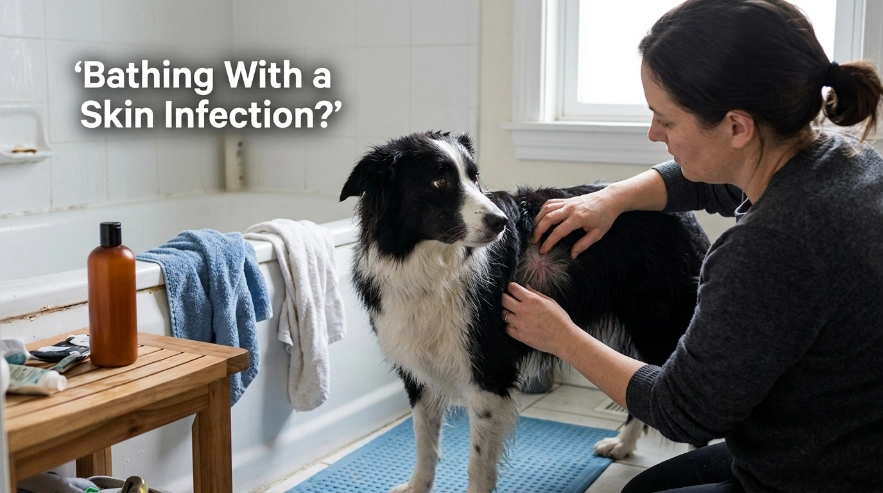
Yes, but the bath needs a purpose. A properly chosen medicated shampoo can help some bacterial or yeast skin problems, while unnecessary bathing can irritate other skin conditions.
A skin infection is an overgrowth or invasion of organisms such as bacteria, fungi, or parasites that damages or inflames the skin. Infection can also develop secondarily after allergies, scratching, moisture, or another condition weakens the skin barrier.
The important distinction is between a routine grooming bath and a therapeutic bath. Routine shampoo is designed mainly to clean the coat, while medicated bathing is part of a treatment plan.
| Situation | Should You Bathe? | Best Approach |
|---|---|---|
| Healthy but dirty coat | Usually yes | Use a mild dog shampoo and dry completely. |
| Mild unexplained redness or itching | Use caution | Avoid repeated shampoo experiments and monitor closely. |
| Vet-diagnosed superficial bacterial infection | Often yes | Follow the prescribed medicated-bath schedule. |
| Yeast overgrowth | Often yes | Use an appropriate antifungal or combination product as directed. |
| Painful, deep, bleeding, or spreading lesions | Get veterinary advice first | The dog may need diagnosis and treatment beyond shampoo. |
Vet note: Skin infections can have several causes that look similar at home. A veterinarian can determine whether bathing is appropriate for your dog’s specific condition.
What Does a Border Collie Skin Infection Look Like?
Common warning signs include persistent itching, red skin, bumps, crusts, scaling, hair loss, unpleasant odor, or discharge. The infection may affect a small area or spread across several parts of the body.
A Border Collie’s coat can hide early changes. Part the fur with your fingers and inspect the actual skin rather than judging the coat’s surface.
Signs worth checking during grooming
- Red patches: Inflamed skin may appear pink, bright red, or darker than the surrounding area.
- Pimples or bumps: Small raised lesions can occur with bacterial skin disease.
- Crusts and flakes: Scaling or crust formation may develop as irritated skin changes.
- Hair loss: Repeated licking, chewing, scratching, or inflammation can thin the coat.
- Greasy skin or odor: Changes in smell or oiliness can accompany some bacterial or yeast problems.
- Moist or oozing areas: Wet, painful lesions need more caution than simple dry skin.
Don’t assume every itchy Border Collie has an infection. Fleas, allergies, mites, contact irritation, and other skin disorders can cause overlapping symptoms.
The ASPCA dog-care resources also emphasize regular grooming and monitoring as part of maintaining healthy skin and coat.
Vet note: Persistent itching or visible lesions deserve veterinary assessment because treating the wrong cause can delay recovery.
When Should You Avoid Bathing Your Border Collie?
Hold off on a casual bath when the skin is painful, bleeding, extensively raw, or rapidly worsening. In those situations, cleaning the coat is less important than identifying the problem.
You should also avoid repeatedly bathing an undiagnosed condition with different products. Excessive wetting and unsuitable cleansers can aggravate some skin disorders.
Contact your veterinarian before bathing if you notice:
- Large areas of inflamed or broken skin
- Deep sores or obvious severe pain
- Pus, significant discharge, or persistent bleeding
- Rapidly spreading lesions
- Severe scratching that damages the skin
- Fever, unusual tiredness, or reduced appetite
- A skin problem that keeps returning after treatment
If your veterinarian wants to examine the lesions soon, ask whether you should bathe first. Recent bathing can sometimes alter the skin’s appearance or remove material that may help with diagnosis.
The Merck Veterinary Manual’s guidance on diagnosing canine skin disorders notes that bathing history is useful information during a dermatologic evaluation.
Vet note: A bath is supportive care, not a substitute for diagnosing deep, recurring, painful, or widespread skin disease.
How Do You Safely Bathe a Border Collie With Infected Skin?
If your veterinarian has approved bathing, keep the process controlled and gentle. The goal is to get the treatment onto the skin without creating extra friction, residue, or trapped moisture.
1. Brush only if brushing is comfortable
Remove loose surface hair before the bath when you can do so without scraping inflamed areas. Never force a brush through painful crusts, sores, or tightly matted fur attached to irritated skin.
2. Use lukewarm water
Use comfortably lukewarm water rather than hot water. High heat can make already-sensitive skin feel more irritated.
3. Wet the double coat completely
A Border Collie’s outer coat can slow water penetration. Work gradually until water reaches the undercoat and skin in the areas that need treatment.
4. Apply the recommended shampoo gently
Massage with your fingertips instead of scratching with your nails. Keep the product away from the eyes, inside the ears, mouth, and other sensitive membranes unless your veterinarian says otherwise.
5. Respect the contact time
Medicated shampoo often needs time against the skin before rinsing. Some veterinary protocols use roughly 10 minutes, but the correct time is the one provided for your specific product and condition.
Guidance from VCA Animal Hospitals advises allowing medicated shampoo to remain on the coat for the veterinarian-recommended period before rinsing thoroughly.
6. Rinse extremely well
Work through the thick coat until no lather remains. Check the chest, belly, armpits, inner legs, and under the tail where residue can hide.
7. Dry the coat completely
Press with absorbent towels instead of aggressively rubbing inflamed skin. If your dog tolerates a dryer, use cool or low airflow and keep it moving.
Vet note: Follow your veterinarian’s instructions over any general bathing routine, especially when prescription or medicated products are involved.
What Shampoo Should You Use for a Skin Infection?
There isn’t one shampoo that treats every skin infection. The right active ingredients depend on whether the underlying problem involves bacteria, yeast, another organism, allergies, or something else.
Veterinarians may recommend products containing antiseptic or antifungal ingredients for certain diagnosed conditions. Chlorhexidine is one commonly used topical antiseptic in canine dermatology.
Common shampoo categories
- Antibacterial shampoo: May be used for certain superficial bacterial infections.
- Antifungal shampoo: May be appropriate for yeast or fungal overgrowth.
- Combination shampoo: Some formulas target both bacterial and fungal organisms.
- Soothing shampoo: Mild products can support irritated skin when infection isn’t the primary problem.
- Prescription product: More complicated cases may require a specific veterinary treatment plan.
For diagnosed pyoderma, the Merck Veterinary Manual describes medicated bathing as an important part of treatment in appropriate cases. The recommended schedule and product depend on infection depth and severity.
Avoid reaching for your own shampoo because it says “gentle.” Products formulated for people aren’t automatically appropriate for canine skin, especially when the skin barrier is already inflamed.
Vet note: Never start medicated shampoo simply because the label says antibacterial or antifungal. Matching treatment to the underlying condition matters.
How Often Should You Bathe a Dog With a Skin Infection?
Bathing frequency during an active infection can be much higher than routine grooming frequency. That doesn’t mean you should automatically increase baths without a diagnosis.
For some cases of superficial pyoderma, veterinary references describe medicated bathing several times weekly early in treatment. Other skin disorders need a different schedule.
Think in terms of treatment versus maintenance
- Active treatment: Follow the exact frequency recommended by your veterinarian.
- Recheck stage: Frequency may change as lesions improve.
- Routine grooming: Return to a normal coat-care schedule once your veterinarian considers the infection resolved.
- Recurring infection: Investigate the underlying cause instead of simply adding more baths.
More bathing isn’t automatically better. The useful dose of topical treatment depends on the diagnosis, shampoo formulation, contact time, and how well the coat is rinsed and dried.
As of 2026, veterinary guidance continues to emphasize treating underlying triggers when infections repeatedly return. Allergies, parasites, chronic irritation, and other medical problems can contribute to recurrence.
Vet note: If the skin isn’t improving on the expected schedule, contact your veterinarian rather than increasing shampoo frequency yourself.
Why Is Drying a Border Collie So Important
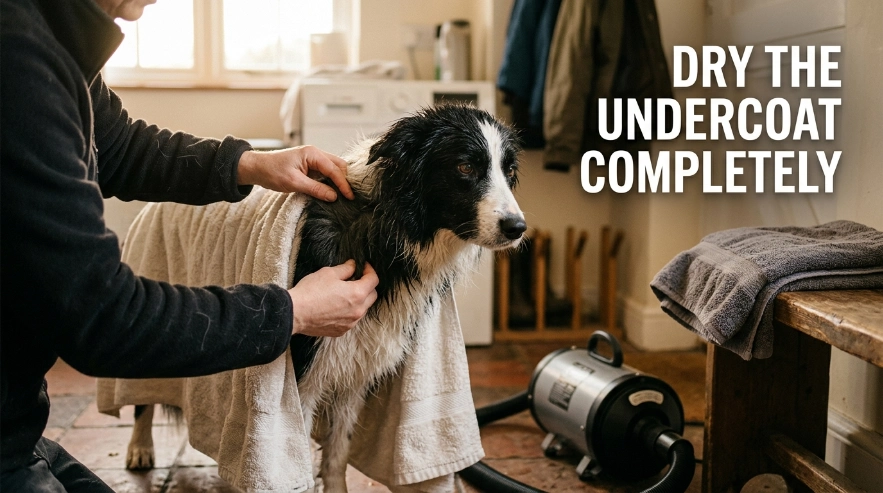
Border Collies usually carry a double coat consisting of an outer layer and a softer insulating undercoat. That structure can hold surprising amounts of water close to the skin.
Leaving the undercoat damp is especially unhelpful when the skin is already irritated. Your goal is dry skin without overheating or rubbing sore areas.
A safer drying routine
- Press with towels: Blot and squeeze sections of coat rather than rubbing vigorously.
- Change wet towels: A fresh dry towel removes more water than continuing with a saturated one.
- Separate thick fur: Gently part the coat so you can check whether the undercoat remains wet.
- Use low airflow: Keep a dryer moving and avoid concentrated heat on irritated skin.
- Check hidden areas: Pay attention behind the ears, under the legs, belly, chest, and tail area.
A dog can feel dry across the back while remaining damp underneath. I recommend checking with your fingers at skin level before considering the drying job finished.
If drying appears painful, or your Border Collie won’t tolerate handling around a lesion, stop rather than forcing the process.
When Does a Skin Infection Need Veterinary Care?
A veterinarian should evaluate a suspected infection when symptoms persist, spread, cause significant discomfort, or return repeatedly. Skin problems that look similar can require completely different treatments.
Veterinary diagnosis may involve examining the skin closely and collecting samples when necessary. The goal is to identify the cause instead of treating redness or itching blindly.
Seek prompt veterinary help for:
- Severe or rapidly worsening itching
- Bleeding caused by scratching or chewing
- Large areas of affected skin
- Painful swelling or deep lesions
- Pus or substantial discharge
- Strong odor with widespread inflammation
- Fever or marked lethargy
- Reduced appetite
- Repeated infections after previous treatment
Dog skin infections may involve bacteria, fungi, or parasites, and treatment can include topical or systemic medications. That’s why a shampoo that helped one dog may be wrong for another.
Don’t give leftover antibiotics, human creams, or another pet’s prescription medication. Those choices can complicate diagnosis and may be unsafe.
Vet note: Seek veterinary attention urgently when skin symptoms occur alongside significant illness, severe pain, or rapidly spreading lesions.
Frequently Asked Questions
Can bathing make a Border Collie’s skin infection worse?
Yes, it can in some situations. Excessive bathing, unsuitable shampoo, incomplete rinsing, or leaving the dense undercoat damp may increase irritation, so use a veterinarian-approved bathing plan when an active infection is present.
Can I bathe my Border Collie if the skin is red and itchy?
A mild bath may sometimes be appropriate, but redness and itching don’t prove an infection is present. Allergies, parasites, and irritation can look similar, so persistent symptoms should be evaluated before you repeatedly shampoo the dog.
Can I use human shampoo on an infected Border Collie?
It’s better to use a shampoo formulated for dogs. When infection is suspected, ask your veterinarian whether a medicated, hypoallergenic, or other canine product best matches the condition.
Should I use chlorhexidine shampoo on my Border Collie?
Chlorhexidine is commonly used in veterinary topical products for certain bacterial skin conditions. However, the appropriate concentration, frequency, and contact time depend on the product and diagnosis, so follow veterinary directions.
How long should medicated shampoo stay on a dog’s skin?
Contact time varies by product. Some veterinary medicated-shampoo protocols use around 10 minutes, while others differ, so read the label and follow your veterinarian’s specific instructions rather than assuming one universal timing rule.
Can I let my Border Collie air-dry after a medicated bath?
With an irritated double-coated dog, I prefer making sure the undercoat dries thoroughly rather than leaving it wet for a long period. Use towels and cool or low airflow if tolerated, while avoiding friction and excessive heat.
Why does my Border Collie’s skin infection keep coming back?
Recurring infections may develop when an underlying trigger remains uncontrolled. Allergies, parasites, chronic skin irritation, and other medical conditions can contribute, so repeated infections deserve veterinary investigation rather than endless shampoo changes.
Final Takeaway
You can bathe a Border Collie with a skin infection when bathing matches the dog’s diagnosis and treatment plan. Medicated baths can be useful, but random shampoos and excessive washing aren’t a substitute for veterinary care.
Focus on the basics: identify concerning symptoms, use the correct canine product, follow the specified contact time, rinse thoroughly, and dry the double coat to skin level. If the infection is painful, spreading, recurring, or affecting your dog’s overall health, contact your veterinarian before the next bath.