
Bathing for an Itchy Border Collie: A Safe, Soothing Guide

Quick Answer
Bathing an itchy Border Collie can help remove pollen, dirt, loose hair, and other irritants while soothing mildly irritated skin. Use a gentle dog-specific shampoo, rinse the dense double coat completely, and remember that persistent itching can signal allergies, parasites, or infection that need veterinary evaluation for an itchy dog.
Safe Bathing Basics
- Check the skin first: Look for redness, sores, fleas, scabs, odor, or moist areas before getting the coat wet.
- Use dog shampoo: Choose a mild, fragrance-free, hypoallergenic, oatmeal, or vet-recommended formula.
- Keep water lukewarm: Hot water may make already sensitive skin feel more uncomfortable.
- Rinse thoroughly: Shampoo trapped inside a Border Collie’s thick undercoat may worsen irritation.
- Dry completely: Gently dry the undercoat instead of leaving damp areas pressed against irritated skin.
When to stop home care
- Call your veterinarian if scratching is intense, skin is broken, hair is disappearing, there is a strong odor, or bathing does not improve the problem.
If you’re considering bathing for an itchy Border Collie, the goal isn’t simply getting your dog cleaner. You want to remove possible irritants without making sensitive skin drier or more inflamed.
That takes a little extra care with this breed. The Border Collie’s dense double coat can hide redness, moisture, parasites, and irritated patches until you separate the fur and look closely.
In This Guide
- Should You Bathe an Itchy Border Collie?
- Why Is My Border Collie So Itchy?
- What Shampoo Should You Use for an Itchy Border Collie?
- How Do You Bathe an Itchy Border Collie Safely?
- How Often Should You Bathe an Itchy Border Collie?
- What Should You Do After the Bath?
- When Does Itchy Skin Need Veterinary Care?
- Frequently Asked Questions
- The Bottom Line
Should You Bathe an Itchy Border Collie?
Yes, a bath can help a mildly itchy Border Collie when dirt, pollen, dust, loose hair, or another surface irritant is involved. Bathing is less useful when the real problem is an untreated infection, parasite, or significant allergy.
A soothing bath for an itchy Border Collie is supportive skin care, not a diagnosis or cure. That distinction matters because scratching is a symptom with many possible causes.
As of 2026, veterinary guidance still emphasizes identifying the underlying reason for persistent itching rather than repeatedly washing the dog and hoping the problem disappears.
Why Border Collie coats need special attention
Border Collies have a double coat. A softer undercoat sits beneath longer protective outer hairs.
That coat helps protect an active herding dog outdoors, but it can also make skin inspection difficult. You may need to part the hair in several places to see what is happening underneath.
- Check the belly: Look for pinkness, bumps, or irritation.
- Inspect the paws: Repeated licking can accompany allergies or irritation.
- Look behind the ears: Dense hair can hide inflamed skin.
- Check the tail base: Flea-related irritation commonly deserves attention here.
- Examine the armpits and groin: These thinner-haired areas can reveal redness more easily.
I always prefer checking the skin before turning on the water. Once a thick Border Collie coat becomes wet, small irritated areas can become harder to identify.
Vet note: A bath may soothe minor itching, but ongoing or severe scratching deserves veterinary evaluation.
Why Is My Border Collie So Itchy?
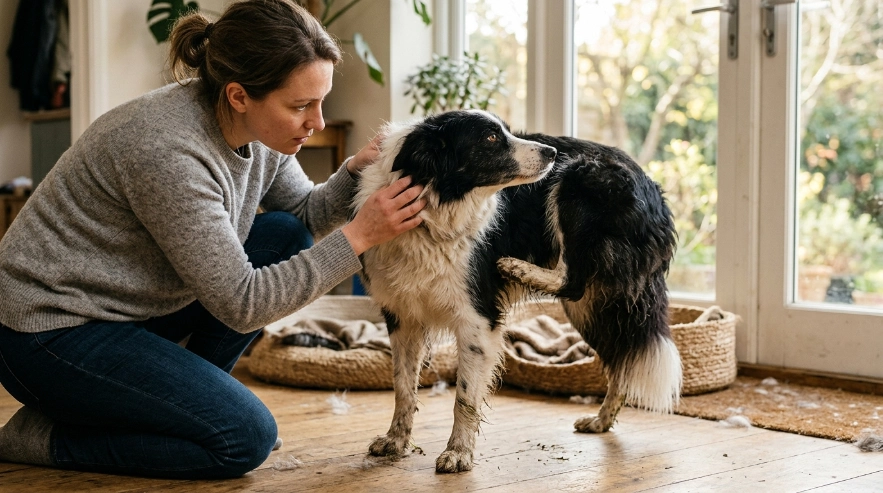
An itchy Border Collie may be reacting to allergens, parasites, infection, dry skin, grooming products, or environmental irritants. The location and severity of the itching can offer useful clues.
The medical term for itching is pruritus. It describes the uncomfortable sensation that makes a dog scratch, lick, bite, chew, or rub the skin.
Common reasons for itching
- Environmental allergens: Grass, pollen, dust, and other substances may irritate sensitive dogs.
- Fleas or mites: Parasites can cause intense itching even when you don’t immediately see them.
- Skin infection: Bacterial or yeast problems may cause redness, odor, greasy skin, or discomfort.
- Contact irritation: Shampoo, household cleaners, plants, or grooming sprays may bother the skin.
- Dry skin: Weather, excessive bathing, or unsuitable grooming products can contribute to dryness.
- Food-related problems: Some dogs with adverse food reactions develop persistent skin symptoms.
Look at where your dog scratches
Paw licking and irritation around the face, belly, or ears can occur with allergies. Scratching near the rear or tail base should make you consider fleas among the possibilities.
A single wet, painful, or rapidly worsening patch may be more consistent with a hot spot or another skin problem that should not be scrubbed aggressively.
Before bathing, use your fingers to separate the coat every few inches. Look for flakes, dark debris, scabs, redness, moisture, or unusual odor.
Vet note: Skin appearance alone cannot reliably identify every cause of itching. A veterinarian may need to check for parasites, infection, or allergy-related disease.
What Shampoo Should You Use for an Itchy Border Collie?
Choose a shampoo formulated specifically for dogs and matched to your Border Collie’s skin problem. Mild, fragrance-free products are a sensible starting point for uncomplicated sensitive skin.
The American Kennel Club’s dog shampoo guidance also emphasizes selecting canine products appropriate for a dog’s coat and skin needs.
Bath products compared
| Bath option | May suit | Main caution |
|---|---|---|
| Gentle hypoallergenic dog shampoo | Sensitive skin or routine cleansing | Check ingredients if your dog has known sensitivities |
| Colloidal oatmeal dog shampoo | Mild dryness or itching | It won’t treat every underlying cause |
| Medicated shampoo | Specific diagnosed skin conditions | Use the correct active ingredient and directions |
| Strongly scented shampoo | Usually unnecessary for itchy skin | Fragrance may bother sensitive skin |
| Human shampoo | Not my choice for routine dog bathing | Formulation may irritate or dry canine skin |
What about oatmeal?
Dog-formulated colloidal oatmeal products can help soothe some cases of mild dry or irritated skin. PetMD’s veterinary guide to oatmeal baths for itchy dogs discusses oatmeal as supportive care for minor irritation.
Don’t assume “natural” automatically means safer. Essential oils, fragrances, homemade mixtures, and concentrated ingredients can still cause problems.
When medicated shampoo makes sense
Your veterinarian may recommend antiseptic, antifungal, antibacterial, or other medicated shampoo when a specific skin condition is suspected or diagnosed.
Follow the label or your veterinarian’s instructions carefully. If a medicated product requires several minutes of skin contact, use a timer rather than guessing.
Vet note: Don’t choose prescription-strength or strongly medicated products simply because the itching looks severe. The correct treatment depends on the cause.
How Do You Bathe an Itchy Border Collie Safely?
A safe bath should remove irritants while minimizing friction and product residue. Preparation matters more with a Border Collie because water and shampoo must penetrate a thick coat.
Step 1: Inspect and brush the dry coat
Brush gently before bathing unless the skin is too painful. Removing loose undercoat, debris, and small tangles lets water reach the skin more evenly.
Don’t aggressively brush red, raw, or broken areas.
Step 2: Prepare everything first
- Dog-specific shampoo
- Several absorbent towels
- Non-slip bath mat
- Handheld sprayer or cup
- Brush or wide-tooth grooming tool
- High-value treats if your dog needs reassurance
A prepared bath is calmer. It also prevents you from leaving a wet dog unattended while searching for supplies.
Step 3: Wet the coat with lukewarm water
Use water that feels comfortably lukewarm against your wrist. Wet the body gradually instead of blasting sensitive skin with a strong spray.
Keep water and shampoo away from the eyes and inside the ear canals.
Step 4: Apply shampoo gently
Work the product through the coat using your fingertips. Don’t scratch irritated skin with your nails.
Pay attention to areas that collect environmental allergens, including the paws, legs, underside, and chest.
Step 5: Follow contact-time directions
Routine shampoos may rinse quickly, while some medicated products need longer contact. Follow the exact instructions printed on the product or provided by your veterinarian.
More time isn’t automatically better.
Step 6: Rinse longer than you think
This is one of the most important steps for a double-coated breed. Keep rinsing until the water runs clean and you can’t feel slippery product near the skin.
Check the chest, armpits, belly, rear legs, and under the tail carefully. Shampoo residue can remain hidden in these areas.
Step 7: Blot instead of rubbing
Press towels into the coat to pull out water. Vigorous rubbing can tangle the coat and create friction against already irritated skin.
The ASPCA dog-care resources include grooming and general care guidance that can help owners maintain healthy skin and coats.
How Often Should You Bathe an Itchy Border Collie?
There is no single correct bathing schedule for every itchy Border Collie. Frequency should depend on the cause of the itch, the product being used, and your veterinarian’s treatment plan when a medical problem exists.
For an otherwise healthy Border Collie, frequent shampooing usually isn’t necessary just because the dog has a dense coat. Regular brushing often handles routine loose hair and dry dirt between baths.
When an extra bath may be useful
- After heavy pollen exposure: A rinse or suitable bath may remove allergens from the coat.
- After muddy outdoor activity: Cleaning prevents dried debris from staying against the skin.
- When a veterinarian prescribes bathing: Some skin treatment plans require a specific bathing schedule.
- When the coat contains an irritant: Prompt washing may be appropriate after exposure to a known safe-to-rinse contaminant.
Signs you may be bathing too aggressively
- Increasing flakes
- Dull or unusually dry coat
- More scratching after baths
- Redness following shampoo use
- Skin that appears tight or irritated
If itching consistently gets worse after bathing, stop using the current product. The shampoo itself, incomplete rinsing, water temperature, or frequent washing may be contributing.
Vet note: If your dog is using medicated shampoo, follow the prescribed schedule instead of applying a general grooming timetable.
What Should You Do After the Bath?
Drying and monitoring matter almost as much as washing. A Border Collie’s undercoat can remain damp even when the outer hair feels nearly dry.
Dry the coat carefully
Start with absorbent towels and gently squeeze water from the coat. Avoid vigorous rubbing over irritated areas.
If your dog tolerates a dryer, use a cool or low-warm setting and keep the airflow moving. Avoid concentrating heat on one patch of skin.
Check the skin again
Part the coat after drying and compare the skin with what you saw before the bath. Mild surface dirt should be gone, but inflammation or sores may remain obvious.
Watch your dog for the next several hours.
- Improving: Less scratching and a calmer dog are encouraging signs.
- Unchanged: Persistent itching suggests the trigger may not simply be surface debris.
- Worse: Increased redness, licking, scratching, or swelling deserves attention.
Keep brushes and bedding clean
A freshly bathed dog can quickly pick up irritants from dirty bedding or grooming tools. Wash bedding as appropriate and remove accumulated hair from brushes.
This is particularly useful during high-pollen periods or when your Border Collie spends substantial time outdoors.
When Does Itchy Skin Need Veterinary Care?
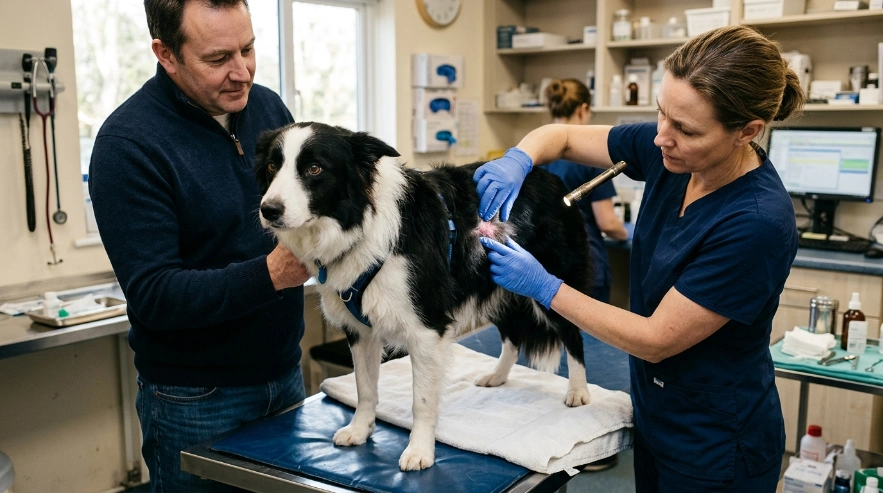
Contact your veterinarian when itching is intense, persistent, recurring, or accompanied by visible skin changes. Bathing should not delay treatment when your Border Collie is uncomfortable or damaging the skin.
Book a veterinary appointment for these signs
- Open sores or bleeding
- Hair loss
- Strong or unusual skin odor
- Moist, painful patches
- Pustules, crusts, or extensive scabs
- Repeated ear problems
- Constant paw chewing
- Severe scratching that interrupts sleep
- Itching that repeatedly returns after bathing
Veterinarians may investigate several possibilities rather than treating every itchy dog the same way. Parasites, allergies, bacterial infection, yeast, and other skin disorders can create similar outward symptoms.
When is it an emergency?
Sudden facial swelling, difficulty breathing, collapse, or rapidly developing severe allergic signs require urgent veterinary attention. Don’t rely on a bath for symptoms like these.
A dog that has contacted a potentially toxic substance also needs situation-specific advice. Some chemicals require special decontamination procedures.
I treat repeated scratching as information rather than a grooming nuisance. If the dog keeps telling me something feels wrong, I want to find the reason instead of simply adding another bath.
Vet note: Your veterinarian can examine the skin, look for parasites or infection, and choose treatment based on the actual cause of the itching.
Frequently Asked Questions
Can I bathe my Border Collie when they are itchy?
Yes, if the skin is only mildly irritated and your dog is otherwise comfortable. Use lukewarm water and a gentle dog-specific shampoo. Avoid scrubbing sore areas, and contact your veterinarian when itching is severe, persistent, or associated with wounds, odor, hair loss, or significant redness.
What is the best bath for an itchy Border Collie?
A gentle dog-specific bath is usually the safest starting point. Fragrance-free or hypoallergenic shampoos can suit sensitive dogs, while colloidal oatmeal may help mild dryness. A veterinarian may recommend medicated shampoo when allergies, yeast, bacteria, or another medical skin problem is involved.
Can I use human shampoo on my itchy Border Collie?
I wouldn’t use human shampoo as a routine solution for an itchy Border Collie. Human and canine skin have different needs, and unsuitable cleansers can leave a dog’s skin dry or irritated. Choose a product specifically formulated and labeled for dogs instead.
Does oatmeal shampoo help Border Collie itching?
Dog-formulated colloidal oatmeal shampoo may soothe mild dry or irritated skin and support the skin barrier. It won’t cure every cause of itching. If scratching continues, becomes intense, or is accompanied by sores or infection signs, your Border Collie needs veterinary evaluation.
Should I brush my Border Collie before an itch-relief bath?
Usually, yes. Gentle brushing removes loose undercoat and debris so water and shampoo can reach the skin more evenly. Skip aggressive brushing over painful, broken, moist, or intensely inflamed skin, because friction can make those areas more uncomfortable.
Why is my Border Collie still itchy after a bath?
The cause may be allergies, fleas or other parasites, infection, dry skin, shampoo sensitivity, or another medical issue. Shampoo residue can also cause irritation when a dense double coat isn’t rinsed thoroughly. Persistent post-bath itching is a good reason to call your veterinarian.
Can I bathe my itchy Border Collie every week?
Weekly bathing may be appropriate in some veterinary skin-care plans, but it isn’t automatically right for every dog. Product type and the cause of itching matter. If frequent bathing wasn’t prescribed, ask your veterinarian before turning weekly shampooing into a long-term routine.
The Bottom Line
Bathing for an itchy Border Collie works best when you treat the bath as gentle supportive care. Use a dog-specific shampoo, lukewarm water, minimal friction, complete rinsing, and careful drying through the undercoat.
Most importantly, pay attention to what happens afterward. A cleaner dog that keeps scratching is telling you the problem may be deeper than dirt or pollen.
Check the skin closely, track where your Border Collie scratches, and involve your veterinarian when symptoms persist. The goal isn’t more baths—it’s comfortable, healthy skin beneath that beautiful double coat.
