
Bathe Border Collie After Flea Medicine: How Long Should You Wait?

Quick Answer
You can bathe a Border Collie after flea medicine, but the safe waiting time depends on the exact product. Some topical treatments require only a few hours, while others recommend waiting 48 hours or several days. Always follow the package directions and the AVMA guidance on safely using flea and tick preventives rather than relying on one rule for every medication.
What to do after applying flea medicine
- Check the label: Look specifically for bathing, swimming, shampooing, and water-exposure instructions.
- Topical treatment: Keep your Border Collie dry for the entire waiting period stated for that product.
- Oral treatment: Bathing usually cannot wash an oral medicine off the coat, but follow your veterinarian’s directions.
- Accidental soaking: Call your veterinarian before applying another dose because repeating treatment too soon can be unsafe.
- After waiting: Use lukewarm water, dog shampoo, thorough rinsing, and careful drying through the dense undercoat.
Safest default
- If you cannot identify the medication or find its bathing instructions, postpone the bath and ask your veterinarian.
If you’re wondering when to bathe a Border Collie after flea medicine, you’re right to check before turning on the shower. Water and shampoo can affect some topical flea treatments if they contact the coat too soon.
I’ve also learned that Border Collies add another challenge. Their dense double coat takes time to wet and dry, so a rushed bath can create problems beyond flea-control timing.
In This Guide
- How Long After Flea Medicine Can You Bathe a Border Collie?
- Why Can Bathing Too Soon Affect Flea Medicine?
- Does the Waiting Time Change by Flea Medicine Type?
- What If Your Border Collie Gets Wet Too Soon?
- How Should You Bathe Your Border Collie After the Waiting Period?
- Does a Border Collie’s Double Coat Change Anything?
- When Should You Call Your Veterinarian?
- Frequently Asked Questions
- The Bottom Line
How Long After Flea Medicine Can You Bathe a Border Collie?
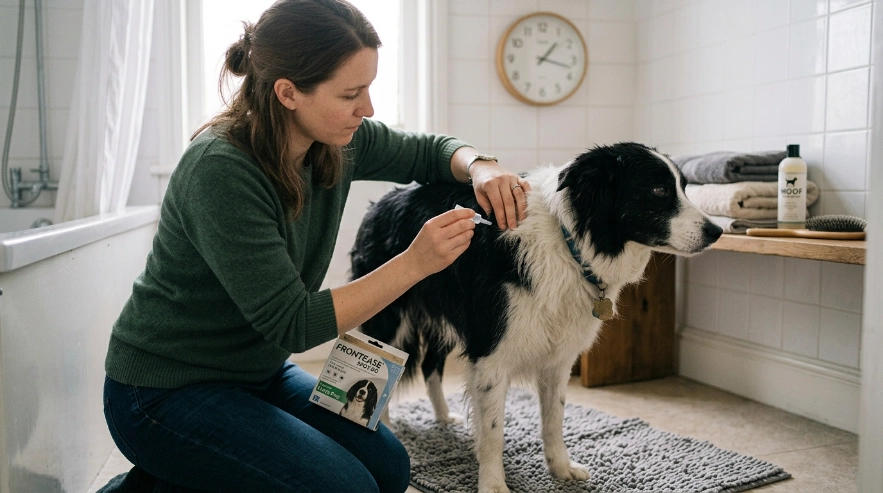
There is no single waiting period that applies to every flea medicine. The correct answer comes from the specific medication’s label or your veterinarian’s instructions.
For topical flea medicine, waiting matters because the medication is placed on or near the skin. Water or shampoo introduced too early may interfere with certain formulations.
Common waiting periods you may see
Some topical products permit bathing after only a few hours. Others ask owners to keep the dog dry for 48 hours or several days.
- Selamectin: Veterinary drug guidance states that dogs should not be bathed within two hours of application.
- Fipronil: Some formulations advise avoiding shampoo bathing within 48 hours after application.
- Topical fluralaner: Veterinary guidance recommends waiting at least three days before bathing.
- Other spot-on products: Directions can differ, so don’t assume another medication follows the same schedule.
- Oral flea medication: Because the medicine is swallowed rather than spread through the coat, ordinary bathing does not wash the dose from the skin.
I keep the box or take a photo of the label whenever I apply a topical product. It prevents the familiar problem of remembering the treatment but forgetting its exact bathing instructions.
Vet note: Medication formulations and label directions can change. Follow the directions for the exact product and dose your veterinarian recommended.
Why Can Bathing Too Soon Affect Flea Medicine?
A topical flea treatment is a medication applied directly to a dog’s skin or coat. Depending on the active ingredient, it may need time to dry, distribute through skin oils, or remain on the surface where it can work properly.
Bathing too early may remove or disturb some products before this process is complete.
Water and shampoo are not the same thing
A quick splash and a full shampoo bath create different levels of exposure. Shampoo is particularly important because cleansing ingredients remove oils, dirt, and residue from skin and hair.
- Bathing: Fully wets the skin and usually includes a cleansing product.
- Swimming: Can soak the coat for an extended period.
- Heavy rain: May penetrate a Border Collie’s outer coat during a long walk.
- Light moisture: A few drops usually create less exposure, but the medication label still controls.
PetMD notes that topical flea products may become less effective when a dog is bathed, swims, or becomes wet too soon after application. That is why I treat the recommended dry period as part of giving the medicine correctly.
This doesn’t mean a bath automatically ruins every dose. It means you shouldn’t guess whether protection remains adequate afterward.
Vet note: Never automatically repeat a topical flea dose because your dog became wet. Ask your veterinarian whether another dose is necessary.
Does the Waiting Time Change by Flea Medicine Type?
Yes. Flea preventives use different active ingredients and delivery methods, so their bathing instructions can differ significantly.
As of 2026, this product-specific approach remains the safest way to decide when your Border Collie can get wet.
| Medicine example | Type | Example bathing guidance | Best owner action |
|---|---|---|---|
| Selamectin | Topical | Avoid bathing dogs within 2 hours | Follow the exact product label |
| Fipronil | Topical | Some guidance says no shampoo bath within 48 hours | Keep the dog dry during the stated period |
| Fluralaner | Topical | Wait at least 3 days in published veterinary guidance | Confirm the formulation before bathing |
| Oral preventives | Tablet or chew | Bathing does not physically wash an swallowed dose from the coat | Still follow veterinary instructions |
Why the label beats a general rule
For example, the published topical fluralaner guidance from VCA advises waiting at least three days before bathing. That clearly differs from medications with much shorter dry periods.
Likewise, VCA’s fipronil medication guidance includes a 48-hour shampoo restriction for applicable forms.
Don’t transfer the directions from last month’s flea medicine to a new brand. Similar-looking applicators can contain different medications.
Section Takeaway: The safest bathing schedule comes from the exact flea product, not from your Border Collie’s breed or a universal number of hours.
What If Your Border Collie Gets Wet Too Soon?
Don’t panic if your Border Collie runs through rain or jumps into water shortly after treatment. First, identify how wet the dog became and which medication you used.
Then check the product instructions before doing anything else.
Use this simple checklist
- Find the package: Confirm the brand, active ingredient, dose, and application time.
- Estimate the exposure: Note whether your dog had a full bath, went swimming, or only encountered light rain.
- Do not re-dose: Avoid applying another tube unless your veterinarian or the manufacturer specifically tells you to.
- Call if uncertain: Your veterinary clinic can tell you whether the exposure may have affected that product.
- Watch for fleas: Continue normal flea checks without assuming every visible flea means immediate treatment failure.
The biggest mistake I try to avoid is turning uncertainty into a second dose. More flea medication is not automatically better.
Seeing fleas shortly after treatment also doesn’t always mean the medication failed. Fleas can continue emerging from the dog’s environment after the animal itself has been treated.
PetMD’s guide to controlling fleas on dogs also emphasizes treating the broader infestation rather than relying on bathing alone.
Vet note: Contact your veterinarian promptly if you accidentally apply too much flea medication or notice unusual symptoms after treatment.
How Should You Bathe Your Border Collie After the Waiting Period?
Once the medication’s required waiting period has passed, you can return to a normal Border Collie bathing routine. Keep the process gentle and make complete drying a priority.
Step-by-step bathing routine
- Brush first: Remove loose undercoat, dirt, and manageable tangles before getting the coat wet.
- Use lukewarm water: Hot water isn’t necessary and may bother irritated skin.
- Wet to the skin: Separate the outer coat with your fingers so water reaches the undercoat.
- Use dog shampoo: Choose a canine product appropriate for your dog’s skin and coat.
- Massage gently: Work with your fingertips instead of scratching with your nails.
- Rinse completely: Keep rinsing until the coat no longer feels slippery.
- Towel-blot: Press moisture from the coat instead of aggressively rubbing it.
- Dry the undercoat: Use towels and comfortable airflow until hidden damp areas are gone.
The VCA bathing guidance for pets also recommends pet-specific shampoos and thorough rinsing. Those two details matter even more with a thick Border Collie coat.
If your Border Collie has flea-related itching, don’t scrub harder. Irritated skin needs gentler handling, not extra friction.
Does a Border Collie’s Double Coat Change Anything?
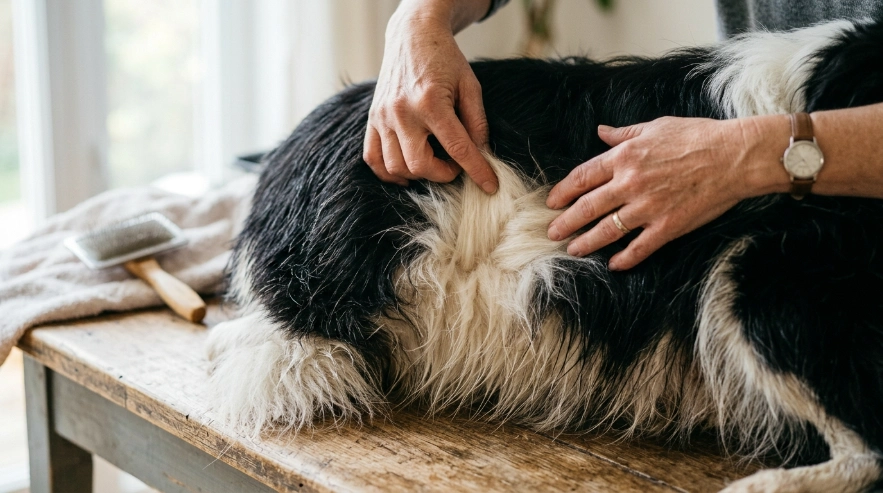
The double coat doesn’t determine how long the flea medicine needs before bathing. It does change how carefully you should wash and dry your dog afterward.
A Border Collie’s coat contains a softer undercoat beneath protective outer hair. Water can reach that undercoat slowly and remain there long after the surface looks dry.
Why I pay extra attention to drying
- Hidden moisture: The outer hair may feel dry while the undercoat remains damp.
- Product residue: Shampoo can stay near the skin if the coat isn’t rinsed section by section.
- Skin inspection: Flea dirt, redness, scabs, and irritation can hide beneath dense hair.
- Tangles: Rough towel drying can tighten knots in feathering around the legs, tail, and chest.
I like to part the coat with my fingers after towel drying. I check the shoulders, chest, belly, tail base, armpits, and rear legs before deciding the dog is dry.
This check is useful after a flea problem because the tail base and rear body can show obvious scratching or irritation.
Section Takeaway: The Border Collie’s double coat doesn’t change medication instructions, but it makes thorough rinsing, skin checking, and drying especially important.
When Should You Call Your Veterinarian?
Call your veterinarian whenever the medication instructions are unclear, your dog became soaked too early, or you’re considering applying another flea dose. Veterinary advice is especially important when skin symptoms are present.
Get veterinary guidance for these situations
- Severe or nonstop scratching
- Open sores or bleeding
- Hair loss around irritated areas
- Red, swollen, painful, or hot skin
- Strong skin odor
- Repeated flea infestations despite correct preventive use
- Vomiting, tremors, weakness, poor coordination, or other unusual signs after medication
- Accidental use of the wrong flea product
- Possible overdose or repeated application
Flea shampoos can kill fleas present during bathing, but they don’t necessarily provide the same lasting protection as a veterinary preventive. VCA’s flea-control guidance also stresses following product directions carefully and choosing treatments with veterinary help.
Vet note: A bath should never delay veterinary attention when your Border Collie develops significant skin irritation or unusual symptoms after flea treatment.
Frequently Asked Questions
Can I bathe my Border Collie 24 hours after flea treatment?
Maybe, but 24 hours is not safe for every product. Some topical medications allow bathing sooner, while others require 48 hours or several days. Read the label for your exact flea medicine before bathing.
Can I bathe my Border Collie 48 hours after flea medicine?
Forty-eight hours is enough for some flea treatments but not all of them. Topical fluralaner guidance, for example, recommends waiting three days. The product-specific instructions should always override a general 48-hour rule.
Can my Border Collie swim after flea treatment?
Swimming counts as significant water exposure. Keep your dog out of ponds, pools, lakes, and other water until the medication’s specified dry period has passed, particularly after applying a topical treatment.
What happens if I accidentally bathe my dog too soon?
Bathing too soon may reduce the effectiveness of some topical flea medicines. Don’t automatically apply another dose. Find the product label and contact your veterinarian or the manufacturer for instructions specific to that medication.
Does flea medicine wash off with shampoo?
Some topical products can be affected by shampooing, especially when bathing occurs too soon after application. Other treatments are more water-resistant once enough time has passed. Check the exact label rather than assuming every topical works the same way.
Can I bathe my Border Collie after oral flea medicine?
Bathing generally cannot wash away an oral flea medication because the dog swallowed the dose rather than carrying it on the skin. However, follow your veterinarian’s directions if your dog uses several parasite-control products at once.
Should I use flea shampoo after giving flea medicine?
Don’t automatically combine flea-control products. A flea shampoo may contain active ingredients of its own, so ask your veterinarian whether it is appropriate alongside your Border Collie’s current preventive.
The Bottom Line
If you need to bathe a Border Collie after flea medicine, start with the medication label. The correct waiting period can range from a few hours to several days depending on the treatment.
Keep topical treatments dry for the full required period. If your dog becomes soaked early, don’t repeat the dose without professional guidance.
- Know the medication: Keep the box or photograph the label.
- Follow its timing: Don’t rely on a universal 24- or 48-hour rule.
- Prevent accidental soaking: Skip swimming and unnecessary baths during the waiting period.
- Bathe gently afterward: Use dog shampoo, rinse thoroughly, and dry the double coat completely.
- Ask when unsure: Your veterinarian can tell you whether accidental water exposure requires any action.
With the right timing, flea prevention and regular grooming can work together without creating unnecessary problems. A few minutes spent checking the label is much safer than guessing when your Border Collie is ready for the next bath.
