

Quick Answer
To prevent matting in a Border Collie after a bath, start with a completely tangle-free coat, rinse thoroughly, towel-blot instead of rubbing, and dry the coat while gently separating the hair. Finish by brushing and combing all the way through the undercoat, following the same principle recommended in professional dog coat-care guidance.
Quick After-Bath Routine
- Brush first: Remove existing knots before the coat gets wet.
- Rinse completely: Shampoo residue can leave the coat sticky and harder to separate.
- Blot gently: Press towels into the coat instead of scrubbing in circles.
- Dry in sections: Separate the coat as you dry rather than letting the undercoat clump together.
- Comb to skin: Check behind the ears, armpits, chest, tail, and rear feathering.
- Check again later: Feel through the coat once it’s completely dry for hidden tangles.
One Rule That Matters Most
- Never leave a thick Border Collie coat damp and tangled after bathing.
Border Collies can look wonderfully fluffy after a bath, but that dense coat can also hide small tangles. I’ve found that what happens during drying matters almost as much as the bath itself.
This guide explains how I prevent matting after washing a Border Collie, including drying, brushing, tools, trouble spots, and coat-type differences.
In This Guide
- Why Does a Border Collie Mat After a Bath?
- How Do You Prevent Matting Immediately After a Bath?
- How Should You Dry a Border Collie Without Causing Tangles?
- How Should You Brush a Border Collie After Bathing?
- Where Do Mats Form Most Often?
- Do Rough and Smooth Border Collies Need Different Care?
- What Should You Do If a Mat Has Already Formed?
- Frequently Asked Questions
- Final Takeaway
Why Does a Border Collie Mat After a Bath?
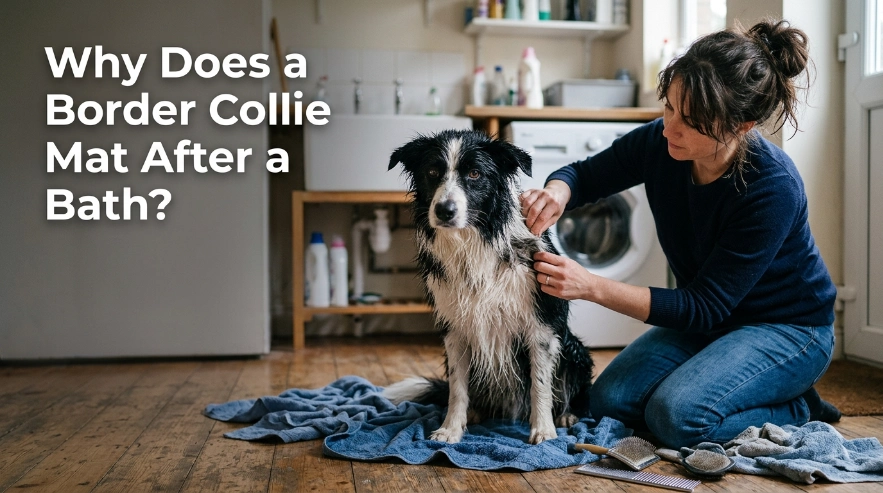
A Border Collie can mat after bathing when loose undercoat, small tangles, moisture, and friction cause neighboring hairs to bind together. Existing tangles are especially likely to tighten once they become wet.
Definition: A Border Collie mat is a compacted mass of tangled hair that no longer separates freely with normal brushing or combing.
Border Collies commonly have a double coat. This means they have a softer, dense undercoat beneath more protective outer guard hairs.
The American Kennel Club’s Border Collie information describes both rough and smooth varieties as having dense, weather-resistant double coats. That density is useful outdoors, but it requires regular grooming.
Water isn’t the only problem
A clean wet coat doesn’t automatically become matted. Trouble usually starts when water combines with loose coat, pre-existing tangles, rubbing, or incomplete drying.
- Loose undercoat: Shed hairs can become trapped between healthy hairs.
- Small knots: Water can make an unnoticed tangle harder to separate later.
- Towel friction: Vigorous rubbing twists longer coat sections together.
- Dampness: A thick undercoat may remain wet after the surface feels dry.
- Movement: Running, rolling, scratching, and wearing a harness can compress damp hair.
This is why my mat-prevention routine starts before I turn on the water. I want my fingers and comb to pass through the coat first.
How Do You Prevent Matting Immediately After a Bath?
The most reliable approach is to treat bathing, drying, and brushing as one grooming session. Don’t finish the job while the undercoat is still damp or clumped.
The ASPCA’s dog grooming guidance also recommends brushing away dead hair and mats before bathing.
My seven-step mat-prevention routine
- Brush before bathing. Work through the whole coat and remove loose undercoat.
- Check with a comb. Pay special attention behind the ears, under the legs, chest, belly, and tail.
- Wet the coat thoroughly. Separate dense sections with your fingers so water reaches through the coat.
- Use dog-specific shampoo. Work it through gently rather than aggressively scrubbing the hair in circles.
- Rinse until the coat feels clean. Pay attention to thick areas where product can remain trapped.
- Blot away water. Squeeze and press with towels rather than rubbing vigorously.
- Dry and brush in sections. Continue until the undercoat is dry and a comb moves freely through it.
I also keep bath-day exercise calm until the coat is dry. A wet dog racing through grass and then collapsing on a rug can undo careful grooming surprisingly fast.
Don’t skip the pre-bath inspection
Run your fingers through the coat before brushing. Your hands often find compacted spots that a quick surface brushing misses.
Then use your grooming tools to reach beyond the outer coat. A fluffy surface can hide a knot close to the skin.
How Should You Dry a Border Collie Without Causing Tangles?
Dry a Border Collie by removing water without creating unnecessary friction, then separating the coat as drying continues. The goal is a dry, loose undercoat rather than a dry-looking surface.
Start by blotting, not scrubbing
After rinsing, I gently squeeze excess water from longer coat sections. I then press an absorbent towel against the body.
Avoid rubbing the towel back and forth through feathering. That twisting motion can create fresh tangles around the chest, legs, belly, and tail.
Separate the coat while drying
If you use a pet dryer, use comfortable airflow and keep the nozzle moving. Use your free hand to separate the coat so you can see whether the undercoat remains damp.
Some Border Collies are nervous around dryers. Introduce the sound gradually and never force a frightened dog to tolerate intense airflow.
- Work in sections: Shoulder, side, chest, legs, rear, and tail.
- Watch the skin: Stop if you notice redness or obvious discomfort.
- Check temperature: Avoid hot air against the dog’s skin.
- Recheck thickness: The rump and neck may stay wet longer than expected.
What if you only air-dry?
Air-drying can work, but it deserves more supervision with a thick double coat. Periodically separate and gently comb the coat instead of leaving it compressed against itself.
Keep your dog somewhere warm and clean during drying. Avoid sending a damp Border Collie outside to roll, wrestle, or lie in debris.
How Should You Brush a Border Collie After Bathing?
Brush once the coat is mostly dry, then finish with a comb check when it is fully dry. Work in manageable sections so you’re grooming the undercoat rather than only smoothing the surface.
As of 2026, AKC coat-care guidance continues to recommend regular brushing for medium double-coated breeds such as Border Collies. Routine grooming removes loose fur and helps stop small tangles becoming mats.
Useful tools for the job
- Pin brush: Useful for routine brushing and longer rough-coat areas.
- Slicker brush: Helpful for loose coat and light tangles when used gently.
- Metal comb: Excellent for checking whether you’ve reached through the coat.
- Undercoat tool: Can help during heavy seasonal shedding when appropriately sized and used carefully.
- Dog-safe detangling product: May add slip when the label says it’s suitable for your dog’s coat and skin.
Use line brushing for dense areas
Line brushing means separating a small layer of hair so you can brush the coat beneath it. Then you move to the next small section.
This method is helpful on dense feathering because it exposes hidden undercoat. Don’t repeatedly scrape the skin with a slicker or undercoat tool.
Finish with a comb test
I consider the section finished when a suitable comb moves through without repeatedly catching. Never force the comb through resistance.
If the comb stops, return to that small section and gently separate the tangle. Start at the ends and gradually work closer to the skin.
Where Do Mats Form Most Often?
Mats usually develop where long hair, pressure, and movement repeatedly meet. Border Collies with fuller rough coats need particularly careful checks in these friction zones.
| Area | Why It Tangles | After-Bath Check |
|---|---|---|
| Behind ears | Fine hair plus scratching and movement | Finger-check and gently comb each side |
| Armpits | Leg motion creates repeated friction | Lift each front leg and separate the hair |
| Chest and neck | Thick coat plus collar or harness pressure | Dry thoroughly before replacing gear |
| Rear feathering | Longer hair can stay damp and compress | Brush in small layers from ends upward |
| Tail | Dense feathering easily hides knots | Support the tail and comb gently |
| Belly and groin | Soft hair experiences movement and moisture | Inspect carefully without pulling sensitive skin |
Behind the ears is the place I check first. A tiny knot there can hide under perfectly tidy-looking outer hair.
Harness areas deserve attention too. I wait until the coat underneath is dry before leaving a harness on for an extended period.
Do Rough and Smooth Border Collies Need Different Care?
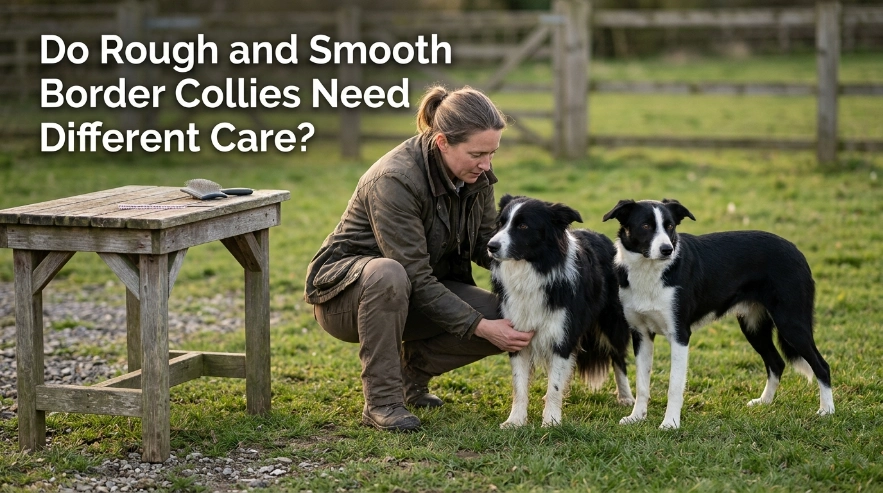
Yes, although both coat varieties still need routine grooming. Rough-coated Border Collies usually require more careful after-bath detangling because they carry more obvious feathering and longer outer hair.
Smooth-coated dogs may be less prone to dramatic feathering tangles. Their dense undercoat can still retain loose hair and moisture.
| Grooming Point | Rough Coat | Smooth Coat |
|---|---|---|
| Coat structure | Double coat with longer, more noticeable furnishings | Double coat with shorter outer hair |
| Mat risk after bathing | Higher in feathered and friction-prone areas | Usually lower, but compacted undercoat remains possible |
| Areas needing extra attention | Ears, chest, armpits, legs, tail, rump | Neck, shoulders, rump, shedding undercoat |
| Final check | Brush plus careful comb-through | Brush and hand-check for loose undercoat |
Shedding season changes the routine
During seasonal coat loss, loose undercoat can accumulate quickly. That’s when I spend extra time brushing before the bath instead of hoping shampoo will loosen everything safely.
Regular brushing is especially important for this breed. AKC guidance notes that Border Collies may need more frequent grooming during shedding periods.
What Should You Do If a Mat Has Already Formed?
A small, loose tangle may be gently worked apart, but a tight mat close to the skin needs much more caution. Don’t keep pulling simply because the coat is freshly washed.
Handle small tangles slowly
- Let the coat dry enough to handle comfortably.
- Hold the hair above the tangle to reduce pulling on the skin.
- Use your fingers to separate the outer edges.
- Work from the hair ends toward the base.
- Stop if the dog shows pain or the skin is being pulled.
Don’t cut a tight mat away with household scissors. Dog skin can become pulled into or hidden inside a mat.
The Merck Veterinary Manual’s routine dog-care guidance warns that matted hair can irritate skin and advises against using scissors to remove mats because of injury risk.
When should a groomer handle the mat?
Ask a professional groomer for help when a mat is tight, extensive, painful, or sitting directly against the skin. Professional removal is usually safer than repeatedly tugging at a sensitive area.
You should also stop home detangling if your Border Collie becomes distressed. Grooming shouldn’t become a wrestling match.
When is it a veterinary issue?
Check the skin under and around any mat you can safely inspect. Redness, sores, moisture, odor, discharge, persistent scratching, or pain deserve professional attention.
Vet note: If matting is associated with irritated skin, wounds, persistent itching, hair loss, or suspected infection, contact your veterinarian rather than treating the skin problem yourself.
Veterinary and welfare guidance also emphasizes that abnormal skin changes deserve investigation. The ASPCA advises veterinary evaluation when dogs develop concerning abnormalities of the skin or coat.
Frequently Asked Questions
Should I brush my Border Collie while the coat is wet?
A soaking-wet coat is harder to evaluate and can be easier to pull. I first blot excess water, then gently separate and brush manageable sections as drying progresses.
Can I let my Border Collie air-dry after a bath?
Yes, but monitor the coat closely. Separate dense areas, prevent rolling or prolonged pressure on damp fur, and comb through the coat when it’s dry enough to ensure hidden tangles haven’t formed.
Why does my Border Collie’s coat feel clumpy after bathing?
Clumping can come from trapped loose undercoat, incomplete rinsing, damp hair, or small tangles. Once the coat is comfortably dry, separate the sections gently and check them with an appropriate brush and comb.
Does conditioner prevent mats in a Border Collie?
A dog-safe conditioner or detangling product may add slip, but it cannot replace proper brushing and drying. Existing tangles should still be removed before bathing whenever they can be handled safely.
How often should I brush my Border Collie?
The AKC recommends regular grooming for Border Collies and commonly suggests brushing about once or twice weekly, with more attention during heavy shedding. Individual dogs may need more frequent care based on coat length, activity, and tangle formation.
Should I shave a Border Collie to prevent matting?
Routine shaving isn’t the first choice for preventing mats in a healthy Border Collie double coat. Consistent brushing, undercoat removal, careful drying, and professional grooming help preserve the coat while controlling tangles.
Why do mats keep appearing behind my Border Collie’s ears?
The hair behind the ears experiences movement, scratching, and friction, and fine hairs can knot quickly. Check this area after every bath and during normal weekly grooming rather than waiting for a visible mat.
Final Takeaway
Preventing matting after a Border Collie bath comes down to three habits: start tangle-free, dry thoroughly, and comb through the coat afterward. The drying stage is where many avoidable knots begin.
I also recommend making the final comb check part of every bath. It takes only a few extra minutes when the coat is maintained regularly.
If your comb suddenly stops, don’t force it. Find the tangle, work gently, and call a professional when the mat is tight or the skin looks irritated.
That simple routine keeps bath day comfortable and helps a Border Collie’s beautiful double coat stay loose, clean, and manageable.