

Quick Answer
The best natural shampoo for a Border Collie is a mild, dog-specific formula that cleans the dense double coat without leaving heavy fragrance or irritating residue. My natural-first pick is an unscented formula with a short ingredient list, while colloidal oatmeal and aloe are useful options for mildly dry skin. The ASPCA dog grooming guidance also recommends choosing shampoo formulated specifically for pets.
What I look for first
- Dog-specific formula: Choose shampoo made for canine skin rather than human hair.
- Low fragrance: Unscented products remove an unnecessary variable for sensitive dogs.
- Simple ingredients: A shorter formula makes products easier to compare.
- Easy rinsing: Shampoo must wash completely from the Border Collie’s thick undercoat.
- Skin-matched choice: Dry, healthy skin needs something different from infected or inflamed skin.
My 2026 picks
- Natural-first: 4-Legger Organic Unscented Hypoallergenic Dog Shampoo with Aloe.
- Dry-skin option: Earthbath Oatmeal & Aloe Fragrance Free Shampoo.
Border Collies can turn a clean coat muddy in one energetic afternoon. Their rough or smooth coats also hide a dense undercoat, so choosing shampoo takes more thought than picking the nicest-smelling bottle.
As of 2026, I judge natural shampoo by the complete formula, not the front-label marketing. This guide explains what works, what “natural” means, and how I wash a working collie’s double coat without overdoing it.
In This Guide
- What Is the Best Natural Shampoo for a Border Collie?
- What Does Natural Dog Shampoo Actually Mean?
- Which Natural Shampoo Ingredients Should You Look For?
- Which Natural Shampoo Is Best for Your Border Collie?
- Does Coat or Skin Type Change the Best Choice?
- How Do You Shampoo a Border Collie’s Double Coat?
- How Often Should You Shampoo a Border Collie?
- Which Natural Products Should You Avoid?
- Frequently Asked Questions
- Final Takeaway
What Is the Best Natural Shampoo for a Border Collie?
For a healthy Border Collie, I prefer an unscented dog shampoo with mild cleansers and as few unnecessary additives as possible. It should rinse easily from both layers of the coat.
My strongest natural-first choice is 4-Legger Organic Unscented Hypoallergenic Dog Shampoo with Aloe. Its current listed formula uses saponified organic coconut, olive, and jojoba oils, organic aloe vera, and rosemary extract.
The brand also identifies the formula as certified to USDA organic standards. That gives the word “organic” more meaning than an unverified natural claim on a bottle.
For a Border Collie with mildly dry skin, Earthbath Oatmeal & Aloe Fragrance Free is another practical option. Its current formula includes plant-derived and coconut-based cleansers, colloidal oatmeal, and organic aloe.
- Normal healthy skin: Start with a gentle unscented shampoo.
- Mild dryness: Consider colloidal oatmeal and aloe.
- Fragrance sensitivity: Choose a truly fragrance-free formula.
- Skin disease: Ask your veterinarian before choosing medicated products.
The best choice is the one your individual dog tolerates. “Natural” should never matter more than comfortable skin and a completely rinsed coat.
What Does Natural Dog Shampoo Actually Mean?
Definition: A natural dog shampoo generally relies heavily on ingredients derived from plants, minerals, or other naturally occurring sources. However, the word “natural” by itself does not guarantee that a formula is safer, milder, or better for a Border Collie.
That distinction matters. A shampoo can advertise coconut, aloe, or botanical extracts while still containing fragrance or other ingredients your dog dislikes.
Natural and organic are not the same thing
“Organic” can refer to ingredients produced under a defined certification system. “Natural” is often a broader marketing description.
I therefore read the ingredient panel before trusting the front label. Certification is useful, but your dog’s skin response still matters most.
Why the Border Collie coat changes the decision
Border Collies have a weather-resistant double coat. The coarser topcoat protects the softer, denser undercoat near the skin.
- Rough coat: Longer feathering can hold shampoo and moisture.
- Smooth coat: Shorter hair rinses faster, but an undercoat is still present.
- Seasonal coat: Loose undercoat can become packed during heavier shedding.
- Active lifestyle: Mud, dust, grass, and outdoor debris increase cleaning needs.
VCA’s canine skin and coat guidance also emphasizes matching bathing frequency and shampoo choice to coat type, lifestyle, and health.
Which Natural Shampoo Ingredients Should You Look For?
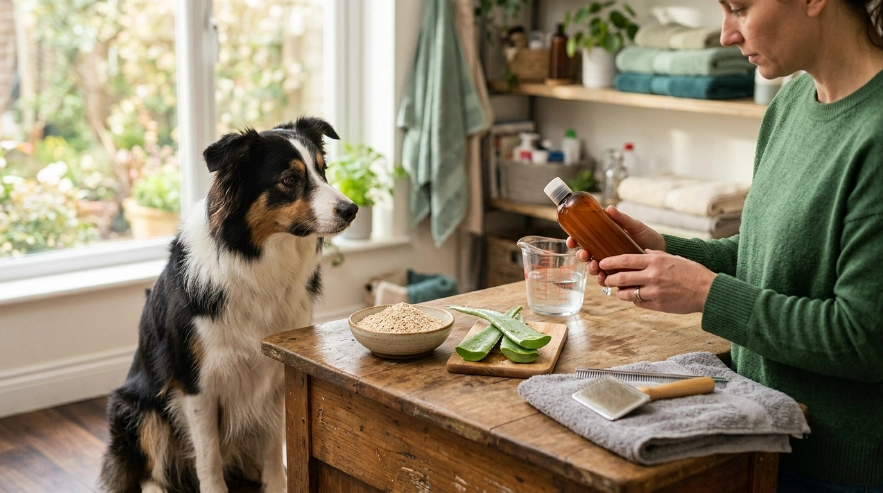
The most useful ingredients depend on why you’re bathing your dog. I don’t choose shampoo because it contains the longest list of herbs.
Colloidal oatmeal
Colloidal oatmeal is finely processed oatmeal designed to disperse through water. It is commonly included in dog shampoos intended for mildly dry or itchy-feeling skin.
It can be useful for routine grooming when the skin is otherwise healthy. It cannot diagnose allergies, infection, or parasites.
Aloe vera
Aloe is common in moisturizing canine grooming formulas. I prefer it as part of a properly formulated dog shampoo instead of applying homemade aloe mixtures directly.
Simple is better. Your Border Collie does not need six botanical extracts just because they sound natural.
Plant-derived cleansing ingredients
Coconut-derived or other plant-derived cleansers can remove dirt and oil effectively. Their origin alone does not tell you whether a shampoo will be mild.
The finished formulation matters. I also look at fragrance, rinsability, concentration, and the manufacturer’s directions.
Fragrance-free formulas
Dogs do not need perfume to be clean. When I am troubleshooting post-bath scratching, fragrance is one of the first unnecessary extras I remove.
- Look for: Dog-specific labeling.
- Prefer: Clear ingredient lists.
- Consider: Oatmeal or aloe for mild dryness.
- Check: Dilution and contact-time directions.
- Recheck: Current ingredients before every repurchase.
Section Takeaway: Natural ingredients can be useful, but the complete dog-specific formula matters more than any single botanical on the label.
Which Natural Shampoo Is Best for Your Border Collie?
No natural shampoo wins for every Border Collie. This comparison shows how I separate common choices by skin and coat needs.
| Shampoo choice | Best fit | Useful features | Main caution |
|---|---|---|---|
| 4-Legger Organic Unscented Hypoallergenic | Natural-first choice and fragrance-sensitive dogs | Short ingredient list, unscented, organic-certified formula | Natural ingredients can still cause individual reactions |
| Earthbath Oatmeal & Aloe Fragrance Free | Mildly dry or sensitive skin | Colloidal oatmeal, aloe, fragrance-free formula | Oatmeal does not treat infection |
| Simple fragrance-free dog shampoo | Routine bathing and normal skin | Fewer unnecessary scents and easy everyday use | “Natural” claims may have no certification behind them |
| Veterinary medicated shampoo | Diagnosed skin conditions | Active ingredients selected for a specific problem | Should not be replaced by a natural shampoo when treatment is needed |
I would start with 4-Legger when the priority is a genuinely minimal, natural-first formula. I would lean toward Earthbath when mild dryness makes oatmeal especially useful.
Formulas change over time. Always compare the current bottle with the ingredients you intended to buy.
Does Coat or Skin Type Change the Best Choice?
Yes. Choose shampoo around the dog’s skin first, then consider coat length, shedding, and outdoor activity.
Healthy rough-coated Border Collies
A rough coat has longer feathering around the chest, legs, belly, and tail. I prioritize a shampoo that spreads easily and rinses without leaving those areas heavy.
A lightweight dog conditioner can help longer feathering. Avoid leaving conditioner packed near the skin.
Smooth-coated Border Collies
Smooth coats are shorter, but they still need proper rinsing. A gentle fragrance-free formula is usually enough for normal skin.
Dry or easily irritated skin
Start with a mild fragrance-free formula and consider colloidal oatmeal. Watch your dog during the next 24 to 48 hours for increased scratching or redness.
Persistent itching, odor, or sores
Natural shampoo is not a treatment plan for every skin problem. Infection, parasites, allergies, and other conditions can produce similar signs.
Vet note: Persistent itching, hair loss, sores, swelling, unusual odor, or recurring redness should be evaluated by your veterinarian.
The Merck Veterinary Manual’s skin-treatment guidance explains that medicated shampoos are chosen for specific skin disorders and require careful use.
How Do You Shampoo a Border Collie’s Double Coat?
A good shampoo can still cause problems when it stays trapped near the skin. With Border Collies, rinsing technique is often more important than making a huge lather.
- Brush before bathing. Remove loose undercoat, dried dirt, burrs, and small tangles.
- Check the skin. Look at the belly, armpits, paws, groin, neck, and base of the tail.
- Use lukewarm water. Wet slowly until water reaches beneath the outer coat.
- Follow the label. Dilute concentrated shampoo only when the manufacturer recommends it.
- Massage gently. Work through the coat without aggressive scratching.
- Protect the face. Keep shampoo away from the eyes, mouth, nose, and ear canals.
- Rinse deeply. Part the coat with your fingers and keep flushing until no slippery residue remains.
- Dry completely. Blot with towels and use comfortable airflow if your dog accepts a dryer.
On my rough-coated dogs, the chest and rear feathering are the areas I check twice. They can feel dry on top while moisture or shampoo remains underneath.
I also use less shampoo than many owners expect. More product often means more rinsing, not a cleaner dog.
Section Takeaway: Brush first, wet through the undercoat, use the smallest effective amount of shampoo, and rinse until the coat feels completely clean.
How Often Should You Shampoo a Border Collie?
There is no single correct number of days between baths. A Border Collie’s activity, coat condition, season, swimming habits, and skin health all change the schedule.
For healthy dogs, I prefer bathing when the whole coat is genuinely dirty, greasy, or smelly. Brushing, paw rinses, and spot cleaning handle many smaller messes.
- Light dust: Brush the coat thoroughly.
- Muddy paws: Rinse or wipe the affected area.
- Whole-body mud: Use a proper shampoo bath.
- Strong persistent odor: Check the skin instead of repeatedly masking it.
- Veterinary treatment: Follow the prescribed bathing schedule.
PetMD’s dog bathing guidance likewise notes that coat type, breed, lifestyle, season, and health affect bathing frequency.
Regular brushing matters more than unnecessary shampooing for many Border Collies. During shedding season, removing loose undercoat can make the dog look dramatically cleaner without another bath.
Which Natural Products Should You Avoid?
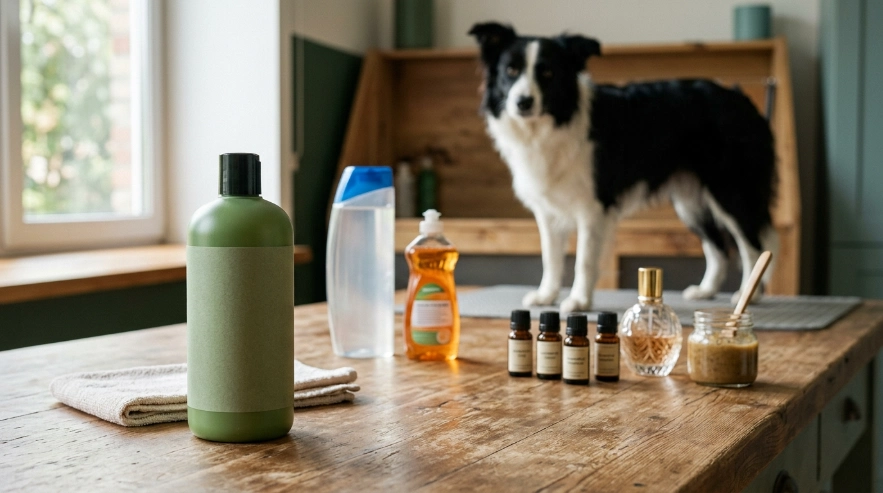
Natural does not automatically mean harmless. I avoid experimenting with concentrated homemade additives simply because they came from a plant.
- Human shampoo: It is formulated for human skin rather than routine canine grooming.
- Dish detergent: It is not my choice for normal repeat bathing.
- Strong essential oils: Do not add concentrated oils to shampoo without professional guidance.
- Heavy perfume: Fragrance adds no cleaning benefit for a sensitive dog.
- Homemade mixtures: Avoid guessing at concentrations of vinegar, oils, soaps, or botanical extracts.
A dog-specific formula is the safer default. Even a beautifully marketed botanical product should be stopped if your Border Collie becomes red, itchy, swollen, or uncomfortable.
Vet note: Sudden facial swelling, breathing difficulty, collapse, or a rapidly worsening reaction requires urgent veterinary care.
Frequently Asked Questions
What is the best natural shampoo for a Border Collie with sensitive skin?
Start with a fragrance-free dog shampoo containing a short, clearly listed formula. I favor an unscented option such as 4-Legger’s organic formula, but persistent sensitivity should be discussed with a veterinarian.
Is oatmeal shampoo good for Border Collies?
Colloidal oatmeal can suit Border Collies with mildly dry or itchy-feeling skin. It should be part of a dog-specific shampoo, and it should not be used to delay diagnosis of recurring skin trouble.
Can I use human organic shampoo on my Border Collie?
I would not use human shampoo as the normal choice. “Organic” describes ingredient sourcing, not whether the finished product is formulated appropriately for canine skin.
Is aloe vera shampoo safe for Border Collies?
Aloe is commonly included in dog-specific grooming formulas and can suit normal or mildly dry skin. Use a finished canine shampoo rather than applying homemade or concentrated aloe products.
Should Border Collie shampoo be fragrance-free?
It does not have to be fragrance-free when your dog tolerates scent well. However, fragrance-free shampoo is my preferred starting point for dogs that itch after bathing or have easily irritated skin.
Do smooth and rough Border Collies need different shampoo?
Not necessarily. Both coat varieties have double-coat characteristics, so skin condition matters more than hair length when choosing shampoo.
Why does my Border Collie itch after shampooing?
Possible causes include shampoo residue, fragrance sensitivity, hot water, frequent bathing, or an unrelated skin condition. Rinse thoroughly and contact your veterinarian if the itching persists or worsens.
Final Takeaway
The best natural shampoo for a Border Collie is not simply the bottle with the most botanical ingredients. Choose a dog-specific formula that is gentle, easy to rinse, and appropriate for your dog’s current skin condition.
For a natural-first routine, I favor a simple unscented formula such as 4-Legger Organic Unscented Hypoallergenic Dog Shampoo with Aloe. For mild dryness, a fragrance-free oatmeal-and-aloe formula such as Earthbath is another sensible option.
Brush before the bath and rinse the dense undercoat completely. Then judge the shampoo by the result that matters most: a clean coat and comfortable skin.
