

Quick Answer
For most adult Border Collies, my top pick is the Dexas Medium MudBuster. Its soft silicone bristles use plain water to loosen mud, and the manufacturer specifically places Border Collies in its medium-size range.
What matters most when choosing
- Correct fit: Measure your Border Collie’s paw instead of buying by breed name alone.
- Soft bristles: Flexible silicone should reach around the pads without harsh scrubbing.
- Easy cleanup: A removable or washable insert matters when you clean four muddy feet every day.
- Mess type: Cups suit heavy mud, foam suits routine dirt, and wipes work best for quick touch-ups.
- Good drying: Always dry between the toes and around the pads after wet cleaning.
My simple rule
- Choose a medium silicone paw cup for regular muddy walks, then keep unscented dog wipes in the car for lighter messes.
Border Collies rarely choose the clean path when there is mud, wet grass, or a puddle nearby. Their active herding-dog lifestyle makes a fast paw-cleaning routine far more useful than frequent full baths.
This guide focuses on what works for a Border Collie’s size, coat, activity level, and sensitive feet. I’ll compare paw cups, foam cleaners, wipes, and simple alternatives so you can choose the right setup.
In This Guide
- What Is the Best Paw Cleaner for a Border Collie in 2026?
- Why Do Border Collies Need a Good Paw-Cleaning Setup?
- Which Paw Cleaners Work Best for Border Collies?
- How Do You Choose the Right Paw Cleaner Size?
- How Should You Use a Paw Cleaner on a Border Collie?
- Are Paw Cleaners Safe for Daily Use?
- What Cleaner Works for Mud, Salt, Sand, and Trail Debris?
- How Do You Train a Border Collie to Accept Paw Cleaning?
- Frequently Asked Questions
What Is the Best Paw Cleaner for a Border Collie in 2026?
The Dexas Medium MudBuster is my best overall choice for most adult Border Collies in 2026. It combines water with flexible silicone bristles, so there is no need to scrub each paw with a cloth.
Dexas specifically lists the Border Collie among breeds suited to its medium model. Individual dogs still vary, so paw width matters more than the label on the box.
Definition: A dog paw cleaner is a cup, brush, wipe, foam, or washing tool designed to remove dirt and debris from the paw pads, toes, nails, and surrounding fur without giving the dog a full bath.
Why a silicone paw cup wins for muddy Border Collies
A silicone cup is useful because Border Collies often bring home dirt from more than the surface of the pads. Mud can sit between toes and collect in the longer hair around the feet.
- Heavy mud: Water loosens packed soil better than a dry wipe.
- Toe spaces: Flexible bristles reach areas a flat cloth may miss.
- Fast routine: Each paw can be cleaned before your dog walks through the house.
- No disposable refills: The cup can be emptied, rinsed, and reused.
I would choose a no-rinse foam instead when the paws are dusty rather than muddy. Wipes are even faster, but they are better for light surface dirt than deep cleaning.
Who should choose something else?
A paw cup is not ideal for every Border Collie. Dogs with painful pads, open cuts, or strong handling sensitivity may do better with a damp cloth and veterinary guidance.
If your dog mainly walks on clean sidewalks, a large washing cup may also be unnecessary. An unscented dog wipe can make more sense for quick doorway cleaning.
Why Do Border Collies Need a Good Paw-Cleaning Setup?
Border Collies are active, athletic herding dogs, so their feet often meet more mud, grass, gravel, and trail debris than those of a low-activity companion dog. The American Kennel Club’s Border Collie profile describes the breed as energetic and work-driven.
Both rough-coated and smooth-coated Borders have double coats. Rough-coated dogs can also carry extra dirt in the feathering around their legs and feet.
Working heritage changes the problem
A Border Collie may run through wet grass, fields, agility areas, hiking trails, or livestock ground in one outing. Cleaning only the center paw pad can leave debris between the toes.
- Rough coat: Longer foot and leg hair can hold more mud and moisture.
- Smooth coat: Cleanup is often easier, but dirt still packs around the pads.
- Working dogs: Field debris and plant material deserve a careful paw inspection.
- Sport dogs: Check pads after agility, flyball, hiking, and long running sessions.
Cleaning is also inspection time
I treat paw cleaning as a quick health check, not just a floor-saving job. It gives you a chance to notice redness, cuts, burrs, cracked pads, damaged nails, or something stuck between the toes.
That habit matters with a dog that moves fast outdoors. Small foot problems are easier to spot when you look at every paw routinely.
Which Paw Cleaners Work Best for Border Collies?
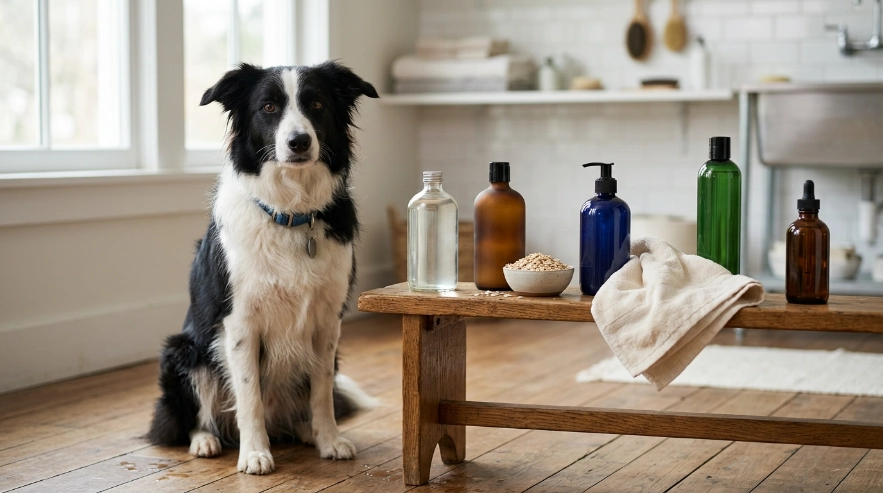
No single cleaner wins every situation. For most Border Collie homes, a reusable paw cup handles mud best while foam or wipes cover quick daily cleanup.
| Option | Best for | Key detail | Main drawback |
|---|---|---|---|
| Dexas Medium MudBuster | Best overall for mud | 6-inch-tall medium cup with soft silicone bristles; Border Collie appears in manufacturer sizing guidance | Needs water and towel drying |
| Dandylion Clean Paws | Best no-rinse option | 150 mL foam with built-in silicone brush head | Recurring cleanser cost |
| Earth Rated Unscented Grooming Wipes | Best for travel | Portable wipes for paws and body; standard wipes measure about 8 × 8 inches | Less effective on packed mud |
| Bowl + microfiber towel | Best budget setup | Uses lukewarm water and items you may already own | Slower and messier |
| Tub or shower rinse | Best for extreme mess | Can clean paws, lower legs, and belly together | Too much work for routine walks |
Best overall: Dexas Medium MudBuster
This is the option I would start with for a typical adult Border Collie that regularly returns home muddy. The soft silicone insert and simple water-based design suit frequent post-walk use.
Best no-rinse cleaner: Dandylion Clean Paws
This foam is useful when you want more cleaning power than a wipe without filling a cup. Its built-in silicone brush makes it easier to work around the toes and pads.
Best portable choice: Earth Rated Unscented Wipes
Wipes make sense in the car, training bag, or travel kit. I prefer an unscented version when a product will touch the paws often.
Section Takeaway: A silicone cup is the strongest all-around choice for muddy Border Collies, while no-rinse foam and wipes work better for lighter or travel cleanup.
How Do You Choose the Right Paw Cleaner Size?
Measure the paw at its widest point before buying a cup-style cleaner. A breed recommendation is useful, but your individual dog’s foot should make the final decision.
Dexas lists its medium MudBuster for medium dogs and includes Border Collies in its sizing examples. Its current medium unit measures about 6 inches tall and 4 inches wide.
A good paw-cup fit should do three things
- Allow easy entry: The paw should slide in without forcing the toes together.
- Contact the bristles: The cup should not be so wide that the silicone barely touches the paw.
- Clear the dewclaw: Do not jam the leg downward if the opening catches higher structures.
Border Collies can vary from lighter sport dogs to heavier individuals. Measure instead of assuming every adult needs the same size.
Think about coat length too
A rough-coated Border Collie may have more hair around the foot than a smooth-coated dog. Leave enough room for wet feathering without crushing the toes against the cup wall.
If your dog falls near a size boundary, compare the actual opening measurements. Comfort matters more than maximizing bristle pressure.
How Should You Use a Paw Cleaner on a Border Collie?
Use lukewarm water, gentle movement, and thorough drying. The goal is to loosen dirt rather than scrub the paw aggressively.
- Check the paw first. Look for cuts, burrs, damaged nails, swelling, or tender areas.
- Add a small amount of lukewarm water. You need enough to rinse the pads without overflowing the cup.
- Guide the paw in slowly. Do not push if your Border Collie pulls back.
- Rotate gently. Let the flexible bristles move through the dirty areas.
- Lift the paw out. Check between the toes for remaining mud or plant debris.
- Dry completely. Use a clean towel around the pads, toes, and surrounding hair.
- Rinse the cleaner. Remove dirty water and wash out trapped hair and grit.
The AKC’s paw-cleaning guidance also notes that wipes can handle lighter dirt while more serious messes may need washing. It also recommends drying paws thoroughly.
What I avoid
- Hot water
- Aggressive twisting
- Strong household cleaners
- Human shampoo used as a routine paw cleanser
- Leaving thick foot fur wet
If the water becomes heavily muddy after the first paw, replace it. There is little value in washing the next three feet in dirty water.
Are Paw Cleaners Safe for Daily Use?
A gentle paw cleaner can be used frequently when the dog’s skin is healthy and the cleaning method is mild. Plain lukewarm water is often enough for normal dirt.
The ASPCA’s dog grooming guidance supports regular attention to paws as part of basic grooming. Products designed specifically for dogs are safer choices than improvised household products.
Check the skin before cleaning
Do not treat every red or sore paw as a cleaning problem. Excessive licking, swelling, bleeding, deep cracks, discharge, or limping can signal pain or another condition.
PetMD’s veterinary-reviewed guidance on cracked paw pads recommends checking paws regularly and seeking veterinary care when cracking comes with concerning symptoms.
Vet note: If your Border Collie has painful, bleeding, swollen, infected-looking, or repeatedly irritated paws, stop routine scrubbing and ask your veterinarian for advice.
More cleaning is not always better
- Normal dust: A dry or damp towel may be enough.
- Light grime: Use a dog-safe wipe or gentle foam.
- Heavy mud: Use a water-filled paw cup.
- Unknown chemical: Rinse thoroughly and contact a veterinarian or poison-control resource when needed.
The right routine removes contaminants without turning every walk into a heavy grooming session. Keep it simple when the paws are already healthy.
What Cleaner Works for Mud, Salt, Sand, and Trail Debris?
Match the cleaner to what is on the paw. Mud, winter salt, sand, pollen, and grass seeds create different cleanup problems.
Wet or dried mud
A silicone paw cup works best when soil has packed between the pads. For thick dried mud in long foot hair, loosen obvious clumps gently before washing.
Winter salt and de-icer residue
Use plenty of clean water instead of relying on a quick dry wipe. Salt and de-icing material should not remain where your dog can lick it later.
Sand and beach debris
Rinse thoroughly because fine grains can sit between the toes. A second rinse may be needed after the first water becomes cloudy.
Pollen and grass
A water rinse can help remove outdoor material after walks. PetMD’s summer paw-care guidance also recommends rinsing paws after walks when pollen exposure is a concern.
Burrs and grass seeds
Do not expect a paw cup to solve embedded plant debris. Inspect the toes, pads, nail edges, and surrounding fur by hand before washing.
- Loose debris: Remove it gently before rinsing.
- Deeply embedded material: Do not dig aggressively into the skin.
- Pain or swelling: Contact your veterinarian.
Vet note: Persistent licking after a field or trail walk deserves attention, especially if you see swelling, a puncture, or a foreign object between the toes.
How Do You Train a Border Collie to Accept Paw Cleaning?
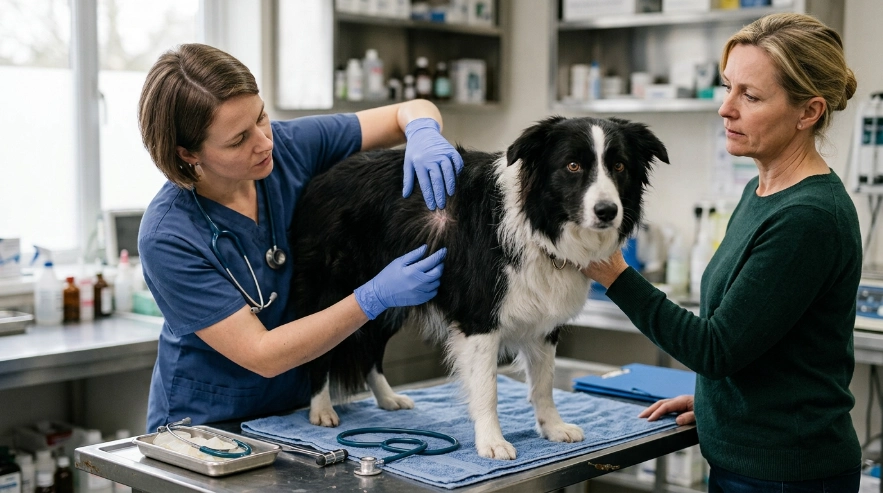
Teach paw cleaning as a short handling exercise before you need it after a muddy walk. Border Collies learn patterns quickly, so a predictable routine usually works better than wrestling with four dirty feet.
Start without water
- Show the empty cleaner and reward calm interest.
- Touch one paw briefly, then reward.
- Place the paw near the cup opening without inserting it.
- Insert the paw for one second, then reward.
- Add a little water only after the dry version feels routine.
Keep early sessions around one to three minutes. Stop while your dog is still relaxed rather than repeating the exercise until they become frustrated.
Use a consistent doorway routine
I recommend keeping the paw cleaner, towel, and treats in the same place. The sequence becomes simple: come inside, stand on the mat, clean four paws, dry, reward, release.
- Use one cue: A phrase such as “paws” can signal the routine.
- Start with the easiest foot: Build confidence before handling a sensitive paw.
- Reward stillness: Mark calm standing rather than grabbing the leg.
- Never chase: Chasing turns paw cleaning into a game or conflict.
If your Border Collie suddenly resists a paw that was previously easy to handle, inspect it carefully. A behavior change can be a clue that something hurts.
Frequently Asked Questions
What size paw cleaner is best for a Border Collie?
A medium paw cleaner fits many adult Border Collies, and Dexas specifically lists the breed with its Medium MudBuster. However, measure the widest part of your dog’s paw before ordering because individual Border Collies vary in size and foot shape.
Can I use a paw cleaner after every walk?
Yes, gentle cleaning can be part of a daily routine when needed. You do not need a deep wash after every clean sidewalk walk, though. Use plain water, a damp towel, or a dog-safe product based on how dirty the paws are.
Do paw cleaners remove mud between a Border Collie’s toes?
A well-fitting silicone cup can loosen mud between the pads and around the toes better than a flat wipe. You should still inspect the foot afterward because burrs, stones, or plant material may need careful removal by hand.
Are dog paw wipes better than a paw washer?
Wipes are better for travel and light dirt, while a water-filled paw washer is usually better for thick mud. Many Border Collie owners will get more use from both: a cup near the door and unscented wipes in the car.
Can I put dog shampoo in a paw cleaner?
Plain water is enough for many muddy-paw cleanups. If you need cleanser, use a small amount of a product specifically made for dogs and follow its directions rather than adding human shampoo or household soap.
What if my Border Collie hates having its paws cleaned?
Train the process in tiny steps when the paws are already clean. Reward touching, brief paw lifts, and calm insertion into an empty cup before adding water. Sudden resistance to one particular paw can also indicate pain and deserves inspection.
When should I call a vet about dirty or irritated paws?
Contact your veterinarian if you notice bleeding, deep cracks, significant swelling, discharge, persistent redness, limping, an embedded object, or repeated licking and chewing. Routine cleaning should not replace medical care when a paw looks painful or injured.
The bottom line: For most adult Border Collies, I would start with a medium silicone paw washer such as the Dexas MudBuster and keep a microfiber towel beside it. Add unscented wipes or no-rinse foam only when your routine calls for faster cleanup away from home.
Measure your dog’s paw before buying, introduce the cleaner gradually, and inspect the feet as you clean. That simple doorway habit can keep mud off your floors while helping you notice paw problems early.
