

Quick Answer
The best odor remover for a Border Collie is usually a dog-specific deodorizing shampoo that cleans through the breed’s dense double coat without simply covering smells with perfume. Between baths, pet-safe wipes or waterless foam can handle light odor, while an enzyme cleaner belongs on bedding and washable gear rather than your dog’s coat. Choose a shampoo designed specifically for dogs and suitable for double coats, following dog shampoo guidance from the AKC.
What works best?
- Coat odor: Use a dog-specific deodorizing shampoo and rinse the undercoat thoroughly.
- Light odor: Try dog-safe grooming wipes or a leave-in waterless foam between full baths.
- Wet-dog smell: Dry the coat completely instead of trying to hide moisture with fragrance.
- Bedding odor: Use a pet-safe enzyme cleaner or appropriate laundry product on washable items.
- Persistent odor: Check the skin, ears, mouth, paws, and rear end before buying stronger deodorizer.
One important rule
- Don’t use fragrance to hide a strong or recurring odor accompanied by itching, redness, discharge, sores, or discomfort.
Border Collies can collect an impressive range of smells during one muddy walk. Their rough or smooth double coat can hold moisture, dirt, pond water, and whatever fascinating thing they decided to roll in.
I’ve found that choosing the right odor remover matters more than choosing the strongest scent. This guide explains what works for a Border Collie sheepdog, what belongs only on bedding, and when smell deserves a veterinary check.
In This Guide
- What Is the Best Odor Remover for a Border Collie?
- Why Does My Border Collie Smell Bad?
- Which Type of Border Collie Odor Remover Works Best?
- How Do You Remove Odor From a Border Collie Safely?
- How Do You Get Wet-Dog Smell Out of a Border Collie?
- How Can You Keep a Border Collie Fresh Between Baths?
- What Should You Avoid, and When Should You Call a Vet?
- Frequently Asked Questions
- Final Takeaway
What Is the Best Odor Remover for a Border Collie?
For ordinary coat odor, my first choice is a mild, dog-specific deodorizing shampoo followed by complete rinsing and drying. Border Collies need products that can reach through their double coat rather than coating the outer hair with fragrance.
An odor remover for a Border Collie is a grooming or cleaning product that removes the source of unwanted smell. The right product depends on whether that source is fur, moisture, dirt, bedding, or something medical.
Look for function before fragrance
I don’t judge an odor-control shampoo by how powerful it smells from the bottle. A strong perfume can make a dirty coat smell like perfume plus dirty dog.
- Choose dog-specific formulas: The label should clearly state that the product is intended for dogs.
- Prioritize easy rinsing: Residue is hard to remove from a dense undercoat and may irritate sensitive skin.
- Consider sensitive skin: A simple or lightly scented formula is useful for dogs that react to heavily fragranced grooming products.
- Match the product to the problem: Shampoo, wipes, foam, and surface cleaners serve different purposes.
The Border Collie’s rough and smooth coat varieties both have an undercoat. That undercoat is one reason drying matters so much after swimming, rain, or bathing.
Why Does My Border Collie Smell Bad?
A Border Collie can smell because its coat is wet, dirty, oily, or carrying environmental material. Persistent odor can also come from the ears, skin, mouth, paws, or anal area.
The first step isn’t deodorizing. It’s locating the smell.
Common non-medical odor sources
- Rain and swimming: Moisture stays underneath the guard hairs and can produce the familiar wet-dog smell.
- Mud and soil: Working and active Border Collies often bring organic material deep into the coat.
- Rolling outdoors: Manure, dead material, wildlife scent, and stagnant water can overpower normal grooming products.
- Dirty gear: Collars, harnesses, beds, crate mats, and car blankets can transfer old smells straight back onto clean fur.
- Paw buildup: Mud and moisture between the toes can create a localized smell even when the body seems clean.
When odor may come from the body
A strong odor that quickly returns after bathing deserves closer attention. The AKC’s guidance on unusual dog odor notes that skin and ear problems can be important causes.
Look beyond the coat if you notice new itching, licking, head shaking, skin changes, discharge, or increasing odor.
- Ears: Watch for redness, debris, frequent scratching, or head shaking.
- Skin: Check for redness, greasy patches, scaling, sores, or thinning hair.
- Mouth: Persistent bad breath can have a dental or oral cause.
- Rear end: A sudden fishy smell with scooting or licking may involve the anal sacs.
Vet note: Strong or recurring odor with skin, ear, mouth, or anal-area symptoms should be evaluated by your veterinarian rather than repeatedly covered with deodorizer.
Which Type of Border Collie Odor Remover Works Best?
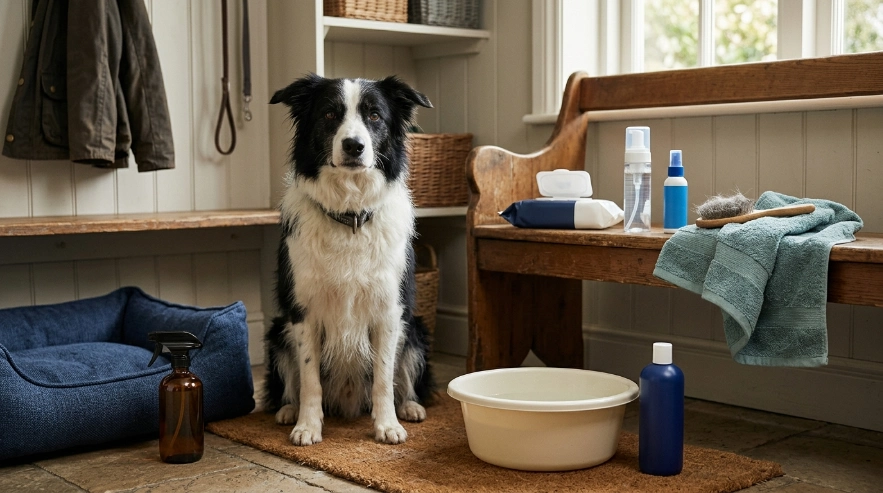
No single odor remover is best for every situation. I keep separate products for full baths, quick cleanup, and the dog’s environment.
That prevents a common mistake: spraying the dog when the smelly object is actually the collar or bed.
| Odor Remover Type | Best Use | Used on Dog? | Rinse? | Main Caution |
|---|---|---|---|---|
| Dog deodorizing shampoo | Dirty or strongly scented coat | Yes | Yes | Rinse the undercoat completely |
| Waterless dog foam | Light odor between baths | Yes, when dog-labeled | Usually no; follow label | Don’t use on irritated skin |
| Pet grooming wipes | Paws and small dirty areas | Yes, when dog-labeled | No | Avoid eyes and inside ears |
| Dog deodorizing spray | Temporary mild coat odor | Yes, if specifically labeled | Usually no | Shouldn’t mask recurring odor |
| Pet-safe enzyme cleaner | Beds, crates, floors, washable gear | No | Not applicable | Follow surface directions and drying instructions |
My practical three-product setup
For an active adult Border Collie, I prefer a simple setup rather than a cupboard full of scents. Three products cover most normal situations.
- Dog shampoo for genuine full-coat cleaning.
- Dog grooming wipes or foam for paws, legs, and small areas.
- Pet-safe surface cleaner for bedding, crates, and household odor sources.
A medicated shampoo belongs in a different category. If your veterinarian recommends one for a diagnosed problem, follow that treatment plan instead of substituting a regular deodorizing product.
How Do You Remove Odor From a Border Collie Safely?
Start by brushing and identifying where the smell is strongest. Then use the least intensive cleaning method that solves the problem.
I use this approach after muddy hikes because it prevents unnecessary full baths.
- Brush the dry coat first. Remove loose fur, dried mud, leaves, and small tangles before adding water.
- Check the odor source. Smell the ears, collar area, paws, body coat, and bedding separately.
- Use lukewarm water. Wet the coat thoroughly if a full bath is needed.
- Work in dog shampoo. Reach through the outer coat without aggressive scrubbing.
- Rinse patiently. Continue until shampoo residue is gone from both outer coat and undercoat.
- Towel thoroughly. Press and blot instead of creating tangles with hard rubbing.
- Finish drying. Make sure dense areas aren’t left damp against the skin.
- Clean the gear. Wash or clean the collar, harness, bed, towels, and car blanket when needed.
The ASPCA dog grooming guidance also emphasizes routine grooming and checking other odor sources when bathing doesn’t solve the problem.
Don’t forget the undercoat
Border Collies belong to the herding group and were developed for active outdoor work. Their double coat offers useful protection, but it also means surface cleaning can miss material closer to the skin.
Australian Shepherds have a similar double-coat challenge. A shorter-coated Australian Kelpie may dry differently, so don’t copy another breed’s grooming routine blindly.
How Do You Get Wet-Dog Smell Out of a Border Collie?
The best treatment for ordinary wet-dog odor is often complete drying, not more perfume. A Border Collie’s undercoat can stay damp after the outer hair already feels dry.
That distinction matters after rainy walks, swimming, or bathing.
My after-rain routine
- Dry immediately: Keep absorbent dog towels close to the door.
- Focus underneath: Check the chest, belly, armpits, rear legs, and base of the tail.
- Separate damp hair: Use your fingers to feel whether moisture remains near the skin.
- Brush after drying: Once appropriate for the coat, gentle brushing can help separate hairs and remove remaining debris.
- Dry wet gear: Never put a damp collar or harness straight back onto a clean coat.
Moisture trapped against a thick coat can contribute to skin trouble. That’s one reason I take repeated dampness more seriously than the temporary smell itself.
If an area stays moist and becomes red, painful, itchy, or sore, contact your veterinarian. Don’t repeatedly shampoo an irritated patch.
How Can You Keep a Border Collie Fresh Between Baths?
You don’t need a full bath every time your Border Collie smells like the outdoors. Regular brushing, spot cleaning, and clean equipment often make a bigger difference.
As of 2026, my basic rule remains simple: clean the source instead of automatically adding fragrance.
Use a five-minute odor check
- Brush: Remove loose undercoat and dirt before they build up.
- Wipe paws: Use a dog-safe grooming wipe or damp cloth after messy walks.
- Inspect ears: Look without putting cleaning products deep into the ear canal.
- Check the collar: Fabric collars can hold more smell than owners expect.
- Wash bedding: A freshly bathed dog will quickly pick up odor from a stale bed.
Bath frequency isn’t identical for every dog. Activity, swimming, weather, skin condition, coat condition, and veterinary instructions all affect the schedule.
What about waterless dog shampoo?
Waterless foam can be useful after a dusty walk or before visitors arrive. It isn’t a replacement for a true bath when the undercoat contains mud, oil, or a strong contaminant.
Use only a product labeled for dogs and follow its directions. Stop if you notice redness, excessive licking, or other irritation.
What Should You Avoid, and When Should You Call a Vet?
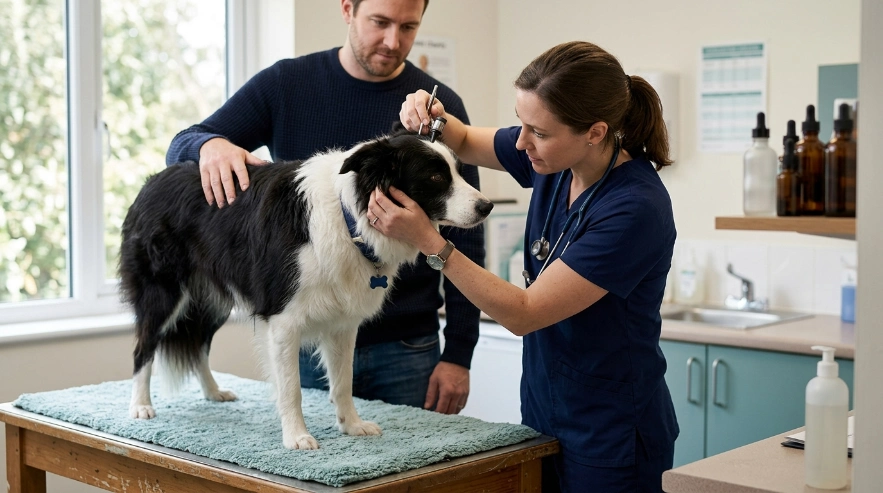
A strong-smelling home remedy isn’t automatically safer than a dog grooming product. Avoid putting concentrated essential oils or improvised fragranced mixtures directly on your Border Collie’s coat.
The ASPCA’s essential-oil safety guidance warns that concentrated oils can cause health problems after skin exposure or ingestion.
Products and habits I’d avoid
- Human perfume: It doesn’t clean the source of dog odor.
- Concentrated essential oils: Don’t apply them directly as homemade deodorizer.
- Household surface cleaner on fur: Surface products belong on their labeled surfaces, not the dog.
- Repeated shampooing for unexplained odor: Find the cause before escalating grooming.
- Spraying around the face: Keep grooming products away from eyes, nose, mouth, and ear canals.
- Masking skin symptoms: Fragrance shouldn’t delay veterinary care.
When odor becomes a health question
A musty odor combined with itching, redness, greasy skin, scaling, or recurrent ear trouble can accompany yeast-related skin disease. VCA describes these signs in its veterinary overview of yeast dermatitis.
That doesn’t mean every smelly Border Collie has yeast. It means deodorizer alone cannot diagnose the cause.
- Book a vet visit if odor returns quickly after proper bathing.
- Get help for persistent scratching, licking, redness, hair loss, crusting, or greasy skin.
- Check the ears if odor occurs with discharge, head shaking, or discomfort.
- Ask about dental care when foul smell clearly comes from the mouth.
- Contact your vet for a strong fishy smell with repeated scooting or rear-end discomfort.
Vet note: Skin infections, allergies, ear disease, dental problems, and anal-sac problems need diagnosis and treatment from your veterinarian. A deodorizing shampoo can clean fur, but it cannot treat an unknown medical cause.
For normal maintenance, stick with sensible grooming rather than chasing a completely scent-free dog. Dogs have a natural coat odor, especially active working breeds.
Frequently Asked Questions About Border Collie Odor Removers
What is the best product for a smelly Border Collie?
For ordinary dirt and coat odor, a gentle dog-specific deodorizing shampoo is the most useful starting point. Choose a formula made for dogs, rinse the dense undercoat completely, and dry thoroughly. Use wipes or waterless foam only for light cleanup between proper baths.
Why does my Border Collie still smell after a bath?
The undercoat may still be damp, or odor may remain in the collar, harness, bedding, or towels. If the smell comes back quickly despite proper washing and drying, check for skin, ear, mouth, paw, or anal-area symptoms and contact your veterinarian when needed.
Can I use dog deodorizing spray every day?
Follow the individual product label rather than assuming daily use is appropriate. A dog-specific spray may help mild temporary odor, but frequent spraying shouldn’t replace brushing, spot cleaning, washing dirty gear, or investigating a recurring smell that seems unusual.
Can I put an enzyme odor remover on my Border Collie?
Don’t put a household or surface enzyme cleaner on your dog unless its label specifically says it is intended for that use. Enzyme cleaners are most useful for odor sources such as bedding, crate surfaces, rugs, and other washable areas when used according to directions.
How often should I bathe a Border Collie that smells?
There isn’t one perfect schedule for every Border Collie. Bathing needs depend on outdoor activity, swimming, coat condition, season, skin health, and veterinary advice. Spot cleaning and brushing can reduce unnecessary full baths, especially when only the paws or lower legs are dirty.
Is a strong doggy smell normal for a Border Collie?
A mild natural or temporary wet-coat smell can be normal. A new, strong, musty, fishy, sour, or persistent smell deserves investigation, particularly when accompanied by itching, redness, discharge, greasy skin, sores, head shaking, scooting, or other signs of discomfort.
Final Takeaway: Match the Odor Remover to the Source
The best odor remover for a Border Collie isn’t necessarily the strongest-smelling bottle. For normal coat odor, start with dog-safe shampoo, thorough rinsing, and complete drying.
Use grooming wipes or waterless foam for small between-bath messes. Keep enzyme and household cleaners on appropriate surfaces rather than your dog’s body.
- Smelly coat? Clean and dry the coat.
- Muddy paws? Spot clean them.
- Smelly bed? Wash or treat the bed.
- Recurring abnormal smell? Look for the cause instead of hiding it.
That source-first approach has always worked best in my Border Collie grooming routine. It keeps odor control simple while putting the dog’s skin and coat ahead of fragrance.
