
Do Border Collies Love People? Understanding Their Affection and Bond

Quick Answer
Yes, Border Collies usually love their people and can form remarkably close bonds with them. They often show affection through following, watching, playing, leaning against you, bringing toys, or relaxing nearby rather than constant cuddling. The AKC Border Collie breed profile also describes the breed as an energetic working dog that can settle for cuddle time after activity.
Common signs a Border Collie loves you
- Stays nearby: Your dog chooses to rest, work, or move through the house close to you.
- Checks in: They frequently look toward you during walks, play, and training.
- Brings toys: Inviting you to play can be an important social bonding behavior.
- Seeks contact: They may lean against you, rest a head on you, or request petting.
- Relaxes with you: A dog that willingly settles near you usually feels safe in your company.
Remember
- Not every Border Collie expresses affection through cuddling, so judge the whole relationship rather than one behavior.
I’ve lived around enough Border Collies to know their affection can look different from the classic lap-dog version of love. One may curl against your leg, while another would rather drop a tennis ball at your feet for the twentieth time.
That doesn’t make the second dog less attached. Border Collies often express their strongest bonds through attention, cooperation, play, and simply wanting to be involved in whatever their person is doing.
In This Guide
- Do Border Collies love people or just their owner?
- Why are Border Collies so attached to people?
- How do Border Collies show love?
- Are Border Collies friendly with strangers and children?
- Is your Border Collie affectionate, excited, or stressed?
- Do Border Collies like cuddles, hugs, and petting?
- How can you build a stronger bond with a Border Collie?
- Does affection change with age, exercise, or training?
- Frequently Asked Questions
Do Border Collies Love People or Just Their Owner?
Most Border Collies are strongly people-oriented, but many develop an especially close relationship with one person. That favorite person is often whoever trains, walks, plays with, and communicates with the dog most consistently.
This doesn’t mean a Border Collie can’t love an entire family. Many happily maintain different relationships with different household members.
Definition: A Border Collie’s people-bond is the social relationship built through trust, shared activity, predictable care, communication, and positive experiences with humans.
A working Border Collie may show that bond differently from a Golden Retriever or another highly social companion breed. The Collie often wants participation as much as physical affection.
For example, one of the clearest bonding moments I’ve seen comes during off-leash play. A Border Collie may sprint across a field, yet still glance back repeatedly to check where their person is.
Can a Border Collie have more than one favorite person?
Yes. A Border Collie can form strong relationships with several people while still preferring one person for certain activities.
- Training person: The dog may seek this person when waiting for direction.
- Play person: Someone else may become the favorite for fetch or tug.
- Comfort person: The dog may choose another family member when resting.
- Walking person: Daily routines can create their own strong association.
Think of affection as a collection of relationships rather than a single ranking.
Why Are Border Collies So Attached to People?
Border Collies were developed to work closely with humans while controlling livestock. That working heritage rewards attentiveness, responsiveness, and an unusual awareness of movement.
A shepherd needed a dog that could notice subtle direction from a distance. Modern family Border Collies still carry much of that tendency to watch their humans carefully.
Working heritage shapes modern behavior
A Border Collie’s famous eye is the intense stare used while controlling livestock. The same general attentiveness can appear at home when your dog studies your movements.
They may notice when you reach for walking shoes, move toward the treat cupboard, or change your normal routine. Small details matter to these dogs.
- Human direction: Generations of working alongside handlers favored responsiveness.
- Environmental awareness: Border Collies constantly notice movement and changes around them.
- Problem-solving: They often enjoy activities where they work together with a person.
- Routine sensitivity: Predictable shared activities can become emotionally important.
This people-focus resembles traits seen in other herding breeds such as the Australian Shepherd and Australian Kelpie. Individual personalities still vary widely.
A poorly socialized Border Collie may watch people without wanting close interaction. Early positive experiences help turn natural attentiveness into comfortable social confidence.
How Do Border Collies Show Love?
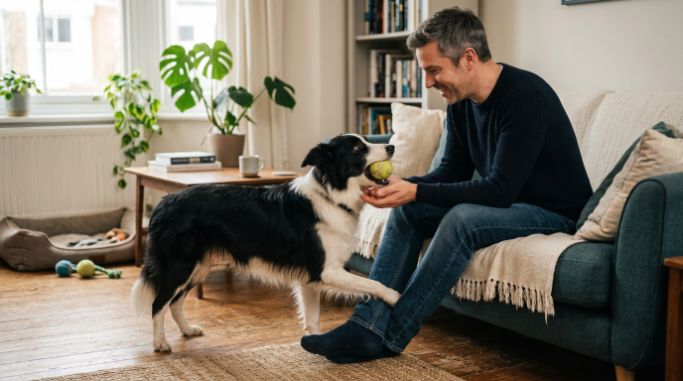
Border Collies often show love through engagement rather than nonstop physical contact. Watch what your dog repeatedly chooses to do when they have freedom to choose.
The pattern matters more than a single tail wag or lick.
1. They follow you around
Many Border Collies move from room to room with their person. They may lie beneath the desk while you work, then appear in the kitchen seconds after you stand.
2. They bring you toys
A toy invitation is more than an exercise request. Your dog is choosing you as a partner for an activity they value.
3. They check in with their eyes
Border Collies are exceptionally observant. Repeated relaxed glances during walks or play often show that you’re an important reference point.
4. They choose to rest near you
Settling can be especially meaningful with such an active breed. A dog sleeping beside your chair is voluntarily becoming vulnerable in your presence.
5. They lean or rest against you
Some Border Collies press a shoulder into your leg or place their head across your knee. Others prefer lying nearby without touching.
6. They greet you enthusiastically
Loose movement, excited toy carrying, wagging, and an eagerness to interact can all be part of a happy reunion. Look at the dog’s full body rather than relying on the tail alone.
For broader guidance on recognizing comfortable canine behavior, the ASPCA dog-care resources cover dog behavior, enrichment, health, and responsible care.
Are Border Collies Friendly With Strangers and Children?
Border Collies can love their families deeply without being equally enthusiastic about every stranger. Some are outgoing, while others are naturally more reserved or observant.
Socialization and individual temperament make a major difference.
Meeting new people
Don’t force greetings. Let your Border Collie observe a new person and approach when comfortable.
- Keep the first interaction calm.
- Allow the dog to create distance.
- Reward relaxed investigation.
- Avoid leaning over the dog.
- Don’t require strangers to pet them.
A puppy should meet different kinds of people through safe, positive experiences. Adult dogs can also build confidence, though nervous dogs usually need slower introductions.
Border Collies and children
Many Border Collies become affectionate family dogs, but their herding heritage deserves attention around running children. Fast movement can trigger staring, circling, chasing, or attempts to control movement.
Teach children not to chase, grab, climb on, or corner the dog. Give your Border Collie a quiet resting area that children leave alone.
Supervision matters. Affection doesn’t remove the need for sensible boundaries between dogs and children.
Is Your Border Collie Affectionate, Excited, or Stressed?
People sometimes label any close behavior as love, but context changes the meaning. A Border Collie leaning into your hand can be comfortable, while frantic pawing may signal excitement or another need.
Read several body signals together. PetMD’s dog body-language guidance similarly recommends looking at posture, eyes, ears, mouth, and tail together.
| What you see | Affection / relaxation | Excitement | Stress / discomfort |
|---|---|---|---|
| Body | Loose, comfortable, willingly stays | Bouncy, fast, restless | Stiff, crouched, repeatedly moving away |
| Eyes | Soft, relaxed gaze | Wide and intensely focused | Avoiding contact or showing whites |
| Movement | Leans in or settles | Jumping, spinning, repeated pawing | Backing away, freezing, turning away |
| Response to touch | Stays or asks for more | Gets increasingly energetic | Moves away or becomes tense |
Let your dog’s response guide the interaction. Consent matters with petting too.
Vet note: A sudden major change in sociability, tolerance of touch, sleep, or behavior can sometimes accompany pain or illness. Speak with your veterinarian rather than assuming every change is behavioral.
Do Border Collies Like Cuddles, Hugs, and Petting?
Many Border Collies enjoy physical affection, but there is no universal cuddle setting for the breed. One may climb beside you every evening, while another prefers two feet of personal space.
Both dogs can be strongly bonded to you.
Petting is usually different from hugging
Gentle petting lets a dog move away easily. A human hug can restrict movement and bring your face close to the dog’s face.
That’s why I don’t judge affection by whether a Border Collie accepts hugs. Current PetMD guidance on hugs and kisses notes that dogs don’t naturally interpret those gestures the same way people do.
How can you tell whether petting feels good?
- Continue: The dog stays close, leans toward your hand, or returns after you stop.
- Pause: The dog turns their head away, shifts backward, stiffens, or repeatedly licks their lips.
- Stop: The dog leaves, freezes, growls, snaps, or clearly avoids further contact.
I like a simple consent test. Pet for a few seconds, stop, and see whether the dog actively asks for more.
This works better than assuming every Border Collie wants the same type of affection.
How Can You Build a Stronger Bond With a Border Collie?
The fastest route to a stronger Border Collie relationship is usually shared activity plus trustworthy handling. These dogs tend to value interaction that gives their brain something meaningful to do.
You don’t need sheep or an agility course. Daily life offers plenty of opportunities.
Use short training sessions
Try sessions of about five to ten minutes instead of drilling commands until your dog loses interest. Finish while both of you still want another repetition.
- Practice recalls.
- Teach place or settle.
- Work on loose-leash walking.
- Teach simple tricks.
- Use scent-search games.
Play together instead of only exercising
Throwing a ball repeatedly can burn energy, but interactive play builds communication. Add rules such as waiting, releasing the toy, changing direction, or searching for a hidden toy.
Reward voluntary check-ins
If your Border Collie looks toward you during a walk, quietly reward that choice. You’re teaching the dog that paying attention to you is worthwhile.
Respect their boundaries
Trust grows when your dog learns that you listen. If they walk away from petting, don’t follow them for another cuddle.
The same principle applies during handling, grooming, and unfamiliar situations. VCA’s canine communication guidance emphasizes reading the complete pattern of body posture and signals.
Give them an off-switch
A Border Collie shouldn’t need entertainment every waking minute. Calmness is a useful skill that deserves practice too.
After activity, provide a predictable place to rest. That balance often makes quiet companionship easier.
From my experience, some of the sweetest Border Collie affection appears after the work is finished. The dog that was laser-focused on a ball ten minutes earlier may suddenly curl against your boots and fall asleep.
Does Affection Change With Age, Exercise, or Training?
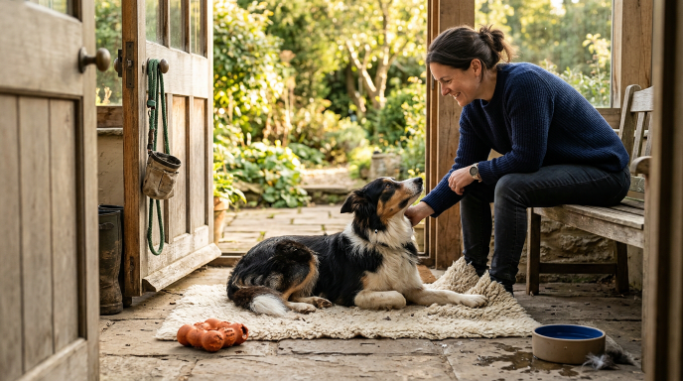
Yes. The way a Border Collie interacts with people can change as they mature, gain confidence, and develop daily routines.
Don’t assume your puppy’s current personality is the finished version.
Puppies
Young puppies may alternate between intense social contact and distracted exploration. Their first months should include gentle handling, positive social experiences, training, rest, and safe exposure to everyday life.
Adolescents
Adolescent Border Collies can seem more independent or harder to settle. Their energy and curiosity may temporarily overshadow cuddly behavior.
Keep expectations consistent. Continue rewarding calm interaction instead of competing with excitement.
Adults
Many adult Border Collies develop more predictable social habits. Once their physical and mental needs are met, some become noticeably more relaxed around the house.
Seniors
Older dogs may seek more quiet companionship as their activity level changes. Others become more sensitive to handling because of physical discomfort.
Vet note: If an older Border Collie suddenly avoids touch, becomes unusually clingy, or changes behavior, ask your veterinarian to rule out pain or another medical cause.
Does more exercise make a Border Collie more affectionate?
Appropriate exercise can help an energetic dog settle, but endless intense exercise isn’t a shortcut to affection. Mental stimulation, sleep, training, and calm routines matter too.
The goal isn’t to exhaust your Border Collie. It’s to create a balanced life where the dog has enough physical activity, thinking work, social connection, and rest.
Frequently Asked Questions
Do Border Collies get attached to one person?
Border Collies often develop an especially strong bond with the person who trains, exercises, and interacts with them most. However, they can form loving relationships with several family members and may choose different people for play, comfort, walking, or relaxation.
Are Border Collies affectionate dogs?
Yes, many Border Collies are deeply affectionate. Their affection may appear as following you, watching you, leaning against you, bringing toys, asking to play, or sleeping nearby rather than constantly sitting on your lap.
Do Border Collies like strangers?
It depends on the individual dog. Some Border Collies greet strangers happily, while others remain reserved and prefer to observe first. Early positive socialization and respectful introductions can help a dog feel comfortable without forcing social contact.
Why does my Border Collie follow me everywhere?
Your Border Collie may follow you because they enjoy your company, expect an activity, have learned that following earns rewards, or naturally pay close attention to human movement. If clinginess appears suddenly or involves distress, discuss the change with your veterinarian.
How do I know if my Border Collie trusts me?
A trusting Border Collie usually behaves comfortably around you. They may voluntarily approach, rest nearby, engage in play, accept appropriate handling, respond to training, and return to you after exploring without showing persistent fear or avoidance.
Why doesn’t my Border Collie like cuddling?
Some Border Collies simply prefer less physical contact. Temperature, personality, past experiences, activity level, and where you touch them can all affect cuddling preferences. Respecting that preference often strengthens trust rather than weakening your bond.
Can Border Collies sense their owner’s emotions?
Dogs pay close attention to human voice, posture, movement, facial expressions, and routines. A Border Collie may therefore respond differently when you appear excited, upset, or tense, although you shouldn’t assume you know the dog’s exact emotional interpretation.
Bottom line: Border Collies can love people intensely, but they often express that love through attention and partnership as much as cuddling.
Give your dog meaningful activities, calm companionship, consistent training, and the freedom to communicate their boundaries. Over time, you’ll learn the individual signs that say, in true Border Collie fashion, “You’re my person.”