

Quick Answer
The kind of person who owns a Border Collie successfully is usually active, patient, consistent, and interested in doing things with their dog. Border Collies are intelligent working dogs that need physical activity, mental challenges, and regular interaction, which is why the Border Collie breed profile describes them as energetic dogs that need plenty to keep them occupied.
A good Border Collie owner usually has these qualities:
- Active lifestyle: They enjoy walking, hiking, running, dog sports, training, or regular outdoor activities.
- Time to engage: They can give the dog meaningful attention instead of relying only on a backyard.
- Patient mindset: They understand that a clever dog still needs calm, consistent teaching.
- Love of training: They enjoy teaching skills, games, tricks, obedience, or sports.
- Flexible routine: They can adjust activities as the dog ages, learns, and develops.
The simplest test
- If you want a dog to share your hobbies, learn with you, and stay involved in daily life, a Border Collie may suit you.
People often ask me, “What kind of person owns a Border Collie?” because the breed has such a strong reputation for intelligence and energy.
The better question is whether your habits match a working herding dog. In 2026, that matters far more than whether you live on a farm or in the suburbs.
In This Guide
- What kind of person typically owns a Border Collie?
- What hobbies suit a Border Collie owner?
- What personality traits make someone a good Border Collie owner?
- How much time does a Border Collie owner need?
- What kind of home and family suit a Border Collie?
- Border Collie vs Australian Shepherd: which owner fits each?
- Who should probably not own a Border Collie?
- Frequently asked questions
- Final takeaway
What Kind of Person Typically Owns a Border Collie?
A successful Border Collie owner is usually someone who wants an involved relationship with a dog. They don’t expect the dog to entertain itself for most of the day.
A Border Collie’s working drive is its natural desire to focus, solve problems, chase movement, and complete tasks. That drive comes from generations of livestock work.
Simple definition: A Border Collie owner is someone prepared to give a highly trainable herding dog regular physical exercise, mental work, structure, companionship, and useful outlets for instinctive behavior.
They like doing things with their dog
The best owners often see dog care as part of their hobbies. Walking the dog isn’t simply another chore on the calendar.
They may enjoy activities such as:
- Long walks and nature trails
- Hiking and camping
- Running when the adult dog’s fitness allows it
- Agility or obedience training
- Disc games and structured fetch
- Herding lessons
- Scent games and puzzle work
- Teaching tricks at home
I find that this attitude makes a huge difference. An owner who enjoys interacting with the dog rarely sees training as wasted time.
They appreciate an observant dog
Border Collies tend to notice movement, routines, gestures, and patterns quickly. That’s wonderful when you enjoy communication with your dog.
It can be less enjoyable if you want a pet that rarely reacts to what happens around it.
The breed’s famous eye is the intense stare used to influence livestock. Similar focus may appear around balls, running children, bicycles, or other moving objects.
- Good owners: redirect that interest into controlled games and training.
- Unprepared owners: may accidentally let fixation become a daily habit.
What Hobbies Suit a Border Collie Owner?
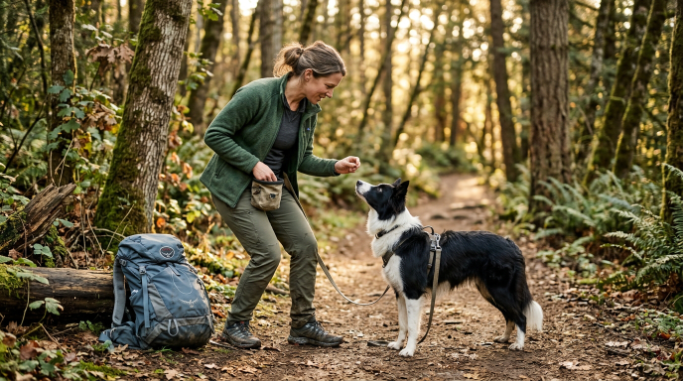
Border Collies fit people whose hobbies already involve movement, learning, or spending time outdoors. You don’t need sheep or a large farm.
You do need something constructive to share with the dog.
Outdoor hobbies are an obvious match
Walking, hiking, camping, and exploring can provide useful variety. Different surfaces, smells, and environments also give the dog something to process mentally.
- Neighborhood walks with training stops
- Woodland or park hikes
- Dog-friendly camping trips
- Trail exploration
- Outdoor photography with a trained companion
Don’t assume distance alone solves everything. A Border Collie can return from exercise physically tired but still ready to use its brain.
Training itself can become the hobby
Some of the happiest Border Collie households I’ve seen make short training sessions part of normal life. Ten focused minutes can be more satisfying than endless uncontrolled ball throwing.
Reward-based training also gives the dog clear information. The ASPCA’s pet behavior guidance explains the value of choosing appropriate professional help when behavior or training problems become difficult.
- Recall practice
- Loose-leash walking
- Impulse-control games
- Object names
- Trick chains
- Basic scent searches
- Agility foundations
The goal isn’t to turn every pet into a competition dog. The goal is to give that busy mind a useful direction.
What Personality Traits Make Someone a Good Border Collie Owner?
The right owner doesn’t need to be an athlete or professional dog trainer. Temperament matters just as much as fitness.
Patience, consistency, curiosity, and humor help enormously.
Consistency matters more than toughness
Border Collies learn patterns quickly, including patterns we didn’t mean to teach. Rules that change every day can create confusion.
- Decide where the dog can settle.
- Use consistent cues.
- Reward the behaviors you want repeated.
- Keep household rules clear.
- Make calm behavior worthwhile.
Harsh handling isn’t the answer. A sensitive, observant dog often responds better when communication is predictable.
Curious people tend to enjoy the breed
A Border Collie may force you to become a better observer. You start noticing what happens before barking, chasing, staring, or restlessness begins.
That’s one reason experienced dog owners often enjoy the breed. They become interested in the reason behind a behavior instead of only stopping the behavior.
You should be comfortable setting boundaries
More activity isn’t always better. Some Border Collies also need help learning how to relax.
A thoughtful owner balances excitement with calm routines.
- Active play has a clear beginning and end.
- Training sessions stay short and focused.
- Rest periods aren’t constantly interrupted.
- High-arousal games aren’t the only entertainment.
Section Takeaway: The ideal Border Collie owner is engaged, consistent, and willing to teach both activity and calmness.
How Much Time Does a Border Collie Owner Need?
A Border Collie needs more than one rushed walk around the block. However, there isn’t one universal exercise number that fits every dog.
Age, fitness, health, temperament, working background, and activity type all change the answer.
Think in blocks of activity
I prefer thinking about a balanced day instead of chasing a single exercise target. A healthy adult might have several different forms of engagement across the day.
| Activity | Example Session | Main Benefit |
|---|---|---|
| Walking | 20–40 minutes | Movement and environmental enrichment |
| Training | 5–15 minutes | Mental focus and communication |
| Structured play | 10–20 minutes | Physical outlet and impulse control |
| Scent or puzzle work | 5–15 minutes | Problem-solving and enrichment |
Those times are examples, not veterinary prescriptions. Puppies, seniors, and dogs with medical problems need activities adjusted to their bodies.
The American Veterinary Medical Association’s pet-owner resources emphasize choosing pets that suit your lifestyle and providing appropriate exercise and mental stimulation.
Mental work matters
One common mistake is trying to exhaust a Border Collie with harder exercise every day. That approach can simply build a fitter dog that expects more exercise.
Mix physical activity with thinking.
- Hide treats and ask the dog to search.
- Practice known cues in new places.
- Teach names for toys.
- Rotate puzzle activities.
- Practice settling after exciting games.
*Vet note: Ask your veterinarian what exercise is appropriate if your dog is young, senior, injured, overweight, or living with a medical condition.*
Section Takeaway: Time matters, but quality matters too. A balanced Border Collie routine combines movement, learning, interaction, and genuine rest.
What Kind of Home and Family Suit a Border Collie?
A Border Collie doesn’t automatically need acreage. An attentive apartment owner can sometimes provide a better life than a disengaged owner with ten acres.
The important resource is daily involvement.
A yard is useful, but it isn’t a solution
A secure yard provides space for toileting and controlled play. It doesn’t replace walks, training, exploration, or companionship.
- Apartment: possible when exercise and training are planned carefully.
- Suburban home: often convenient for structured routines.
- Rural property: offers space but still requires supervision and engagement.
- Working farm: may suit the breed when the dog is trained for appropriate work.
What about children?
Border Collies can live successfully with children, but their herding instincts matter. Fast movement may encourage chasing, circling, staring, or attempts to control movement.
The AKC notes that the breed’s herding tendency can affect interactions with people and that active, experienced households are often a strong fit.
- Supervise dog-child interactions.
- Teach children not to tease or chase the dog.
- Give the dog a quiet resting place.
- Redirect inappropriate herding behavior early.
Can a retired person own a Border Collie?
Yes. Age alone doesn’t determine whether someone is a suitable owner.
An active retiree may have something a busy younger household lacks: time.
- Daily walking
- Gardening with supervised outdoor companionship
- Training classes
- Dog-friendly travel
- Photography walks
- Obedience or scent-work hobbies
The important question is whether the person’s mobility, schedule, support system, and activity level match that individual dog.
Border Collie vs Australian Shepherd: Which Owner Fits Each?
Border Collies and Australian Shepherds attract similar people because both are intelligent herding breeds. Neither is a sensible choice for someone seeking a consistently low-energy companion.
There are still useful differences to consider.
| Trait | Border Collie | Australian Shepherd |
|---|---|---|
| Typical height | 18–22 inches | 18–23 inches |
| Typical weight | 30–55 pounds | 40–65 pounds |
| Breed group | Herding | Herding |
| Work style | Often intense, focused, movement-sensitive | Energetic, work-oriented, versatile |
| Best owner | Enjoys frequent training and mental challenges | Enjoys active family life, training, and dog activities |
Breed averages can’t predict every individual. Working lines, upbringing, socialization, age, and temperament can create major differences within either breed.
The Border Collie information from PetMD’s veterinary-reviewed breed guide also highlights the breed’s need for both physical activity and mental stimulation.
What about the Australian Kelpie?
The Australian Kelpie is another highly active herding breed. Like a Border Collie, it was developed for demanding livestock work rather than passive companionship.
If you’re comparing these breeds, choose the individual dog and breeder or rescue carefully. Don’t choose based only on looks.
Who Should Probably Not Own a Border Collie?
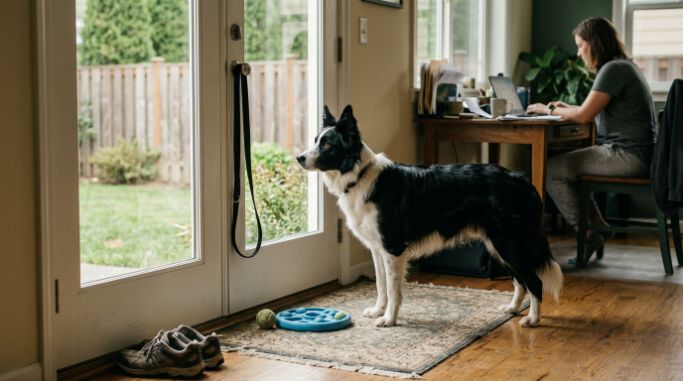
A Border Collie isn’t the ideal choice for every dog lover. Admiring the breed isn’t the same as enjoying its daily needs.
This breed may frustrate you if you want a pet that requires little planning.
Think carefully if these statements sound familiar
- You dislike daily walks or outdoor activity.
- You don’t enjoy teaching dogs.
- Your schedule regularly leaves the dog alone for long periods.
- You want a dog that remains satisfied with occasional weekend exercise.
- You become frustrated when a dog notices every movement around it.
- You expect a backyard to provide enough entertainment.
- You dislike adjusting routines around a pet.
None of those preferences make someone a bad person. They simply suggest another breed or individual dog may fit better.
Too much intelligence can be demanding
People often say they want the smartest dog possible. They sometimes forget that intelligence creates work for the human too.
A clever dog can learn desirable behaviors quickly. It can also learn how to open doors, predict routines, demand games, or repeat behaviors that earned attention once.
- Prevent unwanted habits before they become routines.
- Reward calm choices.
- Use management when the dog is still learning.
- Give natural instincts acceptable outlets.
VCA’s Border Collie guidance similarly notes that these dogs need structured activity and can struggle when they lack enough stimulation.
Don’t choose the breed for appearance alone
Black-and-white markings, expressive eyes, and athletic movement make Border Collies striking dogs. Coat color says almost nothing about whether the lifestyle will suit you.
Look at temperament, working background, health history, and energy level before appearance.
Section Takeaway: A Border Collie is a poor match when the owner’s preferred lifestyle conflicts with the dog’s need for involvement, structure, movement, and mental work.
Frequently Asked Questions
What type of people are attracted to Border Collies?
Border Collies often attract active people who enjoy intelligent, responsive dogs. Hikers, runners, trainers, farmers, dog-sport enthusiasts, and people who enjoy teaching tricks may find the breed especially appealing.
Are Border Collies only suitable for experienced dog owners?
No, but first-time owners should be ready to learn quickly. Training classes, realistic expectations, consistent routines, and enough time for exercise and mental stimulation can make a major difference.
Do you have to be athletic to own a Border Collie?
No. You need an active and engaged routine, but that doesn’t always mean running. Walking, training, scent games, obedience, puzzles, and controlled play can all contribute to a balanced lifestyle.
Can an older adult own a Border Collie?
Yes, when the person’s health, mobility, schedule, and support system match the individual dog. Active retirees may enjoy Border Collies because they often have time for walking, training, and shared hobbies.
Are Border Collies good for introverts?
They can be excellent companions for introverted owners who enjoy one-on-one activities. A quiet person who likes hiking, training, gardening, or spending time outdoors may fit the breed better than a highly social but inactive owner.
Can a busy professional own a Border Collie?
Possibly, but the schedule needs careful planning. Long workdays without exercise, interaction, training, or reliable help can make the breed difficult to manage and may leave the dog without enough stimulation.
What is the biggest mistake new Border Collie owners make?
One common mistake is thinking physical exercise solves every problem. Border Collies usually benefit from a combination of movement, problem-solving, training, calmness, routine, and appropriate social experiences.
Final Takeaway: Are You a Border Collie Person?
The typical Border Collie person isn’t defined by age, job, or home size. They’re defined more by what they’re willing to do with the dog every day.
They enjoy movement, learning, interaction, and structure. Most importantly, they’re willing to adapt to the individual dog in front of them.
- You enjoy active hobbies.
- You have time for daily interaction.
- You like teaching and problem-solving.
- You can provide both activity and calm periods.
- You understand that intelligence doesn’t make a dog effortless.
- You want your dog involved in your everyday life.
If most of those points describe you, a Border Collie could become an exceptional companion. If they don’t, choosing a better-matched dog is a smart act of responsible ownership.
Before bringing one home, spend time with adult Border Collies if possible. Talk with responsible breeders, rescue organizations, trainers, and your veterinarian so you understand the individual dog rather than relying on the breed’s reputation alone.
