

Quick Answer
If you don’t walk a Border Collie regularly, they may become restless, frustrated, destructive, noisy, or obsessed with finding their own activities. The Border Collie’s working-dog background means this breed usually needs both meaningful physical activity and daily mental stimulation.
Common signs of too little activity
- Constant restlessness: Your dog may pace, follow you around, or struggle to settle.
- Destructive behavior: Chewing, digging, shredding, and stealing objects can become self-made entertainment.
- Extra barking: Boredom and frustration can increase vocal behavior in some dogs.
- Herding behavior: Chasing, staring, circling, or controlling people and pets may become more noticeable.
- Attention seeking: Your Border Collie may repeatedly bring toys, paw at you, or demand interaction.
- Weight and fitness changes: Long-term inactivity can contribute to reduced fitness and unwanted weight gain.
What to do
- Restore activity gradually and combine walks with sniffing, training, play, enrichment, and enough rest.
Skipping one walk won’t ruin your Border Collie. The problem starts when too little physical and mental activity becomes the normal routine.
As of 2026, my practical rule is simple: don’t focus only on exhausting your BC. Build a day that gives the dog chances to move, sniff, think, learn, and then relax.
In This Guide
- What Happens When a Border Collie Doesn’t Get Walked?
- Why Does Walking Matter So Much to Border Collies?
- How Can You Tell Your Border Collie Needs More Activity?
- How Much Walking Does a Border Collie Need?
- Is a Backyard Enough Instead of Walking?
- What If You Can’t Walk Your Border Collie Today?
- Can Lack of Walking Cause Behavior Problems?
- How Do You Restart Exercise After Inactivity?
- Frequently Asked Questions
What Happens When a Border Collie Doesn’t Get Walked?
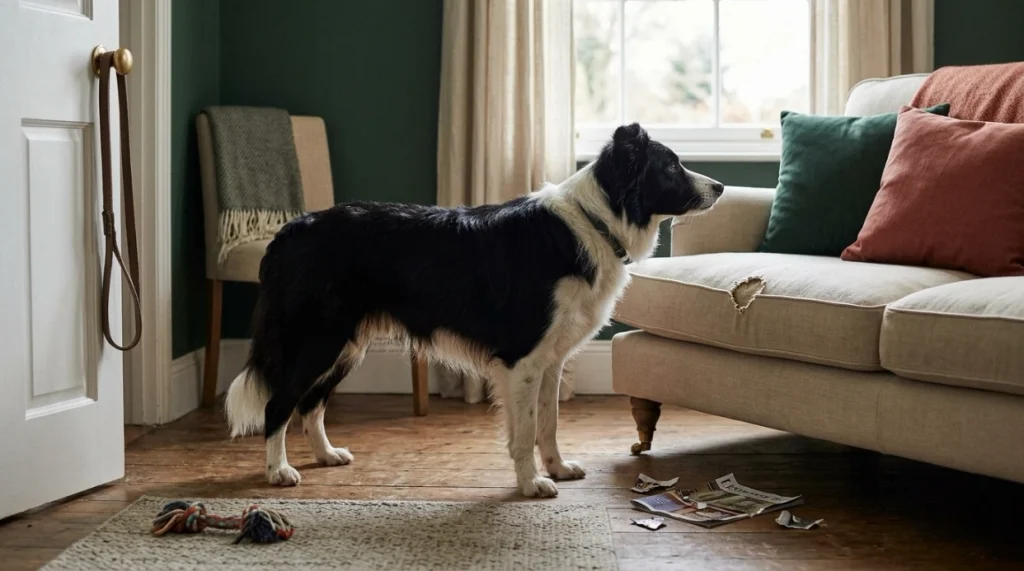
A Border Collie that repeatedly misses appropriate exercise may become physically under-stimulated and mentally frustrated. You often notice the change in behavior before you notice a change in fitness.
This breed was developed to work, watch movement, respond to a handler, and solve problems. A quiet home with nothing meaningful to do can leave a healthy young Border Collie searching for a job.
Boredom can become destructive behavior
A bored Border Collie may start creating entertainment from the environment. That can be expensive.
- Chewing: Furniture, shoes, rugs, cushions, or household objects may become targets.
- Digging: Some dogs dig gardens, bedding, carpets, or corners.
- Shredding: Paper, boxes, beds, and soft objects can become instant projects.
- Stealing: Carrying forbidden items can trigger attention and create a rewarding game.
These behaviors aren’t proof that a dog is being spiteful. They can simply provide movement, sensory input, attention, or problem-solving when better outlets are missing.
Your dog may struggle to settle
Some under-stimulated Border Collies pace between rooms, stare at their owners, repeatedly drop toys, or react to every small movement. Their body may be indoors while their brain remains ready for action.
Adding endless high-speed fetch isn’t always the solution. A balanced day should also teach calm behavior and include low-arousal activities.
Natural herding tendencies can become inconvenient
Border Collies have a strong herding heritage. Movement from children, cats, bicycles, runners, or other dogs may attract intense attention.
When useful outlets are missing, some dogs may spend more time staring, stalking, circling, or chasing movement. Management and training matter as much as exercise.
Section Takeaway: Regular walking won’t solve every behavior issue, but chronic under-stimulation can make everyday behavior harder to manage. Give your Border Collie purposeful outlets before they invent their own.
Why Does Walking Matter So Much to Border Collies?
Walking gives a Border Collie more than calorie-burning exercise. A good walk combines movement, exploration, communication, sniffing, and exposure to a changing environment.
The PetMD Border Collie guide also emphasizes the breed’s strong need for exercise and mental stimulation.
A Border Collie’s exercise need is the amount and type of physical and mental activity required to support healthy movement, appropriate behavior, engagement, and recovery.
Sniffing makes a walk mentally useful
Don’t measure every walk by distance. Letting your dog investigate smells can provide meaningful mental activity.
A 30-minute sniff-focused outing can serve a different purpose from 30 minutes of repetitive ball chasing. I like to use both active outings and slower exploration instead of making every session a workout.
Walking gives your dog changing information
The street changes every day. Dogs encounter different scents, sounds, surfaces, people, animals, and environmental patterns.
That variety gives the Border Collie’s busy brain something appropriate to process. It also creates natural opportunities to practice recall, loose-leash walking, checking in, and impulse control.
Physical fitness still matters
Regular age-appropriate activity supports muscle condition, stamina, mobility, and healthy body weight. However, more exercise isn’t automatically better.
A high-drive dog may keep moving after becoming tired. Owners still need to schedule water, recovery, sleep, and calm periods.
How Can You Tell Your Border Collie Needs More Activity?
Look for a pattern rather than one isolated behavior. Barking or chewing can have many causes, so exercise shouldn’t become an automatic diagnosis.
Possible signs of insufficient activity include:
- Pacing: Your dog repeatedly moves around without settling.
- Demand barking: Vocal behavior increases when nothing is happening.
- Persistent toy pushing: Your dog constantly pressures you to start another game.
- Destructive chewing: Household objects become frequent targets.
- Digging: Your yard, bedding, or flooring receives unwanted attention.
- Overreaction to movement: Cars, bikes, pets, or running children become difficult to ignore.
- Reduced fitness: Your dog gains weight or loses conditioning over time.
- Difficulty relaxing: Even quiet periods seem impossible without constant entertainment.
PetMD notes that bored dogs may show behaviors such as excessive barking, pacing, digging, and other repetitive activities. Mental stimulation deserves attention alongside physical movement.
Sudden behavior changes deserve a different response. Pain, illness, fear, anxiety, and other problems can look like restlessness.
Vet note: If your Border Collie’s behavior, mobility, appetite, sleep, or energy changes suddenly, speak with your veterinarian rather than assuming the dog simply needs more exercise.
How Much Walking Does a Border Collie Need?
There isn’t one correct number for every Border Collie. Age, health, fitness, temperament, working background, weather, and the intensity of each activity all change the answer.
For young, healthy adults, substantial daily activity is common. PetMD suggests roughly one to two hours of exercise per day for many young Border Collies, but that doesn’t need to be one continuous walk.
| Life Stage | Example Walking Approach | Main Priority |
|---|---|---|
| Puppy | Several short, gentle outings; many older puppies may handle roughly 10–20 minute easy walks depending on development and veterinary guidance. | Socialization, sniffing, basic training, and avoiding forced endurance work. |
| Healthy adult | Often 60–120 minutes of total daily physical activity, divided across walks, play, training, and other suitable exercise. | Balance cardiovascular activity with mental work and recovery. |
| Senior | Often shorter, gentler sessions; around 30–60 total minutes may suit some seniors, while mobility problems may require less. | Comfort, mobility, sniffing, and preserving quality of life. |
Think of these numbers as starting ranges, not prescriptions. Your dog’s recovery after activity tells you as much as the clock does.
A useful adult schedule might include:
- 30–45 minutes of purposeful walking in the morning.
- 5–10 minutes of obedience, recall, or trick training.
- 20–30 minutes of suitable play or another activity later.
- 30–45 minutes of evening walking or relaxed exploration.
- Short enrichment opportunities between active sessions.
Don’t turn the schedule into a competition. The goal is a dog that can enjoy activity and also settle afterward.
Vet note: Puppies, seniors, overweight dogs, dogs returning from injury, and Border Collies with medical conditions should have exercise adjusted with veterinary guidance.
Is a Backyard Enough Instead of Walking?
Usually, no. A backyard provides useful space, but simply opening the door doesn’t guarantee meaningful exercise or enrichment.
Many dogs eventually stop exploring a familiar yard. Others repeat the same patterns, such as fence running, barking, digging, or watching neighbors.
Use the yard as an activity space
A yard becomes much more valuable when you participate. Give your Border Collie something structured to do.
- Practice recalls between two people.
- Hide treats or kibble for scent searches.
- Teach your dog to circle cones or trees.
- Practice short obedience sequences.
- Play controlled tug with clear start and stop cues.
- Scatter food safely in grass for supervised searching.
The ASPCA’s canine enrichment guidance recommends activities that let dogs sniff, search, play, chew, and problem-solve.
Those activities complement walking. They don’t always replace the changing sensory experience of leaving your property.
What If You Can’t Walk Your Border Collie Today?
Missing an occasional walk is manageable. Illness, storms, unsafe heat, poor air quality, work emergencies, and other disruptions happen.
Replace some of the missing activity with safe indoor mental work. You don’t need a complicated setup.
Try short training sessions
Five to ten focused minutes can give a smart dog useful work. Stop before your Border Collie becomes frustrated or overexcited.
- Practice sit, down, stay, and recall.
- Teach targeting with the nose or paw.
- Practice going to a mat and settling.
- Teach names for two or three toys.
- Practice “leave it” and impulse control.
Turn meals into enrichment
Instead of placing every meal in a bowl, use some food for supervised enrichment when appropriate for your dog.
- Food puzzles
- Snuffle mats
- Scatter feeding
- Hide-and-seek searches
- Safe stuffed food toys
Use scent work
Hide a few treats around one room and ask your dog to find them. Make early searches easy.
As your dog understands the game, increase the difficulty gradually. Nose work can be useful on days when vigorous outdoor exercise isn’t possible.
Section Takeaway: One missed walk isn’t an emergency. Replace part of the lost outing with training, sniffing, searching, and calm enrichment, then return to your normal routine when conditions are safe.
Can Lack of Walking Cause Behavior Problems?
Insufficient exercise and enrichment can contribute to unwanted behavior, but they aren’t the only possible causes. Genetics, learning history, stress, fear, pain, environment, and medical problems also matter.
The AKC’s guidance for high-energy dogs recommends appropriate exercise and mentally engaging jobs while also noting that persistent hyperactivity can warrant veterinary evaluation.
Don’t assume every problem means “more exercise”
If your dog barks, lunges, guards resources, panics when alone, or chases shadows, exhausting the dog isn’t a complete behavior plan. Some problems require management and specialized training.
Repeatedly trying to tire out a Border Collie can also create an increasingly conditioned athlete. A dog that runs farther every week may simply become capable of demanding even more running.
Teach an off-switch too
Calmness is a skill. Give your Border Collie predictable periods when nothing exciting happens.
- Reward relaxed behavior on a mat.
- Use calm chewing or food enrichment when appropriate.
- Keep high-speed games structured.
- End play before your dog becomes frantic.
- Protect uninterrupted sleep and rest periods.
Vet note: Persistent pacing, compulsive behavior, sudden aggression, severe anxiety, exercise intolerance, limping, or unusual fatigue should be discussed with a veterinarian or qualified veterinary behavior professional.
How Do You Restart Exercise After Inactivity?
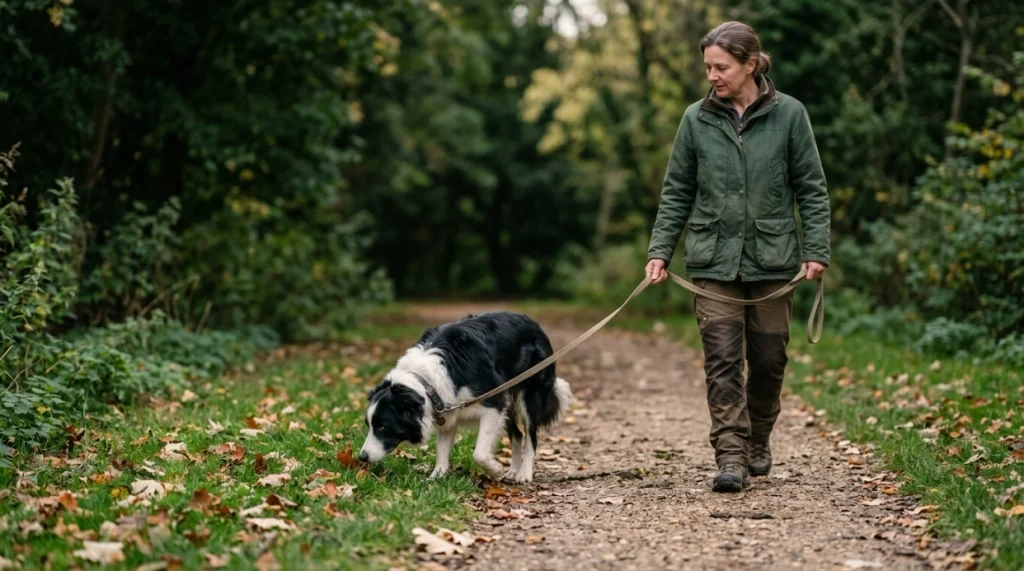
Don’t compensate for two quiet weeks with one enormous hike. Fitness should return gradually.
Start with comfortable sessions your Border Collie can finish without obvious soreness or exhaustion. Increase duration or intensity in small steps.
A simple seven-day restart example
- Days 1–2: Use two or three easy walks and allow plenty of sniffing.
- Days 3–4: Add a few extra minutes if your dog recovers comfortably.
- Day 5: Include a short training or scent session alongside normal walking.
- Day 6: Add moderate play if movement remains comfortable.
- Day 7: Review your dog’s energy, paws, movement, and recovery before increasing again.
Watch the dog rather than following the calendar blindly. Limping, stiffness, reluctance to move, unusual panting, or slower recovery are reasons to reduce activity and seek professional advice when appropriate.
My preferred long-term approach is variety. I would rather build a routine containing walks, sniffing, training, play, problem-solving, and rest than depend on one exhausting activity every day.
Frequently Asked Questions
Is it cruel not to walk a Border Collie?
Missing occasional walks isn’t inherently cruel, but regularly denying an active Border Collie appropriate exercise, enrichment, and opportunities to express normal behaviors can harm their welfare. Walking is one useful outlet, though suitable training, play, scent work, and other activities also contribute.
Can a Border Collie go one day without a walk?
Most healthy Border Collies can handle an occasional no-walk day, especially when you provide indoor training, food enrichment, scent games, and interaction. A single disrupted day is different from chronic inactivity.
Is 30 minutes of walking enough for a Border Collie?
Thirty minutes may suit some seniors, recovering dogs, or individual low-activity days. For many healthy young adults, 30 minutes is unlikely to cover the entire day’s physical and mental activity needs.
Are two walks a day enough for a Border Collie?
Two walks can form a strong foundation if their duration and quality suit the dog. Many Border Collies still benefit from additional training, sniffing, play, puzzles, or dog sports because walking alone doesn’t challenge every part of the breed’s working mind.
Will walking calm a hyper Border Collie?
Appropriate exercise can reduce excess energy, but walking isn’t a guaranteed cure for hyperactive behavior. Some dogs also need better sleep, enrichment, structured training, impulse-control practice, and veterinary assessment if restlessness remains unusual or persistent.
Can Border Collies live without a large yard?
Yes. A large yard isn’t automatically necessary if the owner consistently provides suitable outdoor activity, training, mental stimulation, and toilet breaks. A Border Collie with an engaged owner can receive more meaningful activity than a dog simply left alone in a large yard.
What is the best exercise if I can’t take a long walk?
Combine several short activities. A brief sniff walk, five to ten minutes of training, scent searches, controlled tug, puzzle feeding, and calm enrichment can make a much richer day than relying on one repetitive activity.
The Bottom Line
If you don’t walk a Border Collie regularly and provide no suitable replacement, boredom, frustration, poor conditioning, and unwanted behaviors can become more likely. The answer isn’t simply to run your dog until they’re exhausted.
Build a sustainable routine around physical movement, sniffing, training, problem-solving, social interaction, and genuine downtime. That’s a better goal than counting miles alone.
If your Border Collie suddenly becomes restless, withdrawn, aggressive, painful, or unable to exercise normally, involve your veterinarian. Behavior changes aren’t always caused by a missed walk.
