
Are Border Collies Extremely Loyal? What Owners Should Know

Quick Answer
Yes, Border Collies are typically extremely loyal and often form strong bonds with the people who train, exercise, and interact with them every day. The American Kennel Club’s Border Collie profile describes the breed as intelligent, energetic, affectionate, and highly responsive, although every individual dog has its own personality.
Common signs of Border Collie loyalty
- Stays nearby: Your Border Collie often chooses to rest, walk, or work close to you.
- Checks in: They regularly look toward you during walks, play, or unfamiliar situations.
- Responds quickly: A strong bond can make training and communication easier.
- Seeks interaction: Many Borders would rather work or play with their person than entertain themselves.
- Shows affection: Loyalty may appear as leaning, following, cuddling, greeting, or simply staying close.
How to verify the bond is healthy
- A loyal Border Collie should still be able to relax, sleep, eat, and spend short periods away from you without intense distress.
If you’re wondering, “Are Border Collies extremely loyal?” the short answer is yes. Their loyalty is closely connected to their working heritage, intelligence, responsiveness, and desire to cooperate with people.
I think it’s more useful, though, to understand what that loyalty looks like in everyday life. A strong bond can be wonderful, but owners should also know the difference between devotion and unhealthy dependence.
In This Guide
- Are Border Collies extremely loyal?
- What does Border Collie loyalty look like?
- Why do Border Collies bond so strongly?
- Do Border Collies choose one favorite person?
- Does loyalty mean affectionate, obedient, or protective?
- When does loyalty become separation anxiety?
- How can you build a healthy loyal bond?
- Are Border Collies loyal to the whole family?
- Frequently asked questions
Are Border Collies Extremely Loyal?
Yes. Border Collies are commonly considered highly loyal dogs, especially when they receive consistent training, activity, companionship, and mental stimulation.
A Border Collie’s loyalty is a strong social attachment combined with a desire to stay connected, communicate, and cooperate with familiar people. It isn’t simply following someone from room to room.
The breed was developed as a working sheepdog along the border regions of Scotland and England. Successful herding required a dog that could watch its handler carefully while also making fast decisions around livestock.
- Human focus: Many Border Collies constantly monitor their handler’s movement and body language.
- Responsiveness: They often learn verbal cues, whistles, gestures, and routines quickly.
- Working partnership: Doing activities together can become an important part of the relationship.
- Social attachment: Many Borders prefer being near familiar people instead of spending long periods alone.
Breed tendencies aren’t guarantees. Genetics, early socialization, training history, environment, age, and individual temperament all affect how strongly a particular Border Collie attaches to people.
What Does Border Collie Loyalty Look Like Day to Day?
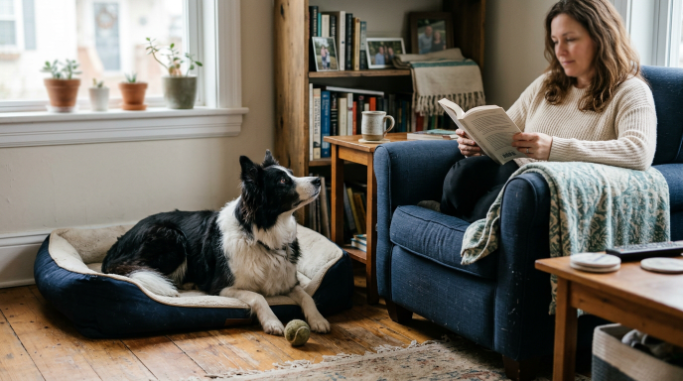
Border Collie loyalty often looks quieter than dramatic guarding behavior. You may notice your dog repeatedly choosing your company and looking to you for direction.
A particularly common behavior is the “check-in.” During a walk or play session, your Border may glance toward you even when nothing has been asked.
- Following you: Your dog moves between rooms when you move.
- Resting nearby: They choose a bed or floor space where they can keep track of you.
- Watching closely: Borders often notice small changes in posture, voice, and routine.
- Fast greetings: They may become noticeably excited when a familiar person returns.
- Offering behavior: Some bring balls, toys, or training behaviors when they want interaction.
- Seeking reassurance: They may look toward a trusted person in unfamiliar environments.
Not every loyal Border Collie is cuddly. Some dogs show attachment through proximity and cooperation rather than climbing into your lap.
That distinction matters. A dog can be deeply attached while still preferring a little physical space.
Why Do Border Collies Bond So Strongly With People?
Border Collies were selected for generations to work closely with humans. That background helps explain their intense attention and unusually strong interest in communication.
The AKC’s broader guide to dog temperament and breed tendencies also notes that Border Collies often have intelligent, alert, intense, and loyal personalities. Individual variation still matters.
Working heritage encourages cooperation
A working Border Collie needs to notice where livestock moves while remaining responsive to its handler. That combination rewards attention, problem-solving, and teamwork.
Intelligence makes routines meaningful
These dogs learn patterns quickly. Feeding times, walking shoes, training equipment, work schedules, and even small movements can become meaningful signals.
Shared activity strengthens the relationship
For many Border Collies, interaction is more valuable than passive attention. Training, hiking, scent games, herding, agility, fetch, and problem-solving activities give the dog a reason to communicate with you.
The PetMD Border Collie breed guide recommends substantial daily exercise and mental stimulation for this energetic herding breed. A healthy adult often needs around one to two hours of exercise, adjusted for health and individual needs.
Do Border Collies Choose One Favorite Person?
Some Border Collies do develop a noticeably stronger attachment to one person. This is often the person who provides the most training, exercise, play, structure, or working opportunities.
That doesn’t automatically make the Border Collie a strict one-person dog. Many are strongly attached to several household members while having one preferred training partner.
Why one person may become the favorite
- Training frequency: The dog practices communication with that person most often.
- Exercise: Daily walks and active games create repeated positive interactions.
- Predictability: Consistent rules make a person easier for the dog to understand.
- Reward history: Food, toys, praise, and access to favorite activities build associations.
- Personality match: Some dogs simply connect more easily with one person’s energy and handling style.
If you want a family Border Collie to bond broadly, share enjoyable responsibilities. Different family members can handle meals, short training sessions, walks, play, and calm relaxation.
Does Loyalty Mean Affectionate, Obedient, or Protective?
No. Loyalty, affection, obedience, and protectiveness overlap in some situations, but they aren’t the same trait.
Understanding the difference prevents owners from misreading normal Border Collie behavior.
| Trait | What it means | What you may notice |
|---|---|---|
| Loyalty | Strong attachment to familiar people | Following, checking in, staying nearby, seeking interaction |
| Affection | Enjoyment of social or physical closeness | Leaning, cuddling, greeting, resting against you |
| Obedience | Reliable response to learned cues | Coming when called, staying, leaving objects, settling on cue |
| Protectiveness | Behavior intended to create distance from a perceived threat | Alerting, blocking, barking, or defensive behavior in certain situations |
A loyal Border Collie doesn’t need to guard you. Many are watchful or reserved around strangers without being natural protection dogs.
Training matters too. An obedient Border Collie may respond beautifully because you’ve built a strong reinforcement history, not simply because the dog feels loyal.
When Does Border Collie Loyalty Become Clinginess or Separation Anxiety?
Healthy loyalty allows a dog to feel connected while still functioning independently. Separation anxiety involves distress when the dog is separated from an attached person.
Following you around the house alone doesn’t prove separation anxiety. Look at what happens when you leave.
- Usually healthy: The dog follows you but can settle elsewhere when encouraged.
- Usually healthy: The dog notices departures but soon rests, eats, or plays.
- Possible concern: Persistent barking or howling starts after departures.
- Possible concern: The dog repeatedly scratches, chews, or digs around exits.
- Possible concern: Pacing, drooling, trembling, or frantic behavior appears when departure cues begin.
- Possible concern: The dog cannot eat or settle when left alone.
The ASPCA’s separation anxiety guidance notes that affected dogs may bark, howl, destroy objects, pace, eliminate indoors, or attempt to escape after their guardian leaves. These behaviors reflect distress rather than spite.
Don’t punish anxiety-related behavior. Punishment can increase fear without addressing why the dog panics.
Vet note: Sudden clinginess or a major behavior change can also have medical causes, particularly in older dogs. Speak with your veterinarian if the change appears suddenly or comes with pain, appetite changes, confusion, or other unusual symptoms.
How Can You Build a Strong but Healthy Bond With a Border Collie?
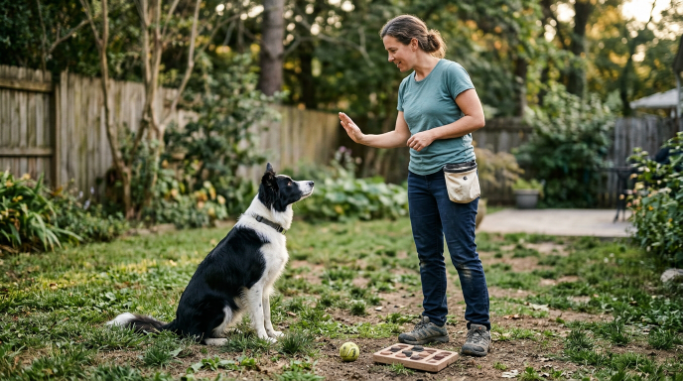
The best bond combines companionship with confidence. Your Border Collie should enjoy working with you without believing they must remain beside you every minute.
Train together in short sessions
Five to ten minutes of focused training can be more productive than one long repetitive session. Practice useful skills such as recall, settle, place, leave it, loose-leash walking, and impulse control.
Give the brain a job
- Hide treats for scent-search games.
- Teach the names of several toys.
- Practice obedience around mild distractions.
- Use puzzle feeders or food-search activities.
- Try dog sports that suit your dog’s health and temperament.
Practice independence deliberately
Reward your dog for settling on a bed while you move around the room. Gradually build comfortable periods when attention isn’t available.
A dog who can relax independently often becomes a better companion. Constant entertainment can accidentally teach a clever Border Collie to demand interaction all day.
Use positive, predictable training
I prefer clear cues, consistent boundaries, and rewards for the behavior I want repeated. Border Collies notice inconsistency quickly, so predictable communication makes training easier.
Physical activity still matters, but don’t try to exhaust your dog with endless running. Mix exercise with sniffing, training, problem-solving, calm time, and adequate rest.
Are Border Collies Loyal to the Whole Family?
Yes, many Border Collies become devoted family dogs rather than bonding exclusively with one person. Their strongest relationships usually develop with people who participate in their daily life.
Families should remember that herding behavior can appear around moving children or other pets. Chasing, circling, staring, or attempting to control movement can come from herding instinct rather than aggression.
With children
Supervise interactions and teach both the child and dog appropriate boundaries. Fast running and loud play may excite a young Border Collie’s herding instincts.
With other dogs and pets
Compatibility depends heavily on socialization and the individuals involved. A Border Collie may live happily with other animals, but introductions should be controlled and gradual.
With strangers
Some Borders greet strangers readily, while others remain reserved until they feel comfortable. Reserved behavior doesn’t mean the dog lacks confidence or loyalty.
Early positive socialization helps a young Border learn that unfamiliar people, sounds, surfaces, places, and animals don’t automatically require a reaction. Keep those experiences controlled rather than overwhelming.
Frequently Asked Questions About Border Collie Loyalty
Are Border Collies loyal to one person?
Some Border Collies develop a favorite person, particularly the family member who trains and exercises them most. However, many bond closely with several people when family members regularly participate in feeding, training, play, walking, and calm social time.
Are Border Collies affectionate dogs?
Border Collies can be highly affectionate, but affection varies between individuals. Some love cuddling and physical contact, while others show attachment by following their owner, checking in frequently, bringing toys, responding eagerly to cues, or resting nearby.
Why does my Border Collie follow me everywhere?
Your dog may follow you because of social attachment, curiosity, learned routines, anticipation of activities, or the breed’s strong tendency to monitor people. Following isn’t automatically a problem unless the dog becomes distressed or unable to function when separated from you.
Will a Border Collie protect its owner?
A Border Collie may alert you to unfamiliar activity and can be watchful around strangers, but the breed was developed primarily for herding rather than protection work. Loyalty should not be interpreted as a guarantee that an individual dog will behave protectively.
Do Border Collies miss their owners?
Border Collies can notice and react to the absence of people they know well. A healthy dog should still be able to rest and function while alone, while persistent panic, destruction, vocalization, or escape attempts may indicate separation-related distress.
How long does it take for a Border Collie to bond with a new owner?
There is no fixed bonding timeline. Some Borders become comfortable within days, while rescued, poorly socialized, fearful, or recently rehomed dogs may need weeks or months to develop trust through predictable routines and positive experiences.
Are male or female Border Collies more loyal?
Sex alone isn’t a reliable way to predict loyalty. Genetics, temperament, early experiences, training, socialization, household routine, and the quality of daily interaction usually matter more when determining how strongly an individual Border Collie bonds with people.
The takeaway: Border Collies are typically exceptionally loyal, people-focused dogs, but their strongest relationships grow through interaction rather than ownership alone. Give your Border clear communication, meaningful activity, affection, rest, and opportunities to feel confident without constant contact.
If you’re considering this breed, think beyond loyalty alone. Make sure you can also provide the daily training, mental stimulation, exercise, structure, and companionship that make a Border Collie partnership work.