
At What Age Do Border Collies Start to Slow Down?

Quick Answer
Most Border Collies begin showing subtle signs of slowing down around 8 to 10 years old, although some energetic dogs stay remarkably active beyond 10. There is no exact age because genetics, weight, previous injuries, lifestyle, and health all matter. The Border Collie’s working-dog background also means a healthy older Border may remain more active than many other breeds.
Signs Your Border Collie May Be Slowing Down
- Shorter play sessions: Your dog still wants activity but finishes sooner.
- Longer recovery: Rest after walks, fetch, or training becomes more important.
- Slower starts: Getting up after sleeping may take a little longer.
- Less explosive speed: Sprinting and sharp turns may become less intense.
- More sleep: Older Border Collies commonly spend more time resting.
- Changed enthusiasm: A long hike may become less appealing than a shorter walk or training game.
One Important Check
- A sudden drop in energy, limping, weakness, breathing trouble, appetite changes, or obvious pain deserves a veterinary check rather than being dismissed as normal aging.
Border Collies have a reputation for acting as if their batteries never run flat. I have also learned that aging in this breed often happens gradually rather than on one obvious birthday.
A dog that chased a ball endlessly at five may still love the same game at ten. The difference is often how long they play, how quickly they recover, and what their body feels like the next morning.
In This Guide
- What Age Do Border Collies Usually Start Slowing Down?
- What Does Slowing Down Look Like in a Border Collie?
- Border Collie Energy Levels by Age
- Is My Border Collie Aging or Could Something Be Wrong?
- How Much Exercise Does an Older Border Collie Need?
- How Can You Keep a Senior Border Collie Active?
- Do Border Collies Mentally Slow Down With Age?
- Frequently Asked Questions
What Age Do Border Collies Usually Start Slowing Down?
Many Border Collies show their first noticeable reduction in stamina somewhere around 8 to 10 years old. Some begin changing earlier, while healthy working dogs may remain highly energetic into their early teens.
That range is more useful than choosing one birthday. Aging does not happen at the same speed in every dog.
A Border Collie’s slowdown is a gradual reduction in stamina, speed, recovery ability, or enthusiasm for strenuous activity as the dog matures. It should not mean sudden weakness, severe pain, or an abrupt personality change.
Why Border Collies can seem young for so long
The Border Collie was developed for demanding livestock work. The breed combines athletic movement with intense concentration and a strong desire to keep working.
That heritage can hide age surprisingly well. An older Border may still bring me a toy even when its body would prefer a shorter session.
- Drive stays strong: Motivation can remain high after physical stamina declines.
- Training keeps them engaged: Experienced dogs often love familiar jobs even when they move slower.
- They watch everything: Mental engagement can make an older Border appear younger.
- Individual fitness matters: Lean, appropriately exercised dogs may retain mobility longer.
Senior does not automatically mean slow
Veterinary sources often place medium-sized dogs into the senior stage around seven or eight years, though breed and individual differences matter. Senior status is a life-stage description rather than a prediction of daily activity.
A healthy eight-year-old Border Collie may still handle substantial exercise. The better question is whether that dog’s abilities have changed from its own previous baseline.
Section Takeaway: Most Border Collies do not suddenly become slow at one age. Watch for gradual changes beginning roughly around 8 to 10 years, and judge your dog against its own normal behavior.
What Does Slowing Down Look Like in a Border Collie?
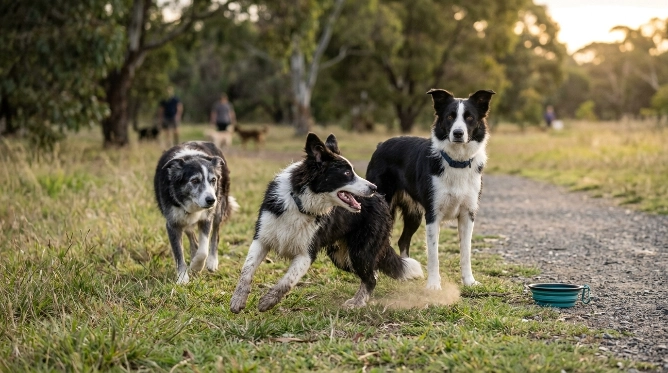
Normal slowing usually appears as small changes in endurance and recovery. Your Border Collie may still be enthusiastic but become more selective about how long it keeps going.
The change can be easy to miss because Border Collies often remain mentally eager.
Common age-related changes
- Shorter fetch sessions: The dog stops after 10 throws instead of demanding 30.
- Slower recovery: A busy morning may lead to a quiet afternoon.
- Less jumping: The dog hesitates before jumping into a vehicle or onto furniture.
- Reduced sprinting: Running becomes steadier and less explosive.
- More resting: Naps become longer or more frequent.
- Stiffness after rest: The first few steps after sleeping may look slower.
- Preference changes: Sniffing walks may become more attractive than nonstop ball chasing.
I pay particular attention to recovery the next day. A dog can look enthusiastic during an activity yet show that the workload was excessive afterward.
That delayed feedback is important with driven herding breeds.
Look at patterns, not single days
One lazy afternoon tells you little. Hot weather, a tiring previous day, stress, or poor sleep can temporarily reduce energy.
Track changes over several weeks instead. Patterns give you much more useful information.
Border Collie Energy Levels by Age
Border Collies mature individually, so no age chart can predict one dog’s behavior exactly. The table below is a practical guide rather than a medical rule.
| Age | Typical Stage | What Owners Often Notice | Activity Approach |
|---|---|---|---|
| 0–1 year | Puppy/adolescent | High curiosity, bursts of energy, developing coordination | Short training, controlled play, age-appropriate exercise |
| 1–7 years | Adult | Strong stamina, intense work drive, fast recovery | Regular physical exercise plus daily mental work |
| 7–9 years | Mature adult | Often still energetic, with subtle recovery changes | Maintain activity while watching stiffness and fatigue |
| 9–12 years | Senior | Lower endurance, more rest, possible mobility changes | Shorter sessions, lower-impact exercise, more recovery |
| 12+ years | Advanced senior | Greater variation in mobility, senses, sleep, and stamina | Comfort-focused movement tailored to veterinary guidance |
Do not reduce exercise simply because your Border Collie reaches a certain birthday. Adjust activity because of the dog’s condition, mobility, recovery, and veterinary advice.
Is My Border Collie Aging or Could Something Be Wrong?
Gradual reductions in stamina can accompany aging, but sudden changes deserve more attention. Pain and medical problems can easily look like a dog simply “getting old.”
Older dogs can develop mobility, dental, metabolic, sensory, and cognitive problems. A veterinarian can help separate normal aging from something treatable.
Changes worth discussing with your veterinarian
- Sudden exercise intolerance: Your dog quickly becomes exhausted during familiar activity.
- Limping: A consistent altered gait is not something to dismiss as age.
- Difficulty standing: Repeated struggles to rise deserve investigation.
- Major appetite changes: Eating far more or less than normal can have medical causes.
- Unexpected weight change: Unexplained loss or gain should be checked.
- Excessive thirst: Drinking or urinating much more than usual deserves veterinary attention.
- Breathing changes: Coughing, labored breathing, or unusual panting needs assessment.
- Behavior changes: New confusion, irritability, anxiety, or nighttime restlessness can have several causes.
PetMD’s guidance on when dogs enter their senior years also emphasizes that aging varies according to size and individual factors. Senior dogs can experience changes in mobility, senses, behavior, and body composition.
Stiffness deserves attention
One of the easiest mistakes is assuming stiffness is inevitable and therefore unimportant. An older Border Collie may modify its behavior long before it clearly cries or limps.
You might see slower stairs, hesitation before jumping, shorter strides, or reluctance to turn sharply. These clues deserve discussion at a routine examination.
Vet note: New pain, weakness, major behavior changes, or sudden reductions in activity should be evaluated by your veterinarian rather than attributed to age alone.
Section Takeaway: Normal aging is usually gradual. A sudden or significant decline in energy, mobility, appetite, breathing, or behavior should prompt a veterinary check.
How Much Exercise Does an Older Border Collie Need?
An older Border Collie still needs regular movement, but exercise should match current ability rather than yesterday’s athletic standard. Consistency usually matters more than intensity.
Senior-dog exercise guidance from PetMD supports regular, age-appropriate movement tailored to mobility and medical needs.
Think shorter and steadier
A senior Border may handle two or three moderate outings better than one exhausting session. This spreads movement across the day and gives you more chances to notice fatigue.
- Walking: Use comfortable routes with secure footing.
- Sniffing: Let the dog investigate rather than marching continuously.
- Training: Practice familiar cues in sessions of about 5 to 10 minutes.
- Retrieving: Reduce repetitive high-speed throws and sharp turns.
- Swimming: It may suit some dogs when safe and veterinarian-approved.
- Balance work: Gentle controlled exercises can be useful when professionally recommended.
Use the 24-hour check
I like judging an older dog’s workload by what happens afterward, not only during the activity. Border Collies can keep working because they are excited.
Watch your dog later that evening and the following morning.
- Is getting up noticeably harder?
- Is your dog unusually tired?
- Has stiffness increased?
- Is a familiar walk suddenly less appealing?
- Does the dog recover normally before the next session?
If an activity repeatedly produces next-day soreness or exhaustion, reduce the intensity or duration. Discuss persistent changes with your veterinarian.
Section Takeaway: Keep senior Border Collies moving, but adjust duration, speed, impact, and recovery time to the individual dog. Enthusiasm during exercise does not always mean the workload is appropriate.
How Can You Keep a Senior Border Collie Active?
The goal is not to turn an older Border Collie back into a three-year-old. The goal is to preserve comfortable movement, healthy body condition, confidence, and enjoyment.
Protect a healthy body weight
Extra body weight makes movement harder and can place more stress on joints. Food portions may need adjustment as activity declines.
The ASPCA’s dog nutrition guidance discusses changing nutritional needs as dogs age. Your veterinarian can help decide whether your Border Collie needs dietary changes.
Make the home easier to navigate
- Add traction: Rugs or runners can help on slippery flooring.
- Provide comfortable bedding: Give your dog a supportive place to rest.
- Reduce difficult jumps: Consider a ramp or step when appropriate.
- Keep essentials accessible: Place water and resting areas where your dog can reach them easily.
- Maintain routines: Predictable activity can help older dogs feel secure.
Keep doing things together
A senior Border Collie does not need retirement from family life. Many still enjoy walks, training, scent games, car rides, and helping with small daily routines.
Change the difficulty instead of removing the activity. That preserves the sense of having a job.
Do Border Collies Mentally Slow Down With Age?
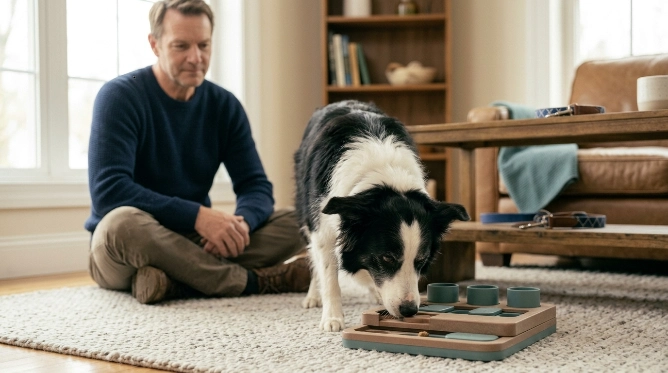
Some older Border Collies remain sharp learners even after their bodies slow down. Others develop changes in memory, sleep, awareness, or responsiveness as they age.
Because Border Collies are highly observant, subtle mental changes may stand out. A dog that once anticipated every routine may suddenly seem uncertain.
Keep the brain working without exhausting the body
- Scent searches: Hide treats in easy, safe locations.
- Known tricks: Practice cues the dog already enjoys.
- Simple new skills: Teach low-impact behaviors in short sessions.
- Food puzzles: Choose difficulty levels that do not create frustration.
- Choice games: Let your dog find or identify familiar objects.
- Slow exploration: New walking routes provide smells without requiring intense running.
I often find that older Borders still light up when they realize a training session is starting. Five focused minutes can be more satisfying than another exhausting game of fetch.
When mental changes need a veterinary discussion
Occasional hesitation is different from persistent confusion. Repeated nighttime pacing, house-training changes, getting stuck in familiar spaces, or altered social behavior should be discussed with your vet.
PetMD’s senior dog behavior guidance notes that behavioral changes can have physical, sensory, metabolic, or cognitive causes. That is why evaluation matters.
Vet note: Do not assume confusion, anxiety, disrupted sleep, or major personality changes are unavoidable parts of aging. Your veterinarian can check for medical and cognitive causes.
Frequently Asked Questions
Do Border Collies calm down after age two?
Many become easier to manage as they mature and gain training experience, but that is different from physically slowing down. A healthy two- or three-year-old Border Collie is usually still a highly energetic adult that needs substantial physical activity and mental work.
Is eight years old considered old for a Border Collie?
Eight is better described as mature or entering the senior stage rather than extremely old. Many eight-year-old Border Collies remain active, athletic, and mentally sharp, although owners may begin noticing longer recovery times or subtle mobility changes.
Can a 10-year-old Border Collie still exercise every day?
Yes, many healthy 10-year-old Border Collies benefit from daily activity. The type, duration, speed, and impact should match the individual dog’s health, mobility, fitness, and veterinary recommendations rather than a fixed exercise target.
Why has my Border Collie suddenly become less energetic?
A sudden energy drop should not automatically be blamed on age. Pain, illness, injury, medication effects, heat, or other problems can reduce activity, so a significant unexplained change deserves veterinary attention.
Should I stop playing fetch with my senior Border Collie?
Not automatically. You can shorten sessions, reduce throwing distance, use level footing, and limit repeated sharp turns. Stop if your dog becomes stiff, painful, unusually tired, or struggles to recover afterward.
Do older Border Collies sleep more?
Many senior dogs spend more time resting as their stamina changes. Gradually increased sleep can be normal, but dramatic lethargy, difficulty waking, weakness, appetite changes, or withdrawal from favorite activities should be discussed with a veterinarian.
How can I tell when my Border Collie needs less exercise?
Watch recovery as closely as enthusiasm. Shorten or modify activity if your dog repeatedly becomes stiff, excessively tired, reluctant to continue, slower the following day, or less willing to begin activities it previously enjoyed.
The Bottom Line
Most Border Collies begin showing noticeable signs of slowing somewhere around 8 to 10 years old, but there is enormous individual variation. Some remain impressively active well into their senior years.
Watch the dog in front of you rather than the number on the birthday calendar. Track stamina, recovery, mobility, body weight, sleep, and enthusiasm over time.
Keep an older Border Collie moving, thinking, and participating in family life. Modify the job when necessary, but do not take away the joy of having one.
If the slowdown is sudden, painful, or accompanied by other changes, schedule a veterinary examination. Healthy aging should be supported, while treatable problems should never be written off as “just old age.”
