
How to Bathe a Border Collie Afraid of Water: Calm, Safe Steps

Quick Answer
To bathe a Border Collie afraid of water, don’t force them into a full bath immediately. Build comfort in small stages, use a non-slip surface, reward calm behavior, keep water lukewarm and gentle, and stop before fear becomes panic. The AKC’s guidance for dogs scared of baths also supports gradual exposure instead of turning bath time into a struggle.
Quick Steps for a Fearful Border Collie
- Start dry: Let your Border Collie enter the bathroom or tub without running water.
- Add traction: Put a rubber mat or towel under their feet so they don’t slip.
- Reward calmness: Give small treats for approaching, standing, and relaxing near the bath.
- Introduce water slowly: Start with wet paws instead of spraying the whole body.
- Keep sessions short: End while your dog can still think, eat, and respond to you.
- Never overpower them: Wrestling a frightened dog can make the next bath harder.
When to stop
- Pause if your Border Collie freezes, scrambles to escape, refuses favorite treats, growls, or becomes increasingly distressed.
If you’re trying to bathe a Border Collie afraid of water, the hardest part usually isn’t shampooing. It’s helping the dog feel safe enough to stay near the water.
Border Collies notice tiny changes in sound, footing, movement, and routine. In this 2026 guide, I’ll show you how I approach bath fear without turning grooming into a wrestling match.
In This Guide
- Why Is My Border Collie Afraid of Water?
- How Do You Bathe a Border Collie That Is Afraid of Water?
- How Do You Desensitize a Border Collie to Bath Time?
- What Should You Do If Your Border Collie Panics in the Tub?
- What Bath Setup Helps a Scared Border Collie?
- How Often Should You Bathe a Water-Shy Border Collie?
- When Does Bath Fear Need Professional Help?
- Frequently Asked Questions
- Final Takeaway
Why Is My Border Collie Afraid of Water?
A Border Collie’s water fear is a negative emotional response to some part of the bathing experience. The trigger may be water itself, but often it’s the tub, slippery floor, sprayer noise, restraint, or a previous frightening bath.
That’s an important distinction. You can’t solve the problem well until you know which part bothers your dog.
Border Collies notice small environmental changes
Border Collies were developed for work requiring close attention to movement and subtle signals. That awareness can also make some dogs highly responsive to unfamiliar sounds, surfaces, and handling.
A shower hose that seems quiet to you may feel intense when it’s spraying beside your dog’s ears. A smooth bathtub can also feel unsafe when paws can’t find traction.
Previous bad experiences can create bath fear
One frightening bath can create a strong association. Your dog may remember being restrained, slipping, getting water in the face, or hearing a loud dryer.
- Slipping: The dog’s feet repeatedly slide across the tub.
- Sudden spraying: Water hits the face or ears without warning.
- Hot or cold water: Uncomfortable temperature creates an immediate negative association.
- Forced restraint: The dog learns that entering the bathroom means losing control.
- Loud equipment: Showerheads and dryers can frighten sound-sensitive dogs.
Fear of baths isn’t always fear of swimming
A Border Collie may happily run through a creek but refuse to enter a bathtub. Those situations feel completely different to the dog.
Outside, the dog can often choose where to step and when to leave. Inside a tub, the dog may face confinement, noise, handling, and slippery footing at once.
Definition: Bath desensitization means introducing parts of bath time at low intensity until your Border Collie can experience them without becoming overwhelmed.
How Do You Bathe a Border Collie That Is Afraid of Water?
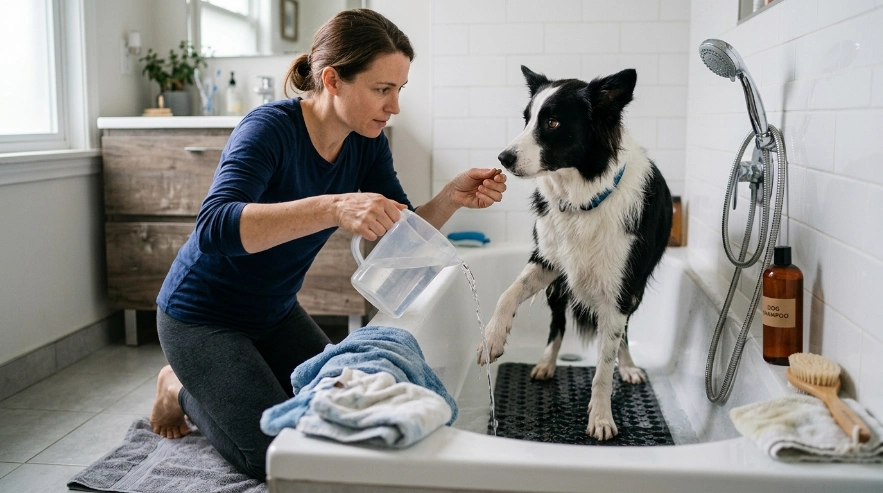
Break the bath into small steps instead of aiming for a perfect wash on the first attempt. Your first goal is calm participation, not a spotless coat.
Here’s the sequence I prefer with a nervous Border Collie.
1. Prepare everything before bringing your dog in
Stopping halfway through the bath to find shampoo can increase stress. Keep the entire process predictable and efficient.
- Dog-specific shampoo
- Several absorbent towels
- Non-slip rubber mat
- High-value treats
- Cup, pitcher, or gentle hand sprayer
- Brush or comb
- Washcloth for the face
2. Let your Border Collie investigate the bathing area
Start without water. Walk into the room, scatter a few treats, and let your dog leave again.
Don’t close the door immediately if that worries your dog. Repeat until entering the area no longer predicts a stressful event.
3. Add secure footing
A non-slip mat is one of the simplest changes you can make. Many frightened dogs become more stable once their paws stop sliding.
Test the mat before starting. It shouldn’t move when your dog shifts weight.
4. Introduce water at the paws
Use lukewarm water and begin low on the body. Wet one paw or lower leg, reward calm behavior, and watch your dog’s response.
Avoid immediately spraying the shoulders, face, or back. Start where the sensation feels less threatening.
5. Wet the body gradually
Move from the legs toward the torso once your Border Collie stays relaxed. Keep water pressure gentle and predictable.
The ASPCA’s dog grooming guidance recommends lukewarm water and avoiding direct water around sensitive areas such as the eyes, ears, and nose.
6. Shampoo and rinse efficiently
Use shampoo formulated for dogs and work it gently through the coat. Border Collies have a double coat, so rinse until you can’t feel shampoo residue.
Use a damp washcloth around the face rather than spraying it. That single adjustment can make baths easier for many water-sensitive dogs.
7. Dry without creating a second fear problem
Press towels against the coat rather than aggressively rubbing. Pay attention to the dense undercoat, legs, belly, chest, and areas behind the ears.
If your dog fears dryers, don’t introduce a loud dryer immediately after a difficult bath. Train dryer comfort separately when possible.
Section Takeaway: A successful first bath may be shorter and less complete than you expected. Calm progress matters more than forcing every grooming step into one session.
How Do You Desensitize a Border Collie to Bath Time?
Desensitization works by exposing your Border Collie to a small version of the scary experience. You increase the difficulty only when the dog remains comfortable.
Pair those small exposures with something your dog values. Trainers call this counterconditioning.
Keep your Border Collie below their fear threshold
Your dog’s threshold is the point where fear becomes strong enough to interfere with normal behavior. Below threshold, the dog can usually respond, investigate, or eat treats.
Above threshold, you may see frantic escape attempts, freezing, shaking, barking, growling, or complete refusal of food.
The AKC’s explanation of desensitization and counterconditioning emphasizes starting with a low-intensity version of the trigger and increasing exposure gradually.
A simple bath-training progression
| Training Phase | What You Practice | Suggested Session | Move On When |
|---|---|---|---|
| 1 | Entering bathroom | 1–3 minutes | Dog enters willingly |
| 2 | Standing in dry tub | 1–3 minutes | Body remains loose |
| 3 | Hearing water nearby | 1–2 minutes | Dog still takes treats |
| 4 | Wet paws and lower legs | 2–4 minutes | No escape attempts |
| 5 | Short partial rinse | 3–5 minutes | Dog recovers quickly |
| 6 | Normal gentle bath | As needed | Dog stays manageable |
These times aren’t strict rules. A dog with strong fear may need several sessions at one stage before moving forward.
Don’t lure your dog past their comfort limit
Treats should create good associations, not trick your dog into a situation they can’t handle. If your dog follows food into the tub and then panics, you’ve moved too quickly.
I like to reward voluntary movement whenever possible. A Border Collie that chooses to put one paw into the tub has learned more than a dog physically lifted into it.
Section Takeaway: Desensitization is about changing the dog’s emotional response, not simply getting the bath finished. Work at the speed where your Border Collie can remain calm enough to learn.
What Should You Do If Your Border Collie Panics in the Tub?
If your Border Collie reaches full panic, continuing usually teaches the wrong lesson. Make the situation safer and reduce the intensity.
Don’t punish growling, struggling, or escape attempts. Those behaviors tell you your dog is overwhelmed.
Watch for signs you’re moving too quickly
- Repeated attempts to climb out
- Tail tightly tucked underneath the body
- Body trembling or freezing
- Heavy panting without heat or exercise
- Refusing normally irresistible treats
- Whining, barking, or growling
- Wide eyes or frantic scanning
- Desperate pulling away from restraint
If those signs increase, reduce the challenge. You might turn off the water, move back to the floor, or end the session.
Avoid flooding
Flooding means forcing a dog to remain around a frightening trigger at an intensity they can’t comfortably handle. It may suppress escape temporarily without teaching the dog to feel safe.
Your goal is the opposite. Give your Border Collie repeated experiences where bath-related things happen without anything frightening following them.
What Bath Setup Helps a Scared Border Collie?
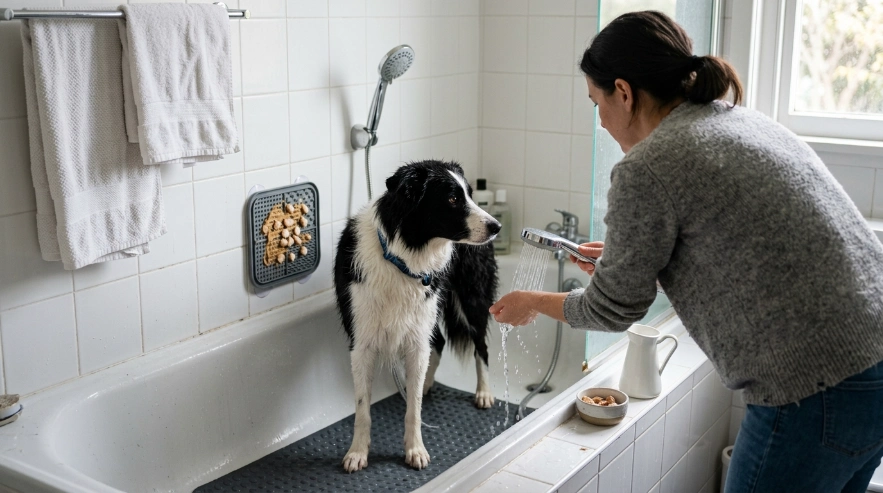
The environment can change your dog’s reaction before training even begins. Remove as many unnecessary stressors as possible.
Use a non-slip surface
This is my first change for a dog that scrambles in the tub. Secure footing gives the dog more control over body position.
A rubber bath mat usually works well. Make sure its edges don’t curl or slide.
Keep water quiet and gentle
High-pressure spray can be intimidating. Use a pitcher, cup, or adjustable shower attachment on a gentle setting.
Let your dog see the water source. Sudden spraying from behind can cause another startle response.
Use lukewarm water
Test the temperature before wetting your dog. Comfortable lukewarm water is a safer choice than water that feels distinctly hot or cold.
Prepare high-value rewards
Use tiny pieces so you can reward often without filling your dog quickly. Pick something more exciting than the treats used during ordinary training.
- Small pieces of cooked chicken
- Tiny cheese pieces if your dog tolerates dairy
- Soft commercial training treats
- A dog-safe food paste on a lick mat
Secure a lick mat only where it doesn’t force your dog into an uncomfortable position. The reward should help relaxation, not become a reason to ignore fear signals.
How Often Should You Bathe a Water-Shy Border Collie?
A frightened Border Collie doesn’t need frequent full baths simply for the sake of maintaining a schedule. Coat condition, lifestyle, dirt, odor, and veterinary needs matter more than an arbitrary calendar.
Border Collies have a weather-resistant double coat. Regular brushing often handles loose fur, dust, and minor debris between baths.
Use alternatives between full baths
You can often keep a mildly dirty Border Collie comfortable without repeating a stressful full bath. Choose the least invasive method that solves the problem.
- Brush dried mud from the coat
- Rinse only muddy paws and legs
- Wipe dirty areas with a damp cloth
- Use dog-safe grooming wipes when appropriate
- Spot-clean a small stained area
These alternatives are especially useful while you’re still working through bath desensitization. They prevent every muddy walk from becoming an emergency training session.
Brush before bathing
Brush out loose hair and tangles before adding water. Wet mats can tighten and become harder to handle.
For rough-coated Border Collies, pay close attention behind the ears, around the rear legs, under the chest, and near the tail. These areas can tangle more easily.
When Does Bath Fear Need Professional Help?
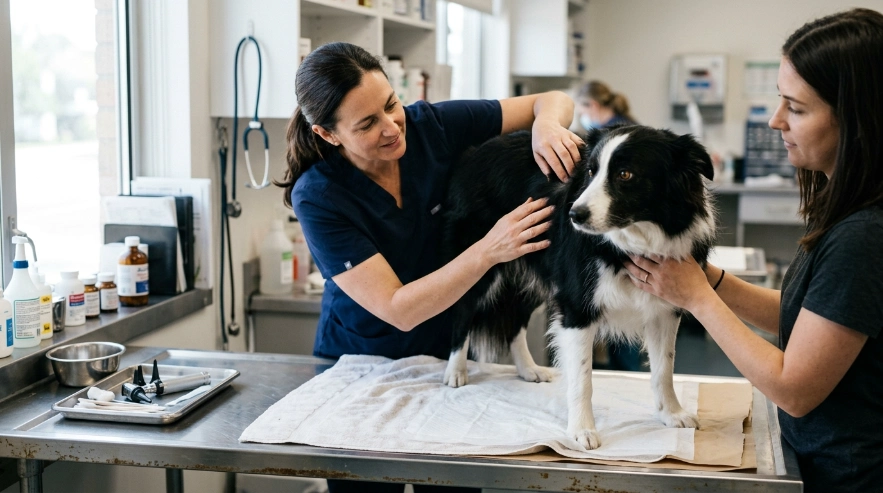
Mild bath hesitation can often improve with patient home training. Severe fear, sudden behavioral change, pain, or aggression deserves extra attention.
Don’t assume every refusal is stubbornness. A dog that suddenly hates handling may be trying to avoid discomfort.
Talk with your veterinarian if the fear appears suddenly
Consider veterinary advice if a Border Collie who previously tolerated bathing suddenly reacts strongly. Ear discomfort, irritated skin, sore joints, wounds, or other painful problems may make handling unpleasant.
Vet note: Any sudden behavior change, persistent skin irritation, painful response, or unusual ear problem should be discussed with your own veterinarian.
Get behavior help when safety becomes a concern
Professional help is useful when your dog repeatedly growls, snaps, bites, or becomes impossible to handle safely. Look for a qualified trainer or veterinary behavior professional experienced with fear-based behavior.
Don’t wait until every bath becomes a confrontation. Early behavior work is often much easier than undoing months of repeated stressful experiences.
Frequently Asked Questions
Why does my Border Collie suddenly hate baths?
A sudden change can come from a frightening experience, slippery footing, loud equipment, uncomfortable water temperature, or pain during handling. If the change is abrupt and you can’t identify an environmental cause, ask your veterinarian to rule out discomfort.
Should I force my Border Collie into the bathtub?
No. Forcing a frightened Border Collie into the tub can strengthen the connection between bath time and fear. Use gradual exposure, secure footing, rewards, and short sessions instead.
Can treats help a Border Collie get over water fear?
Yes, treats can help create a positive association when the dog is still calm enough to eat. They work best when paired with gradual exposure rather than being used to lure a frightened dog into an overwhelming situation.
What if my Border Collie likes swimming but hates baths?
That’s possible because swimming and bathing are different experiences. A bathtub includes slippery surfaces, confinement, water noise, close handling, and spraying that an outdoor swimming area may not have.
Can I use a hose to bathe my Border Collie?
You can, but only if the weather, temperature, water pressure, and your dog’s comfort make it appropriate. A dog already afraid of water may find a fast or noisy outdoor hose more frightening than a gentle pitcher or low-pressure shower attachment.
How long does it take to make a Border Collie comfortable with baths?
There isn’t one fixed timeline. Mild hesitation may improve after several short sessions, while established fear can require weeks or longer of careful desensitization.
Should I use a professional groomer for a water-shy Border Collie?
A patient, fear-aware groomer can help, especially if home bathing isn’t safe. Explain your dog’s fear before the appointment so the groomer can decide whether their setup and handling approach are appropriate.
Final Takeaway
If you need to bathe a Border Collie afraid of water, focus first on changing what bath time means to the dog. Secure footing, low-pressure water, short sessions, and positive associations can make a major difference.
Don’t judge progress only by whether you completed a full bath. A Border Collie that voluntarily enters the bathroom or stands calmly in a dry tub has already made useful progress.
Build from there. Patience now can turn future grooming from a fight into a predictable routine your dog understands.
