
How to Bathe a Border Collie After Mud: Safe Cleanup Guide

Quick Answer
You can bathe a Border Collie after a muddy walk when mud has soaked through the coat, covered the belly and legs, or cannot be removed by brushing and wiping. For light, ordinary mud, let it dry first and brush it out when practical; if a bath is needed, use lukewarm water, dog-formulated shampoo, a thorough rinse, and careful drying following basic dog grooming and bathing guidance.
Quick muddy-dog cleanup
- 1. Check the mud: Look for thorns, stones, road salt, chemicals, or anything irritating before cleaning.
- 2. Remove loose dirt: Let ordinary mud dry and gently brush out what comes away easily.
- 3. Start small: Clean only the paws and belly if the rest of the coat is still clean.
- 4. Bathe when needed: Use lukewarm water and a shampoo made specifically for dogs.
- 5. Rinse completely: Work through the dense coat until no shampoo residue remains.
- 6. Dry thoroughly: Pay extra attention to the undercoat, armpits, belly, feet, and feathering.
One important exception
- If the mud may contain chemicals, sewage, pesticides, fuel, road treatments, or another unknown substance, don’t treat it as an ordinary muddy-dog bath. Contact your veterinarian for situation-specific advice.
Border Collies have a talent for finding the wettest patch of ground on an otherwise dry walk. I’ve learned that bathing a Border Collie after mud is less about getting the coat spotless and more about choosing the least aggressive cleanup that works.
That matters because a Border Collie dog carries a dense double coat. Good mud cleanup should remove dirt without turning every muddy adventure into a full shampoo session.
In This Guide
- Should You Bathe a Border Collie Every Time It Gets Muddy?
- Should You Let Mud Dry Before Cleaning a Border Collie?
- How Do You Bathe a Muddy Border Collie Step by Step?
- How Do You Clean Muddy Paws, Belly, Tail, and Feathering?
- How Do You Dry a Border Collie’s Double Coat?
- What Should You Avoid After a Muddy Walk?
- When Does Muddy or Wet Skin Need Veterinary Attention?
- Frequently Asked Questions
- Keep Mud Cleanup Simple
Should You Bathe a Border Collie Every Time It Gets Muddy?
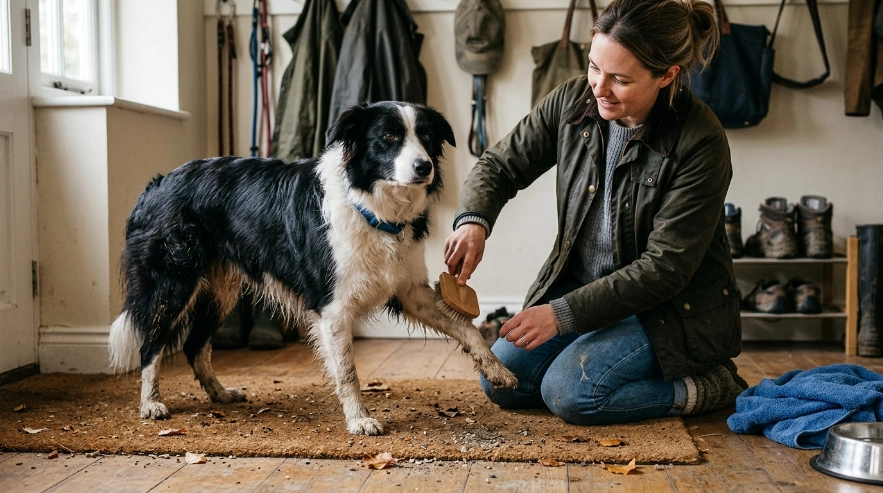
No. A muddy Border Collie doesn’t automatically need shampoo and a full bath.
The Border Collie’s coat can be rough or smooth, but both varieties have a dense, weather-resistant double coat. That coat often releases ordinary dried soil surprisingly well.
A Border Collie’s double coat consists of a protective outer layer and a softer, insulating undercoat. Mud can sit on the outer hair or work deeper toward the skin, depending on how wet the ground is.
Choose the cleanup based on how dirty the dog is
| Mud level | Best first approach | Full shampoo bath? |
|---|---|---|
| Light splashes on legs | Dry, brush, or wipe | Usually unnecessary |
| Wet paws and lower legs | Paw rinse or damp cloth | Usually unnecessary |
| Mud across belly and feathering | Partial rinse first | Only if water alone fails |
| Thick mud through the coat | Full rinse and dog shampoo | Often helpful |
| Unknown or chemical contamination | Get veterinary guidance | Depends on the substance |
My rule is simple: don’t shampoo clean fur just because four paws are dirty. Cleaning the smallest necessary area saves time and keeps bath day calmer.
Should You Let Mud Dry Before Cleaning a Border Collie?
For ordinary soil and garden mud, letting it dry can make cleanup much easier. Dried mud often breaks away from the outer coat during gentle brushing.
Don’t wait for mud to dry if it contains an unknown substance or appears to be irritating the skin. The source of the mess matters more than convenience.
When drying first works well
- Trail mud: Light brown soil sitting mostly on the coat can often dry and brush away.
- Small splashes: Mud below the knees rarely justifies washing the entire dog.
- Dry-season dirt: Loose soil usually releases more easily than sticky clay.
When I clean immediately
- Heavy clay: Thick clay can pack around toes and feathering.
- Road grime: Urban runoff may contain substances you don’t want left on paws.
- Manure or foul material: A proper wash is more appropriate.
- Skin discomfort: Licking, scratching, or obvious irritation changes the priority.
Before brushing dried mud, use your fingers to break larger brittle pieces into smaller sections. Never yank a hard mud clump that is tangled tightly into hair.
Brush with the coat rather than scraping aggressively at the skin. If a clump won’t release, soften it with lukewarm water instead.
How Do You Bathe a Muddy Border Collie Step by Step?
Start by removing as much loose debris as possible, then wash with lukewarm water and dog shampoo only where needed. The final rinse and drying stages matter just as much as the shampoo.
1. Inspect your Border Collie first
Run your hands over the paws, legs, belly, chest, tail, and behind the ears. Check for burrs, twigs, cuts, ticks, tender areas, and packed mud between the toes.
If the dog reacts painfully when you touch one area, investigate before starting a vigorous bath. A sore paw or hidden cut needs different handling from ordinary dirt.
2. Brush away loose debris
Remove material that comes out without pulling. This prevents loose dirt and existing tangles from becoming a wet, compact mess.
- Use your fingers for larger debris.
- Use a pin or slicker-style brush gently on suitable coat areas.
- Use a comb to check longer feathering for hidden tangles.
- Don’t force a brush through a tight mat.
3. Use lukewarm water
Wet the dirty areas slowly so water can move through the outer coat. Avoid blasting the face, eyes, nose, and ears with a strong spray.
For a nervous Border Collie, controlled water flow usually makes the process easier. I prefer starting around the feet and legs rather than surprising the dog with water over the shoulders.
4. Use dog-formulated shampoo when water isn’t enough
Choose shampoo made for dogs and follow the product’s dilution and contact instructions. Human shampoo isn’t my default because canine skin and coat products are designed for dogs.
Massage rather than scrub aggressively. Work in the direction of hair growth on longer sections to reduce unnecessary tangling.
5. Pay attention to the dirtiest zones
- Feet: Work carefully around and between the toes.
- Lower legs: Loosen mud trapped in longer hair.
- Belly: Rinse until runoff becomes clear.
- Chest: Check the thicker hair where splashes collect.
- Tail and rear feathering: Separate long hair gently with your fingers.
6. Rinse longer than you think you need to
The coat can hide shampoo residue beneath the surface. Move your fingers through the hair while rinsing so clean water reaches deeper layers.
Keep rinsing until the coat feels clean rather than slippery. Check the belly, armpits, chest, and feathering again before finishing.
Section Takeaway: Use the gentlest cleanup that removes the mud, and make a complete rinse part of every shampoo bath.
How Do You Clean Muddy Paws, Belly, Tail, and Feathering?
You can often clean these high-contact areas without wetting the whole Border Collie. That makes partial cleaning one of the most useful habits for active dogs.
Muddy paws
Start with a damp cloth or rinse when only the feet are dirty. Current dog paw-cleaning guidance also notes that pet-safe wipes can help with muddy paws, while heavier messes may need a warm washcloth.
Spread the toes gently and check for grit or packed soil. Don’t forget the hair surrounding the pads.
Muddy belly and chest
A handheld shower or cup gives you more control than soaking the whole dog. Rinse downward and keep water away from the face.
If plain water clears the dirt, stop there. Shampoo doesn’t need to become an automatic second step.
Tail and feathering
Longer hair can trap leaves, seeds, and sticky mud. Separate the hair with your fingers before using a comb.
Work from the ends toward the body when tackling a tangle. Pulling from the roots can be uncomfortable and may tighten the knot.
How Do You Dry a Border Collie’s Double Coat?
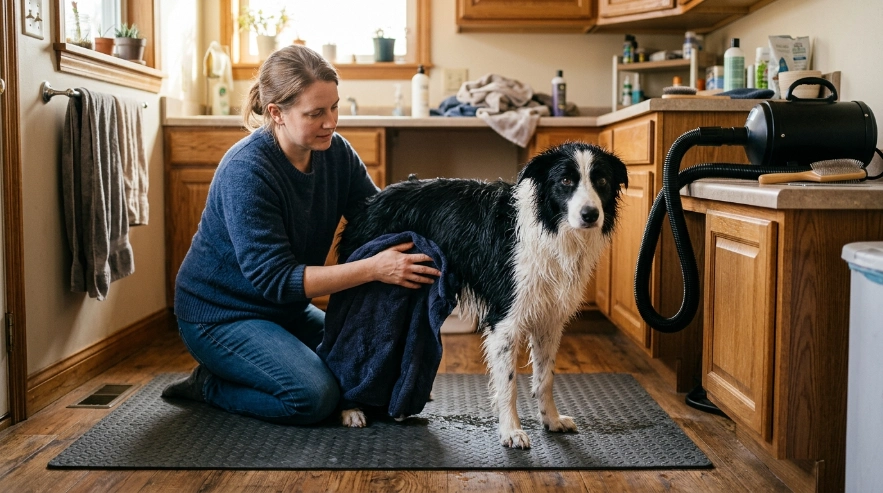
Dry the coat thoroughly enough that the undercoat isn’t left damp for a long period. A Border Collie may look dry on top while moisture remains closer to the skin.
Start with towels
Press and squeeze water from the coat instead of rubbing long hair in every direction. Vigorous rubbing can create tangles in feathered areas.
- Blot the back and sides.
- Squeeze excess water from the legs.
- Press a towel gently beneath the belly.
- Dry around and between the toes.
- Blot the tail and longer feathering.
Use a dryer carefully if your dog tolerates one
If you use a dog dryer, introduce airflow gradually and keep the experience comfortable. Avoid directing strong airflow into the eyes, ears, nose, or sensitive areas.
Use your fingers or an appropriate brush to separate the coat while drying. This helps you notice damp patches hidden beneath the outer hair.
Check the skin before you’re done
Feel behind the ears, under the collar area, around the armpits, belly, inner legs, and paw hair. These areas deserve a second check after a muddy bath.
Don’t send a still-damp dog straight into a cold outdoor environment. Finish the drying process somewhere comfortable and sheltered.
What Should You Avoid After a Muddy Walk?
The biggest mistake is assuming every muddy outing requires a complete shampoo bath. Too much washing can become counterproductive when a rinse, brush, or paw cleanup would have solved the problem.
General veterinary guidance also recognizes that bathing frequency varies between dogs, and bathing too frequently can contribute to dry coat or skin problems.
Avoid these common cleanup mistakes
- Using hot water: Comfortable lukewarm water is the safer routine choice.
- Using human shampoo: Choose a product formulated specifically for dogs.
- Scrubbing hard: Aggressive friction can tangle longer hair and irritate skin.
- Pulling dried clumps: Soften stubborn material rather than yanking it from the coat.
- Ignoring the paws: Mud can remain between toes even when the leg hair looks clean.
- Leaving shampoo behind: Rinse through the dense coat completely.
- Forgetting the undercoat: Surface-dry hair doesn’t always mean the deeper coat is dry.
- Shaving for convenience: A muddy double coat is a grooming problem, not a reason to remove the protective coat.
As of 2026, the practical routine hasn’t changed: brush regularly, spot-clean small messes, and save full bathing for dirt that genuinely needs it. That approach suits an active Border Collie far better than treating every puddle as bath day.
When Does Muddy or Wet Skin Need Veterinary Attention?
Most muddy walks are harmless, but skin changes after a wet outing deserve attention. Contact your veterinarian when the problem stops looking like ordinary dirt.
Vet note: A veterinarian should evaluate persistent redness, pain, wounds, unusual odor, discharge, heavy itching, or rapidly worsening skin changes.
Watch for these warning signs
- Persistent redness or swelling
- Repeated licking or chewing
- Sudden sensitivity when touched
- Broken or bleeding skin
- Hair loss around an irritated patch
- A moist, painful, or oozing area
- Strong or unusual skin odor
- Limping after a muddy walk
Hot spots are one reason to take moist skin seriously. Veterinary guidance on canine hot spots describes them as inflamed skin lesions that can appear quickly and become painful.
Don’t cover a suspicious skin lesion with home remedies just because the dog recently got muddy. The mud may be unrelated to the underlying problem.
Unknown substances need extra caution
A dog covered in ordinary field mud is different from one that entered contaminated runoff. Fuel, chemicals, pesticides, sewage, and unknown liquids require more caution.
Prevent licking when contamination is possible and contact your veterinarian promptly. Tell them exactly what your dog contacted if you know the substance.
Frequently Asked Questions
Can I bathe my Border Collie immediately after a muddy walk?
Yes, when the mud is heavy, wet, foul, or packed into the coat. For ordinary soil, you can often let the coat dry first and brush away much of the dirt before deciding whether a bath is necessary.
Can I wash just my Border Collie’s paws?
Yes. Paw-only cleaning is often enough after wet sidewalks, light trail mud, or a quick run through a puddle.
Rinse or wipe between the toes as well as the visible hair. Dry the paws afterward rather than leaving the hair around them saturated.
Should I use shampoo every time my Border Collie gets muddy?
No. Plain lukewarm water can remove many everyday muddy messes, especially from paws, legs, and the belly.
Use dog shampoo when dirt, odor, or greasy material remains after rinsing. Follow the product label and rinse completely.
Can I brush mud out of a Border Collie’s coat?
Yes, if the mud is ordinary soil, has dried, and comes loose without pulling. Break up larger dry pieces gently before brushing.
Don’t force a brush through hard clumps or tight tangles. Soften stubborn mud with water instead.
How do I keep my house clean when my Border Collie comes home muddy?
Keep towels, a washable mat, a paw cloth, and grooming tools near your usual entrance. Pause there for a quick inspection before your dog runs through the house.
For frequent muddy walks, teaching a short “wait” or “stand” routine makes cleanup much easier. Reward calm handling so the doorway routine becomes predictable.
Can I let my Border Collie air-dry after a bath?
A little air-drying in a warm, comfortable environment may be fine, but don’t assume the coat is dry because the surface feels dry. Check the dense undercoat, belly, armpits, paws, and feathering for lingering moisture.
What if my Border Collie hates baths?
Start with the smallest cleanup possible and reward calm behavior. Short paw rinses and controlled handling can be easier than immediately placing the dog into a full bath.
Build tolerance gradually instead of restraining and rushing through the process. A non-slip bathing surface can also help a dog feel more secure.
Keep Mud Cleanup Simple
A muddy Border Collie doesn’t have to become a major grooming project. Let harmless mud dry when appropriate, brush away what you can, and clean only the areas that still need attention.
When a full bath is necessary, use lukewarm water, dog shampoo, a complete rinse, and thorough drying. Check the paws and skin afterward, especially when the outing involved heavy mud or standing water.
The goal isn’t to keep an active Border Collie perfectly spotless. It’s to keep the coat, paws, and skin comfortable while letting your dog enjoy the messy adventures that come with an energetic life.