

Quick Answer
You don’t always need to shampoo-bathe a Border Collie after swimming. I usually rinse the coat with clean fresh water, then dry it thoroughly. A full bath makes more sense after swimming in saltwater, a chlorinated pool, muddy water, or water that leaves the coat dirty or irritated. The ASPCA’s water safety guidance also recommends rinsing dogs after swimming to remove salt or chlorine.
What I Do After a Swim
- Check the water: Pool, ocean, muddy, and questionable natural water deserve extra attention.
- Rinse the coat: Use clean, lukewarm fresh water to remove residue and debris.
- Use shampoo selectively: Shampoo when the coat is dirty, smelly, sticky, or contaminated.
- Dry the undercoat: A Border Collie’s double coat can stay damp long after the surface looks dry.
- Check ears and paws: Look for redness, debris, cuts, burrs, or irritation after the swim.
Simple Rule
- Rinse after most swims. Save shampoo for times when plain water isn’t enough.
If you’re wondering whether you should bathe Border Collie after swimming, the answer depends more on the water than the swim itself. Border Collies and other working collies have a dense double coat that can trap sand, salt, mud, and moisture.
I prefer a simple approach. I check where the dog swam, rinse away anything I don’t want sitting in the coat, and only reach for shampoo when it’s useful.
In This Guide
- Do Border Collies Need a Bath After Every Swim?
- Does the Type of Water Change What You Should Do?
- Should You Rinse or Shampoo After Swimming?
- How Do You Clean a Border Collie After Swimming?
- How Should You Dry a Border Collie’s Double Coat?
- What Should You Check After Swimming?
- What Post-Swim Grooming Mistakes Should You Avoid?
- Frequently Asked Questions
Do Border Collies Need a Bath After Every Swim?
No. A Border Collie doesn’t normally need a shampoo bath after every swim. A clean-water rinse followed by thorough drying is often enough.
The goal isn’t to make the coat smell freshly shampooed each time. The goal is to remove substances that could stay on the fur or irritate the skin.
What does post-swim bathing mean?
Post-swim bathing is cleaning the coat after water exposure to remove residue, dirt, salt, chemicals, or contaminants. It can mean a plain-water rinse or a complete shampoo bath.
That distinction matters. Rinsing and shampooing aren’t the same thing.
- Rinsing: Fresh water passes through the coat without shampoo.
- Full bathing: Dog shampoo is worked into the wet coat and rinsed completely away.
- Spot cleaning: Only dirty areas, such as paws or the belly, are cleaned.
For a Border Collie that swims often, I wouldn’t automatically use shampoo every time. Frequent shampooing can be unnecessary when the dog simply took a quick dip in clean water.
As of 2026, my practical rule stays simple: rinse freely, shampoo when needed, and always dry carefully.
Does the Type of Water Change What You Should Do?
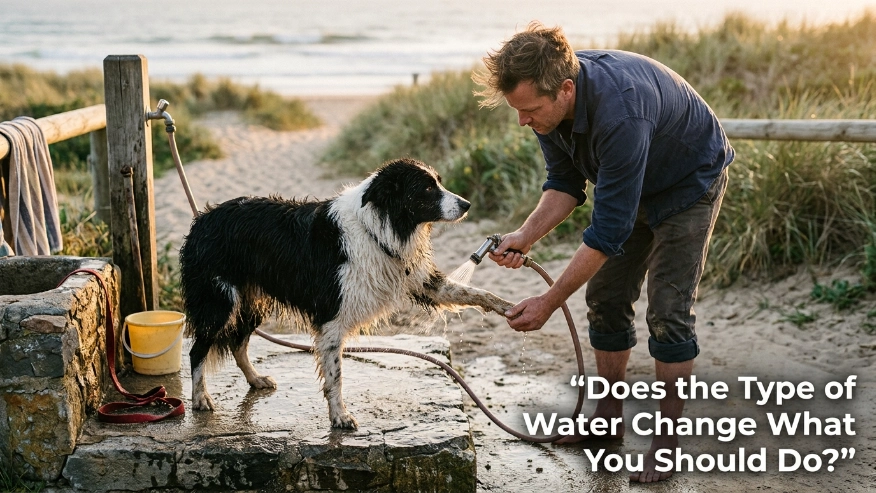
Yes. Where your Border Collie swims is one of the biggest factors in deciding whether to rinse or bathe afterward. Clean freshwater, pools, seawater, and ponds leave different things behind.
I make the decision before reaching for shampoo. First, I think about what was in the water.
| Swimming Water | Minimum Aftercare | When I Would Shampoo |
|---|---|---|
| Clean freshwater | Rinse if needed and dry thoroughly | Mud, odor, algae, or visible dirt remains |
| Chlorinated pool | Rinse well with fresh water | Coat feels dry, sticky, dirty, or irritated |
| Ocean or seawater | Fresh-water rinse to remove salt and sand | Salt, sand, smell, or grime remains after rinsing |
| Lake or river | Rinse thoroughly | Water was muddy, stagnant, foul-smelling, or questionable |
| Muddy pond | Thorough rinse | Usually worthwhile if mud and organic debris coat the fur |
After swimming in a pool
Pool water can leave chlorine and other treatment residue on the coat. The PetMD veterinary resource notes that frequent chlorine exposure can contribute to dry skin or coat irritation in some dogs.
I rinse from the neck toward the tail with clean water. I also flush the legs, underside, paws, and feathering.
After swimming in the ocean
Salt and sand deserve a good freshwater rinse. Sand can hide between toes and in long feathering around the legs and belly.
Don’t forget the underside. That’s where wet sand often hangs around.
After lakes, ponds, and rivers
Natural water varies widely in quality. Clear-looking water isn’t automatically clean or harmless.
The ASPCA warns that some natural waters can contain bacteria, pollutants, parasites, or dangerous algal blooms. I treat unknown water more cautiously than a clean backyard pool.
- Keep dogs away from water with unusual scum, discoloration, or foul odors.
- Follow posted lake or beach closures.
- Don’t let your dog drink freely from ponds or lakes.
- Rinse the coat with fresh water after swimming.
Vet note: Suspected exposure to toxic algae or another harmful substance isn’t a grooming problem. Contact a veterinarian promptly if exposure is possible, especially if your dog develops vomiting, weakness, drooling, breathing trouble, disorientation, tremors, or seizures.
Section Takeaway: The water source matters more than the fact that your Border Collie got wet. Pool, ocean, muddy, and questionable natural water deserve a prompt freshwater rinse.
Should You Rinse or Shampoo After Swimming?
Start with a rinse unless you have a clear reason to use shampoo. Fresh water removes a surprising amount of chlorine, salt, sand, loose dirt, and surface debris.
I reserve shampoo for cases where rinsing alone doesn’t leave the coat clean.
Rinsing is usually enough when:
- The water was reasonably clean.
- Your dog only swam for a short period.
- There is no strong odor.
- The coat doesn’t feel greasy, sticky, or gritty.
- The skin looks normal.
- Fresh water removes the visible residue.
A full shampoo bath may make sense when:
- The dog rolled in mud before or after swimming.
- The coat smells unpleasant after rinsing.
- Salt, grime, or organic material remains in the fur.
- The water was dirty or questionable.
- A veterinarian has given you a specific medicated-bathing plan.
When I use shampoo, I choose one made for dogs and rinse longer than I think I need to. Dense Border Collie fur can hold shampoo close to the skin.
Avoid human shampoo unless your veterinarian specifically tells you otherwise. Dog skin and coat care needs aren’t the same as ours.
How Do You Clean a Border Collie After Swimming?
A good post-swim routine takes only a few steps: inspect, rinse, clean if needed, towel dry, then finish drying the undercoat. Doing these steps in order keeps the process simple.
- Let your dog settle. Give your Border Collie a moment to stop dripping and shake off excess water.
- Check the coat. Look for mud, plant material, burrs, sand, oily residue, or anything stuck in the fur.
- Rinse with lukewarm fresh water. Work from the shoulders backward, then clean the chest, belly, legs, tail, and paws.
- Use dog shampoo only if needed. Massage gently through dirty areas without aggressively scrubbing the coat into tangles.
- Rinse completely. Continue until the coat feels clean and you can’t find shampoo residue.
- Press out excess water. Use your hands gently before reaching for towels.
- Towel blot. Press and squeeze the coat instead of rubbing hard.
- Finish drying. Pay special attention to the thick undercoat and hidden damp areas.
Why I don’t scrub the coat hard
A wet double coat tangles more easily when you rub it aggressively with a towel. Blotting is slower for a moment but saves work later.
I also check the coat with my fingers as I dry. The surface can feel dry while the hair closer to the skin is still damp.
How Should You Dry a Border Collie’s Double Coat?
Drying matters almost as much as rinsing. A Border Collie’s double coat has a protective outer layer and a softer undercoat that can hold moisture.
This is where I spend most of my post-swim grooming time. A quick towel pass often isn’t enough.
My preferred drying order
- First towel: Blot the back, sides, chest, and tail.
- Second towel: Focus on the belly, armpits, legs, feet, and feathering.
- Airflow: Let the dog dry in a comfortable, well-ventilated area.
- Dryer if needed: Use a pet dryer or suitable dryer on a cool or low-heat setting.
- Final check: Feel down to the undercoat before deciding the dog is dry.
Keep heated airflow moving and never concentrate it on one patch of skin. The dog should remain comfortable throughout drying.
The American Kennel Club provides broader grooming and responsible dog-care guidance that can help owners build a safe routine around coat maintenance.
Should you brush while the coat is wet?
I don’t pull a brush aggressively through a soaking coat. I remove obvious debris first, towel dry, then work carefully once the coat is damp rather than dripping.
Use gentle strokes and stop if the brush catches. Border Collie feathering behind the ears, legs, and tail can tangle after swimming.
Section Takeaway: Don’t judge dryness by the outer coat alone. Feel close to the skin, especially around the chest, belly, armpits, neck, and thick feathering.
What Should You Check After Swimming?
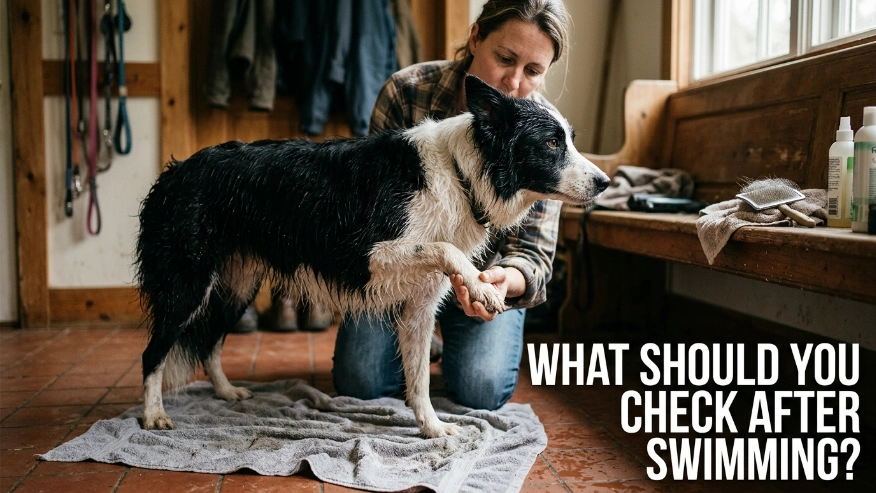
Check your Border Collie’s ears, paws, skin, and coat after swimming. Water play can hide small problems until the dog is back home.
I make this check part of drying. It takes little extra time.
Ears
- Dry the visible outer ear gently.
- Don’t push cotton swabs deep into the ear canal.
- Watch for repeated head shaking.
- Notice redness, discharge, tenderness, or a strong odor.
If ear symptoms persist, I would involve a veterinarian instead of repeatedly cleaning the ear at home. The American Veterinary Medical Association is also a reliable general resource for veterinary care and finding professional guidance.
Paws
- Look between every toe.
- Remove sand, tiny stones, and plant debris.
- Check paw pads for cuts or abrasion.
- Rinse away saltwater and pool residue.
- Inspect nails if your dog climbed on rocks or rough surfaces.
Skin and coat
Part the fur in several places. Look for redness, unusual bumps, tender areas, parasites, or debris near the skin.
Pay attention if your dog starts scratching or licking much more than normal after swimming. Persistent irritation deserves veterinary advice.
Vet note: Redness, painful skin, persistent itching, ear discharge, strong odor, sores, or worsening symptoms should be discussed with your veterinarian rather than treated with repeated home bathing.
What Post-Swim Grooming Mistakes Should You Avoid?
The biggest mistakes are over-shampooing, under-rinsing, and leaving the undercoat damp. None of those improves a Border Collie’s coat.
I try to keep the routine boring and consistent. That usually works best.
- Shampooing after every clean swim: A rinse may be all your dog needs.
- Skipping the freshwater rinse: Salt, chlorine, sand, and natural-water residue can remain in the coat.
- Rinsing only the back: The belly, legs, paws, chest, and tail often collect more debris.
- Rubbing hard with towels: This can create tangles in long feathering.
- Using high heat: Hot airflow can make drying uncomfortable and may harm skin.
- Assuming surface-dry means fully dry: The undercoat may still hold moisture.
- Ignoring ears: Head shaking, redness, pain, odor, or discharge shouldn’t be overlooked.
- Ignoring water warnings: No bath can make a dangerous algal bloom safe to swim in.
What if your Border Collie swims several times a week?
Frequent swimmers need a routine that doesn’t depend on shampoo every time. I would make freshwater rinsing and good drying the default.
Then use shampoo based on coat condition. That keeps post-swim care practical even during a busy summer.
Frequently Asked Questions
Should I bathe my Border Collie after swimming in a pool?
Rinse your Border Collie with fresh water after pool swimming to remove chlorine and other residue. A full shampoo bath isn’t automatically necessary after every pool session unless the coat remains dirty, sticky, smelly, or irritated.
Should I bathe my Border Collie after swimming in the ocean?
At minimum, give your Border Collie a thorough freshwater rinse after ocean swimming. Pay attention to the paws, belly, feathering, and tail because salt and sand can remain trapped there.
Does my Border Collie need shampoo after swimming in a lake?
Not always. If the lake water was clean and the coat rinses clean with fresh water, shampoo may be unnecessary. Use more caution with muddy, stagnant, foul-smelling, or questionable water.
Can I let my Border Collie air dry after swimming?
Some air drying is fine in a warm, comfortable setting, but don’t assume a dense double coat will dry quickly. Towel the dog first and check the undercoat, belly, chest, and other thick areas for lingering moisture.
How do I stop my Border Collie smelling after swimming?
Start with a thorough freshwater rinse and complete drying. If the smell remains after the coat is clean and dry, a gentle dog shampoo may help. Persistent strong odor from the skin or ears should be checked by a veterinarian.
Can frequent swimming damage a Border Collie’s coat?
Swimming itself doesn’t mean the coat will be damaged. Problems are more likely when chlorine, salt, dirt, or moisture repeatedly stays in the coat, or when the dog is shampooed too aggressively after every swim.
When should I call a vet after my Border Collie swims?
Seek veterinary advice for persistent skin redness, painful ears, discharge, repeated vomiting, severe diarrhea, unusual weakness, breathing problems, tremors, seizures, or suspected toxic-water exposure. Those signs go beyond normal post-swim grooming.
The Bottom Line
You usually don’t need to give a Border Collie a full shampoo bath after every swim. A good freshwater rinse and thorough drying are the most useful everyday steps.
Use shampoo when dirt, salt, grime, odor, or questionable water makes it worthwhile. Keep the process gentle and pay attention to the undercoat, ears, paws, and skin.
Once you know what your dog swam in, the decision becomes easy. Rinse what needs rinsing, wash what needs washing, and make sure that thick Border Collie coat dries all the way through.
