
How to Bathe a Border Collie Outside Safely (2026 Guide)

Quick Answer
Yes, you can bathe a Border Collie outside when the weather is comfortably warm, the water is lukewarm, and you can dry the double coat completely afterward. In cold weather, an indoor bath is safer; PetMD’s winter grooming guidance recommends avoiding outdoor dog baths below about 55°F.
Quick outdoor bathing steps
- Check the weather: Choose a mild, calm day rather than cold, windy, or extremely hot conditions.
- Brush first: Remove loose undercoat, tangles, burrs, and surface dirt before the coat gets wet.
- Use lukewarm water: Avoid spraying your Border Collie with very cold hose water.
- Use dog shampoo: Work it through the coat gently without getting shampoo into the eyes or ears.
- Rinse thoroughly: Keep rinsing until the dense undercoat feels free of shampoo.
- Dry completely: Towel-blot first, then finish drying the undercoat before your dog becomes chilled.
Bathing a Border Collie outside can be convenient after a muddy walk, farm work, or a wet afternoon in the yard. The important part isn’t simply choosing the garden instead of the bathtub.
You need to account for your Border Collie’s dense double coat, outdoor temperature, water temperature, footing, and drying time. This guide explains how to do that safely in 2026 without turning bath day into a wrestling match.
In This Guide
- Can You Bathe a Border Collie Outside?
- What Temperature Is Safe for an Outdoor Bath?
- What Do You Need to Bathe a Border Collie Outside?
- How Do You Bathe a Border Collie Outside Step by Step?
- How Do You Dry a Border Collie’s Double Coat?
- How Often Should You Bathe a Border Collie?
- When Should You Avoid Bathing a Border Collie Outside?
- Frequently Asked Questions
Can You Bathe a Border Collie Outside?
Yes. A healthy Border Collie can be bathed outside when the environment is warm enough and you have a safe source of lukewarm water.
The bigger challenge is the coat. Border Collies come in rough and smooth coat varieties, but both have dense, weather-resistant double coats.
A Border Collie’s double coat is a two-layer coat made of a protective outer layer and a softer, insulating undercoat. Water can penetrate deep into that undercoat and remain there long after the surface looks dry.
The American Kennel Club’s Border Collie breed guidance describes both coat types as dense and weather resistant. That protection is useful outdoors, but it also makes thorough rinsing and drying important.
Outdoor bathing works best for dirty dogs
An outdoor setup makes sense after your Border Collie rolls in mud, runs through dirty water, or comes home covered in dust. You can rinse away heavy debris before bringing the dog indoors.
You don’t need a full shampoo bath after every messy walk. Sometimes clean water, towel drying, and brushing after the coat dries are enough.
- Light dust: Let the coat dry, then brush it out.
- Fresh mud: Rinse dirty legs, belly, and chest.
- Strong odor or greasy dirt: A proper shampoo bath may help.
- Unknown chemical or irritating substance: Contact your veterinarian for appropriate cleaning advice.
My practical rule is to match the cleaning method to the mess. A dusty paw doesn’t need the same treatment as a dog coated in wet farm mud.
What Temperature Is Safe for an Outdoor Bath?
Choose a warm, calm day when your dog won’t become chilled during or after the bath. If temperatures are low, move the bath indoors.
PetMD’s winter grooming guidance recommends skipping an outdoor dog bath when the outdoor temperature is below about 55°F. That is a useful conservative cutoff, especially for a soaked double-coated dog.
Air temperature is only part of the decision
Wind, shade, rain, age, health, and drying time also matter. A breezy 60°F afternoon can feel much colder once your Border Collie is soaked to the skin.
Extreme heat isn’t ideal either. Choose shade and avoid keeping your dog restrained on sun-heated concrete during hot weather.
| Outdoor condition | Bath outside? | Best approach |
|---|---|---|
| Below about 55°F | Avoid | Use a warm indoor bathing area. |
| Mild, calm weather above 55°F | Usually suitable | Use lukewarm water and dry thoroughly. |
| Warm but windy | Use caution | Choose a sheltered area or move indoors. |
| Very hot direct sun | Not ideal | Use shade and a cooler time of day. |
Don’t rely on cold hose water
Water temperature matters even when the weather feels pleasant. PetMD’s dog bathing guidance recommends warm water that is neither too hot nor too cold.
Test the water with the inside of your wrist or forearm before wetting your dog. It should feel comfortably lukewarm.
What Do You Need to Bathe a Border Collie Outside?
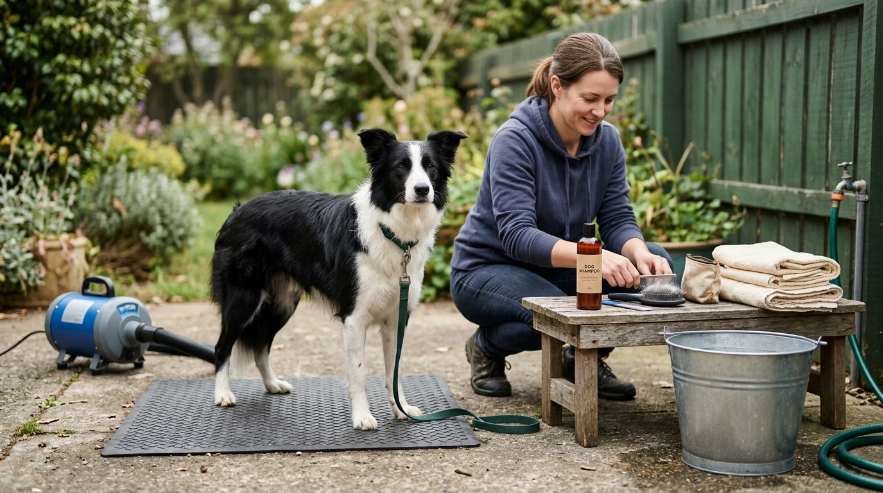
Set up everything before bringing your dog to the bathing area. Border Collies learn patterns quickly, and a long search for missing shampoo can make an already impatient dog harder to manage.
- Dog shampoo: Use a shampoo made specifically for dogs.
- Lukewarm water: A temperature-controlled outdoor faucet or filled containers work better than icy hose water.
- Non-slip surface: Use a rubber mat or another stable surface with good traction.
- Slicker or pin brush: Brush loose coat and debris before bathing.
- Metal comb: Check areas behind the ears, legs, tail, and feathering.
- Several absorbent towels: A Border Collie’s coat can hold a surprising amount of water.
- Drying equipment: Use a dog-safe dryer if appropriate and your dog accepts it calmly.
- Leash or helper: Keep control without forcing the dog into a frightening position.
- Treats: Reward calm standing, rinsing, and handling.
Brush before getting the coat wet. AKC double-coat grooming guidance recommends regular brushing to remove dead hair and maintain the coat.
Pay special attention behind the ears, under the front legs, around the tail, and through longer feathering. Wetting existing tangles can make them harder to work through.
How Do You Bathe a Border Collie Outside Step by Step?
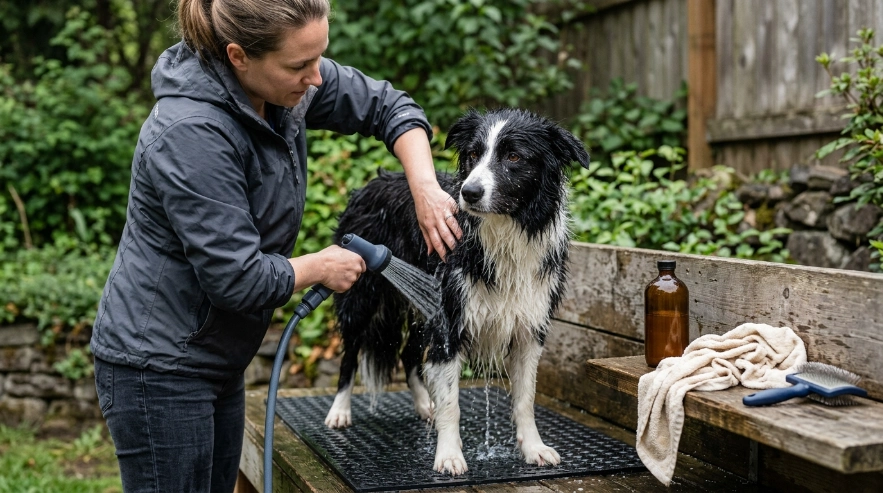
Keep the process calm and efficient. Your goal is to clean all the way through the coat without frightening, overheating, or chilling your dog.
1. Brush the coat thoroughly
Remove loose hair, dry mud, leaves, burrs, and tangles. Part the coat with your fingers so you can check what is happening near the skin.
A few minutes of brushing now makes wetting and rinsing easier. It’s especially useful during seasonal shedding.
2. Choose secure footing
Don’t bathe your Border Collie on slippery decking, smooth concrete, or another surface where wet paws can slide. A rubber mat gives the dog more confidence.
Keep the leash loose enough for comfort but controlled enough to prevent a sudden escape. Never leave a restrained dog unattended.
3. Wet the body gradually
Start at the shoulders or legs instead of spraying directly at the face. Use a gentle stream and work water through the outer coat to the skin.
The double coat can repel water at first. Move slowly and use your fingers to separate thick areas.
4. Apply dog shampoo
Follow the product directions and dilute the shampoo when the manufacturer recommends it. Work it through the neck, back, chest, belly, legs, and tail.
Avoid getting shampoo directly into the eyes, ear canals, nose, and mouth. Use a damp cloth for delicate areas around the face.
5. Rinse much longer than you think
Rinsing is one of the most important parts of bathing a Border Collie. Soap can hide deep within the undercoat even when the surface looks clean.
The ASPCA’s dog grooming guidance stresses thorough rinsing after shampooing. Keep checking the coat with your fingers until the water runs clear and the hair no longer feels soapy.
6. Let your dog shake
Stand back if you can. A strong shake removes a useful amount of surface water before you start towel drying.
Then move your dog immediately to a warm, sheltered drying area. Don’t leave a soaked Border Collie standing in wind or shade.
How Do You Dry a Border Collie’s Double Coat?
Drying matters as much as washing. The outer coat can feel almost dry while moisture remains trapped close to the skin.
Start by pressing towels into the coat rather than rubbing aggressively. Blot the chest, belly, legs, neck, tail, and thick rear coat several times.
Check the undercoat, not just the surface
Part the fur with your fingers and touch the hair close to the skin. If the undercoat still feels cool and damp, drying isn’t finished.
A dog-safe dryer can speed up the process when used correctly. Keep the airflow comfortable, avoid excessive heat, and let a noise-sensitive dog become familiar with the dryer gradually.
- Towel first: Remove as much free water as possible.
- Move into shelter: Get away from wind, rain, and cold ground.
- Dry in sections: Work through the neck, shoulders, body, underside, legs, and tail.
- Check near the skin: Don’t judge dryness from the guard hairs alone.
- Brush when appropriate: Gentle brushing can help separate the coat as it finishes drying.
The AKC also emphasizes proper drying after bathing because moisture can remain in thick coats. Give yourself enough time rather than planning an outdoor bath just before sunset.
How Often Should You Bathe a Border Collie?
There is no single calendar schedule that fits every Border Collie. Activity level, coat condition, skin health, swimming, mud exposure, and lifestyle all affect how often a full bath makes sense.
The ASPCA notes that some dogs need baths more often when they spend significant time outdoors. Border Collies that work, hike, swim, or play in muddy areas may therefore need cleaning sooner than mostly indoor dogs.
Don’t shampoo every time your dog gets dusty
Frequent brushing often removes loose dirt before a bath becomes necessary. Border Collies have working coats designed to handle outdoor conditions.
A simple paw, leg, or belly rinse may also solve the problem. Save a complete shampoo bath for times when the whole coat needs it.
Let the skin and coat guide you
If your dog has ongoing itching, redness, flakes, hair loss, sores, or an unusual odor, don’t simply increase bathing frequency. Those signs can have causes that ordinary shampoo will not solve.
Vet note: Persistent skin or coat problems should be discussed with your veterinarian, who can recommend an appropriate bathing schedule or medicated product when needed.
When Should You Avoid Bathing a Border Collie Outside?
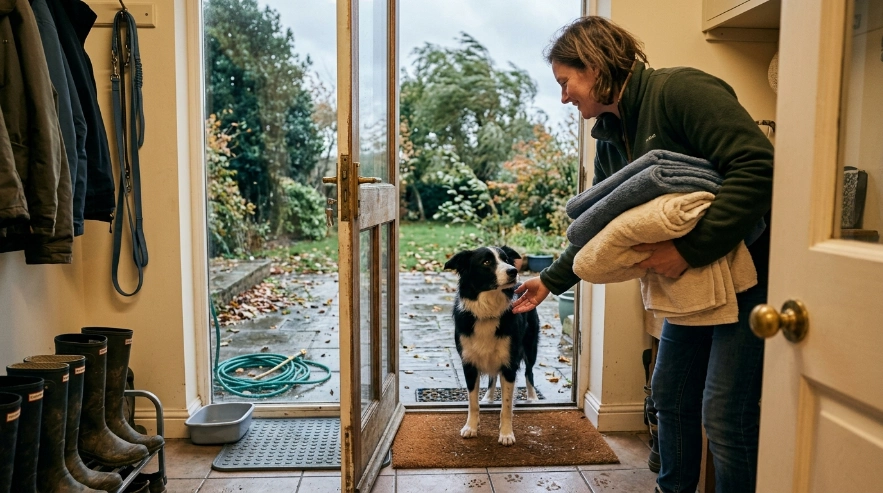
Outdoor bathing isn’t automatically the best choice simply because cleanup is easier. Several situations make an indoor bath safer or more comfortable.
- Cold weather: Avoid an outdoor bath when temperatures are too low for comfortable washing and complete drying.
- Strong wind: Moving air can chill a wet dog quickly.
- Extreme heat: Direct sun and hot surfaces can make the setup uncomfortable.
- No warm water: Don’t assume cold hose water is suitable just because it’s summer.
- Puppy bath: Young puppies need careful temperature control and a calm introduction to bathing.
- Senior dog: Older dogs may need extra warmth, secure footing, and shorter sessions.
- Skin problem: Follow veterinary instructions if your dog has dermatitis, wounds, infection, or another medical issue.
- Fear of hoses: Forcing a frightened dog can make future bathing harder.
Outdoor bathing vs indoor bathing
Neither location is always better. Choose the environment that gives you the best control over temperature, traction, water, and drying.
| Factor | Outdoor bath | Indoor bath |
|---|---|---|
| Mud cleanup | Excellent | More cleanup afterward |
| Temperature control | Weather dependent | Usually easier |
| Warm water access | Varies by setup | Usually convenient |
| Wind exposure | Possible | Minimal |
| Drying control | Requires planning | Usually easier |
If conditions aren’t right outside, don’t force the plan. Moving indoors is often easier than trying to keep a soaked Border Collie comfortable in unsuitable weather.
Frequently Asked Questions
Can I wash my Border Collie with a garden hose?
You can use a hose if the water is comfortably lukewarm and the flow is gentle. Avoid blasting the face or using water that feels cold straight from the tap.
Is cold water safe for a Border Collie bath?
Lukewarm water is the better choice for routine bathing. Water that is unusually hot or cold can make the experience uncomfortable and may make your dog resist future baths.
Can I bathe my Border Collie outside in winter?
An indoor bath is the safer choice during cold weather. PetMD recommends avoiding outdoor winter baths when temperatures are below about 55°F, and wind or slow drying can make even milder conditions unsuitable.
Can I let my Border Collie air-dry outside?
Don’t depend on outdoor air drying when the weather is cool, windy, or humid. Towel-dry thoroughly and check the dense undercoat near the skin before considering the dog dry.
Should I brush my Border Collie before or after a bath?
Brush before bathing to remove loose undercoat, debris, and tangles. You can also brush gently during the drying process once the coat is manageable.
How often should I shampoo my Border Collie?
Bathe according to your dog’s coat, activity, dirt exposure, and skin needs rather than following a rigid schedule. Use partial rinses and regular brushing when a full shampoo bath isn’t necessary.
What should I do if my Border Collie hates outdoor baths?
Start with short sessions, comfortable water, secure footing, treats, and low-pressure handling. If the hose itself causes fear, use containers of lukewarm water or move the bath indoors rather than forcing the dog.
Final takeaway: You can bathe a Border Collie outside, but good weather alone isn’t enough. Use lukewarm water, secure footing, dog-safe shampoo, thorough rinsing, and enough time to dry the double coat completely.
When temperatures are low, wind is strong, or you can’t control the water temperature, choose an indoor bath. A comfortable dog is far easier to clean than a cold or frightened one.
