
Best Bath Brush for Border Collie: Gentle Picks for Double Coats

Quick Answer
For most Border Collies, the best bath brush is a soft silicone or flexible rubber palm brush that spreads shampoo without scraping the skin. Because a Border Collie’s double coat can hold loose hair and dirt beneath the surface, brush the dry coat first and use the bath brush mainly for gentle cleaning and massage.
What to look for
- Soft bristles: Flexible silicone or rubber nubs are less likely to scratch wet skin.
- Secure grip: A palm strap or loop handle helps when your hands become slippery.
- Wide contact area: A medium palm-size head works efficiently across the chest, back, and sides.
- Easy rinsing: Simple one-piece designs are easier to clean after removing shed undercoat.
- No sharp teeth: Metal blades and aggressive deshedding edges don’t belong in a soapy bath.
My quick pick
- Choose a soft rubber palm brush for simplicity, or an integrated shower-and-scrubber tool if rinsing a thick rough coat is your biggest problem.
Bathing a Border Collie looks simple until shampoo disappears into that dense coat and loose undercoat starts sticking to everything. I’ve found that the right bath brush makes the job calmer, faster, and much easier to rinse.
This guide focuses on what works for both rough-coated and smooth-coated Border Collies. I’ll also explain which popular brush styles are useful, which ones aren’t, and how to use them without creating mats.
In This Guide
- What makes a bath brush good for a Border Collie?
- What are the best bath brushes for Border Collies?
- Border Collie bath brush comparison
- How do you use a bath brush on a Border Collie?
- Does a rough-coat Border Collie need a different brush?
- What bath brush is best for puppies and sensitive skin?
- What bath-brush mistakes should you avoid?
- Where does a bath brush fit into Border Collie grooming?
- Frequently asked questions
- Final takeaway
What Makes a Bath Brush Good for a Border Collie?
The best Border Collie bath brush cleans the coat without trying to act like a rake, slicker, or dematting tool. Wet skin is easier to irritate, so softer contact is the goal.
Definition: A Border Collie bath brush is a wet-grooming tool with flexible bristles, nubs, or fingers used to distribute shampoo and lift surface dirt during bathing.
Remember what you’re brushing through
Border Collies have rough or smooth coats, but both are double coats. A protective outer layer sits over a softer, denser undercoat.
The AKC’s double-coat grooming guidance also emphasizes regular brushing and coat-appropriate tools. That’s why I separate dry grooming from bath scrubbing.
- Before the bath: Remove loose coat, burrs, tangles, and small mats.
- During the bath: Use soft nubs to distribute shampoo and loosen dirt.
- After the bath: Rinse completely, dry thoroughly, then comb when appropriate.
Features I prioritize
A comfortable palm strap matters more than it sounds. A wet Border Collie can change direction quickly, and you don’t want to keep dropping the brush.
- Flexible nubs: They should bend when pressed with a finger.
- Rounded tips: Avoid pointed or rigid teeth.
- Medium size: It should cover the body without becoming awkward around legs.
- Simple construction: Fewer seams mean less trapped hair and shampoo residue.
- Wet grip: Rubberized loops or adjustable hand straps are useful.
A bath brush doesn’t need to reach deeply enough to strip undercoat. That’s a different grooming job.
What Are the Best Bath Brushes for Border Collies?
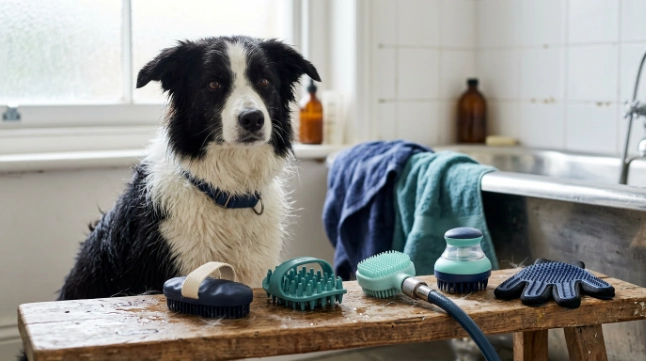
As of 2026, I’d shortlist soft rubber and silicone tools rather than aggressive wet deshedding brushes. These five options cover the most common Border Collie bath setups.
1. Bodhi Dog Bath Brush — best overall manual brush
The Bodhi Dog Bath Brush uses soft rubber bristles and a hand loop, making it a straightforward choice for shampooing. Its broad contact area works well across a Border Collie’s back, chest, shoulders, and hindquarters.
- Best for: Routine home bathing.
- Why I like it: Simple design, secure grip, and gentle contact.
- Watch for: It won’t replace a comb or undercoat rake.
If I wanted one uncomplicated brush for a muddy adult Border Collie, this is the style I’d choose first.
2. KONG ZoomGroom — best for shampooing plus loose hair
The KONG ZoomGroom is designed for grooming and shampooing while lifting loose hair. Its flexible contact points make more sense in water than stiff pins or metal blades.
- Best for: Dogs that shed noticeably during bathing.
- Why I like it: Easy circular massage on broad body areas.
- Watch for: Pre-brush long feathering before the coat gets wet.
3. Aquapaw bathing tool — best for rinsing a thick coat
Aquapaw combines soft silicone scrubbing with water delivery. This design can be handy when getting water through a dense rough coat is harder than applying shampoo.
- Best for: Owners who struggle to rinse thick fur thoroughly.
- Why I like it: One hand can control both scrubbing and water flow.
- Watch for: Check that the supplied connector works with your shower or hose.
4. Soft silicone shampoo-dispenser brush — best budget style
These palm brushes hold a small amount of shampoo inside the brush body. Pressing the brush dispenses shampoo while the silicone nubs massage the coat.
- Best for: Short baths and owners who dislike handling slippery shampoo bottles.
- Look for: Soft nubs, a leak-resistant cap, and an easy-clean reservoir.
- Avoid: Hard plastic spikes disguised as massage bristles.
5. Silicone grooming glove — best for nervous dogs
A grooming glove feels more like petting than brushing. That can help a bath-sensitive Border Collie accept gentle handling around the shoulders, sides, and legs.
- Best for: Puppies, smooth coats, and dogs unsure about brushes.
- Why I like it: Your hand stays close to the dog’s body.
- Watch for: Gloves are less precise in thick feathering.
Section Takeaway: For most Border Collies, a soft palm-style rubber brush is the safest all-round choice. Choose an integrated rinsing tool when coat saturation and rinsing are your main problems.
Border Collie Bath Brush Comparison
No single bath brush does every grooming job. This comparison shows where each style fits best.
| Brush | Best Use | Rough Coat | Smooth Coat | Main Limitation |
|---|---|---|---|---|
| Bodhi Dog Bath Brush | General shampooing | Excellent | Excellent | Doesn’t detangle undercoat |
| KONG ZoomGroom | Loose hair and shampoo | Good | Excellent | Limited detangling |
| Aquapaw Bathing Tool | Scrubbing and rinsing | Excellent | Good | Requires compatible water connection |
| Shampoo-dispenser brush | Convenient lathering | Good | Excellent | Reservoir needs cleaning |
| Silicone grooming glove | Gentle handling | Fair | Excellent | Less effective in dense feathering |
Australian Shepherd owners face a similar double-coat challenge. A shorter-coated Australian Kelpie may need less help distributing shampoo through long feathering.
The Border Collie’s combination of undercoat and feathering is why I prefer separate tools for bathing and detangling.
How Do You Use a Bath Brush on a Border Collie?
Brush the coat dry before you turn on the water. Wetting an existing tangle can tighten it and make the rest of the bath harder.
1. Detangle before bathing
Work through the coat with your normal dry-grooming tools. Pay extra attention behind the ears, under the front legs, around the trousers, and through the tail.
2. Soak the coat thoroughly
Use lukewarm water and work from the body outward. A rough Border Collie’s coat may need extra time before water reaches beneath the outer hairs.
3. Apply dog-safe shampoo
Spread the shampoo rather than dumping a large amount into one spot. The goal is even coverage that will also rinse out evenly.
4. Massage with light pressure
Use short circular movements across broad areas, then move with the direction of coat growth. Five to ten gentle passes over one area are usually enough.
- Back and sides: Use broad circles with light pressure.
- Chest: Slow down because hair may be thicker and more tangled.
- Legs: Use your fingers or a smaller contact area.
- Belly: Reduce pressure because skin is more exposed.
- Face: Skip the bath brush and use a damp cloth.
5. Rinse longer than you think you need
The PetMD dog-bathing guide recommends thorough rinsing, especially through areas such as the chest and armpits. I keep rinsing until I can part the coat and find no slippery shampoo residue.
6. Dry the undercoat, not just the surface
Press water out with absorbent towels instead of aggressively rubbing the coat. Hard towel rubbing can twist longer hair into new tangles.
A pet-safe dryer on an appropriate cool or low-heat setting can help with a dense coat. Keep the airflow comfortable and give noise-sensitive dogs time to adjust.
Section Takeaway: The bath brush belongs in the middle of the process, after detangling and before thorough rinsing. It should spread shampoo gently, not pull out mats.
Does a Rough-Coat Border Collie Need a Different Brush?
Both Border Collie coat varieties can use the same soft bath brush. Rough coats simply demand more preparation and more careful rinsing.
For rough-coated Border Collies
- Choose: A medium or large soft palm brush.
- Prioritize: Easy shampoo distribution and thorough rinsing.
- Pre-brush: Feathering around the chest, legs, tail, and ears.
- Dry carefully: Don’t leave a dense undercoat damp for long periods.
For smooth-coated Border Collies
- Choose: A rubber curry-style brush or grooming glove.
- Prioritize: Gentle removal of surface dirt and loose hair.
- Use less pressure: Shorter hair provides less cushioning over the skin.
Coat length isn’t the only variable. Individual skin sensitivity, age, shedding level, and bath tolerance matter too.
What Bath Brush Is Best for Puppies and Sensitive Skin?
For a Border Collie puppy, I’d start with the softest silicone glove or rubber brush I could comfortably bend with my fingers. The first goal is teaching the puppy that handling feels safe.
- Keep sessions short: A few calm minutes beats a long struggle.
- Reward stillness: Use tiny treats and calm praise.
- Start gently: Shoulders and sides are easier than paws or the rear end.
- Stop early: Don’t continue if the puppy becomes increasingly frightened.
For sensitive adult skin, avoid stiff spikes and excessive scrubbing. Redness, sores, persistent itching, or unusual hair loss deserve veterinary attention rather than stronger grooming.
Vet note: If your Border Collie has recurring itching, skin inflammation, infection, allergies, or a prescribed medicated shampoo, ask your veterinarian how and when to bathe.
What Bath-Brush Mistakes Should You Avoid?
The biggest mistake is treating a bath brush like an undercoat rake. Wet grooming should be gentle.
- Brushing mats underwater: Detangle before bathing instead.
- Pressing hard: More pressure doesn’t mean a cleaner coat.
- Using metal deshedding blades: Save coat-removal tools for appropriate dry grooming.
- Scrubbing against irritated skin: Stop and inspect the area.
- Skipping the rinse: Shampoo trapped in a dense coat can irritate skin.
- Using human shampoo: Choose a product formulated for dogs unless your veterinarian directs otherwise.
- Leaving the coat damp: Thick undercoat needs thorough drying.
The ASPCA’s pet grooming guidance also recommends removing mats before bathing. Severe mats are better handled by a professional than attacked with scissors close to the skin.
Practical tip: Run the brush across the inside of your forearm before using it on your dog. If the tips feel sharp or scratchy with light pressure, I wouldn’t use that brush on wet canine skin.
Where Does a Bath Brush Fit Into Border Collie Grooming?
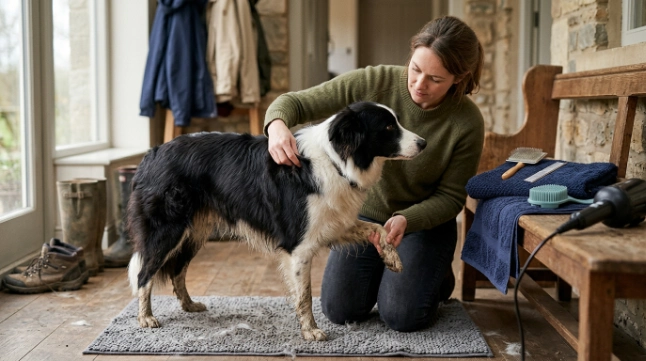
Bathing is only one piece of coat care. Border Collies usually need regular brushing more often than they need a full shampoo bath.
The VCA coat-care guidance recommends choosing brushes for coat type and removing tangles before bathing. That approach suits a working herding breed that collects grass, dust, mud, and loose coat.
A simple grooming rhythm
- Once or twice weekly: Check and brush the coat under normal conditions.
- During heavy shedding: Increase dry brushing as needed.
- After muddy activity: Decide whether paws, legs, or the whole dog need washing.
- Before every full bath: Remove tangles and loose debris.
- During the bath: Use the soft bath brush for shampoo distribution.
- Afterward: Rinse completely and dry through the coat.
I also check ears, paws, armpits, and skin while grooming. For an active Border Collie, those quick checks often matter more than making the coat look perfectly polished.
Vet note: A sudden change in odor, skin color, dandruff, hair loss, or scratching may have a medical cause. Your veterinarian can help determine whether bathing products or treatment need to change.
Frequently Asked Questions
Can I use a silicone bath brush on a Border Collie?
Yes. A soft silicone bath brush is one of the better choices because flexible nubs can distribute shampoo without the sharp contact of metal grooming teeth. Use gentle pressure and detangle the double coat before getting it wet.
Should I use a bath brush to remove a Border Collie’s undercoat?
No. A bath brush can loosen some shed hair, but it shouldn’t replace an undercoat rake, comb, or other dry-grooming tool. Remove excess undercoat before bathing, then use the bath brush mainly for cleaning.
Is KONG ZoomGroom good for Border Collies?
It can be a useful shampooing and loose-hair brush for many Border Collies. I particularly like this style for smooth coats, while rough-coated dogs still need separate pre-bath detangling through feathered areas.
Can I use a grooming glove in the bath?
Yes, provided the glove is designed for wet pet grooming. Soft silicone gloves are useful for puppies, bath-shy dogs, and smooth-coated Border Collies because the motion feels closer to normal petting.
Should I brush a Border Collie before or after a bath?
Brush before the bath to remove loose hair, debris, tangles, and small mats. After the coat is rinsed and thoroughly dried, you can comb or brush again as needed to finish the coat.
How hard should I scrub with a dog bath brush?
Use light pressure. The flexible tips should move across the coat without dragging the skin underneath. If your Border Collie flinches, repeatedly turns toward the brush, or develops redness, reduce pressure or stop.
How often should I bathe my Border Collie?
There isn’t one fixed schedule for every Border Collie. Activity level, coat condition, swimming, mud, skin health, and veterinary treatment all matter, so many owners bathe when the dog becomes dirty or noticeably odorous rather than following a rigid calendar.
Final Takeaway
For most owners, the best bath brush for a Border Collie is a soft silicone or rubber palm brush with a secure grip. The Bodhi Dog Bath Brush is my simple all-round pick, while Aquapaw makes sense when rinsing a dense rough coat is the bigger challenge.
Whatever you choose, don’t ask the bath brush to do the job of a slicker, comb, or undercoat rake. Pre-brush first, scrub gently, rinse thoroughly, and your Border Collie’s double coat will be much easier to manage.
