

Quick Answer
The best flea shampoo for a Border Collie is a dog-safe formula that kills fleas effectively, reaches through the breed’s dense double coat, and matches your dog’s age and skin condition. For an active infestation, I prefer a clearly labeled flea shampoo with proven insecticidal ingredients, while remembering that flea shampoo works best as one part of a complete flea-control plan.
What I Look For
- Dog-safe label: The product must clearly state that it’s suitable for your dog’s age and species.
- Effective active ingredients: Check whether the shampoo targets adult fleas, eggs, larvae, ticks, or several stages.
- Double-coat coverage: The lather must reach the skin beneath your Border Collie’s outer coat and undercoat.
- Skin compatibility: Oatmeal, aloe, or conditioning ingredients may help dogs whose skin is dry after flea bites.
- Household safety: Take extra care with dog-only pesticide shampoos when cats live in the same home.
Before You Bathe
- Read the entire label, confirm the minimum age, and ask your veterinarian before combining flea-control products.
Border Collies have dense coats that can make a simple flea problem harder to spot and treat. Fleas can hide close to the skin while that beautiful outer coat still looks surprisingly clean.
As of 2026, there are several useful flea shampoos available, but no shampoo is right for every Border Collie. This guide explains the products I would compare, what the active ingredients mean, and how to use shampoo without forgetting the rest of the flea life cycle.
In This Guide
- What Is the Best Flea Shampoo for a Border Collie?
- Best Flea Shampoos for Border Collies in 2026
- How Do You Choose Flea Shampoo for a Border Collie’s Double Coat?
- Are Flea Shampoos Safe for Border Collies?
- How Do You Use Flea Shampoo on a Border Collie?
- Why Do Fleas Come Back After a Flea Bath?
- Flea Shampoo vs. Long-Term Flea Prevention
- When Should You Call a Veterinarian?
- Frequently Asked Questions
What Is the Best Flea Shampoo for a Border Collie?
For most adult Border Collies with an active flea problem, I look first for a properly labeled flea shampoo that kills adult fleas while offering some control of immature flea stages. I also want a formula that can be rinsed cleanly from a thick double coat.
A flea shampoo is a medicated cleansing product designed to kill or control fleas during bathing. Depending on the formula, it may also target ticks, lice, flea eggs, or larvae.
The important distinction is that a flea bath and flea prevention aren’t always the same thing. A shampoo can remove or kill parasites on your dog today without protecting them from every flea that develops in the house tomorrow.
My overall approach
- Active infestation: Choose a labeled insecticidal shampoo with clear directions and age restrictions.
- Sensitive skin: Look for soothing ingredients, but don’t assume the word “natural” automatically means gentler.
- Cat household: Check active ingredients and species warnings particularly carefully.
- Recurring fleas: Talk with your veterinarian about longer-lasting flea prevention instead of relying on repeated baths.
A Border Collie’s coat doesn’t require a special flea pesticide because of the breed itself. What changes is the bathing technique needed to reach the skin beneath all that hair.
Best Flea Shampoos for Border Collies in 2026
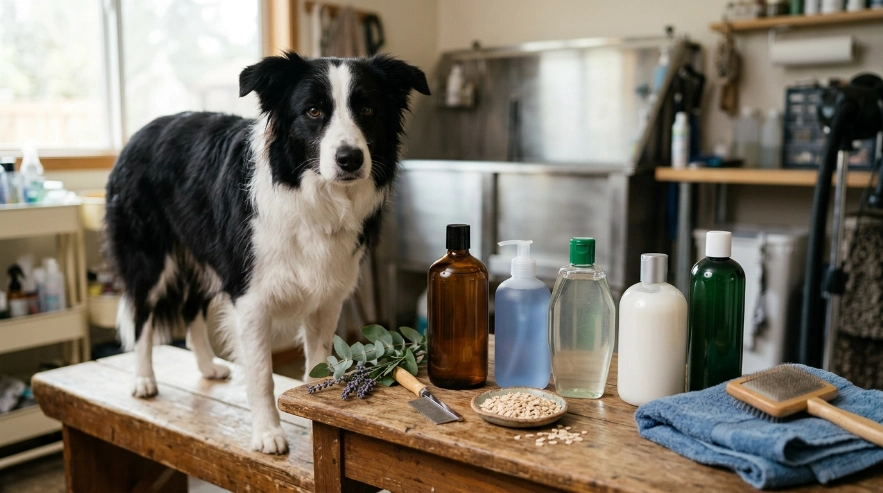
My 2026 shortlist focuses on products with clearly published labels and directions. The best choice still depends on your Border Collie’s age, skin, current flea-control products, and other pets in the home.
| Shampoo | Notable Actives | Label Age | Best Fit |
|---|---|---|---|
| Adams Plus Flea & Tick Shampoo with Precor | Pyrethrins, S-methoprene, piperonyl butoxide | 12+ weeks | Broad flea life-cycle approach |
| Veterinary Formula Flea & Tick Shampoo | Pyrethrins plus synergists | 12+ weeks | Straightforward contact treatment |
| TropiClean Maximum Strength Flea + Tick Shampoo | Lemongrass, cedarwood, clove and other oils | 12+ weeks | Botanical-style formula |
| Hartz UltraGuard Rid Flea & Tick Oatmeal Shampoo | Phenothrin | 6+ months | Adult dogs needing an oatmeal formula |
| Sentry Flea & Tick Shampoo with Oatmeal | Permethrin, piperonyl butoxide | 12+ weeks | Dog-only use with extra cat precautions |
1. Adams Plus Flea & Tick Shampoo with Precor
This is my strongest all-around candidate when the goal goes beyond killing visible adult fleas. Its label includes pyrethrins plus S-methoprene, an insect growth regulator that helps interrupt development of immature fleas.
The formula is labeled for pets over 12 weeks old. It also contains coat-conditioning ingredients, which can be useful when you’re working through a long Border Collie coat.
2. Veterinary Formula Flea & Tick Shampoo
This option uses pyrethrins with insecticide synergists and is labeled for dogs 12 weeks and older. It makes sense when you want a traditional contact flea shampoo without choosing a dog-only permethrin formula.
As with any pesticide shampoo, follow the label contact time instead of rinsing immediately. That step matters.
3. TropiClean Maximum Strength Flea + Tick Shampoo
TropiClean uses a blend that includes lemongrass, cedarwood, clove, cinnamon, and sesame oils. The current label says it can be used on dogs and puppies over 12 weeks when used as directed.
I wouldn’t choose it simply because the ingredients sound “natural.” Botanical ingredients can still irritate some dogs, so stop if your Border Collie develops redness or discomfort.
4. Hartz UltraGuard Rid Flea & Tick Oatmeal Shampoo
This dog-only shampoo combines flea and tick treatment with oatmeal. The current label limits use to dogs and puppies six months and older.
That higher minimum age is important. Never substitute the age recommendation from another Hartz product or another flea shampoo.
5. Sentry Flea & Tick Shampoo with Oatmeal
Sentry’s oatmeal formula contains permethrin and is labeled for dogs and puppies over 12 weeks. I would be particularly cautious with this choice in a household containing cats.
Permethrin exposure can be dangerous to cats, so follow every species warning and prevent cross-contact.
How Do You Choose Flea Shampoo for a Border Collie’s Double Coat?
A Border Collie’s double coat consists of an outer coat and a softer, denser undercoat. Fleas spend their time close to the skin, which means surface-level lather isn’t enough.
The best shampoo must be practical to distribute through that coat. Your technique matters almost as much as the bottle.
Check these five things
- Age requirement: Match the label to your dog’s exact age.
- Active ingredients: Know whether you’re using pyrethrins, pyrethroids, an insect growth regulator, or botanical ingredients.
- Contact time: Some labels require several minutes of lather before rinsing.
- Skin condition: Raw, infected, badly inflamed, or crusted skin deserves veterinary attention first.
- Existing flea medication: Don’t automatically stack shampoo, topical medication, collars, or other insecticides.
Coat length alone shouldn’t push you toward a stronger pesticide. Instead, wet the coat thoroughly and work the product down to the skin.
Are Flea Shampoos Safe for Border Collies?
Flea shampoos can be used safely when the product is appropriate for the individual dog and the label is followed exactly. The safest option depends on age, health history, skin condition, and other parasite medications.
The ASPCA warns specifically about permethrin exposure in cats. That’s worth remembering if your Border Collie shares bedding or grooming contact with a feline housemate.
Don’t assume more treatment is better
Using two flea products together can expose your dog to overlapping active ingredients. Ask your veterinarian before combining pesticide shampoo with another flea or tick treatment.
You should also avoid human shampoo, homemade pesticide mixtures, or concentrated essential oils. A product being common online doesn’t make it appropriate for canine skin.
Vet note: If your Border Collie is pregnant, nursing, elderly, medicated, debilitated, has a history of reactions, or has significant skin disease, ask your veterinarian before using a medicated flea shampoo.
How Do You Use Flea Shampoo on a Border Collie?
The correct method is the one printed on your specific bottle. Contact times, minimum ages, repeat intervals, and safety precautions differ between products.
For a Border Collie’s dense coat, I use a systematic bathing approach so I don’t accidentally leave dry patches near the skin.
- Read the complete label. Check species, minimum age, warnings, dose guidance, and required contact time.
- Brush before bathing. Remove loose undercoat and small tangles so water and shampoo can reach the skin.
- Wet the coat completely. Work in sections until water penetrates the undercoat.
- Apply shampoo as directed. Keep it away from the eyes, mouth, nose, and other sensitive areas.
- Massage to the skin. Pay attention to the neck, back, belly, hindquarters, and base of the tail.
- Respect the contact time. Don’t shorten or extend it based on guesswork.
- Rinse thoroughly. Keep rinsing until the dense undercoat is free of residue.
- Dry the coat fully. Use towels and gentle airflow rather than leaving the undercoat damp.
- Wash bedding and clean the environment. Otherwise new fleas can quickly replace those removed during the bath.
Never increase the amount, contact time, or frequency because the infestation looks severe. Follow the label and get veterinary help when control isn’t working.
Why Do Fleas Come Back After a Flea Bath?
Fleas often return because the adult insects you see on your Border Collie represent only part of an infestation. Eggs, larvae, and pupae can remain in bedding, carpeting, furniture, cracks, and other areas where your dog rests.
The VCA flea life-cycle guide notes that adult fleas on the pet make up only a small portion of the overall flea population. That’s why one successful bath can still be followed by another wave of fleas.
What should you do about the home?
- Vacuum regularly: Focus on carpets, rugs, upholstery, cracks, and resting areas.
- Wash bedding: Clean your dog’s bedding and washable fabrics frequently during an infestation.
- Treat every pet appropriately: Each animal needs a species-appropriate flea-control plan.
- Stay consistent: Flea development continues after the visible adults disappear.
If fleas keep reappearing, the answer usually isn’t simply another bath. You need to address the complete flea life cycle.
Flea Shampoo vs. Long-Term Flea Prevention
Flea shampoo is useful for quickly removing or killing fleas present on a dog, but it shouldn’t automatically become your only long-term strategy. Many modern preventives provide protection for much longer than a shampoo bath.
VCA’s flea-control guidance explains that shampoos can kill fleas during application while offering relatively little lasting protection compared with longer-acting products.
| Option | Main Strength | Main Limitation |
|---|---|---|
| Flea shampoo | Fast removal or contact kill during bathing | Often limited ongoing protection |
| Topical preventive | Longer-lasting scheduled control | Bathing rules and species restrictions vary |
| Oral preventive | No pesticide residue on the coat | Requires individual veterinary suitability |
| Flea comb | Useful for checking and removing visible fleas | Doesn’t control the environmental life cycle |
The safest flea-control choice depends on the individual dog. Age, health, lifestyle, parasite exposure, and other medications all matter.
When Should You Call a Veterinarian?
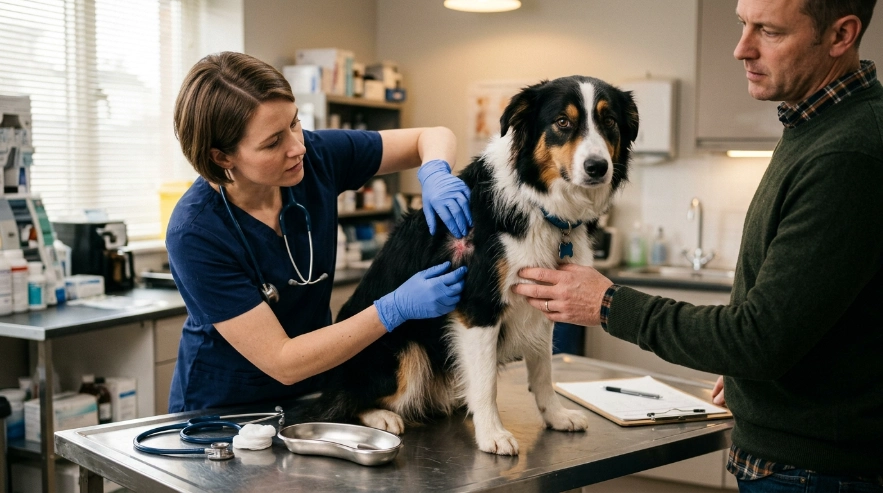
Most uncomplicated flea discoveries don’t require emergency care, but some dogs need veterinary help quickly. Fleas can trigger significant itching, skin inflammation, secondary infection, and other problems.
Contact your veterinarian if you notice any of these signs:
- Persistent scratching that prevents normal rest
- Raw, bleeding, crusted, or infected-looking skin
- Large areas of hair loss
- Pale gums, weakness, or unusual tiredness
- Vomiting, tremors, excessive drooling, weakness, or abnormal behavior after a flea product
- Fleas that continue despite consistent treatment
- A reaction after combining flea-control products
A veterinarian can also help distinguish flea bites from allergies, mites, bacterial skin disease, or other causes of itching.
Vet note: Stop using a flea-control product and contact your veterinarian promptly if you suspect an adverse reaction. Severe neurological signs or breathing difficulty require urgent veterinary care.
Frequently Asked Questions
What is the best flea shampoo for a Border Collie with sensitive skin?
A dog-safe flea shampoo with clearly labeled pest-control ingredients plus soothing coat ingredients may be suitable. However, inflamed or damaged skin can react differently, so I would ask a veterinarian before using medicated shampoo on a Border Collie with significant dermatitis.
Can I use flea shampoo on a Border Collie puppy?
Only if the specific product label allows your puppy’s age. Many flea shampoos start at 12 weeks, while some products require puppies to be at least six months old. Never assume that one brand’s age limit applies to another product.
How often can I use flea shampoo on my Border Collie?
Use it only at the interval stated on the label. Repeat-treatment instructions vary considerably, and excessive bathing can irritate skin or interfere with other flea-control products. Ask your veterinarian if you feel you need treatments more often than directed.
Does flea shampoo kill flea eggs?
Some formulas contain ingredients that target flea eggs or interfere with flea development, while others mainly kill adult fleas during bathing. Read the product label carefully because “flea shampoo” doesn’t automatically mean every stage of the flea life cycle is controlled.
Can flea shampoo get through a Border Collie’s thick coat?
Yes, but you must wet the double coat thoroughly and massage the shampoo down to the skin. Brushing loose undercoat before bathing makes this easier. Rinsing is equally important because shampoo residue can stay hidden beneath dense fur.
Will one flea bath get rid of all the fleas?
Usually not. A bath can kill or remove fleas on your Border Collie, while eggs, larvae, and pupae remain elsewhere in the environment. Successful infestation control normally requires cleaning the home and using an appropriate ongoing flea-control plan.
Can I use dog flea shampoo if I also own a cat?
You need to check the ingredients and label carefully. Some dog flea products contain permethrin, which can be highly toxic to cats. Keep cats away from dog-only products and ask your veterinarian which flea-control combination is safest for a mixed-pet household.
The main takeaway: choose flea shampoo based on its label, active ingredients, your Border Collie’s age, and your household—not simply the strongest claim on the bottle.
A good bath can provide fast relief, but lasting control comes from treating fleas as a whole-life-cycle problem. If fleas keep returning or your dog’s skin looks unhealthy, involve your veterinarian rather than cycling through stronger shampoos.
