
Best Food for Border Collies: A Practical Feeding Guide for Every Life Stage

Border Collies usually do best on a complete and balanced diet that matches their age, activity level, and body condition. That sounds simple, but it matters because this breed can look “fit” while quietly eating too much, or appear hungry while actually needing more calories on busy days.
The goal is not to find one magic formula for every Border Collie. It is to choose food that supports lean muscle, steady energy, healthy digestion, and a coat that stays in good condition without unnecessary extras.
What Is the Best Food for a Border Collie?
The best food for a Border Collie is one that is labeled complete and balanced for the dog’s life stage and fits how the dog actually lives. A young, active dog needs different support than a couch-loving adult or a senior that has slowed down.
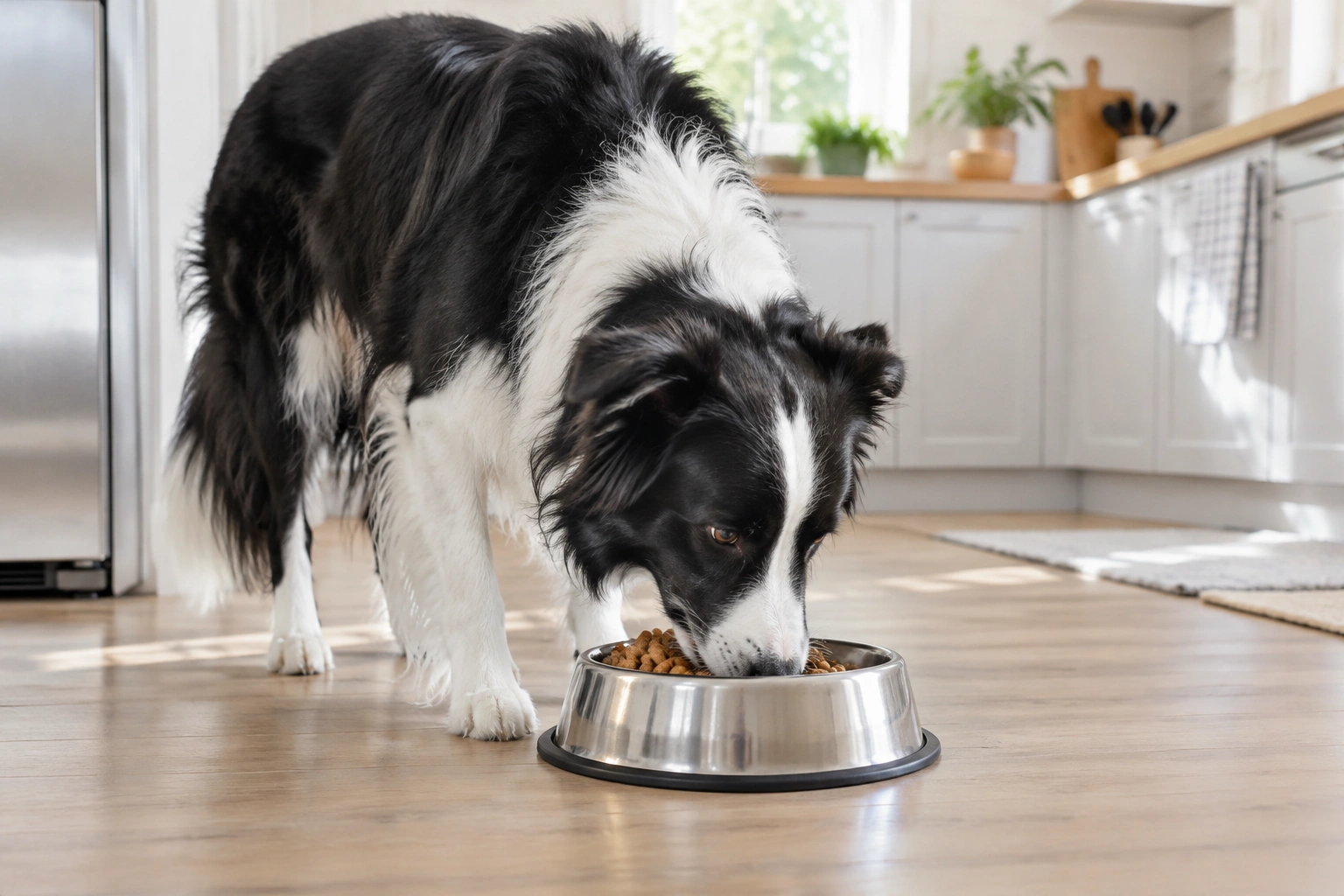
In practical terms, a good Border Collie food should:
- list a quality animal protein source near the top
- provide enough calories for the dog’s workload
- include fat for energy and skin support
- use digestible carbohydrates and fiber in sensible amounts
- have an AAFCO nutritional adequacy statement for the correct life stage
- produce firm stools, good appetite, and stable body condition
That last point matters more than marketing. A food can sound impressive and still be a poor fit if the dog gets loose stools, gains weight, or seems flat and tired.
If you want a quick rule: choose the most nutritionally complete food your budget and routine can support, then judge it by how your Border Collie looks, feels, and performs over time.
Border Collie Nutritional Needs: What This Breed Actually Requires
Border Collies are energetic, athletic dogs, but they do not all need the same “high-performance” diet. A working dog herding livestock all day has very different calorie needs from a pet Border Collie that gets a couple of walks and weekend hikes.
The main nutritional priorities are straightforward:
Protein for lean muscle
Protein supports muscle maintenance and recovery. For Border Collies, that matters because they are built to move, turn, sprint, and work for long periods. Higher protein is not automatically better, though. The food still has to be digestible and calorie-balanced.
Fat for energy
Fat is a dense energy source and often helps active dogs maintain weight without huge meal volumes. It also supports skin and coat health. Very active Border Collies may do better with more fat than a low-activity dog, but excess fat can push a less active dog into weight gain.
Carbohydrates for usable fuel
Digestible carbohydrates are not the enemy. In many complete diets, they help provide steady energy and keep the formula practical and affordable. What matters is the quality and digestibility of the carb source, not whether the food is trendy.
Fiber for stool quality and satiety
A moderate amount of fiber can help with digestive regularity and can make a dog feel satisfied. Too much can reduce calorie density and make a food less suitable for a high-output Border Collie.
Omega-3 fatty acids
Omega-3s, especially from fish oils, are often used in dog foods to support skin, coat, and overall inflammation balance. They are useful, but they are not a substitute for a well-formulated diet.
Is High-Protein Food Better for Border Collies?
Not always. Border Collies do not need high protein just because of the breed name. Protein needs depend more on workload, age, and overall diet balance than on breed alone.
A very active working Border Collie may benefit from a higher-protein formula if it also provides enough calories and digestibility. A pet Border Collie with a lower activity level usually does not need an extreme protein level and may do better with a balanced maintenance diet.
The better question is not “Is more protein always better?” It is “Does this food provide enough protein for this dog’s activity level without throwing off calories, digestion, or body condition?”
How to Choose the Right Food by Life Stage
Border Collie puppies
Puppies need a food made for growth, not an adult maintenance formula. Growth diets are designed to support development with appropriate calcium and phosphorus balance, which is especially important in larger, active puppies that are still building bone and muscle.
For most Border Collie puppies, the better choice is a puppy or “all life stages” formula that is complete and balanced for growth. Feedings are usually split into multiple meals per day to help with digestion and energy stability.
A practical mistake to avoid: switching a puppy to adult food too early because the dog looks “big enough.” Growth and maturity are not the same thing.
Adult Border Collies
Most adult Border Collies do well on a maintenance formula that matches their activity level. A pet Border Collie may need a moderate-calorie food, while a working dog may need a more energy-dense formula.
The adult stage is where portion control matters most. Border Collies can stay lean-looking while still gaining slow, unhealthy weight. Check body condition, not just appearance.
Senior Border Collies
Older Border Collies often need fewer calories, but they still need enough protein to help preserve muscle. Many seniors also benefit from food that is easy to digest and not overly calorie-dense.
If your senior dog is less active, the best food is usually one that helps maintain muscle without pushing weight gain. Joint-support ingredients like glucosamine and chondroitin can be helpful in some formulas, but they should be treated as support features, not miracle fixes.
Kibble vs Wet, Raw, Fresh, and Freeze-Dried Food
There is no single format that is universally best for every Border Collie. The best format is the one that fits the dog, the owner, and the dog’s digestion.
| Food type | Cost | Convenience | Moisture | Digestibility | Border Collie fit |
|---|---|---|---|---|---|
| Kibble | Usually lower | Very convenient | Low | Often good when well made | Strong all-around choice for most homes |
| Wet food | Usually higher | Convenient but messier | High | Often very palatable | Helpful for picky eaters or dogs needing more moisture |
| Raw food | Often higher | Less convenient | High | Can vary a lot | Works for some owners, but requires careful handling and formulation checks |
| Fresh food | Usually higher | Convenient if delivered | High | Often very palatable | Good for dogs that need palatability or easier chewing |
| Freeze-dried food | Usually higher | Convenient once stored | Low unless rehydrated | Can be good | Useful as a topper or full diet if complete and balanced |
Kibble
Kibble is still the most practical option for many Border Collies. It is easy to store, easy to portion, and often the most budget-friendly way to feed a complete diet.
The trade-off is moisture. If your dog does not drink enough water, or if palatability is an issue, kibble may need to be paired with wet food or warm water.
Wet food
Wet food can be useful if your Border Collie is picky, older, or needs more moisture in the diet. It is often very appealing, which can help dogs that lose interest in food.
The downside is cost and storage. It is also easy to overfeed because wet food can look like “less” in the bowl while still being calorie-dense.
Raw food
Raw feeding can be appealing for owners who want moisture-rich meals and simple ingredient lists. The trade-off is safety and consistency. Raw diets can carry pathogen risk if handled poorly, and homemade raw-style feeding without proper formulation can create nutrient imbalances.
Fresh and freeze-dried food
Fresh food may improve palatability and can be easier for some dogs to digest, especially if they are fussy eaters. Freeze-dried food can be a useful middle ground between convenience and ingredient control.
The main caution is the same as with any premium format: “fresh” does not automatically mean nutritionally superior. Check the adequacy statement and calorie information.
Quick decision framework: which format should you choose?
- Choose kibble if you want the best mix of convenience, cost control, and complete-and-balanced feeding.
- Choose wet food if your Border Collie is picky, needs extra moisture, or benefits from softer texture.
- Choose raw only if you are committed to safe handling and the diet is truly complete and balanced; it may suit some owners who want a very hands-on feeding style.
- Choose fresh if you want convenience with higher palatability and are comfortable with a higher price point.
- Choose freeze-dried if you want a shelf-stable option that can work as a topper or full diet, especially when rehydrated.
For a working Border Collie, the best format is often the one that makes it easiest to feed enough calories consistently. For a pet Border Collie with a sensitive stomach, the best format is often the one the dog digests most reliably, not the one with the flashiest ingredient list.
Best Ingredients to Look For in Border Collie Food
A good ingredient list is not about chasing exotic extras. It is about finding a sensible formula that supports an active dog.
Look for:
- named animal proteins such as chicken, turkey, beef, lamb, salmon, or eggs
- healthy fats, including fish oil or other omega-3 sources
- digestible carbohydrates such as rice, oats, barley, or potatoes, depending on tolerance
- moderate fiber sources for stool quality
- probiotics if your dog has a sensitive stomach and the formula is well made
- joint-support ingredients like glucosamine and chondroitin in some adult or senior foods
A practical example: a working Border Collie that does long training sessions may do well on a calorie-dense diet with a clear animal protein source and enough fat to keep energy stable. A less active pet Border Collie may do better with a moderate-fat formula that still supports muscle without overshooting calories.
Grain-Free vs Grain-Inclusive Diets
Grain-free is not automatically healthier for Border Collies. Many grain-inclusive diets are perfectly appropriate and fully nutritious.
Choose grain-free only when there is a clear reason to do so, such as a veterinary recommendation or a documented intolerance to a specific grain-containing formula. Otherwise, the better question is whether the food is complete and balanced, digestible, and appropriate for your dog’s energy needs.
Grain-inclusive diets can be a sensible choice for many Border Collies because they often provide reliable carbohydrates, fiber, and affordability without sacrificing quality. Grain-free diets may also be appropriate in some cases, but they should not be treated as inherently superior.
Budget Foods vs Premium Foods
Price alone does not determine whether a food is suitable for a Border Collie. A more expensive food is not automatically better, and a budget food is not automatically poor.
The main things that matter are:
- complete-and-balanced status
- life-stage suitability
- digestibility
- calorie density
- how well the dog maintains weight, stool quality, and energy on it
A lower-priced kibble can be a good choice if it is nutritionally complete and your dog thrives on it. A premium food may be worth the cost if it solves a real issue such as picky eating, poor digestion, or the need for a more energy-dense formula. The best food is the one that works for the dog in front of you.
Ingredients and Diet Claims to Avoid or Be Careful With
The biggest feeding mistake is buying based on the front of the bag instead of the full label.
Be cautious with:
Grain-free hype
Grain-free is not automatically healthier for Border Collies. Unless your dog has a specific reason to avoid grains, grain-inclusive diets are often perfectly appropriate. Grain-free formulas also should not be chosen just because they sound more premium.
Vague protein claims
“Meat meal” is not always bad, but vague labels with little transparency can make it hard to judge quality. You want to know what the main protein source actually is.
Limited ingredient diets used too casually
Limited ingredient diets can help some dogs with suspected food sensitivities, but they are not necessary for every Border Collie. If your dog digests a regular complete food well, there is no automatic advantage to restricting ingredients.
Marketing extras that sound medicinal
Claims about papaya, moringa, quinoa, or similar ingredients are often overstated. A food should be judged first on completeness, digestibility, and suitability for the dog’s life stage.
For general safety and formulation guidance, the WSAVA Global Nutrition Toolkit is a useful place to understand what a well-formulated pet food should offer.
How Activity Level Changes Calorie and Protein Needs
A Border Collie’s workload should drive the feeding plan more than the breed name alone.
Pet Border Collies
A pet Border Collie that gets daily walks, play, and some training usually needs a balanced maintenance diet. Many of these dogs do well on moderate calories and moderate fat, with enough protein to keep muscles lean.
Highly active or working Border Collies
A working dog may need more calories, and often more fat, than a typical pet dog. The food also needs to be digestible enough that the dog can keep working without GI upset.
The practical rule is simple: if the dog is losing weight, seems hungry all the time, or fades during long work periods, the food may be too low in calories or too bulky. If the dog is gaining weight or getting softer around the waist, the food may be too energy-dense for its current workload.
How Much to Feed a Border Collie and How Often
There is no safe universal portion number because body size, age, metabolism, and exercise change everything. Use the feeding guide on the bag as a starting point, then adjust based on body condition and stool quality.
A useful framework:
- Puppies: usually need 3 to 4 meals per day
- Most adults: usually do best with 2 meals per day
- Seniors: often do best with 2 smaller meals per day if appetite or digestion is a concern
- Very active dogs: may benefit from smaller, more frequent meals if that helps maintain energy and avoids stomach upset
One meal a day is usually not ideal for most Border Collies, especially puppies and active adults, because it can be harder on digestion and energy stability. Two meals a day is the most practical default for most healthy adult dogs.
Body condition is the best guide. You should be able to feel ribs without pressing hard, and the waist should be visible from above. If you are unsure, ask your veterinarian to score body condition at a visit.
Best Food Choices for Border Collies With Sensitive Stomachs or Allergies
If your Border Collie has loose stools, frequent gas, vomiting after meals, itching, or recurring ear issues, look for a food that is easy to digest and simple enough to evaluate clearly.
Useful criteria:
- a complete and balanced formula
- a short, clear ingredient list
- a single, clearly named protein source if you are trialing a sensitivity-friendly diet
- added probiotics if the formula is reputable and the dog tolerates them
- no unnecessary flavorings or add-ons that complicate the picture
It also helps to separate a true food allergy from general digestive sensitivity. A food allergy is an immune reaction and often shows up as itching, skin issues, ear problems, or sometimes GI signs. Simple stomach sensitivity is more often about loose stool, gas, or occasional vomiting without the skin symptoms.
If you suspect a true allergy, or if symptoms are ongoing, a veterinary elimination diet is the most reliable way to identify the trigger. That matters because changing foods randomly can make it impossible to know what your dog is reacting to.
How to Read a Dog Food Label for Border Collie Needs
Use this simple checklist:
- Look for an AAFCO nutritional adequacy statement.
- Confirm the food is for the right life stage: growth, adult maintenance, or all life stages.
- Check the first several ingredients for a clear protein source.
- Find the calorie information if you are managing weight or workload.
- Read the guaranteed analysis, but do not stop there. Protein and fat percentages matter, but so does ingredient quality and digestibility.
- Decide whether the food matches your dog’s current activity level.
If you want a formal reference point for what “complete and balanced” means, the AAFCO pet food label guidance is worth reading.
How to Switch Border Collies to a New Food Safely
Border Collies with sensitive stomachs often do best with a slow transition.
A practical transition plan:
- days 1–2: mostly old food with a small amount of new food
- days 3–4: increase the new food gradually
- days 5–6: move toward half and half
- days 7–10: finish the switch if stools stay normal
If stool softens, pause the transition for a couple of days rather than pushing through. Vomiting, repeated diarrhea, or refusal to eat are signs to slow down and reassess.
How to Tell If the Food Is Working
The best food is the one your Border Collie does well on consistently.
Signs the food is working:
- firm, well-formed stools
- steady energy through the day
- healthy appetite without frantic hunger
- a coat that looks clean and feels normal
- stable weight and visible waistline
- no recurring itching, gas, or digestive upset
Warning signs include loose stool, excessive gas, dull coat, weight gain, weight loss, or changes in enthusiasm for meals. If those show up after a food change, the formula may not suit the dog, or the portion may need adjustment.
When to Ask Your Veterinarian
Ask your veterinarian if your Border Collie has ongoing vomiting, chronic diarrhea, itching, repeated ear infections, unexplained weight change, or a known medical condition. Those problems need a more specific feeding plan than a general guide can provide.
A vet can also help if you are unsure whether your dog is underweight, overweight, or eating the wrong amount for work, sport, or age.
The most reliable feeding decision is usually the simplest one: choose a complete and balanced food that fits the dog in front of you, then adjust based on body condition, stool, and energy rather than marketing claims.
FAQ
Should Border Collies eat high-protein food?
Not necessarily. High protein can be helpful for very active or working Border Collies, but protein needs depend on workload, age, and overall diet balance, not breed alone.
Is grain-free food better for Border Collies?
No. Grain-free is not inherently healthier. Many Border Collies do well on grain-inclusive diets, and the best choice is the one that is complete and balanced and suits your dog’s digestion.
How many times a day should I feed my Border Collie?
Most adults do best with 2 meals a day. Puppies usually need 3 to 4 meals a day, and seniors often do well with 2 smaller meals if appetite or digestion is a concern.
What is better for a Border Collie: kibble, wet, raw, fresh, or freeze-dried?
The best format depends on budget, convenience, activity level, and digestive sensitivity. Kibble is usually the easiest and most affordable. Wet, fresh, raw, and freeze-dried can all work if they are complete and balanced and your dog tolerates them well.
When should I consider a veterinary elimination diet?
If your dog has repeated itching, ear infections, vomiting, diarrhea, or other ongoing symptoms that suggest a true food allergy, a veterinary elimination diet is worth discussing. It is the most reliable way to identify a food trigger.
Can a cheaper food still be good for my Border Collie?
Yes. Price alone does not determine suitability. A budget food can be a good fit if it is complete and balanced, digestible, and matches your dog’s needs.
How do I know if my Border Collie needs more food?
If your dog is losing weight, seems unusually hungry, or has low energy for its workload, the current diet may not be providing enough calories. Check body condition and adjust gradually.
How do I know if my Border Collie has a food allergy or just a sensitive stomach?
Food allergies often involve skin or ear symptoms as well as digestive issues. Simple sensitivity is more likely to show up as loose stool, gas, or occasional vomiting. If you are unsure, ask your veterinarian about an elimination diet.