

Quick Answer
The best medicated shampoo for a Border Collie is one matched to the actual skin problem, not simply the strongest formula. For suspected bacterial or yeast overgrowth, veterinarians commonly use products containing chlorhexidine, sometimes combined with an antifungal such as ketoconazole or miconazole; this veterinary overview of chlorhexidine and ketoconazole explains why diagnosis and correct use matter.
What to look for
- Bacterial problems: Chlorhexidine is a common antiseptic ingredient used for superficial bacterial skin problems.
- Yeast-prone skin: Chlorhexidine combined with ketoconazole or miconazole may suit veterinarian-confirmed yeast overgrowth.
- Greasy follicles: Benzoyl peroxide can provide stronger degreasing action but may dry sensitive skin.
- Flaky skin: Sulfur or salicylic-acid formulas may help certain scaling disorders when your vet recommends them.
- Sensitive skin: Fragrance-free, moisturizing formulas are easier to tolerate when medication already makes bathing intensive.
- Double-coat safety: Whatever you use must reach the skin and rinse completely from the dense Border Collie undercoat.
Before choosing one
- Ask your veterinarian what condition you are treating, how long the shampoo should stay on, and how often your dog should be bathed.
When my Border Collies start itching, smelling yeasty, or developing flaky skin, I don’t reach for the strongest bottle on the shelf. A Border Collie or working Collie has a dense double coat, so choosing and applying medicated shampoo correctly matters as much as the label.
This guide goes beyond product marketing. I’ll show you which active ingredients fit common problems, what I avoid, and how I work shampoo through a rough or smooth Border Collie coat without leaving irritating residue behind.
In This Guide
- What is a medicated shampoo for a Border Collie?
- Which medicated shampoo ingredients are best?
- Medicated shampoo ingredient comparison
- How do I choose the right shampoo for my Border Collie?
- How should I use medicated shampoo on a double coat?
- When is medicated shampoo not enough?
- Frequently asked questions
- Final takeaway
What Is a Medicated Shampoo for a Border Collie?
A medicated dog shampoo is a topical treatment containing active ingredients intended to manage a specific skin problem. It is different from an everyday grooming shampoo designed mainly to remove dirt and odor.
Definition: A Border Collie’s medicated shampoo is a therapeutic cleanser selected for conditions such as bacterial overgrowth, yeast, excessive scaling, greasy skin, or another veterinarian-identified skin problem.
The distinction matters because itchy skin has many possible causes. Fleas, environmental allergies, food reactions, bacterial infection, yeast overgrowth, parasites, and contact irritation can look surprisingly similar at home.
Why Border Collies need careful application
Both rough-coated and smooth-coated Border Collies have a protective double coat. The softer undercoat can hold water, shampoo, loose hair, and skin debris close to the body.
That makes quick surface washing unreliable. I part the coat with my fingers and make sure the medicated lather reaches the skin rather than sitting on the guard hairs.
- Rough coats: Need extra attention around the neck, chest, pants, tail base, and feathering.
- Smooth coats: Are easier to saturate, but the undercoat still needs complete rinsing.
- Working dogs: May collect mud, grass material, moisture, and debris that can hide an irritated patch.
- Heavy shedders: Benefit from gentle removal of loose undercoat before a therapeutic bath.
The Merck Veterinary Manual’s topical-treatment guidance treats medicated shampoos as therapeutic products rather than ordinary grooming products. That’s the same distinction I use at home.
Vet note: Persistent itching, odor, sores, hair loss, crusting, or recurring skin trouble deserves veterinary evaluation before you repeatedly change shampoos.
Section Takeaway: A medicated shampoo should target a diagnosed or strongly suspected skin problem. A Border Collie’s double coat makes skin contact and complete rinsing especially important.
Which Medicated Shampoo Ingredients Are Best?
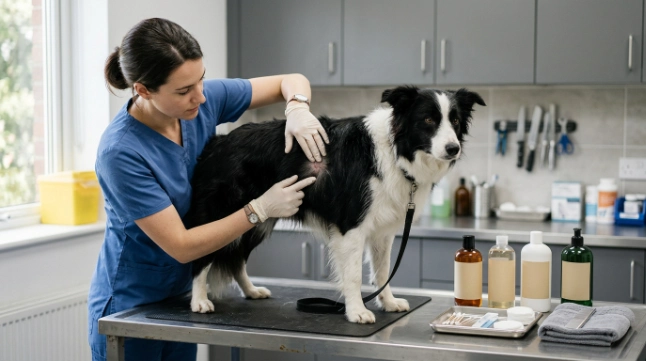
There isn’t one best active ingredient for every Border Collie. The right choice depends on whether the main problem involves bacteria, yeast, excessive oil, scaling, or sensitive inflamed skin.
Chlorhexidine for bacterial skin problems
Chlorhexidine is an antiseptic commonly used in canine topical products. Veterinarians may select it for superficial bacterial problems and some mixed microbial conditions.
I don’t treat every red patch as bacterial. Redness can come from allergy, friction, moisture, parasites, or licking, so a diagnosis still matters.
Chlorhexidine plus ketoconazole or miconazole
A chlorhexidine-and-antifungal combination is often considered when bacteria and yeast are both concerns. Ketoconazole and miconazole are antifungal ingredients commonly found in veterinary skin products.
A yeasty odor, greasy skin, darkened areas, or repeated paw licking can make owners suspect yeast. Those signs still aren’t enough to diagnose it confidently at home.
The PetMD guide to medicated dog shampoo also explains why bacterial and yeast problems may be secondary to another issue. Treating the shampoo-responsive problem doesn’t always remove the original trigger.
Benzoyl peroxide for oily or follicular problems
Benzoyl peroxide has stronger cleansing and degreasing properties. It may be used for certain bacterial or follicular skin problems, but it can be drying.
I would be especially cautious with it on a Border Collie whose skin is already dry, flaky, or irritated. Stronger cleansing isn’t automatically better.
Salicylic acid and sulfur for scaling
Salicylic acid and sulfur appear in some antiseborrheic formulas. These products target abnormal scaling, flaking, or oiliness rather than simply making the coat smell clean.
If dandruff keeps returning, I want to know why. Persistent scaling can be secondary to another dermatologic problem.
Moisturizing ingredients are supportive, not curative
Oatmeal, ceramides, aloe, and other moisturizing ingredients may improve comfort in some formulas. They don’t replace antimicrobial treatment when an infection is present.
Think of them as supporting ingredients. They can make a necessary bathing routine easier on dry or reactive skin.
Vet note: Don’t combine medicated shampoos, sprays, wipes, steroids, or antifungal products unless your veterinarian says the combination is appropriate.
Section Takeaway: Match the active ingredient to the problem. Chlorhexidine and antifungal combinations have different jobs from degreasing or anti-scaling shampoos.
Medicated Shampoo Ingredient Comparison
This table is the framework I use when discussing options with a veterinarian. It helps separate the marketing claims from the actual job of each ingredient.
| Active ingredient | Common veterinary use | Why it may suit a Border Collie | Main caution |
|---|---|---|---|
| Chlorhexidine | Superficial bacterial and some microbial skin problems | Useful when treatment needs to cover larger skin areas | Avoid eyes and follow veterinary directions |
| Chlorhexidine + ketoconazole | Mixed bacterial and fungal or yeast concerns | Combines antimicrobial actions in one bath | Not every itchy dog has yeast or infection |
| Chlorhexidine + miconazole | Bacterial and yeast-related skin problems | Often considered when yeast is part of the diagnosis | Treatment schedule should come from your vet |
| Benzoyl peroxide | Greasy skin and selected follicular disorders | Strong degreasing can help oily skin | Can be too drying for sensitive skin |
| Salicylic acid / sulfur | Scaling and certain seborrheic conditions | Targets flaking rather than just coat dirt | Underlying cause of scaling still needs attention |
Concentrations and formulas differ between products. Don’t choose a shampoo solely because its percentage looks higher.
As of 2026, the sensible approach remains condition-first rather than breed-first. Border Collies need canine-safe skin care, but their breed doesn’t create a unique medicated ingredient requirement.
How Do I Choose the Right Shampoo for My Border Collie?
Start by identifying the problem you are trying to treat. A product for greasy bacterial skin may be a poor fit for a dry dog with allergy-driven itching.
Use the symptoms as clues, not a diagnosis
- Strong odor: Can accompany microbial overgrowth, trapped moisture, or dirty coat.
- Greasy skin: May occur with yeast, seborrhea, or another skin disorder.
- Red bumps or pustules: Need veterinary assessment for possible infection or another cause.
- Flaking: Can reflect dryness, scaling disorders, parasites, or inflammation.
- Constant scratching: May involve allergy, parasites, infection, or several problems together.
- Hair loss: Deserves investigation rather than repeated shampoo changes.
For breed information, I use sources such as the American Kennel Club. For medical decisions, I rely more heavily on veterinarians and organizations such as the AVMA, ASPCA, and PetMD.
Check the formula beyond the active ingredient
A good therapeutic formula also needs to be practical. Border Collie coats can trap strong fragrance and poorly rinsed cleansers.
- Choose a product labeled for dogs.
- Check the active ingredient and its intended purpose.
- Prefer a formula that rinses cleanly.
- Avoid unnecessary heavy perfume when skin is irritated.
- Read eye, mouth, and licking precautions.
- Follow any age restrictions on the label.
I also write the contact time on a waterproof note before starting. It prevents me from guessing once I’m managing a wet, impatient herding dog in the tub.
Vet note: Puppies, pregnant dogs, dogs taking other medications, and dogs with extensive skin disease may need additional product-specific guidance.
How Should I Use Medicated Shampoo on a Border Collie’s Double Coat?
Correct technique can determine whether a medicated shampoo reaches the skin at all. Applying more product doesn’t compensate for poor saturation or a rushed rinse.
- Brush first. Remove loose undercoat, small mats, dried mud, and debris without scraping irritated skin.
- Wet thoroughly. Use comfortably warm water and keep working until the undercoat is saturated.
- Apply as directed. Spread the shampoo through the coat and massage it down to the skin.
- Respect contact time. Follow the product label or your veterinarian’s instructions rather than rinsing immediately.
- Protect sensitive areas. Keep medicated shampoo away from the eyes, mouth, and other areas listed on the label.
- Rinse completely. Keep rinsing until the coat feels clean and no product remains trapped near the skin.
- Dry the skin and undercoat. Towel blot first, then use safe airflow if your veterinarian allows it.
Why contact time matters
Therapeutic shampoo usually needs time on the skin to do its job. The exact period varies, so the product directions or veterinary plan should control your routine.
Don’t improvise by leaving medication on much longer. More exposure can mean more irritation rather than better treatment.
Dry the coat carefully
A thick Border Collie can feel dry on top while remaining damp underneath. I check the armpits, belly, chest, groin, tail base, and behind the ears with my fingers.
A working dog doesn’t need aggressive heat. Gentle drying and complete moisture removal are the priorities.
The American Veterinary Medical Association is also a useful starting point when you want reliable veterinary-health information instead of relying on grooming claims alone.
Vet note: Ask your veterinarian for the bathing frequency. Therapeutic schedules may be much more frequent than a Border Collie’s normal cosmetic bath routine.
Section Takeaway: Get the medicine to the skin, leave it for the instructed contact period, rinse thoroughly, and dry the undercoat. Technique matters as much as the bottle.
When Is Medicated Shampoo Not Enough?
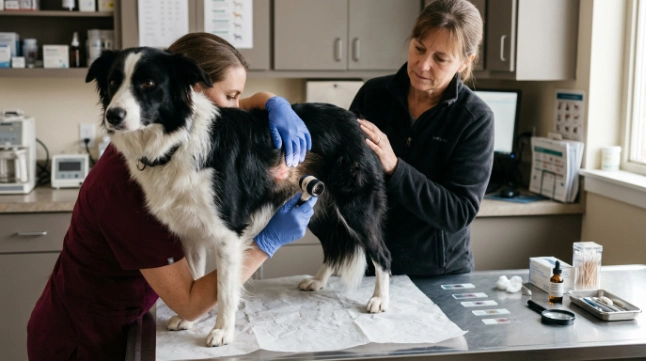
Medicated shampoo can be useful, but it cannot solve every cause of canine itching. Recurrent skin trouble often means something else is driving the flare.
See your veterinarian promptly for worsening skin
- Open or bleeding sores
- Pus or draining lesions
- Painful, hot, or rapidly spreading redness
- Marked swelling
- Large areas of hair loss
- Severe scratching that prevents sleep
- Skin problems paired with lethargy or poor appetite
- Symptoms that return soon after treatment stops
A veterinary exam may include skin cytology, parasite checks, cultures, or other tests depending on the presentation. Those tests help separate infection from allergy, parasites, and other disorders.
Look for the reason infections keep returning
Some bacterial and yeast problems are secondary. That means another issue changed the skin environment and allowed organisms already present on the skin to overgrow.
Allergies, chronic moisture, self-trauma, parasites, and other health problems can contribute. Treating only the secondary infection can lead to another flare.
- Repeated paw licking: May justify investigating allergies or other irritation.
- Seasonal flares: Can suggest an environmental component.
- Recurring ear and skin trouble: Deserves a broader veterinary discussion.
- Persistent greasy odor: Should not be hidden with stronger fragrance.
I keep a simple record of flare dates, body areas, foods, swimming, weather, medications, and bath products. Patterns become easier to spot after several weeks.
Vet note: Don’t stop prescribed medication because the skin looks better after a few baths. Follow your veterinarian’s treatment and recheck plan.
Section Takeaway: Shampoo can control a skin problem without curing its underlying trigger. Recurring infections, severe inflammation, and unexplained hair loss need veterinary investigation.
Frequently Asked Questions
Can I use chlorhexidine shampoo on my Border Collie?
Chlorhexidine is commonly used in veterinary topical skin care, but the correct product depends on the condition being treated. Ask your veterinarian whether chlorhexidine fits your dog’s symptoms and follow the recommended concentration, contact time, and bathing schedule.
Is chlorhexidine and ketoconazole shampoo good for Border Collies?
It can be appropriate when a veterinarian is treating bacterial and fungal or yeast-related skin problems. It isn’t automatically the best choice for ordinary itching, because allergies, fleas, dryness, and other conditions can produce similar symptoms.
How often should I wash my Border Collie with medicated shampoo?
Use the frequency recommended by your veterinarian or the specific therapeutic plan. Medicated bathing can be considerably more frequent than routine Border Collie bathing, so don’t apply your normal grooming schedule to a skin-treatment protocol.
Can medicated shampoo make my Border Collie’s skin worse?
Yes. Irritation can occur from the active ingredient, another ingredient, excessive frequency, poor rinsing, or using the wrong product for the condition. Stop and contact your veterinarian if redness, discomfort, swelling, or itching clearly worsens after use.
Can I use human medicated shampoo on a Border Collie?
I wouldn’t use human medicated shampoo unless a veterinarian specifically directs it. Human products can contain active ingredients, concentrations, fragrances, or other components that weren’t selected for canine skin or normal dog behavior such as licking.
Should I shave my Border Collie before using medicated shampoo?
Usually, don’t shave a healthy Border Collie double coat simply to make bathing easier. Severe mats, wounds, surgery, or dermatologic treatment can create special circumstances, so let your veterinarian or an experienced groomer guide any coat clipping.
Final Takeaway: What Is the Best Medicated Shampoo for a Border Collie?
The best medicated shampoo for a Border Collie is the one that matches the diagnosed skin problem and can be used correctly through the dog’s double coat. For many bacterial or yeast-related problems, that discussion may include chlorhexidine alone or chlorhexidine combined with an antifungal.
Don’t choose by fragrance, strongest-looking concentration, or the longest list of claims. Choose by active ingredient, diagnosis, skin tolerance, and your veterinarian’s directions.
From my experience with Border Collies, one simple habit prevents many bathing mistakes: slow down at the skin level. Saturate the undercoat, respect the contact time, rinse longer than you think you need to, and make sure the coat dries completely.
If the itching, odor, scaling, or hair loss keeps returning, treat that recurrence as useful information. Your next step should be finding the cause rather than buying a stronger shampoo.

2 Comments
Pingback: Best Shampoo for Border Collie With Sensitive Skin
Pingback: Best Shampoo for Itchy Border Collie: Skin Guide