
Best Nail Clippers for Border Collie: A Complete Buying and Trimming Guide

Quick Answer
The best nail clippers for a Border Collie are usually sharp, medium-to-large scissor-style dog clippers with a comfortable non-slip grip. They give good control over the strong nails of an active adult Border Collie, while a dog nail grinder can be a better choice for dark nails or dogs that dislike the clipping sensation. The AKC nail-trimming guide also stresses using dog-specific tools and removing only small amounts at a time.
What I look for in Border Collie nail clippers
- Sharp blades: Clean blades cut the nail instead of crushing or splitting it.
- Correct size: Medium or large dog clippers usually give better control on adult Border Collie nails.
- Secure grip: Textured handles reduce slipping when a dog suddenly moves its paw.
- Good visibility: You should be able to clearly see the nail before every cut.
- Smooth action: The handles should close easily without requiring excessive force.
- Backup styptic: Keep styptic powder nearby in case you accidentally nick the quick.
My simplest recommendation
- Start with quality scissor-style clippers unless your Border Collie strongly prefers a grinder.
I’ve trimmed enough Border Collie paws to know that the most expensive tool isn’t always the easiest one to use. Control, sharpness, and your dog’s comfort matter much more.
Border Collies, often called Borders or BCs by owners, are athletic herding dogs with active feet. This guide explains what I consider before choosing clippers, how I use them, and when I switch to a grinder instead.
In This Guide
- What Type of Nail Clippers Are Best for a Border Collie?
- What Should You Look for in Border Collie Nail Clippers?
- Scissor Clippers vs Guillotine Clippers vs Nail Grinders
- Which Nail Tool Fits Your Border Collie Best?
- How Do You Safely Clip a Border Collie’s Nails?
- How Often Should You Trim a Border Collie’s Nails?
- How Do You Train a Border Collie to Accept Nail Trimming?
- Frequently Asked Questions
- Final Takeaway
What Type of Nail Clippers Are Best for a Border Collie?
For most adult Border Collies, I prefer medium-to-large scissor-style dog nail clippers. They give me a clear view of the nail and enough leverage for a clean cut.
A Border Collie nail clipper is simply a dog-specific cutting tool sized to remove small portions of the hard nail shell without reaching the living quick inside.
Border Collie-specific definition: The best nail clipper is one that matches your dog’s nail thickness while giving you enough control to make tiny, deliberate cuts.
Border Collies are medium-sized working dogs. The AKC describes them as athletic herding dogs weighing roughly 30 to 55 pounds, although individual dogs vary.
The breed also comes in rough and smooth coat varieties. Both need regular grooming, including nail care, as noted in the AKC’s Border Collie care guidance.
Why I usually start with scissor-style clippers
Scissor clippers place the nail between two cutting blades. Squeezing the handles brings those blades together around the nail.
- Good leverage: Helpful for thicker adult nails.
- Clear positioning: I can see how much nail I’m about to remove.
- Fast trimming: A calm dog may need only seconds per nail.
- Simple maintenance: There are no batteries, motors, or charging cables.
- Quiet operation: There’s no motor noise to introduce to a sensitive dog.
I especially like them when the dog has light-colored nails because the quick is easier to identify. I still cut conservatively.
When clippers may not be the best choice
Some Border Collies react more to the pressure and snap of a clipper than to a grinder. Others dislike the vibration of a grinder instead.
That’s why I don’t believe there is one perfect nail tool for every Border Collie. The dog’s response matters as much as the tool’s design.
Section Takeaway: For most adult Border Collies, sharp scissor-style dog clippers are my practical starting point. A grinder becomes especially useful when you want finer control or your dog prefers gradual filing.
What Should You Look for in Border Collie Nail Clippers?
Choose nail clippers based on control, blade quality, size, and visibility. Fancy extras matter less if you can’t position the tool accurately.
Sharp stainless-steel cutting edges
A dull clipper may squeeze the nail before cutting it. That can make an already nervous dog pull its paw away.
I replace or sharpen a tool when cuts stop feeling clean. I don’t compensate for a dull blade by squeezing harder.
A size made for medium or large dogs
Tiny puppy clippers can work when a Border Collie is young. An adult usually needs a larger tool with more leverage.
Oversized clippers aren’t automatically better, though. The jaws should let you position one nail precisely without blocking your view.
A comfortable, non-slip handle
Border Collies are quick dogs. Even a well-trained one can twitch its foot if something surprises it.
I want handles that stay stable in my hand without requiring a tight grip. That helps me make smaller, calmer movements.
A safety guard you can control
Some clippers include a metal guard behind the cutting blades. It can help limit how far the nail enters the clipper.
I treat a guard as a backup, not a guarantee. It cannot locate the quick for you, especially on dark nails.
A lock for safe storage
A simple blade lock keeps the cutting edges closed between sessions. This matters in homes with children or curious pets.
I also store styptic powder beside my nail tools. I would rather have it nearby and never need it.
Scissor Clippers vs Guillotine Clippers vs Nail Grinders
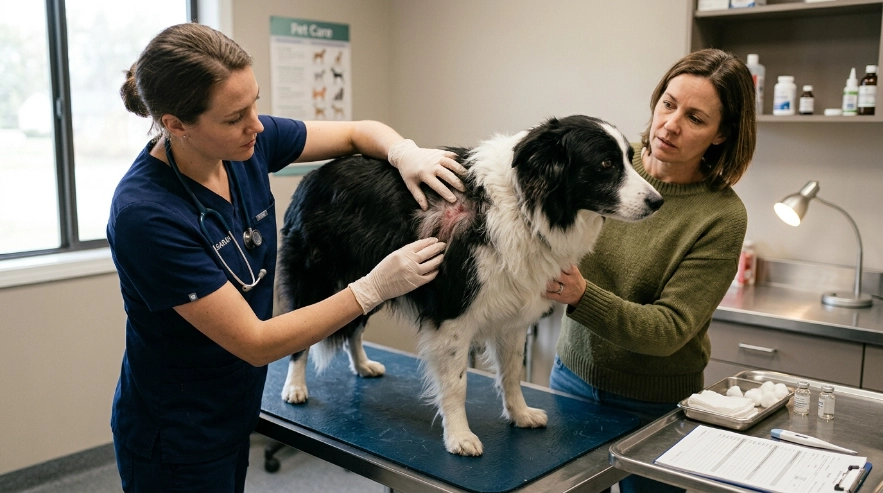
All three tools can maintain dog nails, but they feel quite different in your hand and to your Border Collie. I choose based on nail thickness, visibility, and the dog’s tolerance.
| Tool | Best For | Main Advantage | Main Drawback | My Border Collie Use |
|---|---|---|---|---|
| Scissor-style clipper | Most adult BCs | Strong leverage and control | Can cut too much if rushed | Best overall starting choice |
| Guillotine clipper | Owners comfortable positioning nails | Compact design | Can make visibility harder for some owners | Not my first choice |
| Dog nail grinder | Dark nails and gradual shortening | Removes tiny amounts | Noise, vibration, heat, and hair-entanglement risk | Excellent alternative or finishing tool |
The VCA guide to trimming dog nails notes that both scissor and guillotine designs can work. It also discusses grinders as an alternative.
With a rough-coated Border Collie, I pay special attention to feathering around the feet when using a rotating grinder. Loose hair should never reach the spinning head.
Are grinders safer for black Border Collie nails?
A grinder can make dark nails easier to shorten gradually because you remove small layers instead of one larger piece. It still doesn’t make the quick impossible to hit.
Use brief contact instead of holding the grinder against one nail. Friction creates heat.
Which Nail Tool Fits Your Border Collie Best?
The best tool changes with age, nail color, previous grooming experience, and temperament. I choose for the dog in front of me rather than following one rule.
For an adult Border Collie with thick nails
Start with sturdy scissor-style clippers designed for medium or large dogs. Look for sharp blades and handles that feel stable when squeezed.
For a Border Collie with black nails
Either clippers or a grinder can work, but I remove much less material per pass. Dark pigmentation makes the living quick harder to see from the outside.
A grinder gives me another option when I want to shorten the nail slowly. Good lighting still matters.
For a Border Collie puppy
Small dog or puppy clippers are often easier on thin puppy nails. More important, I make the first sessions short and rewarding.
One calm nail is more useful than forcing all four paws. Early paw handling pays off later.
For a senior Border Collie
I focus on a comfortable position and minimal restraint. An older dog may not enjoy standing with one leg lifted for long.
Never assume a change in nail-trimming tolerance is just stubbornness. Painful toes, joints, or paws deserve veterinary assessment.
For a nervous or noise-sensitive Border Collie
Quiet manual clippers may be easier than a grinder. However, some dogs prefer the grinder because they dislike the pressure of clipping.
Let your dog’s body language guide the choice.
How Do You Safely Clip a Border Collie’s Nails?
Trim only small portions of nail while keeping the paw supported and the quick protected. Stop before you become uncertain about where the living tissue begins.
- Exercise lightly first. A short walk can take the edge off excess energy, but don’t exhaust or overheat your dog.
- Choose bright lighting. Position yourself where you can clearly inspect every nail.
- Check each paw. Look for broken nails, sore pads, swelling, debris, or damaged skin before clipping.
- Move foot hair aside. Keep rough-coat feathering away from the cutting area.
- Hold one toe gently. Stabilize it without twisting the leg or squeezing the paw.
- Remove only the tip. Take a small piece rather than attempting the final length immediately.
- Recheck the cut surface. On dark nails, proceed in tiny increments instead of guessing where the quick ends.
- Remember the dewclaws. These may receive less natural wear because they don’t contact the ground normally.
- Smooth rough edges. A nail file or grinder can tidy sharp corners if your dog tolerates it.
- Reward and release. End on a calm note rather than turning the session into a wrestling match.
What is the quick?
The quick is living tissue inside the nail containing blood vessels and nerves. Cutting into it can cause pain and bleeding.
Light nails often make the quick easier to see. Dark nails require extra caution because you cannot rely on seeing pink tissue through the shell.
What should you do if you cut the quick?
Stay calm and apply a pet-safe styptic product as directed. Your dog may become worried if you panic or immediately grab the paw more tightly.
Contact your veterinarian if bleeding continues, the nail is badly damaged, or you notice significant pain or swelling.
Vet note: A torn nail, swollen toe, persistent bleeding, discharge, limping, or obvious pain is a veterinary problem rather than a routine grooming problem.
Section Takeaway: Small cuts are safer than trying to reach the perfect nail length in one squeeze. Good lighting, a stable paw, sharp clippers, and patience matter more than speed.
How Often Should You Trim a Border Collie’s Nails?
Check a Border Collie’s nails about once a week and trim them whenever they become long enough to affect normal paw contact or start clicking frequently on hard floors. Many dogs need actual trimming every few weeks, but wear varies.
An active Border Collie that runs on firm surfaces may naturally wear nails faster. A dog spending more time on grass, carpet, or soft soil may need more frequent maintenance.
Signs it’s time for a nail trim
- Frequent clicking: Nails repeatedly tap hard flooring during normal walking.
- Visible hooks: Nail tips have developed pronounced downward curves.
- Snagging: Nails catch on blankets, rugs, or fabric.
- Changed stance: Long nails appear to alter how the paw sits on the ground.
- Long dewclaws: These nails are curling because they receive little surface wear.
The ASPCA advises using ground contact and clicking as practical clues that nails may need attention. Individual schedules still vary.
I prefer frequent checks because they take seconds. That prevents nail care from becoming a large corrective job.
How Do You Train a Border Collie to Accept Nail Trimming?

Teach nail trimming as a series of tiny skills: paw touching, toe holding, tool exposure, tool sound, and finally trimming. Border Collies learn patterns quickly, so I try to make every step predictable.
The ASPCA dog grooming guidance also recommends getting dogs comfortable with foot handling before attempting nail trimming.
A simple seven-stage introduction
- Touch the shoulder and leg. Reward relaxed behavior.
- Briefly hold the paw. Release it before the dog pulls away.
- Touch individual toes. Pair gentle handling with treats or praise.
- Show the clippers. Let your Border Collie investigate without being forced toward them.
- Make the clipper sound nearby. Reward calm behavior without cutting a nail.
- Trim one tiny tip. Reward immediately and consider ending the session.
- Build gradually. Add more nails only while your dog remains comfortable.
My biggest mistake years ago was thinking finishing every nail mattered more than keeping the session positive. With a sensitive Border, that can create a problem that lasts much longer than an overgrown nail tip.
What if your Border Collie keeps pulling its paw away?
Reduce the difficulty instead of gripping harder. Go back to touching the leg, holding the paw briefly, or simply placing the tool near the foot.
Sessions can last only 30 to 60 seconds during early training. Progress doesn’t require completing a full manicure.
What if your Border Collie growls during nail trimming?
Stop escalating the situation. Growling is useful information that your dog is uncomfortable, frightened, or possibly painful.
A veterinarian, qualified groomer, or reward-based trainer can help when handling creates serious fear. Don’t punish the warning signal.
Section Takeaway: Cooperative nail care is trained, not forced. Short sessions and predictable rewards usually give me better long-term results than trying to finish every nail at once.
Frequently Asked Questions
What size nail clippers should I use for a Border Collie?
Most adult Border Collies are best matched with medium-to-large dog nail clippers. Choose a size that gives enough leverage for the nail while still letting you clearly see and control each cut.
Are human nail clippers safe for Border Collies?
I would use dog-specific clippers for an adult Border Collie. Human nail clippers aren’t designed around the thickness and shape of typical adult dog nails and may give you poor leverage or an awkward cutting angle.
Are nail clippers or a grinder better for a Border Collie?
Clippers are faster and quieter, while grinders remove nail gradually and smooth rough edges. I prefer scissor-style clippers for straightforward maintenance but often choose a grinder for dark nails or dogs that dislike clipping pressure.
Can I use nail clippers on a Border Collie with black nails?
Yes, but make smaller cuts because the quick is harder to see. Stop frequently to inspect the nail surface rather than trying to remove a large section in one cut.
Do Border Collies need their dewclaws trimmed?
Yes, when present and becoming long. Dewclaws often receive less natural wear because they don’t contact the ground like the main toenails, so they can become overgrown even when other nails look acceptable.
What should I keep beside my nail clippers?
I keep styptic powder, treats, good lighting, and a file or grinder nearby. Having everything ready prevents me from searching for supplies while holding an uncertain dog.
Should a groomer or veterinarian trim my Border Collie’s nails instead?
Professional help is a sensible choice if you’re uncomfortable identifying the quick, your dog becomes highly distressed, or a nail is injured. A veterinarian should handle nails associated with pain, swelling, persistent bleeding, limping, or suspected infection.
Final Takeaway
The best nail clippers for Border Collie dogs are the ones that let you make small, controlled cuts without frightening the dog. For most healthy adults, I start with sharp medium-to-large scissor-style dog clippers.
A grinder is an excellent alternative for gradual shortening, dark nails, or dogs that prefer it. Neither tool replaces careful handling and knowing when to stop.
- Choose control over extra features.
- Check nails weekly.
- Trim small amounts at a time.
- Keep the quick protected.
- Train paw handling before you need a full trim.
- Ask a vet or groomer for help when you’re unsure.
As of 2026, those basics still matter more to me than any new clipper feature. Build a calm routine now, and Border Collie nail care becomes a much smaller job for both of you.
