

Quick Answer
The best shampoo for a dry-skin Border Collie is usually a mild, dog-specific, fragrance-free moisturizing formula containing ingredients such as colloidal oatmeal or aloe. Choose a shampoo designed for canine skin, rinse it completely from the dense double coat, and follow sensible dog shampoo guidance rather than using human shampoo.
What to look for
- Dog-specific pH: Use shampoo made for canine skin rather than products made for people.
- Moisturizing ingredients: Colloidal oatmeal, aloe, and similar gentle ingredients can help soothe dry-feeling skin.
- Low fragrance: Fragrance-free formulas reduce unnecessary ingredients when skin is already irritated.
- Easy rinsing: A Border Collie’s thick undercoat can trap shampoo residue against the skin.
- No aggressive washing: Frequent baths can remove natural oils and worsen dryness.
When shampoo is not enough
- See your veterinarian if dryness comes with severe itching, redness, sores, hair loss, odor, greasy skin, or repeated flare-ups.
Finding the best shampoo for dry skin on a Border Collie takes more thought than choosing the bottle with the nicest scent. Their dense double coat can hide irritation and hold shampoo residue close to the skin.
I focus on comfort first and coat appearance second. A glossy coat means little if the dog starts scratching after every bath.
In This Guide
- What Is the Best Shampoo for a Dry-Skin Border Collie?
- Why Does a Border Collie Get Dry Skin?
- Which Shampoo Ingredients Are Best for Dry Skin?
- Which Shampoo Formula Should You Choose?
- Which Shampoo Ingredients Should You Avoid?
- How Do You Bathe a Border Collie With Dry Skin?
- How Often Should You Shampoo a Border Collie With Dry Skin?
- When Does Dry Skin Need a Veterinarian?
- Frequently Asked Questions
- Final Takeaway
What Is the Best Shampoo for a Dry-Skin Border Collie?
The best starting choice is a gentle, fragrance-free moisturizing dog shampoo. A colloidal oatmeal formula is especially useful when the skin feels dry or mildly itchy but has no obvious infection.
Definition: A dry-skin Border Collie shampoo is a canine cleansing formula designed to remove dirt while minimizing moisture loss and unnecessary irritation.
Border Collies have rough or smooth coats, but both varieties have a double coat. The softer undercoat sits beneath protective outer hairs.
That structure changes how shampoo should work. It needs to reach the skin without becoming difficult to rinse from the undercoat.
My first-choice shampoo profile
- Made specifically for dogs: Canine shampoo is formulated for a dog’s skin and coat.
- Fragrance-free or lightly scented: Fewer extras can be useful for sensitive skin.
- Moisturizing: Look for ingredients designed to support dry skin rather than strong degreasing action.
- Easy to rinse: Residue can become trapped beneath thick Border Collie fur.
- Simple ingredient list: A straightforward formula makes reactions easier to identify.
PetMD’s Border Collie care guidance notes that the breed has a medium-length double coat and commonly recommends oatmeal shampoo as part of routine grooming.
That does not mean every dry-skinned Border Collie needs oatmeal. Individual dogs can react differently to the same ingredient.
Why Does a Border Collie Get Dry Skin?
Dry skin is a symptom rather than one single disease. Shampoo may help surface dryness, but it cannot correct every underlying cause.
Common possibilities include environmental dryness, excessive bathing, unsuitable grooming products, allergies, parasites, infections, and other medical problems. This is why repeated itching deserves more attention than simply changing shampoo.
Overbathing and harsh cleansers
Bathing too often can remove protective oils from the skin and coat. Strong cleansing shampoos may cause the same problem.
This matters with Border Collies because owners often bathe active dogs after muddy walks, swimming, farm work, or outdoor adventures. Not every dirty coat needs a complete shampoo bath.
- Brush out dried dirt when possible.
- Rinse light mud with lukewarm water.
- Spot-clean paws or feathering when appropriate.
- Save full shampoo baths for times the coat genuinely needs cleansing.
Dry weather and indoor heating
Low humidity can contribute to flaky or dry-feeling skin. Indoor heating during colder months can make that environment even drier.
The AKC’s guidance on dry skin in dogs also explains that excessive bathing and environmental conditions can contribute to dryness.
Allergies, parasites, or infection
Persistent scratching should not automatically be blamed on simple dryness. Fleas, mites, environmental allergies, food-related problems, bacterial infections, and yeast can produce similar signs.
Vet note: Contact your veterinarian if itching is persistent, intense, painful, or accompanied by redness, sores, odor, hair loss, or skin discharge.
Which Shampoo Ingredients Are Best for Dry Skin?
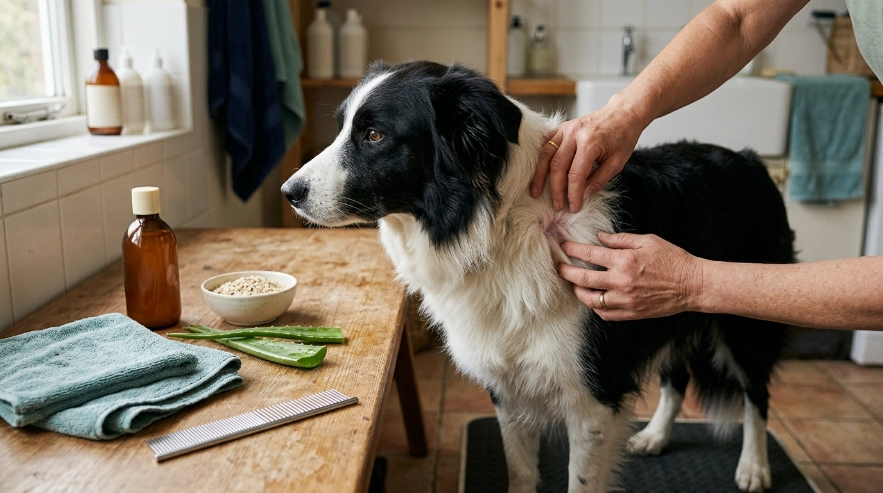
For uncomplicated dryness, I prefer gentle ingredients that clean without aggressively stripping the coat. The goal is comfortable skin, not maximum foam.
Colloidal oatmeal
Colloidal oatmeal is finely processed oatmeal used in topical skin products. It is commonly included in dog shampoos designed for dry or itchy skin.
PetMD notes that an oatmeal shampoo may temporarily soothe itching while the cause of dry skin is being addressed. It should not be treated as a cure for infection or allergy disease.
Aloe and moisturizing ingredients
Aloe appears in many gentle dog shampoos intended to support dry skin. Other formulas use moisturizing agents designed to reduce the tight, dry feeling after cleansing.
I still favor simple formulas. A long ingredient list packed with perfume and cosmetic extras does not automatically provide better skin care.
Fragrance-free formulas
Fragrance does not improve how well shampoo cleans a Border Collie. For a dog already showing sensitivity, an unscented option is often the simplest starting point.
Remember that “natural” does not automatically mean non-irritating. Plant-derived ingredients can still bother an individual dog’s skin.
Which Shampoo Formula Should You Choose?
The right formula depends on what you see on the skin today. Dry flakes, intense itching, and an active infection are different problems.
| Shampoo type | Best suited for | What to look for | Main caution |
|---|---|---|---|
| Moisturizing oatmeal | Mild dryness or flaking | Dog-specific, gentle, easy-rinse formula | Does not treat infection |
| Fragrance-free sensitive-skin | Dogs that react to heavily scented products | Short ingredient list and mild cleansers | No product guarantees zero reactions |
| Puppy shampoo | Young Border Collies | Age-appropriate label and gentle cleansing | Follow minimum-age directions |
| Medicated shampoo | Diagnosed skin conditions | Veterinarian-selected active ingredients | Requires correct diagnosis and contact time |
As of 2026, I would start a healthy adult Border Collie with uncomplicated dryness on the mildest suitable formula. I would not jump directly to medicated shampoo without knowing what is causing the irritation.
PetMD’s veterinary discussion of medicated dog shampoos makes the same distinction. Skin conditions that need therapeutic bathing often require other treatment too.
Vet note: Medicated shampoos can contain active ingredients for specific conditions, so use them according to your veterinarian’s diagnosis and the product directions.
Which Shampoo Ingredients Should You Avoid?
Avoid choosing shampoo based only on scent, color, or how much foam it produces. A Border Collie’s skin does not need perfume to become clean.
Human shampoo
Human shampoo should not be your routine substitute for dog shampoo. Products designed for human hair and skin can be too drying or irritating for dogs.
That includes ordinary salon shampoo, anti-dandruff shampoo, scented body wash, and most human dry shampoos. Use a product labeled for dogs unless your veterinarian gives different instructions.
Strong fragrance and unnecessary additives
A heavily perfumed shampoo can make a dog smell pleasant to us while providing no extra skin benefit. With a dry or sensitive Border Collie, I prefer fewer unnecessary ingredients.
Harsh degreasing products
Products made to remove heavy grease can strip more oil than a mildly dry coat needs. Dishwashing detergent is not a sensible routine Border Collie shampoo.
- Avoid routine human shampoo.
- Avoid strong household detergents.
- Be cautious with intense perfume.
- Do not improvise with essential oils.
- Do not use medicated ingredients without understanding their purpose.
A dog’s response matters more than marketing language. Stop using a new shampoo if you notice increased redness, itching, swelling, hives, or discomfort.
How Do You Bathe a Border Collie With Dry Skin?
Good bathing technique can matter almost as much as shampoo choice. A gentle product left inside the undercoat can still cause trouble.
1. Brush before adding water
Brush the dry coat first to remove loose undercoat, debris, and small tangles. Water can tighten existing tangles and make the bath harder.
2. Use lukewarm water
Wet the coat slowly until water reaches the skin beneath the outer coat. Avoid hot water on already irritated skin.
3. Apply only the amount directed
Follow the shampoo label for quantity and dilution. More shampoo does not automatically create a cleaner Border Collie.
When dilution is permitted, spreading a diluted solution can make it easier to reach the undercoat evenly. Never invent your own dilution ratio for medicated products.
4. Massage rather than scratch
Use your fingertips and work gently in the direction of the coat. Do not scrape dry skin with your fingernails.
5. Rinse longer than expected
This is the step I pay the most attention to. I keep rinsing until the coat no longer feels slippery and clean water moves freely through the fur.
- Check behind the ears.
- Separate thick neck fur.
- Rinse the chest and belly carefully.
- Flush the rear feathering and tail base.
- Recheck the dense rump and hindquarters.
6. Dry the undercoat completely
Press towels into the coat rather than rubbing aggressively. If you use a pet dryer, choose comfortable airflow and avoid excessive heat.
The AKC’s double-coat grooming guidance emphasizes thorough rinsing and proper drying after bathing. That advice is especially useful for Border Collies because moisture can remain hidden beneath the outer coat.
Section Takeaway: Gentle shampoo is only half the job. Brush first, use lukewarm water, rinse the double coat completely, and make sure the undercoat dries.
How Often Should You Shampoo a Border Collie With Dry Skin?
There is no single bathing interval that fits every Border Collie. Coat condition, lifestyle, weather, medical needs, and the shampoo itself all matter.
If dryness appears after frequent bathing, extending the time between full shampoo baths may help. Light dirt can often be brushed or rinsed away without another complete wash.
Let the coat tell you when it needs cleaning
A healthy Border Collie usually needs a bath when the coat is dirty, greasy, unusually smelly, or contaminated. A calendar alone should not force unnecessary baths.
- Light dust: Brush the coat.
- Fresh mud: Let it dry and brush, or rinse if needed.
- Dirty paws: Clean only the affected area.
- Oily or smelly coat: Consider a full dog-shampoo bath.
- Veterinary skin treatment: Follow the prescribed bathing schedule.
Working and highly active Border Collies may get dirty more often than companion dogs. That still does not mean every outdoor session needs shampoo.
Vet note: If your veterinarian prescribes therapeutic bathing, follow that schedule instead of general grooming advice.
When Does Dry Skin Need a Veterinarian?
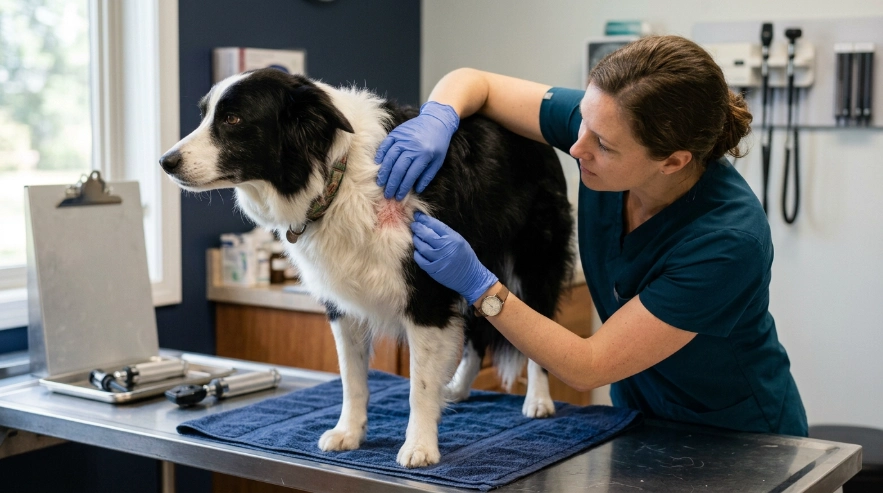
Mild flaking after a poorly chosen shampoo may improve when you change products and stop overbathing. Persistent or worsening symptoms deserve veterinary evaluation.
A shampoo can soothe the surface while a medical condition continues underneath. Do not let temporary improvement delay diagnosis when other warning signs are present.
Book a veterinary visit if you notice:
- Persistent or intense scratching
- Repeated paw chewing or skin licking
- Red, inflamed, or painful skin
- Hair loss or bald patches
- Scabs, sores, pustules, or bleeding
- Strong or unusual skin odor
- Greasy skin with heavy flakes
- Ear problems occurring with skin symptoms
- Symptoms that repeatedly return after bathing
A veterinarian may need to rule out parasites, allergies, infection, nutritional problems, or another health issue. The correct treatment depends on the cause.
Vet note: Seek prompt veterinary advice for facial swelling, hives, breathing difficulty, rapidly spreading irritation, significant pain, or other signs of a serious reaction.
Frequently Asked Questions
Is oatmeal shampoo good for a Border Collie with dry skin?
Oatmeal dog shampoo can be a useful choice for mild dryness or temporary itching. Choose a formula made specifically for dogs, rinse it completely, and stop using it if irritation increases. Oatmeal shampoo does not replace veterinary treatment for infection, parasites, or persistent allergies.
Can I use human moisturizing shampoo on my Border Collie?
No human shampoo should be your regular choice for a Border Collie. Human products are designed around human skin and hair rather than canine skin. A mild dog-specific shampoo is the safer routine option, especially when your Border Collie already has dry or sensitive skin.
Should I use conditioner on a dry-skinned Border Collie?
A dog-specific moisturizing conditioner can help some Border Collies, especially rough-coated dogs with dry feathering or tangles. Choose a simple canine formula and rinse according to its directions. Avoid human conditioner unless your veterinarian specifically recommends a particular product.
Why is my Border Collie still itchy after an oatmeal bath?
Itching can have causes that shampoo cannot fix, including allergies, fleas, mites, bacterial infection, yeast, or another skin condition. Shampoo residue can also worsen irritation. If itching continues, becomes intense, or comes with redness or hair loss, arrange a veterinary examination.
Can I use medicated shampoo for my Border Collie’s dry skin?
Use medicated shampoo when a veterinarian or product instructions indicate it is appropriate for the diagnosed problem. Different active ingredients target different conditions. Using the wrong medicated formula, contact time, or bathing frequency can make treatment less effective or irritate the skin.
Does a smooth-coated Border Collie need different shampoo?
Not necessarily. Rough and smooth Border Collies both have double coats, so skin condition matters more than hair length when choosing shampoo. A mild moisturizing formula can suit either coat type, although rough coats may need extra attention during rinsing and detangling.
How do I know if shampoo is making my Border Collie’s skin worse?
Watch for new redness, increased scratching, hives, swelling, dandruff, licking, or discomfort after bathing. Stop the product if symptoms appear. Rinse away any remaining residue and contact your veterinarian if the reaction is significant, persistent, or worsening.
Final Takeaway
For most Border Collies with uncomplicated dry skin, the best shampoo is a gentle, dog-specific, fragrance-free moisturizing formula. Colloidal oatmeal is a practical ingredient to consider when mild dryness or itching is the main concern.
Shampoo choice is only part of the solution. Avoid overbathing, rinse the double coat thoroughly, dry the undercoat, and pay attention to what the skin looks and feels like afterward.
If dryness keeps returning or comes with redness, odor, sores, severe itching, or hair loss, involve your veterinarian. Treating the cause will always matter more than finding a stronger shampoo
