
What Are the Signs of a Border Collie Aging?

Quick Answer
Common signs of a Border Collie aging include a graying muzzle, lower stamina, longer recovery after exercise, stiffness, more sleep, hearing or vision changes, muscle loss, and shifts in behavior. Confusion, nighttime restlessness, sudden weight changes, house-soiling, or obvious pain deserve veterinary attention rather than being dismissed as normal aging; the AKC’s senior dog guidance also stresses that aging varies with breed, size, and individual health.
Signs I watch for
- Slower movement: Your Border Collie takes longer to stand, climb stairs, or jump into the car.
- Lower stamina: Walks and games tire your dog sooner than they once did.
- More sleep: Older Border Collies often need longer rest periods between activities.
- Sensory changes: Hearing may fade, and your dog may become less confident in dim light.
- Body changes: A gray muzzle, muscle loss, or weight changes may become noticeable.
- Behavior changes: Anxiety, confusion, pacing, or altered social habits can appear in older dogs.
How to confirm what you’re seeing
- Track new changes for a few days and discuss persistent, sudden, or worsening signs with your veterinarian.
Border Collies, often shortened to BCs, can stay mentally sharp and eager to work long after their bodies begin slowing down. That contrast makes their first aging signs surprisingly easy to miss.
I’ve learned to watch changes in patterns rather than birthdays alone, because a dog who still stares at the ball with full intensity may quietly be telling you that the sprint afterward has become harder.
In This Guide
- What age do Border Collies start showing signs of aging?
- What physical signs show that a Border Collie is getting older?
- How does a Border Collie’s behavior change with age?
- What other body and sensory changes should you watch?
- Which aging signs are normal, and which need a vet?
- How should exercise change as a Border Collie ages?
- When should an aging Border Collie see a veterinarian?
- Frequently Asked Questions
- What should you do next?
What age do Border Collies start showing signs of aging?
There isn’t one birthday when every Border Collie suddenly becomes a senior. Genetics, body size, workload, previous injuries, weight, and overall health all influence how quickly an individual dog changes.
A Border Collie is an athletic, medium-sized herding breed; the AKC Border Collie profile describes adults at roughly 18 to 22 inches tall and 30 to 55 pounds.
- Around 7 years: I start paying closer attention to recovery time, muscle condition, teeth, weight, and subtle stiffness.
- Around 8 to 10 years: Many dogs show more obvious changes in stamina, sleep, mobility, or senses.
- Beyond 10 years: Individual differences become even more important, so veterinary monitoring matters more than a simple age label.
The ASPCA’s senior pet guidance notes that medium-sized dogs are often considered senior around 8 to 10 years. I use that as a monitoring guide, not a hard deadline.
A Border Collie’s aging signs are gradual physical, sensory, metabolic, and behavioral changes that appear as the body gets older. Aging itself isn’t a disease, so new problems still deserve investigation.
As of 2026, that distinction remains important. A slower dog may simply need a modified routine, but pain, endocrine disease, dental problems, or other conditions can create similar changes.
Vet note: Your veterinarian can judge senior status more accurately by combining age with your dog’s body condition, history, mobility, behavior, and examination findings.
What physical signs show that a Border Collie is getting older?
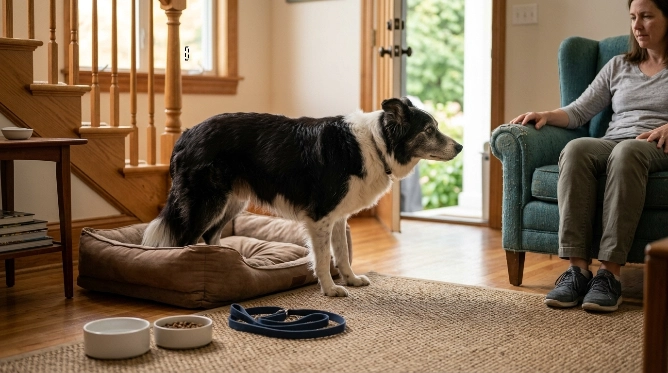
The first physical clue is often reduced efficiency rather than complete unwillingness to exercise. Your Border Collie may still want to chase, herd, hike, or train but need longer recovery afterward.
I especially watch what happens during the first few minutes after a dog gets up. That moment often reveals stiffness that disappears once the dog warms up.
1. A graying muzzle and facial hair
White or gray hairs commonly appear around the muzzle, eyebrows, and face. This cosmetic change may arrive before major changes in energy or mobility.
2. Slower starts and stiffness
An older BC may rise more carefully after sleeping. Stairs, slippery floors, jumping into vehicles, and tight turns may also become harder.
- Pausing before jumping onto a familiar surface
- Taking stairs one step at a time
- Stretching longer after resting
- Moving stiffly during the first minutes of a walk
- Choosing easier routes around obstacles
3. Less explosive speed and endurance
Border Collies were developed for demanding livestock work, so declining stamina can stand out. A dog who once worked or played for an hour may now feel comfortable with several shorter sessions.
Like Australian Shepherds and Kelpies, many Border Collies retain strong working motivation. Their enthusiasm can therefore exceed what their aging joints and muscles comfortably support.
4. Loss of muscle mass
Older dogs can lose muscle, especially across the hindquarters and along the back. You might notice the thighs looking narrower or the hips and spine becoming easier to feel.
- Compare monthly photos from the side and above.
- Watch the hind legs while your dog stands from lying down.
- Record body weight regularly.
- Ask your vet to assess muscle condition as well as body weight.
Weight alone can hide muscle loss because an older dog may lose muscle while gaining body fat. That is one reason visual and hands-on checks are useful.
Vet note: Persistent limping, obvious pain, sudden weakness, or rapid muscle loss isn’t something I’d write off as ordinary aging.
How does a Border Collie’s behavior change with age?
Some older Border Collies become calmer and sleep more, yet a marked personality change needs attention. Pain, sensory loss, anxiety, or cognitive decline can all affect behavior.
Because Border Collies are so observant and routine-oriented, I pay attention when a dog suddenly handles familiar situations differently.
Changes you may notice
- More sleep: Your dog rests longer between walks, training sessions, or household activity.
- Reduced social interest: A previously involved dog may spend more time alone.
- Greater clinginess: Some senior dogs seek more reassurance from familiar people.
- New irritability: A sore or startled dog may dislike handling that was once comfortable.
- Nighttime restlessness: Pacing, waking, or vocalizing after bedtime may appear.
- Confusion: Your dog may hesitate in familiar rooms or seem unsure where to go.
- House-training changes: Previously reliable dogs may begin having accidents.
Could it be canine cognitive dysfunction?
Canine cognitive dysfunction, often called CCD, is an age-related decline in brain function. Signs can include disorientation, altered social interaction, disturbed sleep, house-soiling, anxiety, and changes in learned behavior.
PetMD’s senior dog behavior guidance also stresses that pain and medical problems can cause behavior changes that resemble ordinary aging.
One simple habit helps: write down when a new behavior started. Changes that seem vague from memory become much clearer when you can show your vet a two-week pattern.
- Record nighttime waking.
- Note indoor accidents.
- Track unusual pacing or staring.
- Record changes in response to familiar cues.
- Film unusual movement or behavior when safe.
Vet note: New confusion, aggression, anxiety, or house-soiling should be evaluated because treatable medical problems can produce similar signs.
What other body and sensory changes should you watch?
Aging affects more than movement. Appetite, body weight, hearing, vision, skin, teeth, and bathroom habits can all change as a Border Collie grows older.
Hearing changes
Your dog may stop responding to quiet verbal cues or sleep through sounds that once caused an instant reaction. Some older dogs also startle when touched because they didn’t hear someone approaching.
Vision changes
A senior dog may become cautious in dim light, misjudge a step, or hesitate in unfamiliar places. Cloudiness in the eyes can have different causes, so appearance alone can’t tell you whether vision is affected.
- Keep furniture layouts predictable.
- Use good lighting near steps.
- Approach sleeping dogs gently.
- Pair verbal cues with clear hand signals while vision remains useful.
Appetite, thirst, and weight changes
Aging can alter calorie needs, but unexplained weight gain or loss deserves attention. The same applies to a major change in appetite, thirst, or urination.
The American Veterinary Medical Association emphasizes preventive care, weight management, nutrition, and veterinary examinations as core parts of animal health.
Coat, skin, and dental changes
An older Border Collie’s double coat may feel different as activity, nutrition, grooming tolerance, or health changes. New lumps, persistent skin problems, bad breath, or difficulty chewing should be checked rather than blamed on age.
Vet note: Increased drinking, increased urination, unexplained weight loss, appetite changes, or new lumps are reasons to contact your veterinarian.
Which aging signs are normal, and which need a vet?
The biggest clue is often the speed and severity of the change. Normal aging tends to be gradual, while sudden or rapidly worsening changes deserve faster veterinary attention.
| Area | Gradual change that may occur with aging | Reason to call your vet |
|---|---|---|
| Energy | Needs more rest after activity over weeks or months | Sudden lethargy, collapse, or refusal to move |
| Mobility | Gradually slower stairs or shorter comfortable walks | Persistent limping, dragging feet, severe pain, or sudden weakness |
| Sleep | Sleeps longer after normal activity | Repeated nighttime pacing, distress, or a major sleep-cycle reversal |
| Senses | Gradually less responsive to quiet sounds | Sudden blindness, eye pain, severe disorientation, or abrupt hearing change |
| Weight | Small change associated with reduced activity | Unexplained or rapid gain, loss, or visible muscle wasting |
| Behavior | Calmer routine and more resting | Confusion, sudden aggression, anxiety, or house-soiling |
The phrase “he’s just getting old” can delay useful care. Arthritis, dental disease, sensory problems, metabolic illness, and cognitive dysfunction can all change how an older dog acts.
Vet note: When you’re unsure whether a change is normal, let your veterinarian decide after an examination rather than waiting for the problem to become severe.
How should exercise change as a Border Collie ages?
Aging doesn’t mean a Border Collie should stop moving. It usually means changing the intensity, duration, surface, and recovery time to suit the dog standing in front of you today.
I’ve found older Border Collies often enjoy having a job even when repetitive sprinting becomes uncomfortable. Mental work can preserve that sense of purpose without demanding nonstop high-impact movement.
Choose consistency over weekend intensity
- Use shorter walks more often instead of one exhausting outing.
- Warm up with several minutes of easy walking.
- Reduce repeated hard stops, sharp turns, and high jumps.
- Use grass or other secure surfaces when possible.
- Allow longer recovery after demanding days.
Keep the brain working too
A senior Border Collie may still love scent games, easy obedience, object searches, trick refreshers, food puzzles, and controlled herding-style tasks. Five to ten focused minutes can be more satisfying than mindless repetition.
- Hide treats around one room.
- Practice familiar cues at an easy pace.
- Teach low-impact targeting games.
- Rotate puzzle toys instead of leaving everything available.
- Use sniffing walks where your dog chooses the pace.
Don’t measure a senior dog against their younger self. Measure whether today’s activity leaves them comfortable later that evening and the next morning.
Vet note: Ask your veterinarian for an exercise plan if your Border Collie has arthritis, heart disease, neurologic problems, previous orthopedic injuries, or unexplained exercise intolerance.
When should an aging Border Collie see a veterinarian?
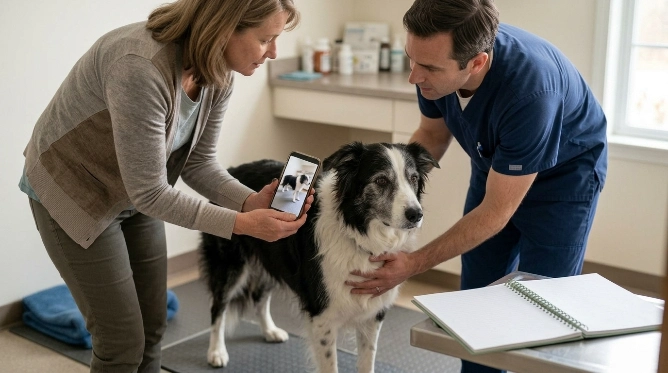
Routine senior care is useful even when your Border Collie seems healthy. Older dogs can develop subtle problems before they become obvious at home.
I would also book an appointment when a familiar pattern changes and stays changed. A dog who suddenly stops doing something they’ve loved for years is giving you useful information.
Arrange veterinary care for changes such as:
- Persistent limping or difficulty standing
- Sudden weakness or collapse
- Rapid or unexplained weight loss
- Major appetite changes
- Drinking or urinating much more than usual
- Repeated vomiting or diarrhea
- New coughing or breathing difficulty
- Seizures or abnormal episodes
- Sudden vision loss
- Persistent confusion or nighttime distress
- New lumps or rapidly changing masses
- Significant changes in personality or social behavior
A simple senior-health log can help your veterinarian see the bigger picture. Record weight, appetite, water intake, mobility, sleep, bathroom habits, and any unusual behavior.
Bring short videos of stiffness, tremors, unusual walking, or confusing episodes when possible. Dogs don’t always reproduce the same problem during a clinic visit.
Vet note: Collapse, trouble breathing, seizures, severe pain, sudden inability to stand, or other acute distress can require urgent veterinary care.
Frequently Asked Questions
Do Border Collies slow down as they age?
Yes, many Border Collies gradually develop lower stamina and need more recovery between activities. However, obvious pain, persistent limping, severe exercise intolerance, or a sudden drop in energy should be evaluated rather than assumed to be normal aging.
At what age is a Border Collie considered old?
There is no exact age for every Border Collie. I start watching more closely around seven or eight years, while recognizing that genetics, size, previous injuries, weight, and health can make one dog age differently from another.
Is a gray muzzle a sign that my Border Collie is old?
A graying muzzle is a common visible sign of aging, but it doesn’t tell you how healthy a dog is. Some dogs gray relatively early while remaining active, comfortable, and mentally sharp for years.
Why is my older Border Collie suddenly following me everywhere?
Some senior dogs become more dependent as hearing, vision, confidence, or cognition changes. New clinginess can also reflect pain or anxiety, so mention a significant behavioral change to your veterinarian.
Why is my senior Border Collie restless at night?
Nighttime restlessness can have several causes, including discomfort, increased bathroom needs, anxiety, sensory changes, or canine cognitive dysfunction. Keep notes about pacing, vocalizing, accidents, and sleep times to help your veterinarian investigate the cause.
Should an old Border Collie still exercise every day?
Many senior Border Collies benefit from regular, appropriate movement if their health allows it. Shorter walks, controlled games, sniffing, and mental training are often easier to tolerate than repetitive jumping, sharp turns, or prolonged high-intensity exercise.
How can I tell whether stiffness is arthritis or normal aging?
You can’t reliably diagnose the cause from appearance alone. Stiffness after rest, reluctance to jump, limping, or reduced activity can occur with painful joint problems, so a veterinary examination is the safest way to determine what is happening.
What should you do next?
Watch your Border Collie’s patterns rather than waiting for one dramatic sign. Movement, recovery time, sleep, appetite, body condition, senses, bathroom habits, and behavior together give you a much clearer picture.
I also wouldn’t remove every favorite activity simply because a dog is older. Modify the challenge, protect comfort, and keep giving that busy Border Collie brain something worthwhile to do.
- Take monthly side and overhead photos.
- Track weight and muscle condition.
- Notice how your dog moves after rest.
- Keep exercise regular but adaptable.
- Record behavioral or sleep changes.
- Discuss persistent or sudden changes with your veterinarian.
Aging changes the way a Border Collie works, but it doesn’t erase the dog you know. Early attention to subtle changes can help you make each senior year safer, more comfortable, and more enjoyable.
