
Border Collie Bath During Shedding Season: Complete Grooming Guide

Quick Answer
You can safely give a Border Collie a bath during shedding season, and a well-timed bath can help loosen dead undercoat. The key is to brush before bathing, use a dog-safe shampoo, rinse completely, and dry the dense double coat thoroughly. The American Kennel Club’s Border Collie grooming guidance also recommends daily brushing when seasonal shedding becomes heavy.
Best Bath Routine During Heavy Shedding
- Brush first: Remove as much loose undercoat and tangling as possible before the coat gets wet.
- Use lukewarm water: Wet the coat slowly until water reaches through the outer coat toward the skin.
- Choose dog shampoo: Use a gentle product formulated specifically for canine skin and coats.
- Rinse thoroughly: Work through the dense coat until no shampoo residue remains.
- Dry completely: Remove moisture from the undercoat, not just the visible outer hairs.
- Brush again: Once the coat is mostly or completely dry, gently remove newly loosened hair.
Bathing my Border Collies during a heavy coat blow has always worked best as part of a grooming routine, not as a substitute for brushing. If I skip the pre-bath brush, I usually end up dealing with wet clumps of undercoat that are harder to separate.
The good news is that seasonal shedding is normal for this breed. With the right bath, drying method, and brushing routine, you can remove loose hair while keeping the skin and coat comfortable.
In This Guide
- Should You Bathe a Border Collie During Shedding Season?
- Why Does a Border Collie Shed So Much Seasonally?
- How Do You Prepare a Shedding Border Collie for a Bath?
- How Do You Bathe a Border Collie During Heavy Shedding?
- How Should You Dry and Brush the Coat Afterward?
- Rough Coat vs. Smooth Coat During Shedding Season
- What Bathing Mistakes Should You Avoid?
- When Is Heavy Shedding a Reason to Call Your Vet?
- Frequently Asked Questions
Should You Bathe a Border Collie During Shedding Season?
Yes. A healthy Border Collie can be bathed during shedding season, and bathing may help loosen dead hair that is already ready to leave the coat.
The bath works best when you combine it with brushing before and after washing. Water and gentle massage can loosen undercoat, but they do not replace mechanical grooming.
Definition: A Border Collie shedding-season bath is a normal bath timed during a period of increased coat loss, with extra attention given to removing loose undercoat and drying the double coat completely.
You don’t need to increase bathing simply because you see more fur around the house. Seasonal coat loss is managed mainly through regular brushing.
In fact, the AKC recommends brushing Border Collies daily during shedding season. That routine removes loose hair before it becomes tangled or ends up across your floors and furniture.
The bath becomes useful when the coat is dirty, dusty, muddy, oily, or packed with loose hair. It can also be helpful when regular brushing seems to keep releasing more dead undercoat.
As of 2026, veterinary and grooming guidance still emphasizes matching bath frequency to the individual dog’s coat, lifestyle, and skin condition rather than following one rigid schedule.
Why Does a Border Collie Shed So Much Seasonally?

Border Collies have a double coat. It contains a protective outer layer and a softer, denser undercoat that helps insulate the dog.
Both rough-coated and smooth-coated Border Collies have this basic double-coat structure. The visible length differs, but both varieties can release plenty of undercoat.
The AKC’s guidance on double-coated breeds explains that seasonal changes can trigger heavier undercoat shedding. This is often called “blowing coat.”
What does blowing the coat mean?
Blowing the coat means the dog is releasing a larger amount of undercoat over a relatively concentrated period. You may notice soft tufts lifting from the body or collecting around the hindquarters and shoulders.
With my own Border Collies, I notice the coat change most clearly when a normal brushing suddenly fills the brush much faster. Loose fluff may also appear along the sides even though the dog was groomed recently.
Does every Border Collie shed at the same time?
No. Climate, indoor heating, daylight exposure, coat density, health, age, and individual genetics can influence the pattern.
Some dogs have obvious seasonal coat blows. Others shed more steadily throughout the year with shorter periods of increased hair loss.
| Coat-Care Situation | Typical Grooming Focus | Bath Approach |
|---|---|---|
| Normal shedding | AKC suggests brushing once or twice weekly | Bathe when coat condition or lifestyle requires it |
| Heavy seasonal shedding | Daily brushing may be appropriate | Brush thoroughly before washing |
| Dirty or muddy coat | Remove debris and tangles first | Use dog shampoo and rinse completely |
| Abnormal hair loss | Look for itching, redness, sores, or bald patches | Ask a veterinarian before treating it as normal shedding |
How Do You Prepare a Shedding Border Collie for a Bath?
Brush first. This is the single preparation step I wouldn’t skip during a heavy shed.
Once loose undercoat becomes soaked, it can compact against surrounding hair. Removing much of it while the coat is dry makes bathing and drying easier.
Gather everything before you start
- Dog-safe shampoo: Choose a product formulated specifically for dogs.
- Slicker or pin brush: Use it gently for loose hair and surface tangles.
- Metal comb: Check whether you’ve reached through thicker areas.
- Undercoat tool: Use an appropriate rake carefully if your dog’s coat needs it.
- Absorbent towels: Have more than one available for a rough-coated dog.
- Non-slip surface: Help your Border Collie feel secure in the tub.
- Treats: Reward calm behavior throughout the process.
Brush in sections
Start around the shoulders and work toward the rear. Pay close attention to the chest, trousers, tail base, and behind the ears on rough-coated dogs.
Don’t keep scraping one spot just because hair continues coming out. Seasonal undercoat removal should remain gentle and comfortable.
The ASPCA’s dog grooming guidance also recommends brushing out dead hair and mats before bathing. That is especially useful with a shedding Border Collie.
Remove mats before wetting them
Water can tighten existing tangles. If you find a firm mat close to the skin, don’t pull aggressively at it.
Severe matting is a good reason to involve a professional groomer. Skin can be pulled into tight mats, which makes careless cutting risky.
How Do You Bathe a Border Collie During Heavy Shedding?
Use a calm, methodical bath rather than vigorous scrubbing. Your goal is to clean the coat while allowing already-loose hair to release naturally.
1. Use lukewarm water
Test the water before it touches your dog. It should feel comfortably lukewarm rather than hot.
Wet the body gradually. A Border Collie’s outer coat can initially resist water, so give it time to penetrate toward the undercoat.
2. Keep water away from sensitive areas
Avoid directing water into the eyes, nose, or ear canals. I prefer cleaning the face separately with a damp cloth.
A lower-pressure rinse can also be less stressful for dogs that dislike the sound or sensation of a strong shower spray.
3. Work dog shampoo through the coat
Massage shampoo through the coat with your fingertips. Don’t scratch the skin with your nails.
Work from the neck toward the back, sides, chest, belly, legs, and tail. Spend extra time where loose undercoat feels dense.
4. Massage instead of aggressively scrubbing
Gentle massage helps move water and shampoo through the double coat. It can also free hairs that were already detached from their follicles.
Don’t try to force every loose hair out during the bath. Much of the remaining coat will release more easily while drying and brushing afterward.
5. Rinse longer than you think you need to
Dense coats can hide shampoo residue. Continue rinsing while separating sections with your fingers.
Stop when the coat feels clean and you no longer see suds. Residue left close to the skin may contribute to irritation.
Section Takeaway: The safest shedding-season bath is gentle, thorough, and supported by good brushing. Focus on cleaning and loosening dead coat rather than trying to strip out hair aggressively.
How Should You Dry and Brush the Coat Afterward?
Drying is especially important with a Border Collie’s double coat. The surface can feel dry while moisture remains deeper in the undercoat.
Start with towels
Press absorbent towels into the coat instead of rubbing back and forth. Hard rubbing can encourage tangles in longer rough coats.
Swap towels as they become saturated. Removing more water at this stage makes the rest of the process easier.
Use a dryer carefully if your dog tolerates it
If you use a dryer, choose a comfortable low or cool temperature. Keep the airflow moving rather than holding it against one area of skin.
The PetMD dog-bathing guide also emphasizes a safe setup, appropriate water temperature, and a calm approach to home bathing.
Some dogs need gradual desensitization to dryer noise. Don’t turn coat care into a wrestling match simply to finish faster.
Brush once the coat is dry enough
A post-bath brush often removes an impressive amount of loosened undercoat. Work gently in sections and empty your brush frequently.
I usually find this second brushing more productive than trying to remove every last tuft before the bath. The wash and drying process helps separate hair that was already on its way out.
- Check the chest: Longer feathering can hide damp sections.
- Check behind the ears: Fine hair tangles easily here.
- Check the hindquarters: Dense trousers can retain moisture and loose coat.
- Check the tail: Rough-coated Border Collies may need gentle combing.
- Check the belly and armpits: These areas can mat from friction.
Rough Coat vs. Smooth Coat During Shedding Season
Both rough and smooth Border Collies have double coats. That means both can shed substantial amounts of undercoat.
The main difference during bath time is how easily you can see, wet, separate, dry, and comb through the coat.
| Feature | Rough-Coated Border Collie | Smooth-Coated Border Collie |
|---|---|---|
| Coat structure | Double coat with longer visible outer hair and feathering | Double coat with shorter outer hair |
| Shedding | Seasonal undercoat can collect within longer hair | Loose hair may release more visibly around the home |
| Pre-bath focus | Check feathering, trousers, tail, chest, and behind ears | Remove loose undercoat across the body |
| Drying focus | Make sure dense and longer areas dry completely | Check the undercoat rather than judging by surface hair alone |
Neither variety should be shaved simply to control normal shedding. Their double coat has protective and insulating functions.
What Bathing Mistakes Should You Avoid?
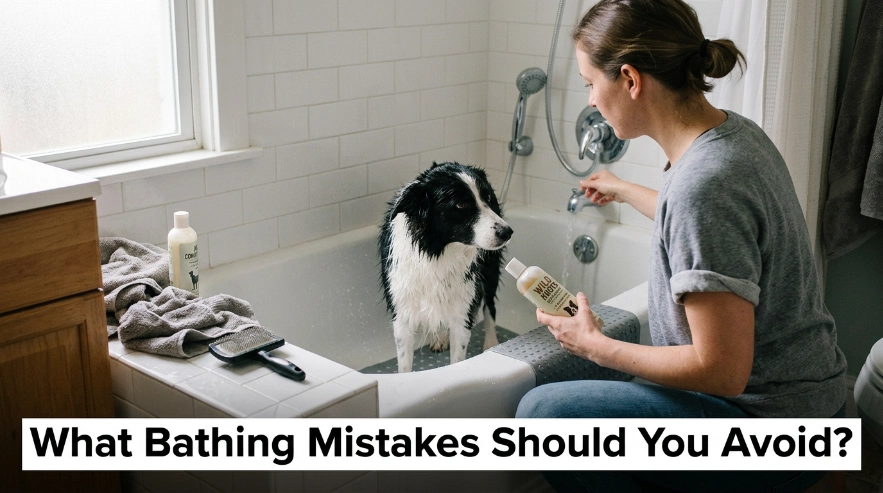
The biggest mistakes usually involve trying to rush the process. A dense shedding coat rewards patience.
- Skipping the pre-bath brush: Loose coat can become harder to handle once completely wet.
- Using human shampoo: Choose shampoo formulated for dogs instead.
- Using hot water: Stick with comfortably lukewarm water.
- Scrubbing aggressively: Massage gently rather than irritating the skin.
- Leaving shampoo behind: Dense undercoat requires careful rinsing.
- Leaving the coat damp: Check beneath the surface before declaring the dog dry.
- Overusing sharp deshedding tools: More pressure isn’t automatically more effective.
- Bathing repeatedly just to stop shedding: Normal seasonal hair loss can’t be washed away permanently.
- Shaving the double coat: Shedding alone is not a good reason to remove the protective coat.
Another common mistake is expecting one bath to finish an entire coat blow. You may continue seeing loose undercoat for days afterward.
Keep brushing gently each day while the heavy shed continues. Short, calm sessions often work better than one exhausting grooming marathon.
When Is Heavy Shedding a Reason to Call Your Vet?
Heavy seasonal shedding can be normal. Hair loss combined with skin changes, intense itching, or bald areas deserves more attention.
The PetMD guidance on excessive shedding notes that unusually heavy shedding can sometimes occur alongside medical problems. The ASPCA likewise advises veterinary attention for abnormal skin or hair changes.
Watch for these warning signs
- Bald patches: Seasonal shedding should not normally create obvious bare areas.
- Constant scratching: Persistent itching can suggest something beyond ordinary coat loss.
- Red or inflamed skin: Check areas where hair seems to be disappearing fastest.
- Scabs or open sores: These need professional assessment.
- Strong or unusual odor: Persistent odor may accompany skin or ear problems.
- Hair that pulls out unusually easily: Mention dramatic coat changes to your veterinarian.
- Behavior changes: Discomfort, low energy, or reduced appetite shouldn’t be blamed automatically on shedding.
Vet note: If your Border Collie’s coat loss looks abnormal, causes bald spots, or occurs with itching, redness, sores, or other health changes, contact your veterinarian before trying medicated shampoos or intensive home treatments.
Bathing can clean the skin, but it cannot diagnose the cause of abnormal hair loss. Don’t mask a persistent problem with repeated grooming products.
Frequently Asked Questions
Should I bathe my Border Collie while they are blowing their coat?
Yes. You can bathe a healthy Border Collie while the coat is shedding heavily, provided you brush first, use dog-safe shampoo, rinse well, and dry the undercoat thoroughly.
Will a bath stop my Border Collie from shedding?
No. A bath can remove some already-loose hair, but it cannot stop the normal shedding cycle.
Regular brushing remains the main way to manage loose fur during a seasonal coat blow.
Should I brush my Border Collie before or after a bath?
Both. Brush before the bath to remove loose hair and tangles, then brush again after the coat is dry to collect hairs loosened during washing and drying.
How often should I bathe a Border Collie during shedding season?
There is no single schedule that fits every Border Collie. Bathe based on coat condition, dirt, odor, lifestyle, and your dog’s skin needs rather than increasing baths simply because shedding has started.
Can I use human shampoo on my Border Collie?
Dog-formulated shampoo is the safer routine choice. Products designed for people may contain ingredients or fragrances that irritate canine skin.
Why is my Border Collie still shedding after a bath?
This is usually expected during a seasonal coat blow. The bath loosens some dead undercoat, while additional hairs may continue releasing during later brushing sessions.
Should I shave my Border Collie to reduce shedding?
Shaving is not a normal solution for seasonal shedding. Border Collies have protective double coats, so coat removal should only be considered for a specific medical or severe matting reason under professional guidance.
Final takeaway: A Border Collie bath during shedding season can make coat management easier, but brushing does most of the work. Brush first, bathe gently, rinse thoroughly, dry the undercoat completely, and keep up short daily grooming sessions until the heavy shedding slows.
