

Quick Answer
A healthy Border Collie generally only needs a full bath every 8 to 12 weeks to protect their natural oils. Over-bathing can damage their weather-resistant double coat and cause skin irritation. The American Kennel Club recommends focusing on frequent brushing rather than frequent bathing for this specific breed.
Essential Bathing Steps
- Brush out completely: Remove all loose undercoat to prevent water from locking tangles into mats.
- Use warm water: Ensure the water is lukewarm to avoid overheating or shocking your dog.
- Apply dog-specific shampoo: Never use human shampoo, as it disrupts the canine skin pH balance.
- Rinse to the skin: Leftover shampoo residue is the leading cause of post-bath itching and flaking.
- Dry down fully: Use a high-velocity dryer to push water out of the dense undercoat and prevent hot spots.
Pro Tip
- Place a cotton ball gently in each ear before turning on the water to prevent painful ear infections.
Welcome to the most thorough resource for keeping your herding dog clean and comfortable. After years of sharing my home with these brilliant, high-energy dogs, I know exactly what muddy chaos they can bring indoors.
This guide goes far beyond simple soap and water. I will show you the exact methods to protect their unique double coat, minimize stress, and make tub time easier for both of you.
In This Guide
- How Often Should You Bathe a Border Collie?
- What Are the Two Border Collie Coat Types?
- What Do You Need to Bathe a Border Collie?
- How Do You Prepare a Border Collie for a Bath?
- How to Bathe a Border Collie Step-by-Step?
- How Do You Dry a Border Collie’s Double Coat?
- Can Frequent Bathing Cause Skin Problems?
- How to Train a Border Collie to Tolerate Baths?
- Frequently Asked Questions
How Often Should You Bathe a Border Collie?
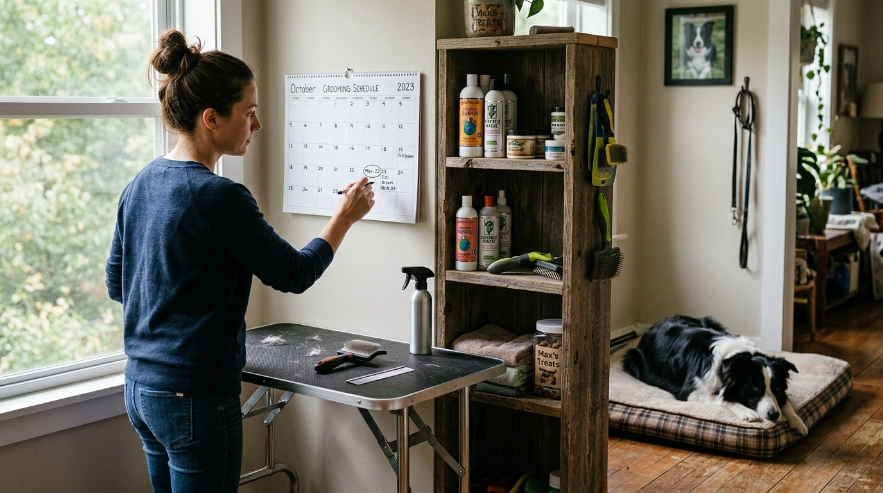
You should bathe an indoor companion Border Collie every 8 to 12 weeks. Working dogs may need more frequent spot-cleaning, but full baths should be limited.
A Border Collie’s double coat is a complex, weather-resistant barrier made of a soft undercoat and coarse guard hairs. This natural system relies on essential oils to repel dirt and water.
If you wash them too often, you strip away these natural protectants. Your dog will end up with dry, itchy skin and a dull, brittle coat.
Bathing Frequency Guidelines:
- Indoor companions: Every 8 to 12 weeks is ideal.
- Active hiking dogs: Every 6 to 8 weeks, depending on mud.
- Farm and working dogs: Spot-clean daily; full bath every 12 weeks.
Keep in mind that mud on a healthy double coat often just dries and falls off. A quick brush is usually better than reaching for the shampoo.
However, if your dog rolls in something smelly, immediate action is required. Deodorizing shampoos can safely neutralize severe odors without needing multiple washes.
Section Takeaway: Limit full baths to roughly four to six times a year unless your dog encounters skunks, feces, or hazardous chemicals.
What Are the Two Border Collie Coat Types?
Border Collies come in either a rough coat or a smooth coat. Both varieties possess a dense double coat, but their outer hair length dictates how you maintain them.
The rough coat is medium-to-long, featuring significant feathering on the legs, chest, and belly. These dogs require far more detangling effort before water ever touches them.
Smooth coats have short hair across their entire body. While they rarely tangle, they shed just as intensely and still need thorough undercoat management.
| Coat Type | Pre-Bath Prep Need | Drying Time |
|---|---|---|
| Rough Coat | High (dematting required) | 30-45 minutes with force dryer |
| Smooth Coat | Low (basic brushing) | 15-20 minutes with force dryer |
Never assume a smooth coat means you can skip the brushing phase. Their thick undercoat will still hold onto loose hair, creating uncomfortable damp spots if not removed.
For rough coats, focus your prep on the friction zones behind the ears and under the armpits. Water acts like glue on tangles, cementing them into solid mats.
Section Takeaway: Always adjust your pre-bath brushing time based on your Border Collie’s specific coat length, focusing heavily on rough coat friction zones.
What Do You Need to Bathe a Border Collie?
You need a high-quality slicker brush, a dog-specific shampoo, and highly absorbent towels to bathe a Border Collie effectively. Gathering your supplies beforehand prevents stressful interruptions during the wash.
Do not attempt this task without the right brushes. An undercoat rake is also crucial for pulling out dead fur trapped deep near the skin.
As of 2026, many groomers consider a high-velocity dog dryer the single best investment for owners of double-coated breeds. It dramatically cuts drying time and blasts out remaining loose hair.
Essential Bathing Checklist:
- Slicker brush and metal greyhound comb.
- Canine-formulated shampoo and moisturizing conditioner.
- Non-slip mat for the bathtub floor.
- A handheld shower attachment or large rinsing cup.
- Multiple microfiber towels.
Avoid human hair products entirely. Our skin has a different pH level than a dog’s, and using human shampoo will cause intense itching.
If your dog has sensitive skin, opt for an oatmeal-based or hypoallergenic formula. Ask your vet for recommendations if your dog has existing allergies.
Section Takeaway: Invest in a proper slicker brush, an undercoat rake, and canine-specific shampoo to protect your dog’s skin and coat.
How Do You Prepare a Border Collie for a Bath?
You prepare a Border Collie by thoroughly brushing out all dead undercoat and removing every single tangle. Skipping this step guarantees severe coat matting once the fur gets wet.
First, run your slicker brush over the entire body, moving in the direction of hair growth. Pay special attention to the dense fur around the neck and hindquarters.
Next, use a metal comb to check your work. If the comb catches on a snag, stop and gently work it out with your fingers.
- Tire them out: Take your dog for a long run or rigorous fetch session before bath time.
- Protect the ears: Place a large cotton ball just inside the ear canal opening.
- Secure footing: Lay down a rubber bath mat so they do not panic from slipping.
A tired Border Collie is much less likely to fight the bathing process. Burn off their physical energy, and they will be more compliant in the tub.
Additionally, smear some peanut butter on a lick mat and stick it to the shower wall. This simple distraction works wonders for anxious dogs.
Section Takeaway: Never put a tangled Border Collie in water, and always exhaust their energy prior to starting the bath.
How to Bathe a Border Collie Step-by-Step?
You bathe a Border Collie by saturating the coat to the skin, massaging in shampoo, and rinsing obsessively. The double coat is notoriously waterproof, so getting them thoroughly wet takes patience.
Start with lukewarm water, testing the temperature on your wrist just like you would for a baby. Hot water can dry out their skin and cause overheating.
Use a handheld sprayer right against the fur to push water past the guard hairs. Begin at the neck and work your way down the back and legs.
- Saturate the coat: Wet the dog entirely, leaving the head and face dry for now.
- Apply shampoo: Lather the soap in your hands first, then massage it deeply into the coat.
- Wash the body: Work the lather down the back, under the belly, and along the legs.
- Clean the face gently: Use a damp washcloth to wipe the face; never pour water over their head.
- Rinse completely: Rinse until the water runs completely clear, then rinse for one more minute.
Shampoo residue left in a dense undercoat is disastrous. It causes chemical burns, hot spots, and relentless scratching over the following days.
When you think you have rinsed enough, run your fingers through their chest and belly fur again. If it feels slick or slimy, keep rinsing.
Section Takeaway: Push the water directly against the skin to penetrate the waterproof outer coat, and spend extra time rinsing out every trace of shampoo.
How Do You Dry a Border Collie’s Double Coat?
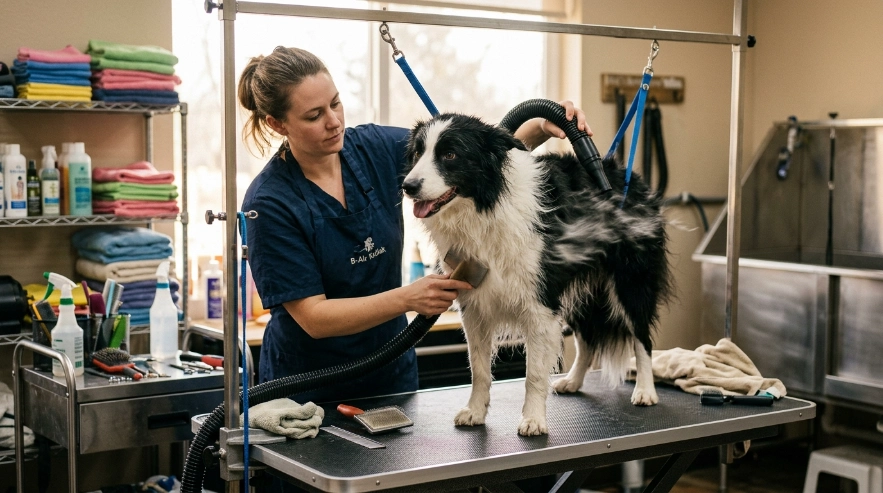
You dry a Border Collie by squeezing out excess water, towel-drying vigorously, and finishing with a high-velocity pet dryer. Air drying is risky because trapped moisture breeds bacteria against the skin.
Before they step out of the tub, gently squeeze their legs and tail to wring out heavy water. Immediately throw a large microfiber towel over them to contain the inevitable full-body shake.
Rub the coat down with multiple dry towels. Do not rub in tight circles, as this will create severe knots in rough-coated dogs.
Best Drying Methods:
- High-Velocity Dryer: Safest and fastest. Blows water out without using dangerous heat.
- Microfiber Towels: Highly absorbent; great for the initial pat-down.
- Standard Hair Dryer (Caution): Must be set to “cool” or “no heat” to avoid burning the dog.
If you use a forced-air pet dryer, start on a low setting to let your dog adjust to the loud noise. Keep the nozzle a few inches away from the skin, sweeping back and forth.
Ensure the thick areas around the neck and the base of the tail are completely dry. Leaving these spots damp is a leading cause of acute moist dermatitis.
Section Takeaway: Use a high-velocity, no-heat dryer to safely blast moisture out of the dense undercoat and prevent bacterial growth.
Can Frequent Bathing Cause Skin Problems?
Vet note: Always consult your primary veterinarian if your dog develops chronic scratching, redness, or hair loss.
Yes, frequent bathing strips the natural sebum from a Border Collie’s skin, leading directly to irritation and coat damage. Their skin is naturally drier than a human’s and recovers oils slowly.
The American Veterinary Medical Association frequently highlights that over-grooming double-coated breeds disrupts their natural skin barrier. This barrier protects against environmental allergens and pathogens.
If you wash them weekly, you invite a host of dermatological issues. The skin overcompensates, leading to either excessive flaking or greasy, foul-smelling fur.
- Hot Spots: Trapped moisture from improper drying causes rapid, painful bacterial infections.
- Dry Flaking (Dandruff): Stripped oils leave the skin parched and itchy.
- Dull Coat: Without natural oils, the guard hairs become brittle and lose their shine.
Sometimes, owners mistake environmental allergies for poor hygiene and bathe the dog more. This only worsens the allergic reaction by removing the skin’s defensive layer.
If your dog smells bad shortly after a bath, it might be a medical issue rather than dirt. Ear infections, dental disease, and anal gland problems all create strong odors.
Section Takeaway: Over-bathing destroys the protective sebum layer on your dog’s skin, which drastically increases the risk of dry skin and infections.
How to Train a Border Collie to Tolerate Baths?
You train a Border Collie to tolerate baths through slow desensitization, high-value rewards, and consistent positive reinforcement. Because they are highly sensitive to their environment, forcing them into a tub creates lasting trauma.
Start by bringing your dog into the dry bathroom and feeding them their favorite treats. You want them to associate the room with positive experiences, not fear.
Next, encourage them to step into the empty, dry tub. Reward them heavily for simply standing there without trying to bolt.
- Introduce the sound: Turn the water on briefly while they are in the bathroom, treating them for staying calm.
- Wet the paws: Put an inch of warm water in the tub and let them stand in it while distracted with treats.
- Use a lick mat: Spread dog-safe peanut butter on a silicone mat attached to the wall.
- Keep sessions short: The first few real baths should be quick, prioritizing a stress-free exit over a perfect clean.
Border Collies feed off your energy, so you must remain calm and upbeat. If you get frustrated or raise your voice, their anxiety will instantly spike.
Always end the bath routine with an incredible reward. A special toy or a high-value chew will make them look forward to the end of the process.
Section Takeaway: Build positive associations with the tub using high-value treats and a lick mat before attempting a full bath.
Frequently Asked Questions
Can I use baby shampoo on my Border Collie?
No, you should not use baby shampoo on a dog. Even gentle human products are formulated for human skin pH and will disrupt your dog’s acid mantle, causing dryness and itching.
Should I shave my Border Collie in the summer?
Never shave a Border Collie. Their double coat actually insulates them from the heat and prevents severe sunburns, while shaving permanently damages the natural regrowth pattern.
Why does my Border Collie smell like corn chips?
The “Fritos” smell usually comes from their paws. It is caused by a natural buildup of harmless yeast and bacteria, which can be wiped down with pet-safe grooming wipes if it becomes overwhelming.
How do I get sap out of my Border Collie’s fur?
Rub a small amount of olive oil or coconut oil into the sap to break it down. After a few minutes, gently comb it out and wash the specific spot with dog shampoo.
Can I use a normal hair dryer on my dog?
You can use a human hair dryer only if it has a strict “no heat” or “cool” setting. The heat settings on standard dryers will burn a dog’s skin very quickly under their dense fur.
Final Thoughts on Bathing Your Border Collie
Mastering the bath routine keeps your Border Collie comfortable and your home clean. Remember that a thorough brushing is often more important than the actual wash.
By using the right tools, maintaining a calm environment, and drying them completely, you eliminate the stress from grooming day. Your dog’s coat is their armor, and proper care keeps it functioning perfectly.
What is the most difficult part of bathing your dog right now? Let me know if it is the brushing, the drying, or just getting them into the tub.
