
What Is the Texture of a Border Collie Coat?

Quick Answer
A Border Collie’s coat usually has a moderately coarse outer layer and a soft, dense undercoat. Rough-coated Border Collies have medium-length hair with noticeable feathering, while smooth-coated Border Collies have shorter hair that lies closer to the body. The exact texture varies from dog to dog.
If you run your fingers through a Border Collie’s fur, you may notice that the hair does not feel the same throughout the coat. The outer hairs can feel slightly coarse or firm, while the undercoat underneath is usually softer and fluffier.
This combination helps protect the dog from different weather conditions. However, the texture, length, and softness of a Border Collie’s coat can vary depending on its coat type, genetics, age, and overall coat condition.
What Does a Border Collie’s Coat Feel Like?
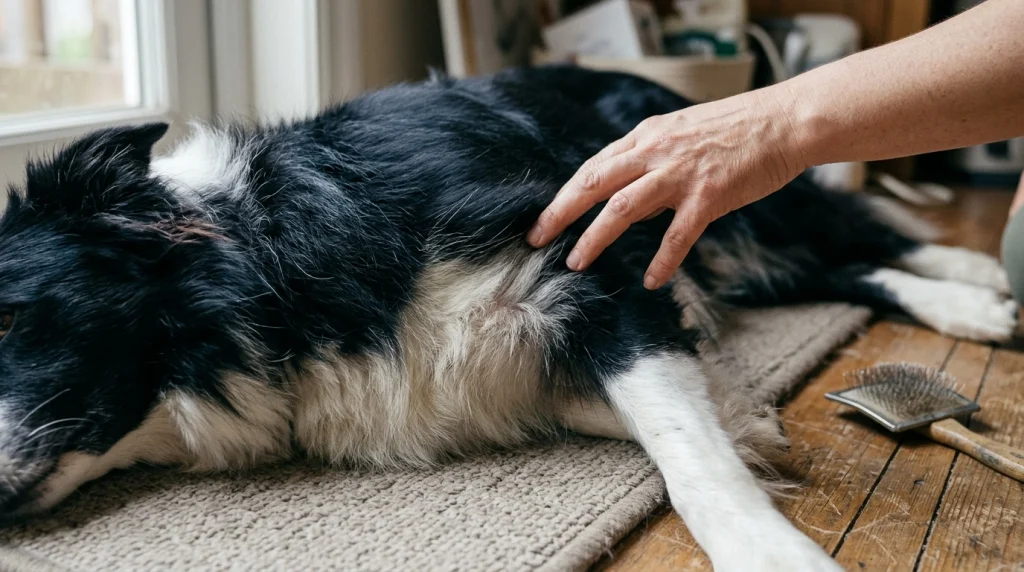
A typical Border Collie has a double coat made up of two layers: an outer coat and an undercoat. These layers have different textures and perform different functions.
The outer hairs are generally straight or slightly wavy and may feel moderately coarse. The undercoat is softer and denser, helping provide insulation. When you gently separate the fur, you may be able to feel the softer layer beneath the outer hairs.
Not every Border Collie has exactly the same texture. Some have a noticeably firm outer coat, while others have softer or silkier hair. A naturally soft coat is not automatically unhealthy, just as a coarse coat is not automatically healthier.
- Outer coat: Usually firmer and sometimes slightly coarse to the touch.
- Undercoat: Generally soft, dense, and insulating.
- Rough coat: Medium-length hair with more noticeable feathering.
- Smooth coat: Shorter hair that lies closer to the body.
The American Kennel Club’s Border Collie breed profile describes both rough and smooth varieties as having a dense, weather-resistant double coat.
What Are the Two Layers of a Border Collie’s Coat?
Understanding the two layers makes it easier to recognize why a Border Collie’s fur can feel different in different areas of the body.
1. The Outer Coat
The outer coat consists of the guard hairs covering the body. These hairs help protect the dog from environmental exposure, including light moisture and changing weather conditions.
Depending on the individual dog, the outer coat may feel moderately coarse, firm, or relatively soft. It can also be straight or slightly wavy. The texture is not necessarily identical across the back, chest, neck, and tail.
2. The Undercoat
The undercoat is the softer, denser layer beneath the outer hairs. It provides insulation and may feel fluffy when you gently part the fur.
Border Collies can shed substantial amounts of undercoat, particularly during seasonal shedding periods. You may notice loose hair on furniture, clothing, carpets, and grooming brushes.
Regular brushing helps remove loose hair and makes it easier to notice tangles or changes in the skin. Avoid brushing aggressively, as excessive pressure can irritate the skin.
Helpful Tip
Do not judge a Border Collie’s entire coat by touching only its back. The hair around the chest, neck, legs, and tail may have a different length or feel.
Rough Coat vs. Smooth Coat: What Is the Difference?
Border Collies commonly have either a rough coat or a smooth coat. These terms mainly describe the length and appearance of the hair, rather than two entirely different coat structures.
A rough-coated Border Collie generally has medium-length hair and more visible feathering. A smooth-coated Border Collie has shorter hair that lies closer to the body. Both varieties typically have an undercoat.
| Feature | Rough Coat | Smooth Coat |
|---|---|---|
| Hair length | Medium-length or longer | Shorter |
| Typical texture | May feel moderately coarse over a soft undercoat | Often feels firmer and less fluffy |
| Feathering | More noticeable around the chest, legs, and tail | Less prominent |
| Undercoat | Typically present | Typically present |
| Grooming | May need extra attention to tangles | Often easier to brush, but still sheds |
Neither coat type is inherently better than the other. Both are normal Border Collie coat varieties, and the grooming routine should be adjusted to the individual dog’s needs.
For a closer look at the differences, read our guide to the different coat types of Border Collies.
Is a Border Collie’s Coat Supposed to Feel Coarse?
A moderately coarse outer coat is normal for many Border Collies. The outer hairs provide a protective layer, while the softer undercoat helps with insulation.
However, not every healthy Border Collie has a noticeably coarse coat. Some dogs have softer hair, and others have a mixture of textures across their bodies. Breed characteristics describe general patterns rather than an exact texture that every dog must have.
What matters most is the overall condition of the coat. Fur that is clean, reasonably smooth for the individual dog, and free from persistent matting is generally easier to maintain than a coat with widespread tangles or signs of skin irritation.
If the coat suddenly becomes brittle, excessively greasy, patchy, or unusually dull, pay attention to any accompanying skin changes or discomfort.
Does a Border Collie’s Coat Texture Change With Age?
Yes. A Border Collie’s coat can change as the dog matures. Puppies often have softer, fluffier fur, while the adult coat may become more defined and develop more noticeable feathering.
The timing varies between individual dogs. Some changes become apparent during puppyhood, while the mature coat may take longer to become fully established.
Rough-coated dogs may develop longer hair around the chest, neck, legs, and tail. Smooth-coated dogs generally retain shorter hair that sits closer to the body.
Seasonal shedding can also affect how the coat feels. When the undercoat loosens, the outer hairs may become more noticeable, and the coat can temporarily appear less dense.
A change in texture alone does not necessarily indicate a health problem. However, sudden hair loss, persistent itching, bald patches, or inflamed skin should not automatically be attributed to normal maturation.
Does Coat Color Affect Texture?
Border Collies come in various colors and patterns, including black and white, red and white, tricolor, blue merle, and other combinations. However, coat color alone is not a reliable way to predict whether the fur will feel coarse, soft, rough, or smooth.
Two Border Collies with similar colors can have different coat textures. Hair length, inherited characteristics, undercoat development, and general coat condition are more useful factors to consider.
The appearance of the coat can also change with lighting, moisture, dirt, and seasonal shedding. These visual differences do not necessarily mean the underlying texture has changed.
How Should You Groom a Border Collie’s Coat?
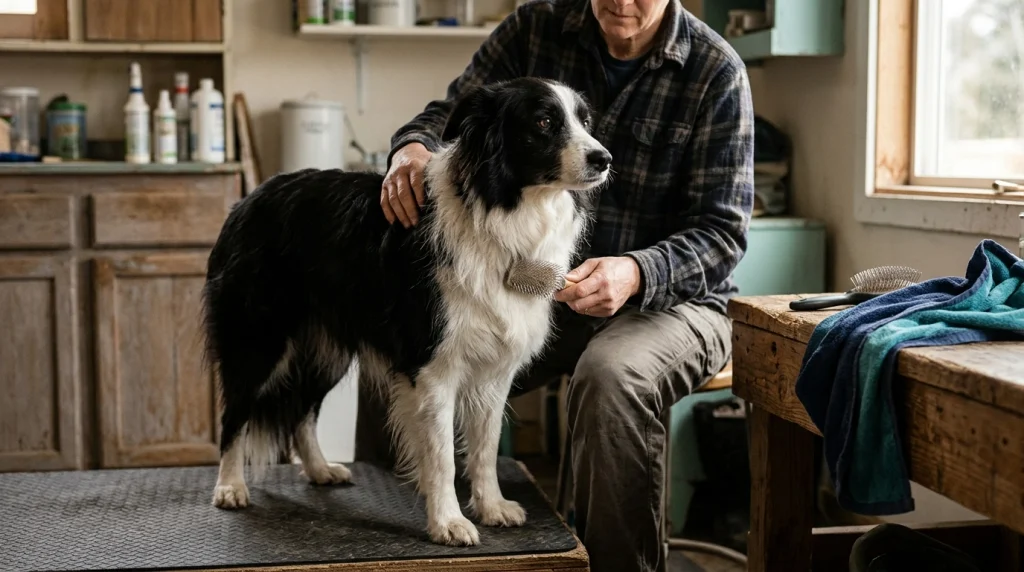
Regular grooming helps remove loose hair, prevent tangles, and keep the coat in good condition. The right routine depends on whether your dog has a rough or smooth coat and how much it sheds.
Brush Regularly
Brushing once or twice a week is a reasonable starting point for many Border Collies. Rough-coated dogs may need additional attention around the chest, behind the ears, the legs, and the tail, where tangles can develop.
During heavier shedding periods, you may need to brush more frequently. Use gentle strokes and avoid pulling hard on knots. Tight mats close to the skin are best handled by an experienced groomer.
Choose a Suitable Brush
A suitable brush can help remove loose hair and keep longer areas from tangling. Choose a tool appropriate for your dog’s coat length and skin sensitivity.
A pin brush may be useful for routine grooming, particularly for a longer rough coat. Introduce grooming tools gradually and make sure the brush does not scratch or irritate the skin.
Related Grooming Tool
Looking for a brush for your Border Collie’s double coat? Compare pin brushes designed for routine brushing and choose one suitable for your dog’s coat length.
Bathe When Necessary
Bathing can remove dirt and odors, but frequent unnecessary baths may dry or irritate some dogs’ skin. Use a dog-specific shampoo and rinse thoroughly.
After bathing, make sure the dense undercoat dries properly. If your dog develops persistent itching, redness, or other skin problems, seek veterinary advice rather than relying on bathing alone.
For more care advice, read our guide on how to groom a Border Collie.
Do Not Shave a Healthy Double Coat Without a Reason
Routine shaving is generally unnecessary for a healthy Border Collie’s double coat. The coat provides protection from the environment, and shaving is not a reliable solution for ordinary shedding.
If severe matting or a medical condition requires clipping, ask a veterinarian or experienced professional groomer about the safest approach.
When Should You Be Concerned About Coat Texture?
Some variation in softness and coarseness is normal. A sudden or persistent change accompanied by skin symptoms, however, may require closer attention.
- Persistent itching: Repeated scratching or licking may indicate irritation or another problem.
- Bald patches: Noticeable areas of missing hair should be assessed if they are unexplained or spreading.
- Red or inflamed skin: Irritation, sores, or crusting may need veterinary evaluation.
- Unusual coat changes: A sudden brittle, greasy, or dull appearance may be worth discussing with a veterinarian.
Possible causes include parasites, allergies, skin infections, nutritional problems, and other conditions. Coat texture alone cannot identify the cause, so a veterinarian can help determine whether further assessment is needed.
A naturally soft coat is not automatically a problem, and a moderately coarse coat is not proof that the dog is healthy. Consider the overall condition of the fur and skin instead of relying on texture alone.
Frequently Asked Questions
1. Is a Border Collie’s coat soft or rough?
It can be both. The outer hairs are often moderately coarse, while the undercoat is softer and denser. The exact texture varies between individual dogs.
2. Do all Border Collies have a double coat?
Border Collies are generally described as having a double coat with an outer layer and a dense undercoat. The length and appearance vary between rough-coated and smooth-coated dogs.
3. Which Border Collie coat is softer?
There is no universal answer. A rough coat may have a soft undercoat and a firmer outer layer. Individual texture varies, so hair length alone does not determine softness.
4. Does a Border Collie’s coat become thicker in winter?
Seasonal changes can affect undercoat growth and shedding. The degree of change depends on the individual dog and its environment.
5. How often should I brush a Border Collie?
Brushing once or twice a week is a reasonable starting point for many Border Collies. Brush more often when shedding increases or when longer hair begins to tangle.
6. Should I shave my Border Collie’s coat?
Routine shaving is generally unnecessary for a healthy double coat. If severe matting or a medical condition makes clipping necessary, consult a veterinarian or experienced professional groomer.
Final Thoughts
The texture of a Border Collie coat is usually a combination of a moderately coarse outer layer and a soft, dense undercoat. Rough-coated dogs have medium-length hair and more visible feathering, while smooth-coated dogs have shorter hair that lies closer to the body.
Individual dogs can vary, so there is no single texture that every Border Collie must have. Regular brushing, sensible bathing, and attention to changes in the skin and fur can help keep the coat in good condition.
If you notice persistent itching, unexplained hair loss, or sudden changes in coat texture, consult a veterinarian rather than assuming the change is normal.
“`