
What Type of Coat Does a Border Collie Have?

Quick Answer
A Border Collie has a dense, weather-resistant double coat made of a soft undercoat and a coarser protective outer coat. The breed has two officially recognized coat varieties: rough and smooth, and both have the same basic double-coat structure described in the AKC Border Collie guidance.
Border Collie coat basics
- Double coated: A soft, dense undercoat sits beneath tougher protective hairs.
- Two varieties: Border Collies may have rough or smooth coats.
- Weather resistant: The coat developed around an active outdoor herding role.
- Regular shedding: Loose hair increases during seasonal coat changes.
- Many colors: Black and white is familiar, but the breed occurs in numerous colors and patterns.
What owners should remember
- Brush through both coat layers instead of focusing only on the visible outer hair.
Border Collies are famous for their intelligence and herding ability, but their coat is just as closely tied to their working heritage. Whether your Border Collie looks fluffy or sleek, there is more happening beneath the surface than you might expect.
This guide explains the Border Collie double coat, rough and smooth varieties, shedding, grooming, colors, puppy coat changes, and common coat-care mistakes.
In This Guide
- What Does a Border Collie’s Double Coat Mean?
- What Is the Difference Between Rough and Smooth Border Collies?
- What Colors and Textures Can a Border Collie Coat Have?
- Do Border Collies Shed a Lot?
- How Should You Groom a Border Collie’s Coat?
- Should You Shave a Border Collie’s Double Coat?
- Does a Border Collie’s Puppy Coat Change?
- When Can Coat Changes Signal a Health Problem?
- Frequently Asked Questions
- Final Takeaway
What Does a Border Collie’s Double Coat Mean?
A Border Collie’s double coat is a two-layer hair system. It combines a soft, dense undercoat with a straighter or slightly wavy outer layer of tougher guard hairs.
The two layers serve different purposes. Together, they create the practical coat expected from a dog developed to work outdoors.
The soft undercoat
The undercoat grows close to the skin. It feels softer and finer than the outer coat and provides insulation.
The amount of undercoat can change throughout the year. Seasonal conditions, indoor living, climate, and the individual dog can all affect how much loose undercoat you notice.
- Texture: Soft, short, and dense.
- Location: Beneath the visible outer hairs.
- Main role: Adds insulation and an extra protective layer.
- Grooming concern: Loose undercoat can remain trapped unless brushing reaches through the coat.
The protective outer coat
The outer coat contains coarser guard hairs. These hairs help shield the skin from moisture, dirt, vegetation, and everyday outdoor exposure.
This structure makes sense for a traditional sheepdog. Border Collies were selected to work for long periods across demanding terrain rather than to have a purely decorative coat.
The AKC’s double-coat grooming guidance describes the undercoat and protective guard-hair system found in double-coated breeds.
What Is the Difference Between Rough and Smooth Border Collies?
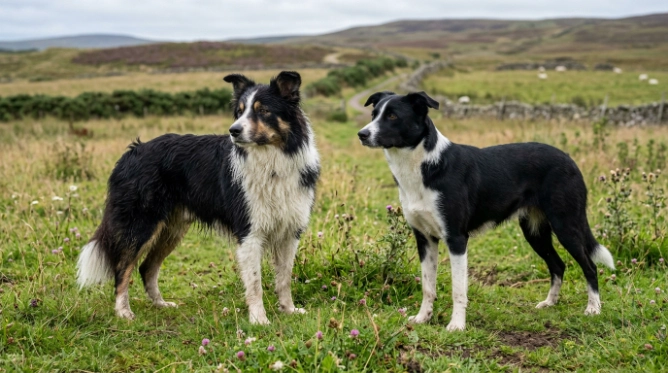
Border Collies come in two recognized coat varieties: rough and smooth. Neither variety is considered inherently better than the other.
The major difference is the length and appearance of the outer coat. Both still have an undercoat.
| Feature | Rough Coat | Smooth Coat |
|---|---|---|
| Hair length | Medium length | Short across most of the body |
| Appearance | Fuller and more feathered | Sleeker and closer fitting |
| Feathering | Noticeable on chest, legs, underside, and haunches | Usually limited, although slight feathering can occur |
| Undercoat | Dense | Dense |
| Shedding | Yes | Yes |
| Typical grooming | Regular brushing, with attention to feathering | Regular brushing despite the shorter appearance |
What does a rough-coated Border Collie look like?
The rough coat is the fluffy Border Collie look many people recognize. Hair is medium in length without being excessively long.
You’ll often see feathering behind the front legs, around the chest, beneath the body, and around the hindquarters. Hair on the face, feet, ears, and fronts of the legs remains shorter.
What does a smooth-coated Border Collie look like?
A smooth Border Collie has short hair across the body. The coat often feels somewhat coarser and gives the dog a leaner outline.
Smooth dogs can still develop a little feathering around the chest, forelegs, and haunches. Short hair does not mean a single coat.
What Colors and Textures Can a Border Collie Coat Have?
Border Collies come in far more colors than the classic black-and-white pattern. Coat color does not determine whether a dog has a rough or smooth coat.
The breed standard allows a broad range of colors, combinations, and markings. Working ability and sound structure have historically mattered more than one preferred color.
Common Border Collie colors and patterns
- Black and white: The most widely recognized combination.
- Black tricolor: Usually black and white with tan points.
- Red and white: Ranges from lighter red tones to deeper shades.
- Red tricolor: Red, white, and tan markings.
- Blue merle: A mottled or marbled pattern over a diluted dark base.
- Red merle: A mottled pattern based on red pigmentation.
- Sable: Hairs can display different tones along their length.
- Less common colors: Other accepted combinations and markings also occur.
Outer hair may appear straight or slightly wavy. Rough-coated dogs can also vary greatly in how full their furnishings look.
That variation is normal. Two purebred Border Collies can look surprisingly different while still sharing the same basic double-coat structure.
Do Border Collies Shed a Lot?
Yes. Border Collies shed because both rough and smooth varieties have double coats.
Some hair can come out throughout the year. Seasonal periods may produce much heavier undercoat loss.
Why does the shedding seem suddenly heavier?
Double-coated dogs replace old undercoat as conditions change. Owners often call a heavy seasonal release a “coat blow.”
During these periods, loose tufts may appear around the hindquarters, shoulders, chest, and sides. A smooth-coated dog can shed plenty despite having much shorter hairs.
- Normal shedding: Loose hair appears but skin looks healthy.
- Heavy seasonal shedding: More undercoat releases over a relatively short period.
- Indoor influence: Heating and air conditioning can make the timing less obvious.
- Grooming effect: Regular brushing removes hair before much of it reaches floors and furniture.
The amount varies between individual dogs. Climate, hormones, age, nutrition, and general health can also influence the coat.
Are Border Collies hypoallergenic?
No dog is completely allergen-free, and a shedding Border Collie is generally not a breed people choose for minimal hair around the home. Dog allergies can involve proteins found in dander, saliva, and other biological material rather than hair alone.
If someone in your household has significant dog allergies, discuss the issue with a medical professional before bringing home a Border Collie.
How Should You Groom a Border Collie’s Coat?
Regular brushing is the foundation of Border Collie coat care. Your goal is to remove loose hair and tangles without damaging healthy guard hairs.
The AKC recommends routine brushing and more frequent attention during heavy shedding. Rough coats may need extra work around feathered areas where tangles form more easily.
A simple Border Collie grooming routine
- Check the coat with your hands: Feel behind the ears, under the collar, around the chest, armpits, tail, and hindquarters.
- Brush in manageable sections: Work through the coat instead of skimming only the surface.
- Remove loose undercoat gently: Choose a suitable brush or comb and avoid aggressively scraping the skin.
- Work through small tangles early: A minor knot is much easier to handle before it becomes a tight mat.
- Inspect the skin: Look for redness, flakes, sores, parasites, or unusual thinning while grooming.
For many Border Collies, brushing once or twice weekly is a practical baseline. During periods of heavy shedding, daily brushing may be useful.
How often should you bathe a Border Collie?
Border Collies do not need shampoo simply because they have a thick coat. Bathe when the dog is dirty, has developed an odor, or needs cleaning for another practical reason.
Brush out loose hair and obvious tangles before bathing. Use lukewarm water and a shampoo designed for dogs.
The ASPCA dog grooming guidance also recommends brushing, pet-appropriate shampoo, thorough rinsing, and complete drying.
- Before bathing: Brush loose hair and check for mats.
- During washing: Work water through the dense coat gently.
- While rinsing: Keep rinsing until shampoo residue is gone.
- After bathing: Dry the undercoat rather than leaving dampness trapped near the skin.
Should You Shave a Border Collie’s Double Coat?
Routine shaving is usually not appropriate for a healthy Border Collie double coat. The outer guard hairs and undercoat perform different protective functions.
Removing the whole coat is different from carefully tidying certain areas. The breed standard even discourages excessive sculpting of the natural coat.
What can you trim safely?
Some owners tidy excess hair around the paws and sanitary areas when needed. Small practical trims are not the same as clipping the body down close to the skin.
If severe matting, surgery, a skin disorder, or another medical situation makes clipping necessary, follow your veterinarian’s or qualified groomer’s advice.
- Don’t shave for shedding control: It does not stop the hair-growth cycle.
- Don’t shave just because summer arrives: Coat management is more complex than simply removing insulation.
- Do brush out dead undercoat: Removing loose hair helps maintain airflow through a clean coat.
- Do ask for professional help: Tight mats can be painful and unsafe to remove with scissors at home.
Does a Border Collie’s Puppy Coat Change?
Yes. A Border Collie puppy’s early coat changes as the adult outer coat and denser undercoat develop.
A fluffy puppy therefore may not show its final coat texture or amount of feathering immediately. Development also differs between individuals.
When does the adult coat appear?
There is no single birthday when every Border Collie suddenly develops a finished adult coat. The transition happens gradually through puppyhood and adolescence.
You may notice changes in texture first. Later, rough-coated dogs often gain more obvious feathering around the chest, tail, legs, and hindquarters.
- Young puppy stage: Coat often feels particularly soft.
- Growing stage: Coarser guard hairs become easier to notice.
- Adolescent stage: Overall length and furnishings become clearer.
- Adult stage: Rough or smooth characteristics are generally much more obvious.
Genetics play a major role in the final appearance. Looking at the parents can offer clues, but siblings can still differ in coat fullness and texture.
When Can Coat Changes Signal a Health Problem?
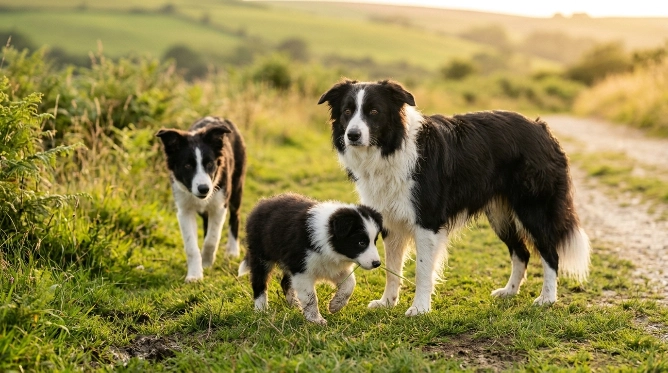
Normal shedding should not leave a healthy Border Collie with inflamed skin, painful sores, or unexplained bald patches. Sudden coat changes deserve attention when they come with other symptoms.
A dog’s hair and skin can change for many reasons. Parasites, allergies, infections, hormonal disorders, nutrition problems, and repeated scratching are only some possibilities.
Signs worth discussing with your veterinarian
- Bald areas: Especially when hair loss is uneven or increasing.
- Persistent itching: Frequent scratching, chewing, licking, or rubbing.
- Red or inflamed skin: Particularly if it looks painful.
- Scabs or open sores: These need proper assessment rather than cosmetic grooming.
- Strong odor: A persistent unusual smell may accompany a skin problem.
- Major texture change: Especially when combined with changes in weight, energy, appetite, or behavior.
The American Veterinary Medical Association emphasizes veterinary care as part of protecting animal health and addressing individual medical needs.
Vet note: Coat and skin symptoms can have many causes. Ask your veterinarian to examine persistent hair loss, itching, inflammation, sores, or other unexplained changes.
Frequently Asked Questions
Does a Border Collie have hair or fur?
Border Collies have the type of body covering commonly called fur or hair. The more useful description is that they have a double coat consisting of a dense undercoat beneath protective outer hairs.
Are all Border Collies double coated?
The recognized Border Collie coat varieties are rough and smooth, and the breed standard describes both as dense, weather-resistant double coats. A smooth Border Collie therefore still has an undercoat even though the outer hair looks short and sleek.
Which Border Collie coat sheds less, rough or smooth?
Both rough and smooth Border Collies shed. Smooth coats may make grooming look easier because the hairs are shorter, but they can still release substantial undercoat during seasonal shedding.
Do Border Collies have waterproof coats?
The coat is better described as weather resistant rather than completely waterproof. Its protective outer hairs can help deal with moisture and outdoor conditions, but a Border Collie can still become thoroughly wet in rain, swimming, or bathing.
How often should a Border Collie be brushed?
A practical starting point is once or twice per week for routine maintenance. During heavy seasonal shedding, many Border Collies benefit from more frequent brushing, sometimes daily, to remove loose undercoat and catch tangles early.
Do smooth Border Collies need grooming?
Yes. Their shorter appearance can be misleading because they still have a double coat. Regular brushing removes dead hair, distributes natural oils, lets you inspect the skin, and helps keep the coat clean.
Can a Border Collie’s coat change with age?
Yes. Puppies gradually develop their adult coats, while mature dogs can experience changes in density, texture, and shedding patterns. An abrupt or unexplained change accompanied by skin problems or other symptoms should be discussed with a veterinarian.
Final Takeaway
A Border Collie has a dense, weather-resistant double coat with a soft undercoat and a protective outer layer. That basic structure applies to both rough-coated and smooth-coated Border Collies.
Rough dogs carry more visible length and feathering, while smooth dogs have shorter, closer hair. Both varieties shed and benefit from consistent coat care.
Focus on regular brushing, sensible bathing, careful skin checks, and preserving the natural double coat. Once you understand those two layers, Border Collie grooming becomes much easier to manage.
