
Border Collie Conditioner After Bath: Complete Coat Care Guide

Quick Answer
Using a dog-safe conditioner after bathing a Border Collie can help soften the coat, reduce tangles, and replace some moisture lost during washing. It is not required after every bath, but I find it useful for dry coats, rough-coated dogs, heavy feathering, and frequent grooming. Always use a product made for dogs, as explained in VCA’s pet bathing guidance.
My simple conditioner routine
- Choose dog-safe: Use conditioner formulated specifically for canine skin and coats.
- Shampoo first: Clean the coat and rinse the shampoo before applying conditioner.
- Use lightly: Spread a small amount through the coat instead of coating it heavily.
- Focus on tangles: Give extra attention to the chest, tail, trousers, and leg feathering.
- Rinse completely: Remove rinse-out conditioner until the coat feels clean rather than coated.
- Dry thoroughly: Check the dense undercoat near the skin before finishing bath day.
When to be cautious
- Stop using a product if your Border Collie develops redness, itching, discomfort, or another unusual skin reaction.
If you’re wondering whether to use Border Collie conditioner after bath time, the answer depends on the coat in front of you. Border Collies, sometimes called Borders or working sheepdogs, have dense double coats that can react differently to washing.
I’ve found that conditioner helps most when a coat feels dry, catches during brushing, or has long feathering. The key is using the right product and rinsing it properly.
In This Guide
- Does a Border Collie Need Conditioner After a Bath?
- Why Can Conditioner Help a Border Collie’s Double Coat?
- What Conditioner Should You Use for a Border Collie?
- How Do You Apply Conditioner After a Border Collie Bath?
- Rough vs Smooth Border Collie: Does Coat Type Matter?
- When Should You Skip or Reduce Conditioner?
- What Conditioner Mistakes Should You Avoid?
- Frequently Asked Questions
- Final Takeaway
Does a Border Collie Need Conditioner After a Bath?
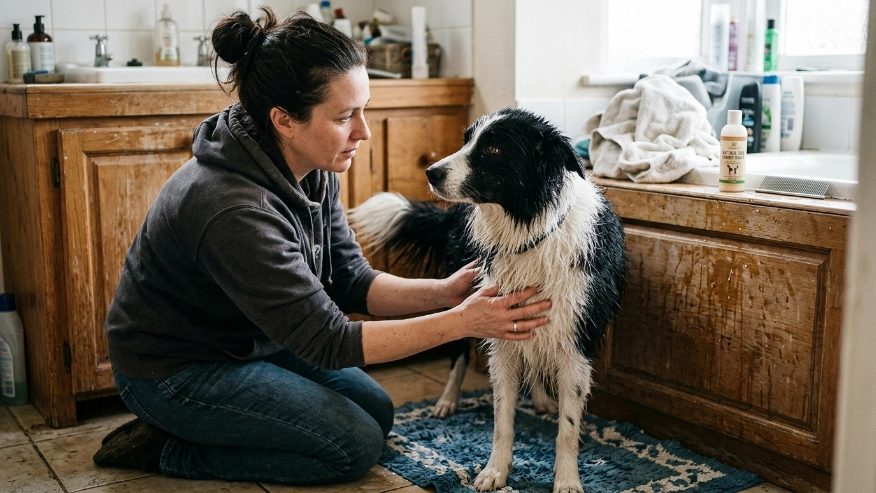
No, every Border Collie does not need conditioner after every bath. However, a suitable dog conditioner can make a dry, tangled, or heavily feathered coat easier to manage.
A Border Collie’s post-bath conditioner is a canine grooming product applied after shampooing to improve coat softness, moisture, and manageability. Rinse-out conditioners are removed before drying, while leave-in products stay on according to their label directions.
Conditioner is useful, not mandatory
I don’t treat conditioner as an automatic bath step. I first look at the dog’s coat, skin, activity level, shedding, and how the hair feels after shampooing.
- Dry-feeling coat: Conditioner may improve softness and flexibility.
- Long feathering: It may make the chest, tail, and leg hair easier to comb.
- Small tangles: A suitable conditioner can add slip during post-bath grooming.
- Frequent bathing: Conditioning may help when repeated washing leaves the coat feeling dry.
- Normal healthy coat: Some dogs remain easy to brush without conditioner.
The American Kennel Club describes both rough and smooth Border Collies as having dense, weather-resistant double coats. Regular brushing is an important part of maintaining either variety.
You can review the AKC Border Collie breed profile for its general coat and grooming guidance.
Don’t use softness as the only goal
A Border Collie’s natural coat has a job. I want it clean and manageable, but I don’t try to make every dog’s coat feel like soft human hair.
Too much product can leave hair heavy or coated. Start with less and judge the dried coat before increasing the amount next time.
Why Can Conditioner Help a Border Collie’s Double Coat?
Conditioner can help because shampooing removes dirt and oils while washing the coat. A suitable conditioning product can improve moisture and make longer hair easier to separate afterward.
Understanding the double coat
A double coat contains two main layers. The outer coat provides protection, while the softer undercoat adds insulation.
- Outer coat: More exposed to mud, rain, dust, and brushing.
- Undercoat: Dense hair close to the skin that can hold loose fur and moisture.
- Feathering: Longer hair around the legs, chest, belly, and tail on many rough-coated dogs.
When I wash a rough-coated Border Collie, the feathering usually tells me whether conditioner will help. If my fingers catch repeatedly after shampooing, a light conditioning step can make grooming easier.
Conditioner may reduce post-bath friction
Wet hair can catch against neighboring hairs more easily during handling. Conditioner adds slip, which can make gentle combing easier once the product has been used correctly.
That does not mean you should use conditioner to hide existing mats. Serious tangles should be addressed before bathing whenever possible.
It can help after shampooing
VCA recommends pet-specific shampoos and conditioners because products designed for people can irritate animal skin. Product choice matters as much as the conditioning step itself.
PetMD also stresses thorough rinsing during bathing. I follow the same rule with conditioner because leftover grooming product can make a dense coat feel sticky or strange.
See PetMD’s dog bathing guide for broader veterinarian-reviewed bathing guidance.
What Conditioner Should You Use for a Border Collie?
Choose a conditioner made specifically for dogs and suited to your Border Collie’s skin and coat condition. For normal bathing, I favor simple products rather than strong fragrances or complicated treatments.
Look for the right purpose
- General conditioner: Suitable when the goal is softer, easier-to-brush hair.
- Detangling conditioner: Helpful for longer rough coats and feathering that catches easily.
- Moisturizing formula: May suit a coat that feels dry after washing.
- Fragrance-free option: Worth considering when a dog seems sensitive to heavily scented grooming products.
- Veterinary product: Use medicated products only as directed for the dog’s specific problem.
Read the directions before bath time
Some conditioners are concentrated and require dilution. Others need several minutes of contact time before rinsing.
I read the label before getting the dog wet. Trying to decipher a tiny bottle while a soaked Border Collie shakes water across the room is never my favorite plan.
Never replace dog conditioner with human conditioner
I don’t use my own hair conditioner on a Border Collie. Human products are formulated for human skin and hair, not canine skin.
VCA specifically advises using pet shampoos and conditioners. That simple rule removes a lot of unnecessary guesswork.
How Do You Apply Conditioner After a Border Collie Bath?
Apply conditioner after shampoo has been rinsed away. Spread it evenly, follow the label’s contact time, and rinse thoroughly unless the product is specifically designed to stay in the coat.
- Brush before bathing. Remove loose undercoat, surface debris, and manageable tangles while the coat is dry.
- Wet the coat completely. Use comfortably lukewarm water and reach through the outer coat to the dense hair underneath.
- Apply dog shampoo. Work it gently through the coat according to the product directions.
- Rinse the shampoo. Continue rinsing until obvious suds and residue are gone.
- Apply conditioner lightly. Work a suitable amount through the coat without piling excessive product near the skin.
- Focus on longer hair. Give extra attention to the chest, trousers, tail, and feathering when these areas tangle easily.
- Wait as directed. Follow the bottle’s stated contact time rather than choosing your own.
- Rinse thoroughly. For rinse-out conditioner, keep rinsing until the coat feels clean and free of excess product.
- Remove excess water. Press with absorbent towels instead of aggressively rubbing the hair.
- Dry the undercoat. Check close to the skin instead of assuming a fluffy surface means the coat is fully dry.
How much conditioner should you use?
There is no useful one-size-fits-all amount because products have different concentrations. Coat length, body size, density, and dilution instructions also change how much you need.
I use enough to spread through the areas that need conditioning without leaving thick blobs of product. The manufacturer’s directions should always override a generic measurement.
Where should you focus?
- Chest and neck feathering
- Behind the front legs
- Rear trousers
- Belly feathering
- Tail
- Other areas that regularly catch during combing
Be careful around the eyes, mouth, and ear canals. Follow the product’s warnings for facial use.
Section Takeaway: Conditioner works best as one step in a complete bath routine. Clean first, use the right amount, rinse correctly, and dry the dense undercoat thoroughly.
Rough vs Smooth Border Collie: Does Coat Type Matter?
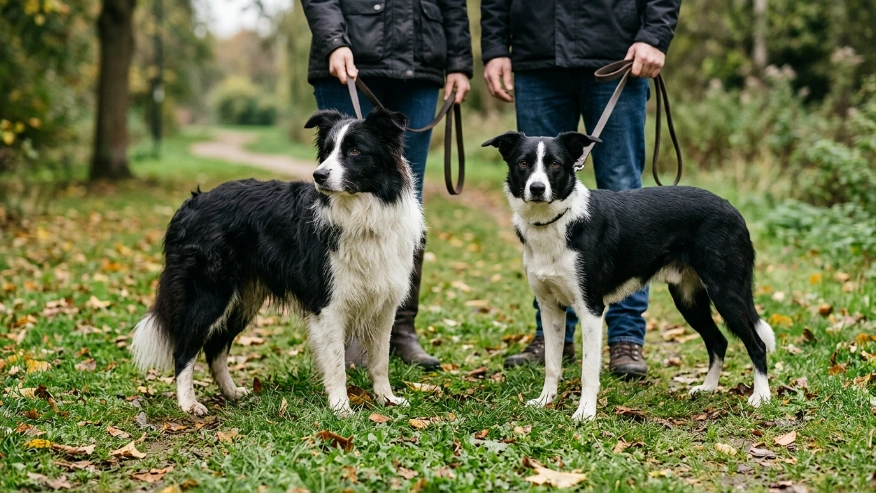
Yes, coat type can change how useful conditioner feels in practice. Rough-coated Border Collies usually have more long feathering to manage, while smooth coats have shorter outer hair.
| Coat Factor | Rough Coat | Smooth Coat |
|---|---|---|
| Outer hair | Medium-length with noticeable feathering | Shorter and coarser |
| Undercoat | Dense | Dense |
| Tangle risk | Higher around ears, legs, chest, trousers, and tail | Usually lower because outer hair is shorter |
| Conditioner value | Often useful for feathering and manageability | Useful when the coat or skin needs it, but may be less noticeable |
| Main bath concern | Product and moisture hiding in longer dense hair | Reaching and drying the dense hair near the skin |
The AKC recognizes both coat types as dense and weather-resistant. Neither type should be treated like a single-coated short-haired dog.
Seasonal shedding changes the routine too
Coat type isn’t the only factor. A dog carrying heavy loose undercoat during seasonal shedding can behave differently from the same dog several months later.
During a heavy shed, I focus heavily on brushing before bathing. Conditioner shouldn’t replace removal of loose coat.
When Should You Skip or Reduce Conditioner?
Skip or reduce conditioner when the coat already feels healthy and manageable, the product causes irritation, or your veterinarian has given different bathing instructions. More grooming product is not automatically better.
Your Border Collie may not need it
A smooth-coated dog with healthy skin and an easy-to-brush coat may do well after shampoo and a thorough rinse. I don’t add a step when there is no clear reason for it.
Stop when you notice a reaction
- New redness
- Persistent scratching
- Skin tenderness
- Raised bumps or unusual irritation
- Sudden discomfort during application
- A worsening skin or coat problem
Rinse the product away if a reaction occurs during the bath. Don’t repeatedly test the same conditioner on irritated skin.
Vet note: Persistent itching, redness, sores, unusual odor, hair loss, painful skin, or recurring coat problems deserve veterinary advice rather than repeated home grooming experiments.
Don’t condition your way around over-bathing
Conditioner is not a license to shampoo your Border Collie constantly. Bathing frequency should depend on lifestyle, coat condition, dirt, odor, and veterinary needs.
PetMD notes that bathing needs can vary considerably between dogs. Excessive washing can contribute to dry skin and coat problems in some dogs.
For broader guidance, see PetMD’s guide to dog bathing frequency.
What Conditioner Mistakes Should You Avoid?
The most common mistakes are using the wrong product, applying too much, and failing to rinse a rinse-out formula properly. These errors can turn a simple grooming step into another coat problem.
- Using human conditioner: Choose a product formulated for dogs instead.
- Skipping the label: Concentration, dilution, contact time, and rinsing instructions differ.
- Applying too much: More product can make rinsing a dense coat harder.
- Ignoring tangles before bathing: Conditioner is not a replacement for sensible pre-bath grooming.
- Conditioning dirty hair: Shampoo and rinse first unless the product specifically says otherwise.
- Poor rinsing: Pay attention to the chest, belly, armpits, legs, and dense feathering.
- Using strong fragrance despite irritation: Stop using products that appear to bother your dog.
- Leaving the undercoat damp: Check near the skin during drying.
- Changing several products together: It becomes difficult to identify what caused a problem.
My biggest lesson: don’t rush the rinse
The step I’ve learned not to hurry is rinsing. A Border Collie can look perfectly clean on the surface while diluted product still hides deeper in the coat.
I use my fingers to separate the hair and check several places. The armpits, chest, belly, and rear feathering deserve extra attention.
Check the finished coat after it dries
The dry coat tells you more than the wet coat. It should feel clean, move naturally, and brush without an obvious greasy or coated residue.
- Too heavy: Reduce the amount next time.
- Still tangled: Improve pre-bath brushing and reconsider the conditioning formula.
- Dry after washing: Review the shampoo, bathing frequency, and conditioning routine.
- Itchy or red: Stop experimenting and discuss persistent problems with your veterinarian.
As of 2026, my rule remains simple: use the fewest grooming products needed to keep the dog clean, comfortable, and easy to brush. A complicated routine isn’t automatically a better one.
Section Takeaway: Choose canine products carefully, use them according to their directions, and judge the result after the coat is completely dry.
Frequently Asked Questions
Should I condition my Border Collie after every bath?
No. Conditioner can be useful after bathing, especially for dry coats, long feathering, or hair that tangles easily, but every Border Collie does not require it each time. Judge the dog’s skin and coat condition and follow any veterinary instructions.
Can I use human conditioner on my Border Collie?
I wouldn’t use human conditioner as a normal grooming product for a Border Collie. Choose shampoo and conditioner designed specifically for dogs because canine skin has different needs and human products may cause irritation.
Is conditioner good for a rough-coated Border Collie?
It can be especially helpful for rough coats because longer feathering around the chest, legs, trousers, and tail may tangle more easily. Use a dog-safe product lightly and rinse a rinse-out conditioner completely.
Does a smooth-coated Border Collie need conditioner?
Not necessarily. Smooth Border Collies still have dense double coats, but their shorter outer hair may require less detangling. Conditioner can still help when the coat feels dry or the individual dog benefits from it.
Should I rinse all conditioner out of my Border Collie’s coat?
Rinse out any product labeled as a rinse-out conditioner according to its directions. A leave-in conditioner is different, so follow the exact label instead of assuming every product should be handled the same way.
Can conditioner remove mats from a Border Collie?
Conditioner may make small tangles easier to work with, but it should not be used as a solution for tight mats. Severe or skin-tight matting may need an experienced groomer or veterinarian to avoid hurting the dog.
What should I do if my Border Collie itches after conditioning?
Rinse away remaining product and stop using that conditioner if irritation appears connected to it. Persistent itching, redness, sores, swelling, hair loss, or discomfort should be discussed with your veterinarian.
Final Takeaway
Border Collie conditioner after bath time can be useful, but it isn’t mandatory. I use it when the coat needs extra softness, moisture, detangling, or help managing longer feathering.
Start with a dog-specific product and follow its directions. Shampoo first, rinse well, apply conditioner lightly, and rinse again when required.
- Brush and inspect the coat before bathing.
- Use products made specifically for dogs.
- Condition according to coat condition rather than habit.
- Give rough-coat feathering extra attention.
- Don’t use conditioner to hide mats or skin problems.
- Rinse rinse-out formulas thoroughly.
- Dry the dense undercoat completely.
- Ask your veterinarian about ongoing skin irritation.
A simple routine usually works best. Keep your Border Collie clean, comfortable, easy to brush, and ready for the next muddy adventure.
