
What Are the Disadvantages of a Border Collie?

Quick Answer
The main disadvantages of a Border Collie are their intense exercise needs, constant need for mental stimulation, strong herding instincts, shedding, sensitivity, and potential inherited health problems. They can be outstanding companions, but the Border Collie’s demanding lifestyle makes this breed a poor match for some households.
The biggest drawbacks to consider
- High exercise needs: Young, healthy Border Collies may need one to two hours of meaningful activity each day.
- Mental workload: Physical exercise alone rarely satisfies a dog bred to think, watch, respond, and solve problems.
- Herding behaviors: Chasing, staring, circling, and occasional heel-nipping can become troublesome around children, pets, bikes, or cars.
- Regular shedding: Both rough- and smooth-coated Border Collies have double coats that shed throughout the year.
- Owner commitment: Training, grooming, enrichment, management, and veterinary care remain ongoing responsibilities for years.
Best fit
- Choose a Border Collie because you genuinely enjoy training and active dog ownership, not simply because the breed looks intelligent and athletic.
What are the disadvantages of a Border Collie? After living around the breed, I think that question deserves more than a list of complaints.
Border Collies can be extraordinary dogs. Their working heritage also creates needs that can overwhelm an owner who expected an easy family pet.
In This Guide
- Why Can Border Collies Be Difficult to Own?
- How Much Exercise and Mental Stimulation Do They Need?
- Can Herding Instinct Become a Behavior Problem?
- Are Border Collies Too Sensitive or Intense?
- Is Shedding a Major Border Collie Disadvantage?
- What Health Problems Should Owners Consider?
- Are Border Collies Difficult for Families and First-Time Owners?
- Is a Border Collie Right for You?
- Frequently Asked Questions
Why Can Border Collies Be Difficult to Own?
Border Collies are difficult for some owners because the traits that make them brilliant working dogs also create demanding household companions. Intelligence does not automatically make a dog easy.
A Border Collie’s working drive is its strong motivation to watch, move, control, chase, learn, and respond to activity around it. Generations of herding work helped shape those tendencies.
A smart dog notices patterns quickly. That means a Border Collie can learn desirable routines fast, but it can learn unwanted routines just as efficiently.
They need more involvement than many owners expect
A yard does not automatically satisfy a Border Collie. Neither does opening the back door and expecting the dog to entertain itself.
Most thrive when daily life includes structured activity with their owner.
- Interactive walks
- Recall and obedience practice
- Food-search or scent games
- Fetch with clear start-and-stop rules
- Trick training
- Agility foundations or appropriate herding work
Boredom can become everyone’s problem
An under-stimulated Border Collie may invent entertainment. Barking, digging, chewing, pacing, chasing movement, or demanding attention can follow.
The ASPCA dog-care resources also emphasize exercise and enrichment as important parts of responsible canine care.
| Ownership Area | Typical Border Collie Commitment | Potential Mismatch |
|---|---|---|
| Exercise | Often 1–2 hours daily for young, healthy dogs | Only brief potty walks |
| Mental work | Daily training, games, problem-solving, or purposeful activity | Enrichment only on weekends |
| Grooming | Regular brushing, often several times weekly | Expecting a low-shedding coat |
| Training | Consistent lifelong practice | Stopping after basic puppy classes |
| Commitment | Commonly a 12–15 year relationship | Choosing mainly for appearance |
Section Takeaway: Border Collies aren’t difficult because they’re unintelligent or stubborn. They’re demanding because they need consistent physical activity, thought, interaction, and structure.
How Much Exercise and Mental Stimulation Do Border Collies Need?
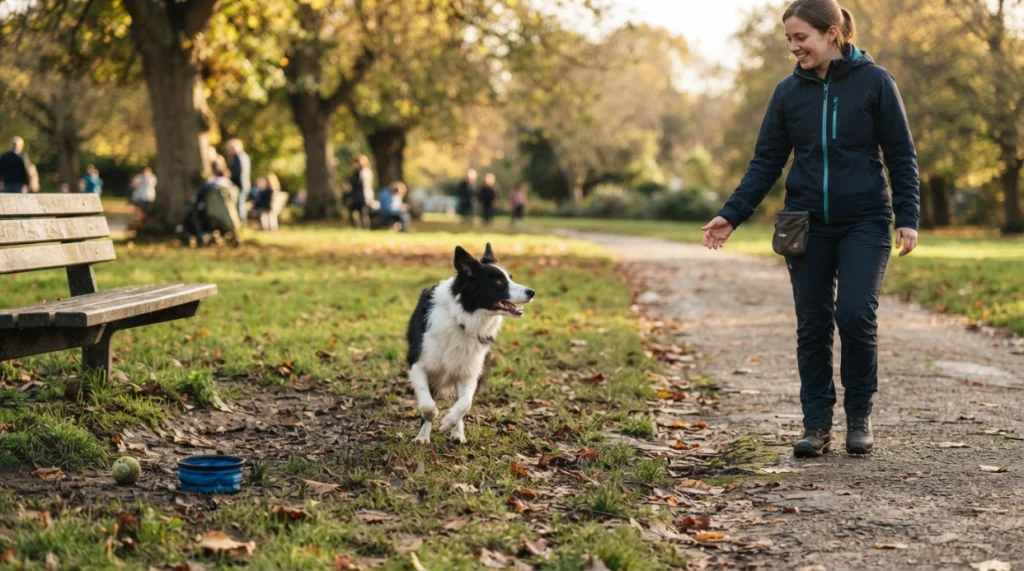
Exercise demand is one of the biggest Border Collie disadvantages for a low-activity household. PetMD notes that young Border Collies may need at least one to two hours of exercise each day.
That doesn’t mean two hours of nonstop sprinting. Balance matters.
Running alone is not enough
A physically tired dog can still have an active brain. Border Collies often benefit from activities that combine movement with decision-making.
- 30–45 minute purposeful walks
- Short recall exercises
- Five- to ten-minute training sessions
- Sniffing and scent searches
- Puzzle feeding
- Controlled tug or fetch
I prefer several useful activities across the day rather than one exhausting ball session. Repetitive high-speed exercise can simply create a fitter dog that expects even more exercise.
Puppies should not be treated like adult athletes
A growing puppy needs training, exploration, socialization, play, and rest. Long forced runs or repetitive jumping are not sensible substitutes for age-appropriate activity.
Senior dogs also need an individual plan. Arthritis, previous injuries, heart disease, or other conditions can change safe exercise levels.
Section Takeaway: Plan for daily physical exercise and daily brain work. Owning a Border Collie becomes much harder when either one is routinely missing.
Can a Border Collie’s Herding Instinct Become a Behavior Problem?
Yes. Herding behavior can become inconvenient or unsafe when a Border Collie redirects working instincts toward everyday movement.
The classic Border Collie eye is an intense stare used to influence livestock. At home, that same focus may appear around children, cats, bicycles, runners, or other dogs.
Common herding-related behaviors include:
- Staring intensely at moving people or animals
- Crouching and stalking
- Circling
- Chasing
- Blocking movement
- Nipping toward heels during excitement
These behaviors do not automatically mean aggression. However, a frightened child or irritated household pet will not care why the behavior happened.
Movement can become highly rewarding
Cars, scooters, bicycles, and running children can trigger intense interest in some dogs. Management matters before training is reliable.
- Use a secure leash near roads.
- Teach a strong recall gradually.
- Reward disengagement from moving triggers.
- Supervise interactions with children.
- Do not let uncontrolled chasing become a daily habit.
A Border Collie that repeatedly rehearses chasing can become better at chasing. Prevention is easier than undoing months of practice.
Are Border Collies Too Sensitive or Intense?
Some Border Collies are remarkably sensitive to movement, sounds, body language, and changes in routine. That awareness can be useful in training but challenging in a chaotic home.
Breed does not determine every dog’s personality. Individual genetics, socialization, learning history, health, and environment all matter.
Harsh training can backfire
Border Collies usually do not need heavy-handed handling. Clear cues, appropriate rewards, predictable boundaries, and thoughtful repetition are more useful.
Because they learn patterns quickly, inconsistency can also cause confusion. One family member allowing a behavior while another punishes it makes training harder.
I want a Border Collie to understand how to settle, not just how to perform. Calmness is a skill worth teaching.
Some struggle with boredom or being alone
Not every Border Collie develops separation anxiety. Still, dogs accustomed to constant interaction can struggle when independence was never practiced.
Start with realistic routines. Teach quiet rest, independent enrichment, and short periods of comfortable separation before you urgently need them.
Is Shedding a Major Border Collie Disadvantage?
It can be if you dislike dog hair. Border Collies have double coats and shed throughout the year, with heavier periods for many dogs during seasonal coat changes.
Both rough-coated and smooth-coated Border Collies shed. A shorter coat does not mean a no-shed coat.
Expect routine coat maintenance
PetMD recommends regular brushing for the Border Collie’s double coat. During heavier shedding, owners may need to brush more frequently.
- Brush loose undercoat before it mats.
- Check feathering behind the ears and legs.
- Inspect paws after outdoor activity.
- Dry dense coat thoroughly after bathing or swimming.
- Expect fur on clothing, furniture, and floors.
Shaving is not a sensible shortcut for routine shedding. Managing loose hair through regular coat care is the better approach for most healthy dogs.
What Health Problems Should Border Collie Owners Consider?
Border Collies are often active, athletic dogs, but no breed is free from inherited health risks. Medical planning is part of responsible ownership.
PetMD’s Border Collie health guide discusses several conditions prospective owners should understand.
Conditions associated with the breed can include:
- Hip dysplasia: Abnormal hip-joint development can contribute to pain and arthritis.
- Epilepsy: Border Collies can be predisposed to seizure disorders.
- Collie eye anomaly: This inherited eye disorder can affect vision.
- MDR1 mutation: Some affected dogs process certain medications differently.
- Trapped neutrophil syndrome: A serious inherited immune disorder found in the breed.
- Neuronal ceroid lipofuscinosis: An inherited neurological disorder that breeders can screen for.
A responsible breeder should be willing to discuss health testing instead of simply saying the parents “look healthy.” Rescue adopters may have less genetic history available, so routine veterinary care becomes especially useful.
The American Veterinary Medical Association also emphasizes preventive health care and choosing pets whose needs suit the owner’s lifestyle.
Vet note: Breed risk does not diagnose an individual dog. Ask your veterinarian about screening, symptoms, medications, exercise limits, or any health concern specific to your Border Collie.
Are Border Collies Difficult for Families and First-Time Owners?

They can be. A Border Collie may thrive in a family home, but success depends more on routine and supervision than the number of people in the house.
Families with young children need management
Fast-running children can attract herding behavior. Excited chasing or heel-nipping needs early redirection rather than being dismissed as cute puppy behavior.
Children should also learn how to give a dog space. Adult supervision remains important around young children and any dog.
Apartment living requires serious planning
A Border Collie does not automatically need a farm. However, a small home cannot compensate for a poor daily routine.
- Plan multiple outdoor opportunities.
- Provide meaningful walks rather than potty breaks alone.
- Use indoor training and enrichment.
- Teach a reliable settling routine.
- Manage barking and shared-building etiquette.
First-time owners face a steep learning curve
The breed’s intelligence can fool new owners into thinking training will be effortless. In practice, intelligent dogs often notice every inconsistency their humans make.
You do not need decades of dog experience. You do need time, patience, willingness to learn, and realistic expectations.
Is a Border Collie Right for You?
A Border Collie is probably right for you if its demanding traits sound enjoyable rather than merely tolerable. This is a breed for people who want active participation in their dog’s life.
As of 2026, my simplest pre-ownership test is to examine an ordinary weekday. Weekend enthusiasm is easy; Tuesday morning routines tell you more.
A Border Collie may suit you if you:
- Enjoy walking, training, games, or dog sports most days.
- Want a highly engaged dog that learns quickly.
- Can provide structured mental stimulation.
- Are comfortable managing shedding and grooming.
- Can supervise herding or chasing tendencies.
- Have resources for preventive and unexpected veterinary care.
Consider another breed if you:
- Want a naturally low-energy companion.
- Regularly leave your dog without meaningful activity for long periods.
- Strongly dislike shedding.
- Want minimal training after puppyhood.
- Cannot safely manage chasing around traffic or livestock.
- Feel that one short daily walk should meet all exercise needs.
None of those preferences make someone a poor dog owner. Choosing a breed that matches your real lifestyle is responsible ownership.
Section Takeaway: The biggest disadvantage of a Border Collie is the mismatch between what the dog was developed to do and what an unprepared household expects it to do.
Frequently Asked Questions
What is the biggest disadvantage of a Border Collie?
The biggest disadvantage is usually the amount of daily engagement they require. Border Collies commonly need substantial exercise, training, mental enrichment, and interaction, making them harder to own for people seeking a relaxed, low-maintenance companion.
Are Border Collies high maintenance?
Yes, they can be high maintenance in terms of exercise, mental stimulation, training, and coat care. Their intelligence makes training rewarding, but it also means boredom and inconsistent rules can quickly create unwanted habits.
Do Border Collies have behavior problems?
Not every Border Collie develops behavior problems. However, insufficient stimulation or poor management can contribute to barking, destructive behavior, chasing, pacing, intense staring, herding, or heel-nipping in some individuals.
Can Border Collies be left alone all day?
A well-adjusted adult may tolerate appropriate periods alone, but routinely leaving a Border Collie without adequate exercise or enrichment can be difficult. Individual tolerance varies, and dogs should gradually learn how to rest comfortably without constant human attention.
Are Border Collies good for first-time owners?
They can be, but they are not the easiest first dog. A committed beginner who enjoys training and active routines may succeed, while someone seeking a simple companion may find the breed overwhelming.
Do Border Collies shed a lot?
Border Collies shed throughout the year because they have double coats. Many experience heavier seasonal shedding, so regular brushing and tolerance for loose hair around the home are part of ownership.
Are Border Collies good family dogs?
Border Collies can make excellent family dogs in active households. Their herding instinct may cause chasing, circling, or heel-focused behavior around running children, so training, supervision, and appropriate outlets are important.
Final Takeaway
The disadvantages of a Border Collie are mostly the other side of the breed’s greatest strengths. Energy becomes exhausting without outlets, intelligence becomes troublesome without mental work, and herding instinct becomes inconvenient without management.
If you’re considering one, build a realistic weekday schedule before bringing the dog home. If that schedule still sounds exciting, a Border Collie may be exactly the companion you’re looking for
