
Do Border Collies Have a Double Coat?

Quick Answer
Yes. Border Collies have a double coat made of a denser, softer undercoat beneath a more weather-resistant outer coat. Both rough-coated and smooth-coated Border Collies, often called BCs, have this two-layer coat structure according to AKC Border Collie guidance.
What that means
- Two layers: The coat combines protective outer hairs with softer insulating hair underneath.
- Both coat types: Rough and smooth Border Collies are double-coated.
- Regular shedding: Loose hair appears year-round and often increases during seasonal coat changes.
- Weather protection: The two layers help protect the skin and support the breed’s outdoor working heritage.
- Regular grooming: Brushing removes loose undercoat, debris, and developing tangles.
Easy way to check
- Part the fur: Gently separate the hair near the shoulder or back and look for a softer, shorter layer beneath the outer hairs.
If you’ve wondered why your Border Collie can look sleek one month and suddenly much fluffier during another, the double coat explains a lot. It affects shedding, grooming, coat texture, and how the breed handles an active outdoor life.
I’ve found that understanding the two layers makes coat care much easier. This guide explains what each layer does, how rough and smooth coats differ, what normal shedding looks like, and which coat changes deserve attention.
In This Guide
- What Is a Double Coat on a Border Collie?
- Do Rough and Smooth Border Collies Both Have Double Coats?
- Why Do Border Collies Have a Double Coat?
- How Much Does a Border Collie’s Double Coat Shed?
- How Do You Groom a Border Collie’s Double Coat?
- Should You Shave a Double-Coated Border Collie?
- What Does a Healthy Border Collie Double Coat Look Like?
- Frequently Asked Questions
- Final Takeaway
What Is a Double Coat on a Border Collie?
A Border Collie’s double coat has two distinct layers of hair. The visible topcoat sits over a shorter, softer, denser undercoat.
Definition: A Border Collie’s double coat is a two-layer hair covering made of protective outer hairs, often called guard hairs, and softer secondary hairs that form the undercoat.
What is the outer coat?
The outer coat forms the visible surface of the dog. These hairs are generally longer and coarser than the undercoat.
The top layer helps shield the skin from dirt, moisture, vegetation, and everyday outdoor exposure. On a Border Collie, it may look straight or slightly wavy.
- Hair type: Longer, stronger outer hairs.
- Texture: Firmer than the soft undercoat.
- Main role: Protects the skin and underlying coat.
- Appearance: Carries much of the dog’s visible color and pattern.
What is the undercoat?
The undercoat grows closer to the skin. It feels softer, finer, and often noticeably denser when you separate the outer hairs.
This layer provides insulation and changes through the shedding cycle. Loose undercoat is often what fills a brush during heavier shedding periods.
- Hair type: Shorter secondary hairs.
- Texture: Soft and fine.
- Main role: Adds insulation and another protective layer.
- Shedding: Often becomes especially noticeable during seasonal coat changes.
The AKC guide to double-coated breeds describes the Border Collie as a herding breed with a medium double coat.
Do Rough and Smooth Border Collies Both Have Double Coats?
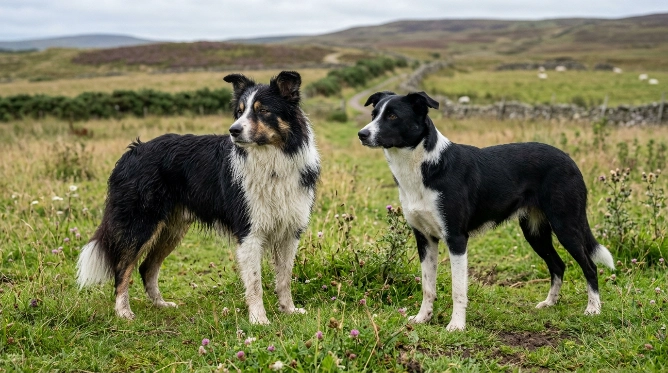
Yes. Both rough and smooth Border Collies have double coats. The difference is mainly the visible length and feathering of the outer coat.
A smooth Border Collie can look surprisingly sleek. That appearance does not mean the dog lacks an undercoat.
Rough-coated Border Collies
The rough variety has more visible coat length. Longer hair commonly appears around the chest, underside, legs, and tail.
That longer decorative hair is called feathering. It gives many rough-coated Border Collies the familiar fluffy outline people associate with the breed.
Smooth-coated Border Collies
The smooth variety has shorter outer hair that lies closer to the body. Its athletic frame is usually easier to see.
Smooth Border Collies still carry the softer undercoat beneath those shorter outer hairs. They also shed despite looking less fluffy.
| Feature | Rough Border Collie | Smooth Border Collie |
|---|---|---|
| Double coat | Yes | Yes |
| Visible hair length | Medium to longer | Shorter and close-fitting |
| Feathering | More noticeable | Limited |
| Undercoat | Soft and dense | Soft and dense |
| Regular shedding | Yes | Yes |
So don’t judge the presence of an undercoat by fluffiness alone. Hair length and double-coat structure are separate characteristics.
Why Do Border Collies Have a Double Coat?
The double coat fits the Border Collie’s history as an outdoor herding dog. These dogs were developed to work livestock while exposed to wind, damp ground, vegetation, and changing weather.
The coat is functional. It is not simply there to make the dog look fuller.
The outer layer protects
The stronger outer hairs provide a first barrier between the dog’s skin and its environment. They can help reduce direct contact with dirt, light moisture, vegetation, and debris.
That matters for a dog moving quickly through grass and open countryside. Working Border Collies don’t spend their days on clean indoor flooring.
The undercoat insulates
The softer undercoat traps air close to the body. This insulating layer supports the dog’s ability to cope with changing conditions.
The amount of undercoat can also change over time. That is one reason the coat may feel thicker during one part of the year and lighter during another.
Why coat texture matters
The Border Collie’s breed standard places importance on a dense, weather-resistant coat rather than extreme length. A longer coat is not automatically a better coat.
That distinction makes sense when you look at working dogs. Practical texture and coverage matter more than a dramatic showy outline.
As of 2026, the breed remains recognized in both rough and smooth coat varieties. Both retain the same basic double-coat structure.
How Much Does a Border Collie’s Double Coat Shed?
Border Collies shed throughout the year, and many experience heavier periods of undercoat loss. The amount you notice varies between individual dogs, climate, indoor living, and coat type.
PetMD describes Border Collies as regular shedders and notes heavier shedding during seasonal changes. Its Border Collie breed guide also identifies the breed as double-coated.
What normal shedding can look like
- Loose hairs: Individual hairs appear on floors, bedding, clothing, and furniture.
- Soft clumps: Loose undercoat can collect in a brush or come away in small tufts.
- Seasonal increase: The amount of loose coat can rise noticeably during coat changes.
- Even coverage: Normal shedding should still leave the dog with generally even hair coverage.
I notice the undercoat most clearly while brushing behind the shoulders and over the rear quarters. A dog that looked tidy before brushing can produce an impressive pile of soft hair.
Don’t confuse ordinary shedding with unexplained bald spots. Hair loss that exposes irritated skin deserves a different kind of attention.
Do smooth Border Collies shed less?
A smooth coat may look easier because the shed hairs are shorter. That doesn’t mean the dog is a low-shedding breed.
Short hairs can work into upholstery and fabric just as easily. Both coat varieties need regular grooming.
How Do You Groom a Border Collie’s Double Coat?
Regular brushing is the foundation of double-coat care. The goal is to remove loose hair and debris without damaging healthy outer coat.
The AKC suggests brushing Border Collies once or twice weekly, with more frequent brushing during heavier shedding. Your own routine can change with coat length, activity, and how quickly tangles form.
A practical brushing routine
- Start with a coat check: Feel for tangles, burrs, grass seeds, damp areas, or irritated skin.
- Brush the outer coat: Work gently in the natural direction of hair growth.
- Reach loose undercoat: Separate longer hair where needed instead of brushing only the surface.
- Check friction areas: Look behind the ears, under the front legs, around the rear legs, and through feathering.
- Finish with your hands: Run your fingers through the coat to find anything the brush missed.
After a muddy field session, I let surface mud dry before brushing where practical. Dry debris often comes away more easily than wet mud worked deeper into the coat.
That small habit also gives me a chance to feel the skin underneath. Hands-on grooming is useful for spotting changes early.
How often should you bathe a Border Collie?
Bathing should match the dog’s lifestyle and skin needs rather than a rigid calendar. Dogs that swim, work outdoors, or roll in dirt may need cleaning sooner.
The ASPCA’s dog grooming guidance recommends brushing before bathing and using products made for pets. Thorough rinsing and drying are especially important with a dense coat.
Useful grooming priorities
- Remove loose coat: This reduces buildup and helps prevent tangles.
- Prevent mats: Rough coats need extra attention where longer hairs rub together.
- Remove debris: Check after walks through long grass, brush, or muddy areas.
- Inspect the skin: Grooming gives you a regular chance to notice redness, lumps, parasites, or soreness.
- Be gentle: Aggressive de-shedding can pull healthy hair and make grooming unpleasant.
The right routine should leave the coat clean, comfortable, and naturally textured. It does not need to look sculpted or heavily trimmed.
Should You Shave a Double-Coated Border Collie?
Routine shaving is generally not the normal grooming approach for a healthy Border Collie double coat. Brushing out loose undercoat is usually the better way to manage shedding.
Shaving also does not stop the biological shedding process. The coat will still cycle and regrow.
Why the outer coat matters
Guard hairs help protect the skin from environmental exposure. Removing them changes the structure that normally sits between the skin and the outside world.
The AKC’s double-coat grooming guidance advises against shaving double coats simply to reduce shedding or keep a dog cooler.
When might clipping be necessary?
There are exceptions. A veterinarian may need hair removed for surgery, wound care, diagnostic procedures, or treatment of a specific skin problem.
Severe matting may also require professional intervention. Trying to cut tight mats close to the skin at home can cause injury.
Vet note: If your Border Collie’s coat is severely matted or you think shaving is needed for a medical reason, ask your veterinarian or an experienced professional groomer before removing large areas of coat.
What Does a Healthy Border Collie Double Coat Look Like?
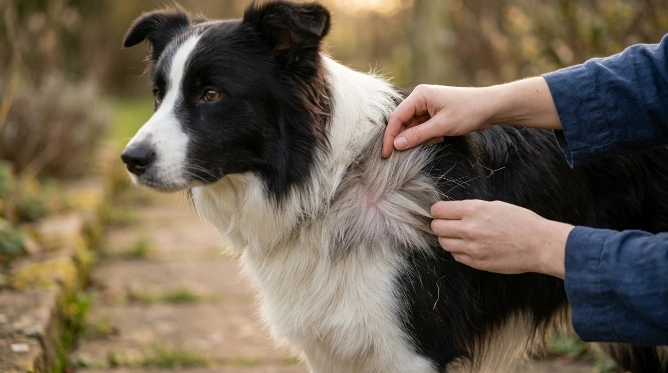
A healthy Border Collie coat should provide generally even coverage and feel appropriate for the dog’s coat type. Smooth dogs look sleeker, while rough dogs carry more length and feathering.
Healthy doesn’t mean perfectly glossy every day. Working, hiking, and farm dogs naturally collect dust, grass, and the occasional muddy patch.
Normal features to expect
- Even coverage: Hair should generally cover the body without unexplained bald areas.
- Distinct layers: You can often feel softer hair beneath the stronger outer coat.
- Seasonal change: Coat density and loose undercoat may vary through the year.
- Natural texture: The coat can range from short and sleek to fuller and slightly wavy.
- Comfortable skin: The dog should not constantly scratch, chew, or lick the same area.
Which coat changes deserve attention?
Skin and coat problems can have many causes. You cannot reliably identify the cause by appearance alone.
- Bald patches: Localized hair loss is different from ordinary seasonal shedding.
- Persistent itching: Repeated scratching, chewing, licking, or rubbing deserves investigation.
- Redness or sores: Inflamed or damaged skin needs attention.
- Greasy or flaky skin: Persistent texture changes may indicate an underlying skin problem.
- Strong unusual odor: A continuing odor can accompany skin or ear problems.
- Sudden coat change: A major unexplained change in texture or coverage warrants a closer look.
VCA notes that regular grooming helps owners monitor coat and skin condition while removing loose hair and debris. See its dog coat and grooming guidance for broader veterinary information.
Vet note: Contact your veterinarian if your Border Collie develops persistent itching, bald areas, sores, inflamed skin, unusual odor, or a sudden unexplained change in coat quality.
Frequently Asked Questions
Are all Border Collies double-coated?
Yes. The recognized rough and smooth Border Collie coat varieties are both double-coated. Each has a firmer outer layer and a softer, denser undercoat. The smooth variety simply has shorter visible outer hair and less obvious feathering.
Do short-haired Border Collies have an undercoat?
Yes. A smooth or short-haired Border Collie still has an undercoat. Shorter outer hair can make the dog look sleek, but the softer secondary layer remains underneath and contributes to regular shedding.
Do Border Collies shed their undercoat?
Yes. Border Collies shed loose undercoat as part of the normal hair cycle, with heavier shedding often occurring during seasonal changes. Indoor conditions and climate can affect how obvious those shedding periods appear.
How can I tell if my Border Collie has a double coat?
Gently part the coat near the shoulder, back, or side. You should usually see or feel shorter, softer, denser hair beneath the stronger outer hairs. Never pull firmly just to test the coat structure.
Are Border Collies hypoallergenic?
No. Border Collies shed hair and dander and are not considered a hypoallergenic breed. Regular grooming can reduce loose hair around the home, but it does not eliminate the proteins that may trigger dog allergies.
Should I remove my Border Collie’s undercoat in summer?
You should remove loose, dead undercoat through appropriate brushing rather than stripping out healthy coat. Regular grooming helps manage shedding while leaving the functional outer and undercoat structure intact.
Does a Border Collie’s double coat grow back after shaving?
Hair often grows back, but regrowth can take time and may not look even during the process. Because routine shaving offers little benefit for normal shedding, discuss major coat removal with a veterinarian or experienced groomer first.
Final Takeaway
Yes, Border Collies have a weather-resistant double coat. Rough and smooth dogs both carry a protective outer coat over a softer, denser undercoat.
That structure explains why Border Collies shed, why seasonal coat changes can look dramatic, and why regular brushing matters. A smooth Border Collie may look less fluffy, but it still has the same basic two-layer design.
Focus on gentle brushing, removing loose undercoat, preventing tangles, and checking the skin while you groom. If you notice bald patches, persistent itching, inflammation, or a sudden coat change, involve your veterinarian rather than treating it as ordinary shedding.
