
Border Collie Drinking Lots of Water: What’s Normal, What’s Not, and When to Call the Vet

A Border Collie drinking lots of water is not automatically a problem. These dogs are often active, and activity, heat, and diet can all push thirst higher for a short period. The key question is whether the drinking is a one-off response to something obvious or a new pattern that keeps repeating.
If you want the short answer: a Border Collie that is consistently drinking more than about 100 ml per kilogram of body weight per day, especially for more than a day or two or with increased urination, should be discussed with a vet. A single thirsty day after exercise is different from an ongoing change in thirst and urine output.
Border Collies are energetic, so owners sometimes dismiss extra drinking as “just exercise.” That can be true, but it can also delay attention to a real medical issue. The useful approach is simple: compare the drinking to your dog’s usual pattern, look for changes in urination and behavior, and decide whether this looks temporary or persistent.
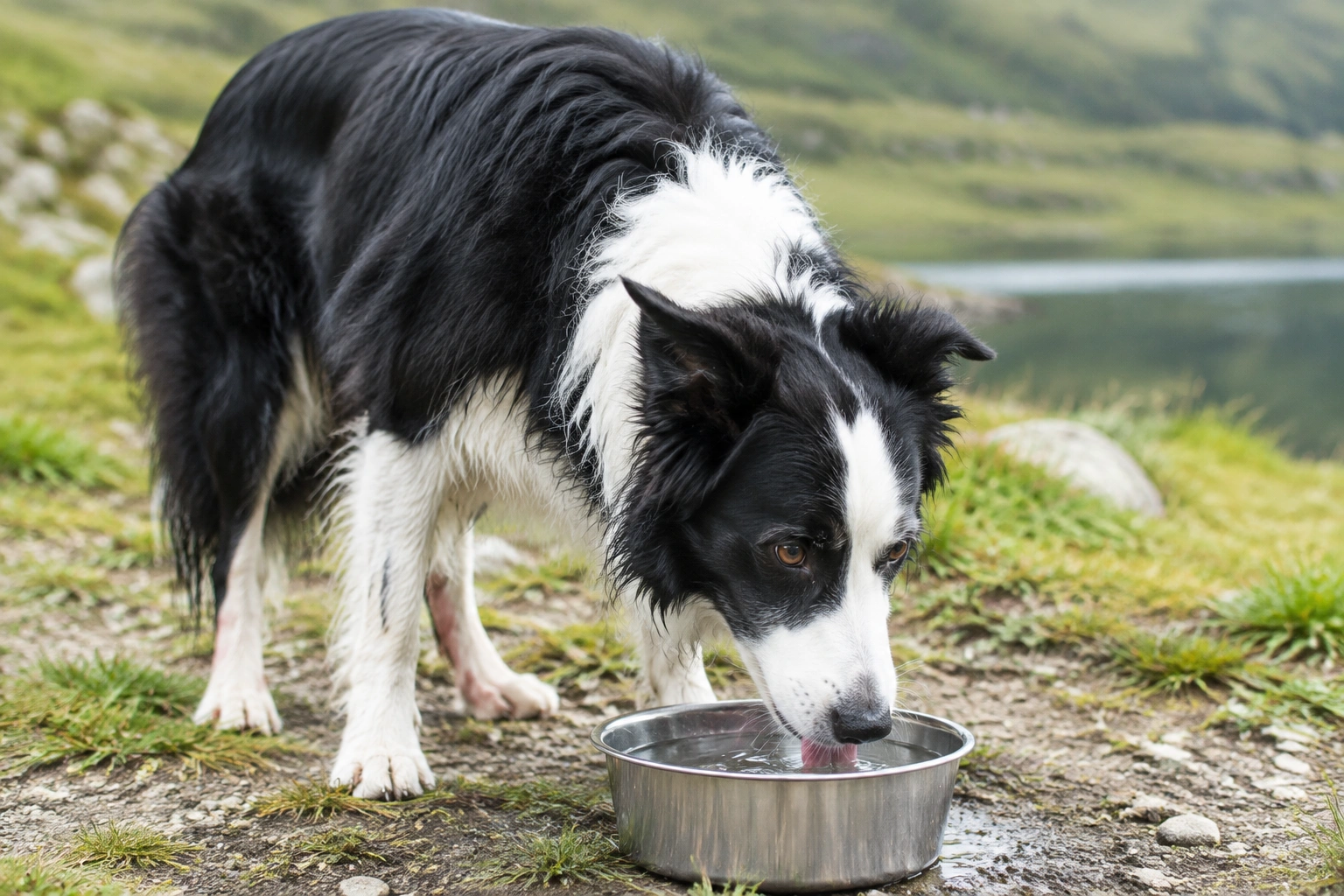
How Much Water Is Normal for a Border Collie?
A practical general guide for healthy dogs is about 100 ml per kilogram of body weight per day. Another commonly used range is 60–80 ml per kilogram per day. Those numbers are not a diagnosis tool by themselves, but they give you a starting point.
For a Border Collie, the real answer depends on body weight, food type, weather, exercise, age, and whether the dog is eating dry kibble or wet food. A 35-pound Border Collie eating dry food after a long run is not the same as a 35-pound Border Collie lying indoors on a cool day and suddenly emptying the water bowl every few hours.
A quick rule of thumb
Use the daily pattern, not one bowl refill, to judge thirst.
- Likely normal: the dog drinks more after exercise, after hot weather, or after a dry meal, then settles back to baseline.
- More concerning: the dog keeps drinking heavily for more than a day or two, especially if urination increases too.
If you want a plain-language comparison, think in terms of stability versus change. A stable high-ish intake in an athletic dog may be normal. A clear shift from “usually drinks a moderate amount” to “now needs the bowl refilled repeatedly” deserves attention.
Normal thirst vs. concerning polydipsia: a quick checklist
Usually normal
– Drinking rises after exercise, heat, travel, or a dry meal
– The increase is short-lived
– Urination stays about the same
– Your dog otherwise seems bright, comfortable, and normal
More concerning
– Drinking stays high even on a cool, quiet day
– The change lasts more than 24–48 hours
– Urination also increases or accidents start
– Your dog seems tired, hungry, weak, nauseated, or “off”
Why Border Collies May Drink More Than Usual
Border Collies often live active lives, so some common reasons for extra thirst are not medical problems at all. Temperature, exercise, and diet are the biggest everyday factors.
Exercise and warm weather
A long play session can trigger temporary thirst that is completely normal. That fits Border Collies well because many of them get more daily movement than average pet dogs.
If your dog just finished a long hike, a training session, or a game of fetch in warm weather, extra drinking is expected. The important clue is what happens next. If the dog is back to normal by the following day, that points toward a temporary cause.
Dry kibble and salty foods
Dry kibble usually contains much less moisture than wet food, so dogs eating kibble often drink more at meals. That does not mean kibble is “bad”; it simply means the dog is getting less water from food. Salty treats can also create a short-term thirst spike.
A practical example: if your Border Collie usually eats wet food and you switch to dry food, the water bowl may empty faster even though the dog is healthy. That is a feeding change, not necessarily a health problem.
Stress, excitement, and routine changes
Some dogs drink more when they are overstimulated, anxious, or recovering from an unusually busy day. This is usually mild and short-lived. If the increase shows up only around visitors, travel, or a change in routine, that pattern matters.
When extra drinking is expected vs. when it needs a vet
Expected
– Right after exercise
– On hot days
– After switching to drier food
– During a short period of stress or excitement
Needs a vet
– Drinking stays high without an obvious trigger
– Drinking and urination both increase
– The dog is losing weight, vomiting, or acting tired
– The pattern keeps repeating instead of settling down
Normal Thirst vs. Excessive Thirst
The medical term for excessive thirst is polydipsia. The companion clue is often polyuria, which means increased urination. Those two together are more meaningful than thirst alone.
Use this decision rule
Ask three questions:
-
Did the dog have a clear reason to drink more?
Examples: hot weather, hard exercise, dry food, salty treats. -
Did the drinking return to normal within a day or so?
Temporary thirst is common. Persistent thirst is more concerning. -
Is the dog also peeing more, having accidents, or acting differently?
If yes, the odds of a medical issue go up.
A Border Collie that drinks heavily after a run but otherwise acts normal is different from a Border Collie that drinks constantly, urinates more, and seems tired or hungry. The second pattern needs veterinary attention.
How to Measure Your Dog’s Water Intake at Home
Guessing from a bowl is unreliable. A better method is to measure intake over 24 hours, which helps you and your vet make a clearer decision.
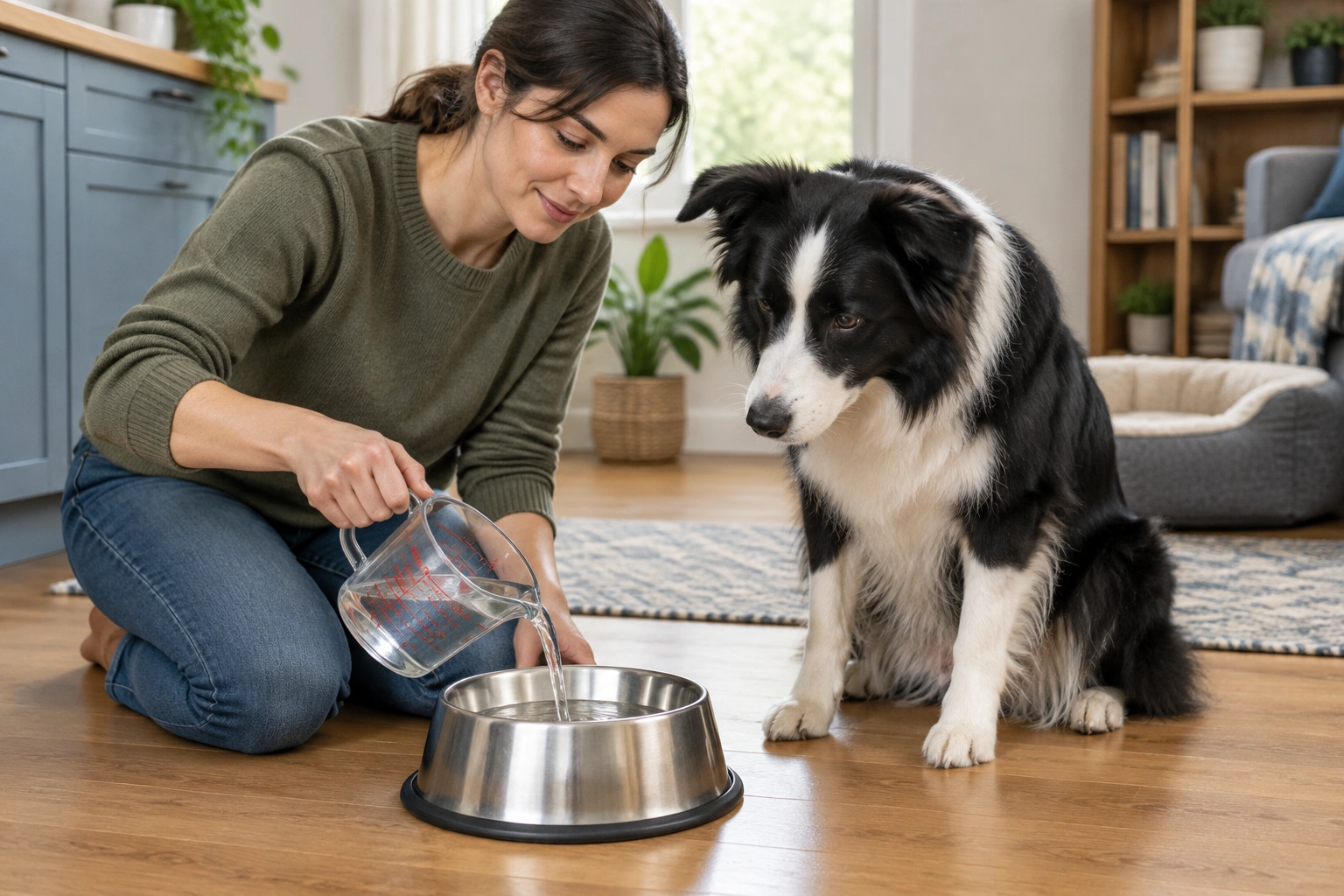
Simple tracking method
-
Measure the water you put down.
Use the same measured amount each time and note it in milliliters or ounces. -
Track refills.
If you top up the bowl, write down how much you added. -
Subtract spills and outdoor water.
If your dog drinks from a hose, puddle, or stream, note that separately. -
Repeat for one to three days.
One day can be misleading. A short trend is more useful. -
Watch for urine changes.
More drinking plus more urination is a stronger clue than drinking alone.
If you do not usually measure in milliliters, a kitchen measuring cup works fine. For example, fill the bowl with a known amount, such as 2 cups, then note every refill so you can total the day’s intake. This is especially helpful if you are trying to decide whether the change is minor or worth a vet visit. Bring the numbers with you if you call the clinic.
Medical Causes of Excessive Drinking in Dogs
If the thirst is persistent, medical causes move higher on the list. Common conditions linked to increased thirst include:
- Diabetes mellitus
- Kidney disease
- Cushing’s disease
- Urinary tract infection
- Liver disease
- Some hormonal disorders
- Heatstroke or overheating
Some of these conditions commonly cause both increased drinking and increased urination. Diabetes, kidney disease, and Cushing’s disease are especially known for that “drinks more, pees more” pattern. A urinary tract infection can also change urinary habits, even if discomfort is not obvious early on.
Why the pattern matters
A dog that drinks more because it is hot usually settles down once it cools off. A dog that drinks more because of illness often keeps doing it even when the environment is normal.
That difference is one reason veterinarians care so much about duration. Persistent polydipsia is more concerning than a single thirsty afternoon.
Warning Signs That Mean You Should Call a Vet
Extra drinking becomes more concerning when it comes with other changes. Watch closely for:
- Increased urination
- Indoor accidents
- Weight loss
- Vomiting
- Lethargy or weakness
- Appetite changes
- Panting that seems excessive
- Trouble keeping water down
- Collapse or disorientation
If your Border Collie is drinking a lot and also losing weight, that is not a “wait and see” situation. If the dog is drinking and peeing more but otherwise seems fine, it is still worth a vet call if the pattern lasts more than a day or two.
Monitor at home vs. call the vet
Monitor at home for a short period if:
– there is a clear reason for the extra drinking
– your dog is otherwise normal
– the change is brief and improving
– urination has not increased much
Call the vet if:
– the drinking is consistently high for more than 24–48 hours
– your dog is drinking and peeing more
– there are accidents, weight loss, vomiting, or lethargy
– the pattern keeps coming back without a clear reason
When it’s urgent
Seek urgent veterinary care if the dog seems overheated, weak, disoriented, collapses, or cannot keep water down. Heatstroke is a real emergency risk in active dogs, especially after exercise in hot weather.
Border Collie Water Intake by Age: Puppy, Adult, and Senior
Age changes thirst patterns, but it does not remove the need to watch for sudden changes.
Puppies
Puppies often drink more relative to their size because they are growing and active. They also urinate more often. That can make normal behavior look dramatic. What matters is whether the puppy is otherwise bright, eating well, and not vomiting or having accidents beyond what you would expect for house-training.
Adults
Adult Border Collies usually have the most predictable pattern. If an adult dog suddenly starts drinking much more, that shift stands out. Adults are the group where a new drinking pattern is easiest to spot and easiest to underestimate.
Seniors
Older dogs need closer attention because several medical causes of thirst become more common with age. A senior Border Collie that drinks more and loses weight, even with a normal appetite, should be checked.
What a Veterinarian May Check
A vet visit for persistent thirst usually starts with a history and a physical exam. Be ready to share:
- how long the drinking has been different
- whether urination also increased
- any accidents in the house
- appetite changes
- vomiting, weight loss, weakness, or panting
- recent diet changes, exercise spikes, or heat exposure
From there, a veterinarian often recommends urine and blood testing. That helps check for dehydration, infection, diabetes, kidney problems, and other common causes of polydipsia and polyuria.
The goal is not to overcomplicate the process. It is to avoid guessing.
What to Do Right Now If Your Border Collie Is Drinking Lots of Water
If the change is mild and there is a clear reason, monitor for a short period and document what you see. Keep water available unless your veterinarian tells you otherwise. That point matters: water restriction at home can make dehydration worse.
A good short-term plan looks like this:
- measure intake for 24 hours
- note exercise, weather, and diet
- watch urination and accidents
- check for vomiting, weight loss, lethargy, or appetite changes
If the thirst resolves after a hot day or a hard workout, that is reassuring. If it repeats, persists, or comes with other symptoms, schedule a vet visit.
Feeding Factors That Can Change Thirst
Because this site focuses on feeding, it is worth separating food-related thirst from medical thirst.
Dry food versus wet food
Dry kibble generally leads to more drinking than wet food because it contains less moisture. That is normal and expected. It becomes useful only when you are trying to understand a change in the dog’s baseline.
Recent diet changes
A switch in food can change thirst for a few days. That is especially true if the new food is saltier, drier, or more calorie-dense. If the timing matches the diet change and nothing else is wrong, monitoring is usually reasonable.
What food cannot explain
Food can explain some extra drinking, but it does not explain persistent excessive thirst with weight loss, repeated accidents, vomiting, or weakness. Those signs deserve veterinary attention even if the dog eats kibble.
When to Ask Your Veterinarian
Call your veterinarian promptly if your Border Collie’s increased drinking:
- lasts more than a day or two without a clear reason
- keeps coming back
- happens with increased urination or accidents
- comes with weight loss, vomiting, lethargy, or appetite changes
- follows heat exposure and the dog seems weak, shaky, or disoriented
If you can, bring your 24-hour water notes. That gives the clinic a better starting point than “I think he’s drinking more.”
For general dog water-intake guidance, the Ontario SPCA’s water intake overview is a useful reference point, and PetMD’s explanation of polydipsia is helpful for understanding why veterinarians take this symptom seriously. For a practical reminder that dogs should usually have free access to water unless a vet says otherwise, see Reed Animal Hospital’s guidance.
FAQs
How much water should a Border Collie drink in a day?
A common general guideline is about 60–100 ml per kilogram of body weight per day, but the right amount depends on size, diet, activity, and weather. The best comparison is your dog’s own normal pattern.
Is it normal for my Border Collie to drink more after exercise?
Yes. Extra drinking after hard exercise or warm weather is often normal and temporary. If it keeps happening when the dog is otherwise resting normally, get it checked.
Should I limit my dog’s water if they are drinking a lot?
Not unless your veterinarian tells you to. Restricting water can create dehydration and make the situation worse.
What if my dog is drinking a lot and peeing a lot too?
That combination is more concerning than thirst alone. It can happen with diabetes, kidney disease, Cushing’s disease, and other medical problems, so a vet visit is a good idea.
Can dry kibble make my Border Collie drink more?
Yes. Dry food usually leads to more drinking than wet food because it contains less moisture. That is normal, but it should not cause sudden, extreme thirst on its own.
When is it an emergency?
Treat it as urgent if your dog is weak, collapsed, disoriented, overheating, vomiting, or unable to keep water down.
Does age matter?
Yes. Puppies may drink more because they are growing and active, while seniors are more likely to have medical causes that need a vet check.
Final thought
A Border Collie drinking lots of water is only “normal” when the reason is obvious, the increase is short-lived, and the rest of the dog’s behavior stays steady. When the pattern changes without a clear explanation, measure it, watch the urine, and call your vet sooner rather than later.
