
Border Collie Dry Skin After Bath: Causes, Fixes, and When to See a Vet

Quick Answer
Border Collie dry skin after a bath often comes from frequent washing, hot water, harsh shampoo, or shampoo left in the coat. Mild flakes may settle once you adjust the bathing routine, but ongoing itching, redness, hair loss, sores, or scabs can point to another skin problem. This veterinary guide to dry skin in dogs explains why persistent skin changes deserve attention.
Check these signs first
- Fine white flakes: Mild dryness may appear after natural oils are stripped from the skin.
- Sudden scratching: Shampoo residue or an irritating product may be bothering the skin.
- Red skin: Redness suggests more irritation than simple cosmetic dandruff.
- Hair loss or scabs: These signs can occur with allergies, infection, parasites, or other skin disease.
- Repeated problems: Dryness after every bath means the routine or an underlying condition needs attention.
What I would do first
- Stop extra bathing, use only a gentle dog shampoo next time, rinse thoroughly, and contact your vet if the irritation persists or gets worse.
Seeing flakes on a Border Collie right after a bath can be confusing. The dog was just cleaned, so the skin should look better, not drier.
I have found that the bath itself is often the first thing worth checking. Border Collies have a dense double coat, and small bathing mistakes can be easy to miss under all that fur.
This guide covers the common bath-related causes, what you can safely change at home, and the signs that deserve veterinary care.
In This Guide
- Why Does My Border Collie Have Dry Skin After a Bath?
- How Can I Tell Bath Dryness From a Skin Problem?
- What Should I Do If My Border Collie’s Skin Looks Dry After a Bath?
- How Can I Prevent Dry Skin During the Next Bath?
- Does a Border Collie’s Double Coat Change Bath Care?
- What Products Help With Dry Border Collie Skin?
- When Does Dry Skin Need a Veterinarian?
- Frequently Asked Questions
Why Does My Border Collie Have Dry Skin After a Bath?
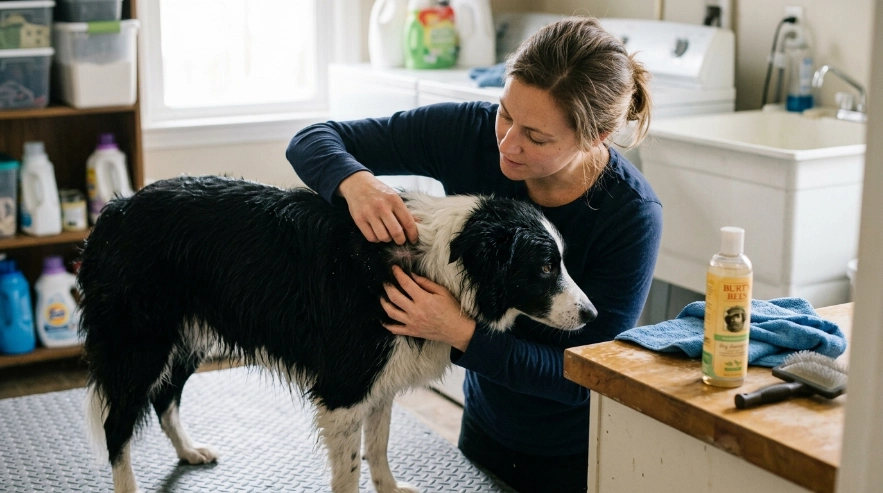
Dry skin after bathing usually means something during the wash changed the skin’s normal moisture balance. The bath may reveal an existing problem too.
A Border Collie’s post-bath dry skin is flaking, tightness, itching, or irritation that becomes noticeable soon after washing and drying.
Bathing too often
Dogs naturally have oils on their skin and coat. Repeated washing can remove too much of that protective oil.
I notice this most when owners start bathing after every muddy outing. Border Collies love dirt, but a muddy paw does not always require a full shampoo bath.
- Full bath: Best when the coat is genuinely dirty, greasy, or smelly.
- Spot rinse: Often enough for muddy feet, legs, or belly.
- Brushing: Can remove dried dirt without shampooing again.
The shampoo is too harsh
Human shampoo is designed for human skin, not canine skin. A dog-specific product is the safer routine for regular baths.
The American Kennel Club’s dog shampoo guidance notes that Border Collies are double-coated dogs and need shampoo that can reach through the coat while remaining suitable for canine skin.
Shampoo was not rinsed out completely
This is one of the easiest mistakes to make with a Border Collie. The outer coat may look clean while suds remain near the skin.
I rinse until I cannot feel any slippery product near the chest, belly, legs, tail base, or thick neck fur. Then I rinse once more.
The water was too hot
Hot water can make already sensitive skin feel worse. Lukewarm water is a safer choice for routine bathing.
The bath may not be the real cause
Allergies, parasites, infections, dry air, and some medical conditions can also cause flaky skin. A bath may simply make those flakes easier to see.
Vet note: If the skin change keeps returning, ask your veterinarian to help identify the cause instead of repeatedly changing shampoos.
How Can I Tell Bath Dryness From a Skin Problem?
Mild bath-related dryness tends to involve light flaking with little discomfort. Strong itching, redness, sores, odor, or hair loss deserves more attention.
Here is the quick comparison I use when checking the coat after it has dried.
| What You Notice | Possible Explanation | Next Step |
|---|---|---|
| A few fine flakes after bathing | Overwashing, dry air, or a drying shampoo | Avoid another bath and review your routine |
| Scratching starts right after bathing | Product irritation or shampoo residue | Check the skin and contact your vet if it continues |
| Red, inflamed skin | Irritation, allergy, infection, or another skin condition | Arrange veterinary advice |
| Scabs, cracks, sores, or hair loss | A problem beyond routine post-bath dryness | Schedule a veterinary examination |
| Dryness happens after every bath | Bath routine, product sensitivity, or an underlying condition | Review products and discuss the pattern with your vet |
Part the fur with your fingers instead of judging the coat from above. I check several spots because one dry patch can hide beneath otherwise healthy-looking fur.
- Behind the ears
- Under the collar
- Chest and armpits
- Belly
- Base of the tail
- Inner thighs
Vet note: Skin problems can look similar at home. A veterinarian can check for infection, parasites, allergies, and other causes when symptoms persist.
What Should I Do If My Border Collie’s Skin Looks Dry After a Bath?
If the dryness is mild and your dog seems comfortable, avoid giving another shampoo bath right away. Start by removing possible irritants and watching the skin.
- Check for shampoo residue. Part the coat and feel near the skin. Any obvious slick or soapy residue suggests the rinse may have been incomplete.
- Let the skin settle. Do not keep washing the dog in an attempt to remove flakes.
- Brush gently. Once the coat is fully dry, light brushing can remove loose flakes and dead coat without another wash.
- Watch the scratching. Note whether itching improves, stays the same, or gets stronger.
- Inspect the skin daily. Look for redness, scabs, moist patches, hair loss, or a change in odor.
I also write down which shampoo I used. That simple note helps if the same reaction happens after a future bath.
Do not start applying several oils, creams, sprays, or human skin products at once. Multiple new products make it harder to tell what helped and what caused more irritation.
If you suspect the shampoo caused a clear reaction, keep the bottle or photograph its ingredient label. Your veterinarian may want to know exactly what touched the skin.
Vet note: Significant itching, redness, bleeding, or obvious discomfort should be discussed with a veterinarian rather than managed only with home grooming changes.
How Can I Prevent Dry Skin During the Next Bath?
A gentler bath usually starts before the water turns on. Brushing first, choosing the right product, and rinsing well matter more than using lots of shampoo.
Brush before washing
Loose undercoat, tangles, and packed dirt make washing harder. A pre-bath brush also helps water and shampoo reach the coat more evenly.
Use lukewarm water
I test the water before wetting the dog. It should feel comfortably warm, never hot.
Use shampoo made for dogs
A mild canine shampoo is the safest starting point for routine cleaning. Dogs with sensitive skin may need a fragrance-free, hypoallergenic, moisturizing, or veterinarian-recommended formula.
Do not use more shampoo than necessary
A Border Collie’s coat can make owners think they need a large amount. More product also means more product to remove.
Make rinsing the longest part
The AKC’s bathing guidance emphasizes thorough rinsing because shampoo left behind can contribute to skin irritation.
I work through the coat with my fingers while rinsing. Thick areas around the neck, chest, rear legs, and tail get extra attention.
Do not follow a rigid bath calendar
Bath needs vary by lifestyle, skin health, dirt exposure, and veterinary treatment. PetMD gives every two to four weeks as a general goal for many dogs when reducing overbathing, but an individual Border Collie may need a different schedule.
Vet note: Dogs using medicated shampoo may need a bathing schedule set by their veterinarian. Follow that treatment plan instead of general grooming advice.
Does a Border Collie’s Double Coat Change Bath Care?
Yes. The Border Collie’s double coat makes thorough rinsing, skin inspection, brushing, and drying especially important.
The outer coat can look dry while the undercoat is still damp. That is why I never judge drying by running a hand over the dog’s back.
Rough coats need extra checking
Longer feathering around the chest, legs, belly, and tail can trap moisture and leftover product. Those areas deserve slow rinsing and careful drying.
Smooth coats still have an undercoat
A smooth-coated Border Collie may dry faster, but the same basic skin-care rules apply. Shorter hair does not make harsh shampoo safer.
Dry to the skin
I start with towels and press moisture from the coat instead of rubbing hard. If I use a dryer, I choose cool or low heat and keep the airflow moving.
Afterward, I part the coat in several places with my fingers. The hair near the skin should not feel wet or clammy.
Regular brushing can also reduce how often a full bath feels necessary. Dirt that dries on the outer coat often brushes away more easily than owners expect.
The VCA guidance on healthy dog skin and coats recommends dog-formulated shampoos and notes that frequent bathing needs should be discussed with a veterinarian.
Vet note: Persistent odor, irritated skin beneath a dense coat, or moist painful areas should be checked rather than hidden with another bath.
What Products Help With Dry Border Collie Skin?
For mild dryness, simple products are usually easier to manage than a shelf full of treatments. Start with a gentle canine shampoo and change only one thing at a time.
Gentle dog shampoo
Look for a product made specifically for dogs. Sensitive-skin or hypoallergenic formulas may suit dogs that become dry after ordinary shampoo.
Oatmeal shampoo
Oatmeal dog shampoos are commonly used to soothe mild dry or itchy skin. They are not a substitute for diagnosing repeated or severe itching.
Veterinary medicated shampoo
Antifungal, antibacterial, anti-itch, and other medicated shampoos serve different purposes. Using the wrong one can delay proper treatment.
When a vet prescribes one, follow the instructions carefully. Some products need a specific contact time before rinsing.
Products I would avoid for routine bathing
- Human shampoo: It is not formulated for regular use on canine skin.
- Dish soap: It is too harsh for routine coat care.
- Strong fragrances: They can be a poor choice for already sensitive skin.
- Random essential oils: Do not experiment with concentrated oils on irritated skin.
- Several new treatments at once: You will not know which product caused a reaction.
As of 2026, my approach remains simple: use the least complicated routine that keeps the dog clean and comfortable.
Vet note: Ask your veterinarian before using medicated products, supplements, or topical remedies for recurring dry skin.
When Does Dry Skin Need a Veterinarian?
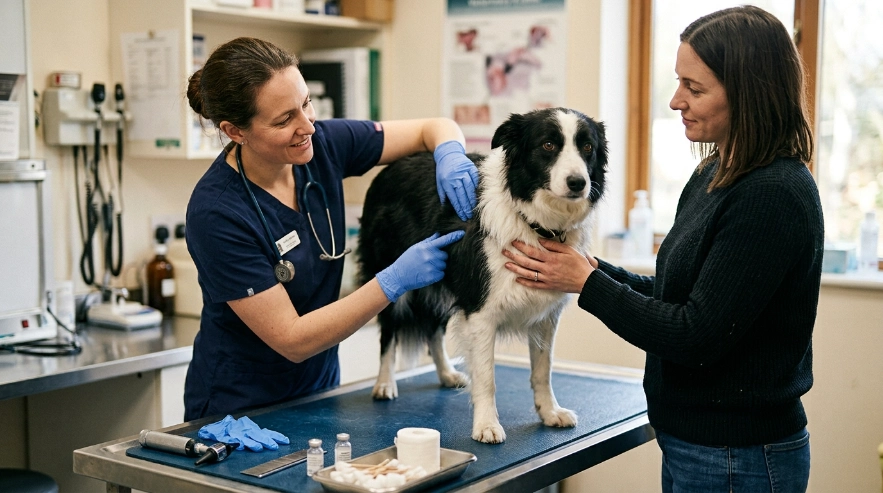
Dry flakes alone may be minor. Dry skin combined with significant itching, redness, hair loss, wounds, or repeated flare-ups needs a closer look.
The AKC’s overview of dry skin in dogs explains that causes can range from bathing habits and environmental dryness to allergies, infections, parasites, and systemic disease.
Call your vet if you notice:
- Persistent or intense scratching
- Red or inflamed skin
- Bleeding or cracked areas
- Scabs or crusts
- Patchy hair loss
- Open or moist sores
- Strong or unusual skin odor
- Dryness that keeps returning
- A clear change in the coat’s normal condition
Also pay attention to timing. A problem that appears after every bath gives your vet useful information about possible product sensitivity or bathing habits.
A skin issue that continues between baths is less likely to be explained by bathing alone. That pattern deserves a wider medical evaluation.
I would also mention recent food changes, flea or tick exposure, new grooming products, seasonal changes, and any medications. Those details can help your veterinarian build a clearer picture.
Vet note: Dry skin has many possible causes, so persistent symptoms are best diagnosed by your own veterinarian rather than treated by trial and error.
Frequently Asked Questions
Is it normal for a Border Collie to have dandruff after a bath?
A few light flakes can appear if bathing removed too much natural oil or shampoo was not rinsed completely. Repeated dandruff, heavy itching, redness, hair loss, scabs, or sores are not something I would dismiss as normal grooming fallout.
How often should I bathe a Border Collie with dry skin?
There is no single schedule that fits every Border Collie. Avoid unnecessary baths and follow your veterinarian’s advice if dry skin is ongoing. Lifestyle, coat condition, allergies, medical treatment, and how dirty your dog gets all affect the right interval.
Can I use human moisturizer on my Border Collie’s dry skin?
I would not apply a human moisturizer without veterinary guidance. Dogs lick their coats, and products designed for human skin may contain ingredients or fragrances that are not appropriate for routine canine use.
Can leftover shampoo make my Border Collie itchy?
Yes, incomplete rinsing can leave product against the skin and contribute to irritation. A Border Collie’s dense coat makes residue easy to miss, so rinse slowly and work your fingers through thick areas until the coat feels completely free of shampoo.
Should I use oatmeal shampoo for Border Collie dry skin?
A mild oatmeal dog shampoo may soothe minor dry or itchy skin. It does not treat every cause, though. If your Border Collie has strong itching, redness, sores, hair loss, or repeated problems, ask your veterinarian before relying on shampoo alone.
Why is my Border Collie still itchy days after a bath?
Ongoing itching may mean the bath was not the only issue. Product irritation, allergies, parasites, infection, environmental dryness, or another skin condition may be involved. Persistent itching is a good reason to contact your veterinarian.
The main takeaway: When Border Collie dry skin appears after a bath, check the simple causes first: bath frequency, water temperature, shampoo choice, rinsing, and drying. Mild flakes may improve after you correct the routine.
If the skin stays itchy, red, sore, or flaky, do not keep experimenting with new products. Let your veterinarian identify the cause so your Border Collie gets the right treatment.