
Border Collie Grain-Free Diet: What Owners Should Know Before Switching Foods

Border Collies are energetic, intelligent dogs, and that often pushes owners to look closely at food labels. Grain-free diets get a lot of attention because they sound cleaner, simpler, or more “natural.” But for most Border Collies, grain-free is not automatically better. The smarter question is whether a specific dog has a real reason to avoid grains, and whether the food is complete, balanced, and appropriate for that dog’s age and activity level.

Do Border Collies Actually Need a Grain-Free Diet?
In general, no. A healthy Border Collie does not need a grain-free diet simply because of the breed. What matters more is whether the food meets the dog’s nutritional needs and agrees with their digestive system.
If your Border Collie is thriving on a grain-inclusive food, there is usually no practical reason to switch just to remove grains. Many well-formulated foods with grains are perfectly suitable for active dogs. Grain-free can be useful in some cases, but it should be a response to a specific problem, not the default choice.
A helpful rule: if your dog has no skin issues, no recurring stomach trouble, and no vet-confirmed reason to avoid grains, the grain-free label alone is not a strong enough reason to change diets.
What Grain-Free Dog Food Actually Means
“Grain-free” simply means the recipe does not include common grains such as corn, wheat, rice, barley, oats, or rye. It does not mean the food is lower in carbohydrates, higher in meat, or automatically higher quality.
In fact, many grain-free formulas replace grains with other starch sources such as peas, lentils, potatoes, or sweet potatoes. That matters because the label may sound very different while the overall nutrient profile is still similar.
This is why the ingredient list and the nutrition statement matter more than the front of the bag. A grain-free food can be excellent, average, or poorly designed. The same is true of grain-inclusive food.
When Grain-Free May Make Sense for a Border Collie
Grain-free can be worth considering when there is a clear reason to suspect a reaction to a grain-containing diet, or when your veterinarian recommends a diet trial.
Common situations include:
- Recurrent itching, ear infections, or skin irritation that has not responded to other changes
- Loose stools or vomiting that seem linked to a specific food
- A vet-supervised elimination diet where the goal is to identify a trigger ingredient
- A dog that has done better on a specific grain-free formula after a careful, documented switch
Even then, grain-free is not the only option. Some dogs do just as well on a carefully chosen grain-inclusive diet once the real trigger ingredient is identified.
For a Border Collie with vague symptoms, such as occasional soft stool or seasonal itching, grain-free should not be treated as a shortcut diagnosis. Those signs can come from many causes.
Grain Allergy vs. Food Sensitivity: What Owners Should Know
This is where many feeding decisions go off track.
A true food allergy is an immune response. Food sensitivity is broader and can involve digestive upset or skin signs without a classic allergy pattern. Either way, the problem is often not the grain itself.
Many dogs react to proteins more often than to grains. That means beef, chicken, dairy, or another ingredient may be the real issue, even when the food contains grains. If you remove grains but keep the true trigger in the bowl, symptoms may continue.
A practical way to think about it:
- If symptoms are consistent and recurring, a vet-guided elimination diet is more useful than guessing.
- If the dog improved after a food change, that does not prove grains were the problem.
- If the dog has never had a structured diet trial, the label “grain-free” is not evidence.
For Border Collie owners dealing with chronic itching or stomach upset, a proper diet trial is often more informative than rotating through trendy foods.
Potential Benefits and Drawbacks of Grain-Free Diets
There are real trade-offs here.
Possible upsides
A grain-free diet may help if your dog is sensitive to a specific grain-containing recipe or if you are working through a vet-directed elimination plan. Some owners also find grain-free formulas easier to source in certain protein styles or life-stage formulas.
Possible drawbacks
The biggest drawback is that grain-free is often treated like a health guarantee when it is not one. A grain-free recipe can still be poorly balanced, overly calorie-dense, or made with ingredients that do not suit your dog.
Another limitation: grain-free does not necessarily mean fewer carbs. If the grains are removed and replaced with potatoes or legumes, the food may still be carbohydrate-heavy. So if your goal is simply “less filler,” the label may not tell you much.
There is also the issue of cost. Grain-free foods often cost more, but the higher price does not automatically buy better nutrition.
The DCM Question: Safety Concerns You Should Understand
Canine dilated cardiomyopathy, or DCM, has been part of the grain-free conversation for several years. The issue is not as simple as “grain-free causes heart disease,” and the evidence is still not definitive. At the same time, it is reasonable to pay attention to the concern rather than dismiss it.
Current discussion around DCM focuses on diets that may rely heavily on certain ingredients, especially some legume- and potato-heavy formulas. That does not prove a direct cause-and-effect relationship, and it does not mean every grain-free food is a problem. It does mean owners should be thoughtful rather than assuming grain-free is automatically a safe upgrade.
The practical takeaway is straightforward:
- Do not choose grain-free just because it sounds cleaner or more natural.
- Be cautious with long-term feeding of formulas that lean heavily on peas, lentils, chickpeas, potatoes, or sweet potatoes unless there is a clear reason to use them.
- Ask your veterinarian before choosing grain-free if your dog has a heart condition, a family history of heart disease, unexplained low energy, coughing, fainting, or if you are considering a long-term diet change for a dog with higher medical risk.
For general background on nutritional adequacy and feed labels, the AAFCO overview of pet food and feeding terms is a useful reference point.
How to Choose a Quality Dog Food for a Border Collie
The best food is not the one with the most fashionable ingredient list. It is the one that is complete, balanced, and appropriate for your dog.
Use this checklist:
1. Look for a complete and balanced statement
The food should state that it is complete and balanced for a specific life stage, such as growth, adult maintenance, or all life stages. That matters more than whether the recipe is grain-free.
2. Match the food to your dog’s life stage
A puppy needs growth-appropriate nutrition. An adult needs maintenance nutrition. A senior may need calorie control, joint support, or a formula that is easier to digest. One bag is not ideal for every age.
3. Judge the brand by more than marketing
Transparent feeding guidance, clear life-stage labeling, and a credible formulation approach are more useful than buzzwords like “ancestral” or “premium.”
4. Check whether the ingredients fit the dog in front of you
If your Border Collie does well on chicken and rice, there is no nutrition trophy for switching away from it. If your dog has repeated problems on a specific protein, then ingredient choice becomes more important.
5. Watch the dog, not just the bag
Good stool quality, steady energy, healthy body condition, and a good coat are practical signs that the food is working.
If your dog is constantly hungry, gaining weight, or having loose stool, the answer is not usually “more grain-free.” It is usually a better-matched diet.
6. Read the label like a checklist
When you are comparing bags, look for these specific markers:
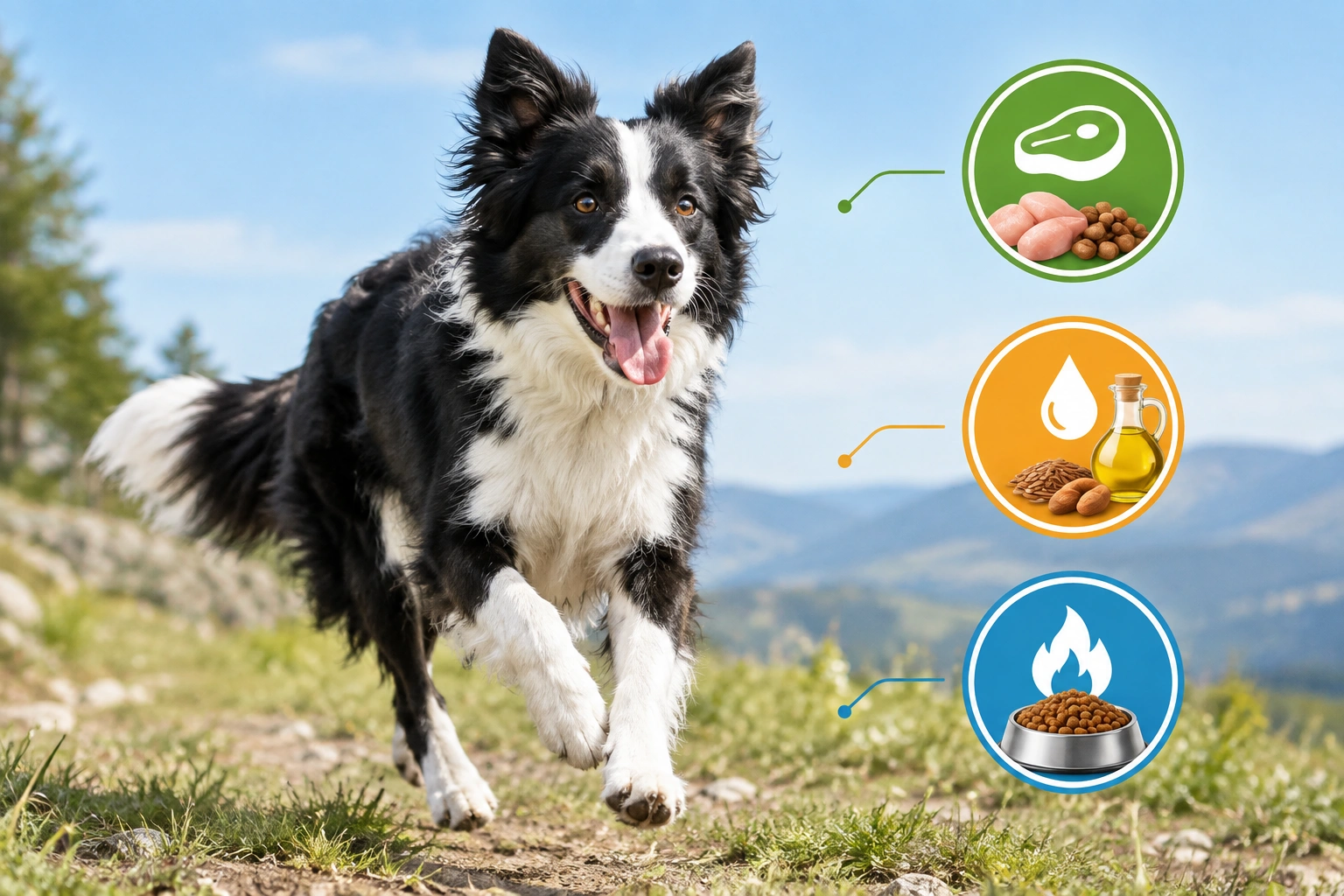
- AAFCO adequacy statement: It should say the food is complete and balanced for the life stage you need.
- Life-stage match: Growth, adult maintenance, or all life stages should fit your dog.
- Named animal proteins: Look for clear protein sources such as chicken, beef, lamb, turkey, salmon, or similar named ingredients rather than vague terms like “meat meal.”
- Calorie density: Check the kcal per cup or kcal per can so you know whether the food is calorie-dense enough for an active dog, or too rich for a less active one.
- Formulation/testing credentials: It is a plus if the company says the diet was formulated by a board-certified veterinary nutritionist or supported by feeding trials. Those details are more meaningful than marketing claims.
- Ingredient quality clues: For grain-free diets, look for a sensible balance of animal protein, digestible carbohydrate sources, and added nutrients rather than a long list of legumes doing all the heavy lifting.
A simple rule: if the bag is vague about who formulated it, what life stage it supports, or how it was tested, keep looking.
Protein, Fat, and Calorie Needs for Active Border Collies
Border Collies are often active enough to make owners underestimate how much food they actually need. That cuts both ways: some dogs are underfed, while others get too many calories because they look lean and athletic.
The most useful question is not “Should my Border Collie eat a high-protein food?” but “Does this dog need maintenance calories, extra fuel, or performance-level nutrition?”
For active Border Collies, the priorities are usually:
- Enough calories to support work, training, and play
- Adequate protein for muscle maintenance
- Enough fat for sustained energy, especially in very active dogs
Here is the practical difference:
- Moderately active pets: A typical family Border Collie that gets daily walks, some play, and occasional training often does well on a standard adult formula with moderate calories and moderate fat. The goal is steady body condition, not maximum fuel.
- Sport dogs: Agility dogs, flyball dogs, or dogs with frequent high-intensity training may need a more calorie-dense food with higher fat, because fat is a useful energy source for repeated bursts of work.
- Working Border Collies: Herding dogs and other true working dogs may need the most calorie-dense diets, and often benefit from higher fat and well-supported protein levels to maintain weight, stamina, and recovery.
A sport formula may make sense for a dog that herds, runs, trains hard, or competes. A less active family dog may do better on a standard adult formula with tighter calorie control. The food should fit the dog’s actual workload, not the owner’s idea of what an athletic breed “should” eat.
Puppy, Adult, and Senior Border Collie Feeding Considerations
Puppies
Puppies need food designed for growth. That is the first filter. If you want to feed grain-free to a Border Collie puppy, check that the formula is specifically labeled for growth or all life stages. Do not assume any high-protein adult food is suitable.
Adults
Adult Border Collies vary a lot. A couch-loving pet and a dog doing daily agility are not eating for the same job. Adult feeding decisions should be based on body condition, stool quality, and activity level rather than breed alone.
Seniors
Older Border Collies may slow down, but not always dramatically. Some still need substantial nutrition, while others need fewer calories to avoid weight gain. Senior feeding is less about “light food” and more about what keeps the individual dog lean, comfortable, and interested in meals.
What to Feed Instead of Grain-Free
If you decide not to feed grain-free, the best alternative is usually not a “special” food at all. It is a well-made grain-inclusive diet that fits your dog’s age and activity level.
For healthy adult Border Collies, good grain-inclusive options often include:
- Standard adult maintenance formulas with named animal protein and moderate calories
- Performance or sport formulas for dogs with higher workloads, training schedules, or herding jobs
- Sensitive skin or sensitive stomach grain-inclusive recipes if your dog does better with a simpler ingredient profile, but does not need grain-free specifically
A quality grain-inclusive food should still be complete and balanced, list clear animal proteins, and provide enough calories for the dog’s actual activity. For many Border Collies, a grain-inclusive chicken-and-rice, lamb-and-rice, or salmon-and-grain recipe can be a very practical choice.
If your dog is healthy, active, and doing well, there is no advantage in switching away from a grain-inclusive formula just to follow a trend. The best food is the one your dog digests well, maintains weight on, and can eat consistently.
How to Switch Your Border Collie to a New Diet Safely
A fast switch can cause loose stool, gas, or refusal to eat. A gradual transition is usually the safer move.
A simple approach is to mix the new food into the old food over several days, increasing the new food step by step while watching stool quality and appetite. If the dog develops soft stool, vomiting, or obvious discomfort, slow the transition down.
During the change, monitor:
- Stool firmness
- Itching or ear scratching
- Appetite
- Energy level
- Weight and body condition
If the dog does well, the new food is probably a better fit. If symptoms worsen, the problem may be the new formula, the transition speed, or an underlying issue that needs a vet’s input.
When to Ask Your Veterinarian
Talk to your veterinarian before changing diets if your Border Collie has:
- Ongoing vomiting or diarrhea
- Recurrent ear infections
- Persistent itching or skin inflammation
- Weight loss, poor appetite, or low energy
- A history of heart disease or a concern about DCM
- Suspected food allergy symptoms that keep returning
A vet can help you decide whether a grain-free diet is worth trying, or whether a structured elimination diet would be more useful. That matters because guessing often wastes time and money, and it can keep the real cause of the problem hidden.
If you are trying to identify a food trigger, a veterinarian or canine nutritionist can also help you choose a trial that is actually informative instead of a series of random food changes.
Border Collie Grain-Free Diet FAQs
Is grain-free dog food healthier for Border Collies?
Not by default. Health depends on the full formulation, not the absence of grains.
Can a Border Collie puppy eat grain-free food?
Yes, if the food is labeled for growth or all life stages and is nutritionally complete. The life-stage statement matters more than the grain-free label.
Is grain-free better for active Border Collies?
Sometimes, but not because it is grain-free. Active dogs may do better on formulas with enough calories and fat for their workload. A quality grain-inclusive sport food can work very well.
What should I feed instead of grain-free?
For most healthy adult Border Collies, a complete and balanced grain-inclusive adult formula is a strong option. If the dog is highly active, look for a performance or sport formula with higher calorie density and enough fat to support work and recovery.
How do I know if my dog has a grain allergy?
You usually cannot know for sure without a vet-guided diet trial. Many dogs blamed on grains are actually reacting to another ingredient.
Should I avoid all grain-free foods because of DCM concerns?
Not necessarily, but it is reasonable to be cautious. If you do choose grain-free, pick a complete and balanced formula from a credible manufacturer and discuss the decision with your vet if your dog has any heart-related risk factors.
What if my Border Collie does fine on grain-inclusive food?
Then there may be no reason to change. A well-tolerated, complete, balanced grain-inclusive diet is often the simplest and most sensible choice.
For Border Collie owners, the best feeding decision is usually the least dramatic one: choose the diet that fits the dog’s body, age, activity, and medical history, then let the results in the bowl and in the dog’s condition guide you.