

Quick Answer
A Border Collie greasy coat after a bath usually means shampoo, conditioner, or another grooming product was not rinsed completely from the dense double coat. Start by rinsing again with lukewarm water and drying the coat thoroughly, following basic safe dog grooming practices.
What to check first
- Shampoo residue: The fur feels slick, tacky, waxy, or unusually heavy after drying.
- Conditioner buildup: The coat looks flat or oily, especially around the neck, chest, and hindquarters.
- Damp undercoat: Fur may look clumped and greasy when moisture remains close to the skin.
- Too much product: Concentrated shampoo can become difficult to rinse from a thick Border Collie coat.
- Skin problem: Persistent grease with odor, itching, redness, flakes, or hair loss deserves veterinary attention.
Fastest safe fix
- Rinse the coat again with lukewarm water, working your fingers through the fur until the water runs clean and the hair no longer feels slippery.
If your Border Collie came out of the bath looking oilier than before, something probably went wrong during rinsing or drying. I’ve found that thick coats can hide product and moisture surprisingly well.
This guide explains what the greasy feeling means, how to correct it, and when the problem may be coming from the skin instead of the bath.
In This Guide
- Why Is My Border Collie’s Coat Greasy After a Bath?
- How Can I Tell Bath Residue From a Skin Problem?
- How Do You Fix a Greasy Border Collie Coat After Bathing?
- How Can You Prevent a Greasy Coat During the Next Bath?
- Can Bathing a Border Collie Too Often Cause Coat Problems?
- When Can a Greasy Coat Mean a Skin Condition?
- What Grooming Products Should You Use or Avoid?
- Frequently Asked Questions
- What Should You Do Next?
Why Is My Border Collie’s Coat Greasy After a Bath?
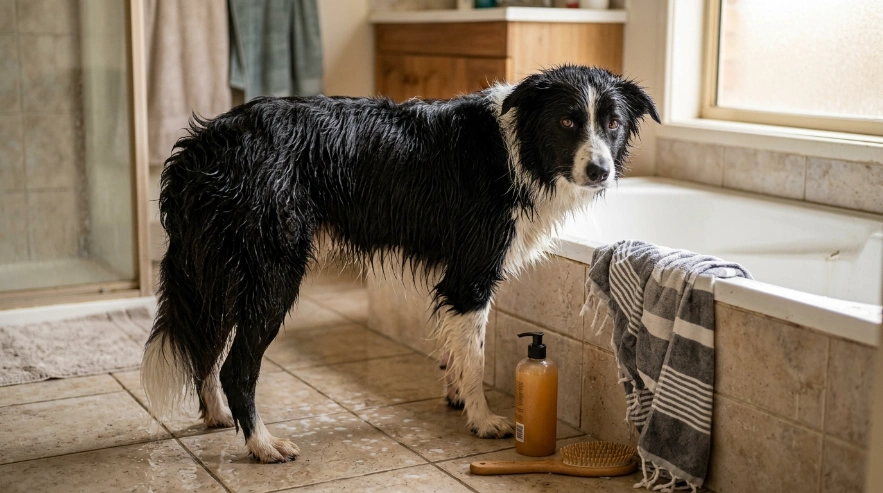
The most common explanation is grooming product left inside the coat. A Border Collie’s dense double coat can trap shampoo or conditioner close to the skin even when the surface fur looks rinsed.
The breed has both rough and smooth coat varieties. Both have dense, weather-resistant double coats, according to the American Kennel Club’s Border Collie guidance.
A greasy post-bath coat is fur that remains unusually slick, waxy, sticky, heavy, or oily after the dog should be clean and dry.
Shampoo was not rinsed out completely
This is the first thing I check. Shampoo can remain around the shoulders, chest, belly, tail base, and thick fur behind the legs.
- Slick feeling: Wet fur continues feeling unusually slippery after several passes with clean water.
- Sticky feeling: Dry fur seems tacky when you run your fingers through it.
- Flat coat: Hair separates into little sections instead of becoming light and fluffy.
- New itching: The dog begins scratching or rubbing after the bath.
A quick surface rinse often isn’t enough. Water must reach through the topcoat and into the undercoat.
Too much shampoo was used
More shampoo doesn’t always produce a cleaner Border Collie. It simply gives you more product to remove.
This problem is especially noticeable when concentrated shampoo gets applied directly to several dry or barely wet areas.
- Follow the product’s dilution directions if it is concentrated.
- Wet the coat all the way to the skin before shampooing.
- Use only enough product to clean the dog effectively.
- Work in sections instead of repeatedly adding shampoo.
Conditioner or detangling product left a coating
Conditioner can make a Border Collie’s coat feel soft, but excess product may leave the fur heavy. Leave-in sprays and coat oils can create a similar result.
Owners sometimes interpret that coated feeling as the dog’s natural skin oil. The timing is the clue if it appeared immediately after using a new product.
The undercoat is still damp
A partially dry double coat can fool you. The outer hairs may feel dry while moisture remains underneath.
Damp undercoat tends to clump together. That can make the whole coat look darker, flatter, and oilier.
- Check behind the ears.
- Feel beneath the neck ruff.
- Check the armpits and chest.
- Feel around the inner thighs.
- Check the tail base and hindquarters.
If those areas feel cool or damp, finish drying before deciding that the coat is truly greasy.
Section Takeaway: A greasy coat immediately after bathing usually points first to residue, too much grooming product, or trapped moisture. Check those simple causes before assuming your Border Collie has a medical problem.
How Can I Tell Bath Residue From a Skin Problem?
Timing, odor, itching, and skin appearance provide useful clues. Bath residue usually appears immediately, while an underlying skin problem tends to persist or return.
| What You Notice | More Likely Explanation | First Step |
|---|---|---|
| Greasy immediately after the bath | Shampoo or conditioner residue | Rinse again thoroughly |
| Outer coat dry but undercoat cool and clumped | Trapped moisture | Finish drying to the skin |
| Problem began after a new conditioner or spray | Product buildup or sensitivity | Rinse and stop the new product |
| Grease returns quickly with strong odor | Possible skin disorder or infection | Arrange a veterinary examination |
| Greasy fur plus redness, flakes, itching, or hair loss | Possible dermatological condition | Contact your veterinarian |
Do a simple coat check
Wait until your Border Collie is fully dry. Then part the coat in several places and look directly at the skin.
- Normal-looking skin: Clear skin without obvious redness, sores, crusts, or heavy scaling makes bath residue more plausible.
- Abnormal skin: Redness, bumps, flakes, odor, hair loss, or sore areas increase the need for veterinary assessment.
- Localized grease: One oily patch may point toward concentrated product left in that location.
- Whole-body grease: Persistent generalized oiliness deserves closer attention if another rinse doesn’t help.
Pay attention to smell
Product residue may smell strongly of shampoo or conditioner. A persistent unpleasant, musty, or unusual skin odor is different.
Greasy skin combined with odor can occur with several skin disorders. It shouldn’t be repeatedly covered with fragrance.
How Do You Fix a Greasy Border Collie Coat After Bathing?
Start with another water-only rinse if you suspect leftover product. Don’t immediately add more shampoo to a coat that may already contain too much.
Step 1: Rinse with lukewarm water
Use a gentle stream rather than blasting the skin. Move slowly from the neck toward the tail.
With one hand, separate the fur while directing water underneath with the other.
- Start around the shoulders and neck.
- Work across the back and sides.
- Rinse the chest and belly carefully.
- Move through each leg and the feathering.
- Finish around the hindquarters and tail.
Avoid spraying directly into the eyes, nose, or ear canals.
Step 2: Feel the coat as you rinse
Your fingers are useful here. Compare areas you’ve rinsed carefully with areas you haven’t reached yet.
Keep rinsing any section that feels slicker, waxier, or heavier than the surrounding coat.
Step 3: Remove excess water
Gently squeeze longer sections of fur rather than twisting them. Then blot with an absorbent towel.
- Press the towel into the coat.
- Replace soaked towels as needed.
- Avoid aggressive rubbing that creates tangles.
- Pay extra attention to the undercoat.
Step 4: Dry the coat thoroughly
If your Border Collie accepts a dryer, use a pet dryer or a suitable low-heat setting. Keep airflow moving instead of holding heat against one patch.
I check the chest, back legs, and tail base twice. Those areas have fooled me more than once because the surface looked finished before the undercoat was dry.
Step 5: Brush after the coat is dry
Once dry, gently brush through the coat. This separates hair, removes loose fur, and helps you judge the final texture more accurately.
A healthy clean coat should not remain sticky or coated after this process.
What if rinsing doesn’t fix it?
If the coat still feels greasy but the skin looks comfortable, consider whether a heavy conditioner, oil, or leave-in product was applied. Stop adding grooming products until you know what caused the buildup.
If you believe the coat genuinely needs another shampoo wash, give the skin a chance to settle rather than repeatedly washing it in one session.
Persistent grease, itching, redness, odor, or discomfort changes the situation. At that point, contact your veterinarian rather than experimenting with stronger cleansers.
Section Takeaway: The safest first correction is usually a thorough water-only rinse followed by complete drying. Repeated shampooing can complicate the problem if residue or irritated skin is already present.
How Can You Prevent a Greasy Coat During the Next Bath?
Prevention mostly comes down to preparation, controlled shampoo use, thorough rinsing, and proper drying. Border Collies reward patience during each stage.
Brush before adding water
Brush out loose undercoat, dirt, and small tangles first. Water tightens some tangles and makes dense loose fur harder to rinse through.
The AKC’s guidance for grooming double-coated dogs also emphasizes regular brushing and thoroughly washing shampoo from the coat.
Wet all the way to the skin
Don’t shampoo a coat that is only wet on top. Separate the hair with your fingers and make sure water reaches the undercoat.
This allows shampoo to spread more evenly and reduces the temptation to keep adding product.
Follow the shampoo label
Some professional and concentrated dog shampoos require dilution. Others are meant to be used directly.
- Read the manufacturer’s instructions.
- Measure concentrated products when practical.
- Don’t assume stronger concentration means cleaner fur.
- Avoid mixing different medicated products without veterinary advice.
Rinse longer than you think you need to
My rule with a Border Collie is simple: once I think the shampoo is gone, I check the thickest areas again.
Watch for foam, bubbles, slippery patches, and milky-looking runoff.
- Neck and shoulders
- Chest
- Armpits
- Belly
- Rear-leg feathering
- Tail base
Use conditioner only when it serves a purpose
A Border Collie doesn’t automatically need layers of finishing products after every bath. If the coat is healthy, simple grooming may produce the best result.
If you use conditioner, follow its instructions and rinse-out directions carefully.
Can Bathing a Border Collie Too Often Cause Coat Problems?
Yes, excessive bathing can contribute to dry or irritated skin, especially when harsh or unsuitable shampoos are used. Bathing frequency should match the individual dog’s lifestyle and skin needs.
There isn’t one perfect calendar for every Border Collie. A farm dog that finds a muddy pond has different grooming needs from a mostly indoor companion.
Bathe for a reason, not just a date
I prefer to judge the dog in front of me. Dirt, odor, mud, allergens, swimming, and veterinary skin-care instructions all affect when a bath makes sense.
- Brush routine dirt from the coat when possible.
- Spot-clean small dirty areas instead of always shampooing the whole dog.
- Rinse after certain messy activities when shampoo isn’t necessary.
- Follow veterinary instructions if your dog requires therapeutic baths.
Don’t try to strip every natural oil
A clean coat isn’t supposed to feel chemically squeaky or brittle. Natural skin oils have a normal role in coat condition.
Trying to remove every trace of oil with repeated strong cleansing can leave the skin dry and uncomfortable.
When Can a Greasy Coat Mean a Skin Condition?
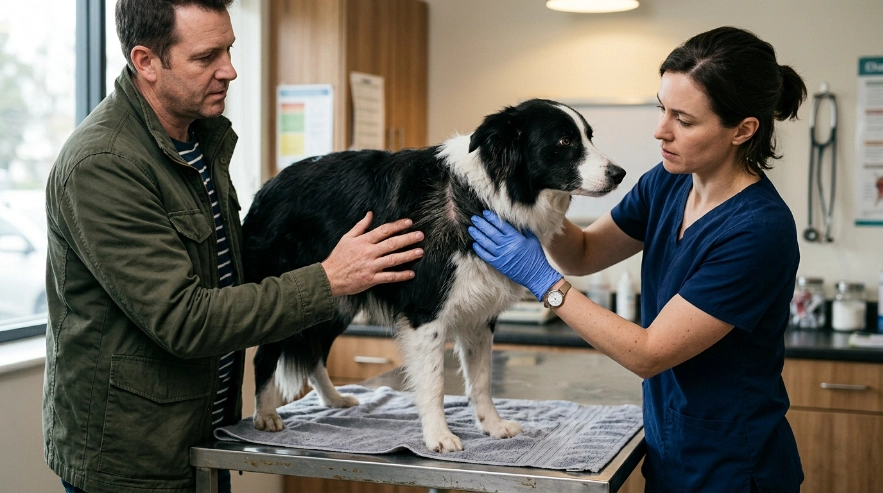
A greasy coat deserves veterinary attention when it keeps returning or comes with other skin changes. The concern is greater when oiliness appears independently of bathing products.
The VCA guidance on canine seborrhea notes that affected dogs can develop oily skin, scaling, crusting, and odor.
Seborrhea
Seborrhea is a disorder involving abnormal skin-cell turnover and can produce scaling, greasiness, or both. It may also occur alongside an underlying health or skin problem.
The Merck Veterinary Manual’s overview of seborrhea describes excessive greasiness as one possible feature and notes that inflammation or infection may occur as well.
Watch for these warning signs
- Grease that returns soon after appropriate grooming
- Persistent or strong skin odor
- Red or inflamed skin
- Frequent scratching or licking
- Flaky or crusty skin
- Bald patches or thinning hair
- Bumps, sores, or moist irritated areas
- Changes around the ears, paws, armpits, or belly
These signs don’t tell you the exact cause at home. Allergies, parasites, bacterial infections, yeast problems, and other conditions can produce overlapping symptoms.
Vet note: If your Border Collie’s greasy coat is persistent, painful, itchy, smelly, or accompanied by skin lesions or hair loss, ask your veterinarian to examine the skin before trying medicated shampoos.
Don’t diagnose oily skin by appearance alone
A photo can’t show whether the cause is residue, excess scale, infection, or another dermatological issue. Your veterinarian may need to examine the skin and choose tests based on the signs.
As of 2026, veterinary guidance still centers on identifying the underlying cause of persistent abnormal skin and coat changes rather than simply masking the grease.
What Grooming Products Should You Use or Avoid?
For routine bathing, choose a shampoo formulated specifically for dogs. The goal is effective cleaning without unnecessarily irritating the skin.
Good routine choices
- Dog-specific shampoo: Choose a formula appropriate for your dog’s skin and coat.
- Clearly labeled concentrate: Dilute it exactly as the manufacturer directs.
- Light conditioner when needed: Use an appropriate canine product and rinse it correctly.
- Simple grooming tools: A suitable brush and comb often matter more than adding another spray.
Products to approach carefully
- Human shampoo: Routine use isn’t a good substitute for a product formulated for dogs.
- Heavy coat oils: These can make it harder to determine whether the natural coat is clean.
- Multiple leave-ins: Layering sprays, conditioners, and detanglers can create buildup.
- Medicated shampoo: Choose it for a diagnosed or veterinary-guided reason, not simply because the fur feels oily once.
What about degreasing shampoo?
Veterinary degreasing and antiseborrheic shampoos have legitimate uses for certain skin disorders. That doesn’t make them the best response to ordinary shampoo residue.
If your Border Collie repeatedly becomes unusually greasy, diagnose the reason first. Stronger cleaning isn’t automatically better.
Frequently Asked Questions
Why does my Border Collie’s fur feel waxy after a bath?
A waxy feeling immediately after bathing commonly suggests shampoo, conditioner, or another grooming product remains in the coat. Rinse again with lukewarm water, paying special attention to dense areas, then dry the undercoat completely before judging the texture.
Can shampoo residue make my Border Collie itchy?
Yes. Shampoo or grooming products left against the skin can cause irritation in some dogs. If rinsing doesn’t improve the problem, or you see redness, sores, swelling, or persistent scratching, contact your veterinarian.
Should I shampoo my Border Collie again if the coat feels greasy?
Not immediately in most residue-related cases. Try a thorough water-only rinse first because adding more shampoo may add more product to an already coated coat.
How do I know when my Border Collie’s undercoat is fully dry?
Part the fur and feel near the skin around the chest, neck, legs, belly, and tail base. The undercoat should not feel cool, wet, or clumped compared with surrounding dry areas.
Can a Border Collie naturally have an oily coat?
Normal skin produces natural oils, so some oil is expected. However, a persistently greasy, smelly, flaky, itchy, or inflamed coat isn’t something to dismiss as normal, especially when the change is new.
Why is my Border Collie still greasy one or two days after bathing?
Incomplete rinsing or leftover conditioner can remain noticeable after the coat dries. If a thorough rinse doesn’t solve it, particularly when odor, itching, flakes, or redness are present, a veterinarian should evaluate the skin.
Can I use dish soap to remove grease from my Border Collie’s coat?
I wouldn’t use household dish soap as the routine answer to post-bath greasiness. Start with water rinsing, use dog-specific grooming products for ordinary baths, and ask your veterinarian about persistent oiliness or a true skin disorder.
What Should You Do Next?
If your Border Collie feels greasy immediately after a bath, start with the simplest explanation. Rinse thoroughly, dry the undercoat completely, and reassess the fur once it is dry.
For the next bath, use less product, wet the coat completely, rinse every dense area, and avoid unnecessary layers of conditioner or finishing spray.
- Greasy immediately after bathing: Check rinsing and drying first.
- Greasy after using a new product: Stop that product and rinse the coat.
- Greasy with odor or itching: Inspect the skin carefully.
- Grease keeps returning: Schedule a veterinary examination.
A Border Collie’s double coat takes more time to rinse than it appears to from the outside. Giving those last few areas extra attention often makes the difference between a clean, airy coat and one that still feels coated.
If the skin itself looks abnormal, don’t keep washing in search of a cosmetic fix. Get the cause identified so your Border Collie receives the right care.
