
Border Collie Hates Baths? Why It Happens and How to Fix It

Quick Answer
If your Border Collie hates baths, fear is usually more useful to think about than stubbornness. Slippery floors, rushing water, restraint, loud sounds, or a bad past experience can all make bath time stressful. Use short, reward-based practice sessions and follow safe dog-bathing practices when your dog is ready for a full wash.
What usually helps
- Add traction: Put a nonslip mat under your dog’s feet before turning on any water.
- Start dry: Practice entering the empty tub before trying another real bath.
- Reward calmness: Use tiny treats for approaching, entering, standing, and staying relaxed.
- Control the water: Use comfortably lukewarm water and avoid spraying the face.
- Keep sessions short: End training before your Border Collie becomes overwhelmed.
- Check for pain: Sudden bath avoidance can sometimes signal sore skin, ears, joints, or another health issue.
The main rule
- Don’t force your dog through escalating panic just to finish the bath.
I’ve seen plenty of Border Collies act fearless outdoors, then freeze when they see a bathtub. That contrast makes sense once you look at the bath from the dog’s point of view.
A Border Collie’s sensitivity and awareness can make every splash, foot movement, and unfamiliar sound noticeable. This guide explains why bath fear happens and how to rebuild confidence without turning grooming into a wrestling match.
In This Guide
- Why Does My Border Collie Hate Baths?
- Is It Fear, Stubbornness, or Physical Discomfort?
- What Should I Do Before the Next Bath?
- How Do I Train a Border Collie to Accept Baths?
- How Can I Make the Actual Bath Less Scary?
- What Bath-Time Mistakes Make Fear Worse?
- What If My Border Collie Still Refuses Baths?
- Frequently Asked Questions
- Final Takeaway
Why Does My Border Collie Hate Baths?
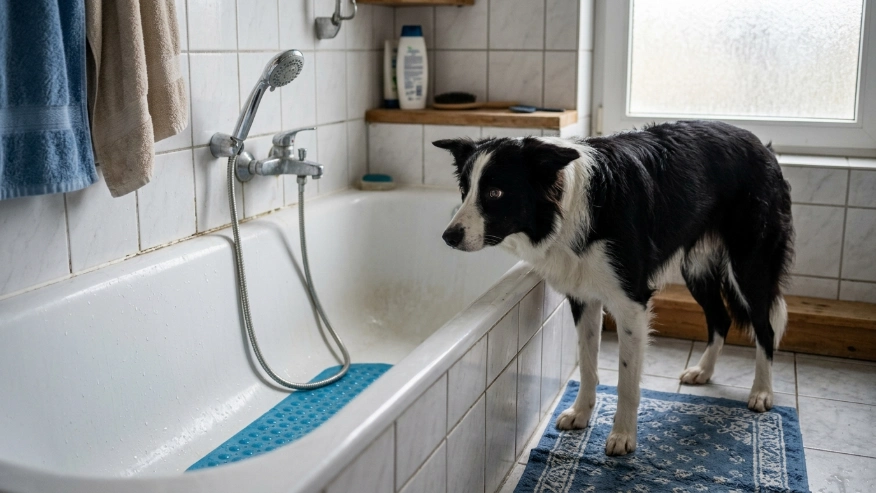
Your Border Collie may hate baths because the experience combines several uncomfortable sensations at once. The problem is often the environment rather than the water alone.
Border Collies are alert, energetic working dogs. The American Kennel Club’s Border Collie profile describes the breed as bright and intensely work-oriented.
The tub feels unstable
One of the first things I look at is footing. A smooth bathtub can feel unsafe under four wet paws.
A dog that slips once may spend the next bath bracing against the tub. That tense body can quickly turn into escape behavior.
- Common clue: Your dog spreads the paws wide or scrambles for traction.
- Simple fix: Cover the standing area with a secure nonslip rubber mat.
- Training goal: Let your dog stand on the dry mat before adding water.
Running water can be overwhelming
A shower attachment sounds much louder inside a tub. Water also strikes the coat, floor, walls, and drain at the same time.
I’ve found that some dogs tolerate a quiet cup of water much better than a strong spray. Changing only that detail can reduce a surprising amount of tension.
Your dog may remember a bad bath
Dogs can form strong associations. A previous slip, cold rinse, forced restraint, or shampoo in the eyes may make the bathroom predict trouble.
You don’t need to know exactly what caused the original fear. Your job is to create new, safer associations.
Definition: Bath aversion is a pattern of avoidance, tension, or fear connected with bathing cues. Those cues can include the bathroom, tub, water, shampoo bottle, towel, or restraint.
The bath removes your dog’s control
Border Collies often enjoy movement and choice. During a bath, they may suddenly face confinement, handling, water, and limited escape routes.
That doesn’t mean the dog is trying to dominate you. It means the situation may feel difficult to predict or control.
Section Takeaway: A Border Collie that hates baths is often reacting to traction, sound, handling, previous learning, or several triggers together.
Is It Fear, Stubbornness, or Physical Discomfort?
Don’t assume every refusal is behavioral. Watch what your dog does before, during, and after the bath.
A dog trying to escape may be frightened. A sudden change in behavior deserves closer attention because discomfort can also make handling unpleasant.
| What You See | What It May Suggest | Best Next Step |
|---|---|---|
| Avoids bathroom before water starts | Learned fear of bath cues | Practice calm, dry bathroom visits |
| Scrambles only inside the tub | Poor traction or confinement | Add a nonslip mat and reduce restraint |
| Panics when sprayer starts | Noise or spray sensitivity | Introduce low water flow gradually |
| Flinches when one area is touched | Possible pain or skin irritation | Stop and discuss it with your veterinarian |
| Suddenly hates baths after tolerating them | New fear, pain, or medical discomfort | Look for physical or environmental changes |
Watch the whole body
Fear isn’t always dramatic. Some Border Collies become unusually still instead of fighting to escape.
- Tucked tail
- Lowered posture
- Trembling
- Repeated attempts to leave
- Heavy panting without exercise
- Refusing normally valuable treats
If your dog has skin redness, sores, persistent itching, unusual odor, ear problems, or pain, don’t treat the issue as training alone. The AVMA’s pet-care resources are also a useful starting point for responsible veterinary care.
Vet note: A sudden behavior change or signs of pain should be discussed with your own veterinarian.
What Should I Do Before the Next Bath?
Preparation can solve many bath problems before your Border Collie gets wet. Set up everything first so you don’t leave a nervous dog waiting.
Brush before bathing
Border Collies have a double coat. Brushing first removes loose material and helps you find tangles before water tightens them.
Keep the brushing gentle. Don’t turn the pre-bath routine into another struggle.
Set up the bathing area
- Nonslip mat: Cover the area where all four paws will stand.
- Dog shampoo: Choose a product made for dogs rather than routine human shampoo.
- Towels: Keep two or more within easy reach.
- Treats: Prepare tiny, high-value rewards before starting.
- Water: Use comfortably lukewarm water.
- Exit route: Make sure the floor outside the tub isn’t slippery.
The ASPCA dog-care guidance also emphasizes routine grooming and thorough rinsing when dogs are bathed.
Take some pressure off the event
Don’t announce bath time with a chase through the house. That teaches your dog that seeing towels or shampoo means escape now.
Instead, bring your dog into the bathroom during ordinary moments. Reward calm behavior, then leave without giving a bath.
My practical rule: If simply entering the bathroom already causes panic, I don’t expect the dog to learn anything useful during a full bath.
How Do I Train a Border Collie to Accept Baths?
Train bath tolerance in small pieces. Your first goal is not a perfectly washed dog.
Your first goal is a dog that can stay relaxed around one bath-related step. Then you build from there.
Step 1: Approach the bathroom
- Stand several feet from the bathroom.
- Give your Border Collie a small treat.
- Walk away again.
- Repeat for 30 to 60 seconds.
When that feels easy, move closer. Don’t drag the dog across the threshold.
Step 2: Practice entering
Toss one treat just inside the room. Let your dog choose to retrieve it and come back out.
After several relaxed repetitions, reward staying inside for a few seconds. Keep the tub empty and the water off.
Step 3: Introduce the dry tub
Put the nonslip mat in place. Reward your dog for looking at the tub, approaching it, and eventually entering it.
For some dogs, this stage takes minutes. For a fearful dog, it may take many separate sessions.
- Session length: Start around 30 to 90 seconds.
- Repetitions: Aim for several easy wins instead of one long struggle.
- Stop point: Finish while your dog can still eat and respond normally.
Step 4: Add water gradually
Don’t go from a dry tub to a full shower immediately. Start with the sound of low water away from your dog’s body.
Next, wet one paw or a small area low on the leg. Reward calm behavior and stop before anxiety climbs.
Step 5: Add gentle handling
Practice touching the shoulders, legs, chest, and sides outside bath time. Pair each brief touch with something your dog enjoys.
This matters because bathing includes much more than water. Handling itself can become a trigger.
Progress test: Move to the next stage when your dog can stay loose, take treats, and recover quickly. Don’t advance just because you managed to physically hold the dog still.
Section Takeaway: Break bath training into approach, entry, dry-tub practice, water exposure, and handling. Small successful sessions build more confidence than forced completion.
How Can I Make the Actual Bath Less Scary?
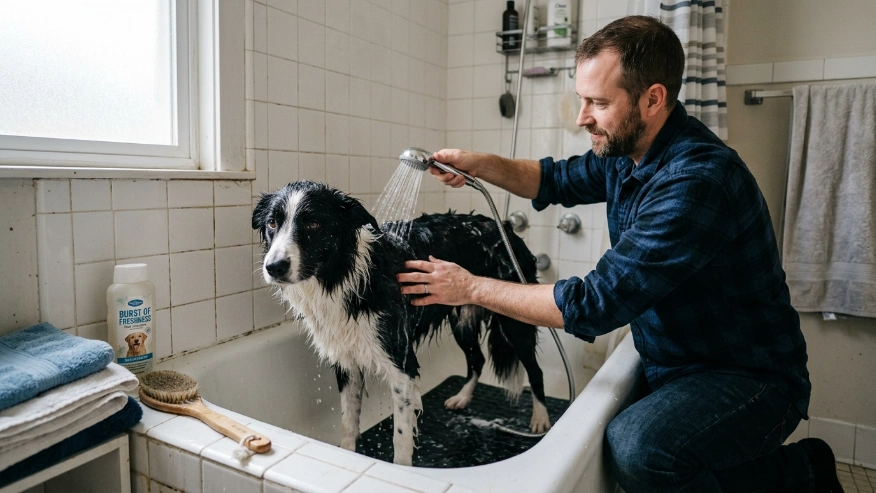
Once your dog can tolerate the setup, keep the real bath simple. Speed helps, but rushing does not.
Start from the body, not the face
Begin around the shoulders or lower body. Avoid aiming running water straight at the eyes, nose, or ears.
Use low water pressure. A cup or gentle handheld sprayer may be easier for a sound-sensitive dog.
Keep your movements predictable
I like to work in the same general order each time. Predictability helps the dog understand what comes next.
- Wet the coat gently.
- Apply dog shampoo as directed.
- Massage without rough scrubbing.
- Rinse thoroughly.
- Let excess water drain.
- Towel dry gently.
Give your Border Collie traction throughout
Check that the mat hasn’t folded or shifted. A dog that suddenly slips can lose confidence fast.
Don’t overdo the bath
Bath frequency should match the individual dog’s coat, activity, and health needs. The right schedule can differ substantially between dogs.
As of 2026, veterinary guidance still emphasizes individual needs rather than one universal schedule. Dogs with skin conditions may require a veterinarian-directed bathing routine.
Vet note: Ask your veterinarian about bath frequency and products if your Border Collie has allergies, recurrent skin problems, or a medicated shampoo plan.
What Bath-Time Mistakes Make Fear Worse?
Bath training often goes backward because owners try to finish too much at once. Avoiding a few common mistakes can protect the progress you’ve made.
- Chasing the dog: This turns bath preparation into a stressful pursuit.
- Dragging the dog: Forced entry can strengthen avoidance of the room or tub.
- Using slippery footing: A slick tub makes standing feel unsafe.
- Starting with strong spray: Sudden noise and pressure can overwhelm a sensitive dog.
- Scolding fear: Punishment doesn’t make the scary sensation disappear.
- Restraining too tightly: Heavy restraint can increase panic and struggling.
- Rushing the face: Water around the eyes, nose, and ears can be especially unpleasant.
- Training too long: A five-minute session isn’t better if fear rises after the first minute.
Don’t confuse stillness with relaxation
A Border Collie standing completely frozen isn’t necessarily comfortable. Look for loose muscles, normal breathing, and willingness to take food.
If your dog stops responding to rewards it normally loves, the session may already be too difficult.
Don’t make every bathroom visit a bath
This is one of my favorite simple fixes. Walk in, give a reward, spend 20 seconds there, and walk back out.
The bathroom stops predicting one unavoidable event. That gives you more room to change the emotional response.
What If My Border Collie Still Refuses Baths?
If progress has stopped, make the task easier rather than becoming more forceful. Severe fear needs a different plan from mild reluctance.
Use partial cleaning when appropriate
Not every dirty paw requires a complete shampoo bath. Brushing, paw cleaning, or wiping a small dirty area may solve minor messes.
That lets you continue bath training separately. Your dog doesn’t have to face a full fear trigger every time mud appears.
Consider professional help
A skilled groomer may have a safer setup, better traction, and efficient handling. Tell the groomer about your dog’s fear before the appointment.
A qualified reward-based trainer or veterinary behavior professional can also help when avoidance is severe. This becomes more important when fear includes snapping or intense escape attempts.
Rule out a health problem
Contact your veterinarian when bath avoidance appears suddenly or comes with physical symptoms. Pain can change how a dog responds to touch and handling.
- Red or inflamed skin
- Open sores or moist areas
- Persistent scratching
- Strong or unusual odor
- Ear discharge or repeated head shaking
- Limping or stiffness
- Pain when a certain area is touched
Vet note: Bath training should not be used to push through suspected pain, skin disease, or ear problems.
Frequently Asked Questions
Why does my Border Collie suddenly hate baths?
A sudden change can follow a frightening experience, a slip, a change in equipment, stronger water pressure, or physical discomfort. If a previously relaxed dog suddenly resists handling, check for skin, ear, joint, or other painful problems and contact your veterinarian when needed.
Should I force my Border Collie into the bath?
Forcing a frightened Border Collie into the tub can strengthen the negative association and increase struggling. Instead, teach the process in small stages, beginning with approaching the bathroom and standing comfortably in a dry, nonslip tub.
Why does my Border Collie shake during a bath?
Shaking can occur when a dog feels frightened, stressed, or physically cold. Check the room and water temperature, watch the dog’s overall body language, and stop if the fear is escalating or you suspect illness or pain.
What water temperature should I use?
Use comfortably lukewarm water rather than hot or cold water. Test it before wetting your dog and keep the temperature consistent throughout the bath, especially with puppies or dogs already worried about bathing.
How long should bath training sessions be?
Start with short sessions of roughly 30 to 90 seconds for a fearful dog. End while your Border Collie is still relaxed and responsive, then repeat later. Several easy sessions are usually more useful than one long session that ends in panic.
Can treats help a Border Collie that hates baths?
Yes. Small high-value treats can help create positive associations with approaching the bathroom, entering the tub, hearing water, and accepting gentle handling. Treats work best when exposure remains easy enough for the dog to stay calm and willing to eat.
How often should I bathe my Border Collie?
There isn’t one perfect schedule for every Border Collie. Coat condition, lifestyle, mud, swimming, skin health, and veterinary needs all matter, while unnecessary frequent shampooing may not benefit every dog. Ask your veterinarian if your dog has ongoing skin or coat problems.
Final Takeaway
If your Border Collie hates baths, don’t begin by asking how to hold the dog more firmly. Begin by asking which part of the experience feels unsafe.
Traction, noise, water pressure, handling, restraint, and previous experiences can all matter. Change those pieces one at a time.
- Start with a secure nonslip surface.
- Practice around the bathroom without always bathing.
- Keep early training sessions short.
- Introduce water gradually.
- Reward voluntary, calm behavior.
- Stop and investigate sudden signs of pain or distress.
The goal isn’t to make your Border Collie love shampoo and running water. A calm dog that understands the routine and can cope comfortably is a much more realistic win.
