
What Is a Border Collie Outer Coat?

Quick Answer
A Border Collie outer coat is the protective top layer of its double coat. It consists mainly of tougher guard hairs that help shield the skin and softer undercoat from moisture, dirt, sunlight, and outdoor debris. Both rough-coated and smooth-coated Border Collies have this protective layer, although it looks different between coat types. You can see the same two-layer coat structure explained in the AKC guide to double-coated dogs.
Key Things to Know
- Protective layer: The outer coat sits above the softer undercoat and faces the environment.
- Guard hairs: These stronger hairs help keep dirt, light moisture, and debris away from the skin.
- Two coat styles: Rough Border Collies have longer outer hair, while smooth Border Collies have shorter outer hair.
- Not the undercoat: The undercoat is softer, denser, and mainly responsible for insulation.
- Regular care: Brushing removes loose hair and debris without stripping away healthy protective coat.
Easy Way to Identify It
- Part your Border Collie’s fur gently. The longer or coarser hairs you see on top are the outer coat, while the softer hairs close to the skin form the undercoat.
If you’ve ever parted a Border Collie’s fur and noticed two different textures, you’ve seen the double coat firsthand. The difference becomes much easier to understand once you know what each layer does.
As of 2026, standard breed guidance continues to describe both rough and smooth Border Collies as double-coated dogs. In this guide, I’ll show you exactly what the outer coat is, why it matters, and how to care for it without damaging it.
In This Guide
- What Exactly Is a Border Collie Outer Coat?
- What Is the Difference Between the Outer Coat and Undercoat?
- Does the Outer Coat Differ in Rough and Smooth Border Collies?
- What Does a Border Collie’s Outer Coat Do?
- Does the Outer Coat Change With the Seasons?
- How Should You Groom a Border Collie’s Outer Coat?
- What Outer Coat Changes Can Signal a Problem?
- Should You Shave or Trim the Outer Coat?
- Frequently Asked Questions
What Exactly Is a Border Collie Outer Coat?
A Border Collie’s outer coat is the visible protective layer of hair covering its softer undercoat. The individual hairs in this layer are often called guard hairs or primary hairs.
These hairs usually feel firmer than the soft fur underneath. Their exact length and texture depend on whether your Border Collie has a rough or smooth coat.
A Simple Definition
A Border Collie’s outer coat is the tougher outer layer of its double coat. It helps protect the dog’s skin and undercoat from everyday environmental exposure.
Think of the undercoat as insulation and the outer coat as the protective shell around it. The two layers work together rather than performing the same job.
When I check a Border Collie’s coat, I use my fingers to separate the hair near the shoulders or side of the body. The difference between the firmer top hairs and softer undercoat is usually easy to feel.
- Outer hairs: Longer or firmer and more exposed to the environment.
- Undercoat hairs: Shorter, softer, and packed closer to the skin.
- Skin: Sits beneath both layers and should appear comfortable without persistent redness or irritation.
The outer coat also contributes heavily to your dog’s visible color and markings. Black, white, red, blue, merle, and other patterns appear primarily through these visible hairs.
What Is the Difference Between the Outer Coat and Undercoat?
The main difference is function. The outer coat provides protection, while the undercoat provides much of the coat’s insulation and density.
This distinction matters during brushing, bathing, drying, and shedding season. A coat can look tidy on top while loose undercoat remains hidden underneath.
| Feature | Outer Coat | Undercoat |
|---|---|---|
| Position | Top visible layer | Closer to the skin |
| Texture | Generally firmer and coarser | Soft, fine, and dense |
| Main role | Environmental protection | Insulation |
| Seasonal shedding | Some hairs shed normally | Can shed heavily during seasonal coat changes |
| Appearance | Creates much of the visible color and finish | Often hidden beneath the outer hair |
Why Owners Sometimes Confuse the Two
On a rough-coated dog, the long visible hair attracts most of your attention. However, much of the hair coming out during heavy shedding may be soft undercoat.
Smooth-coated Border Collies can be even more confusing. Their short appearance sometimes makes owners assume they have only one layer.
They don’t. The AKC’s Border Collie guidance describes both rough and smooth varieties as having dense, weather-resistant double coats.
Does the Outer Coat Differ in Rough and Smooth Border Collies?
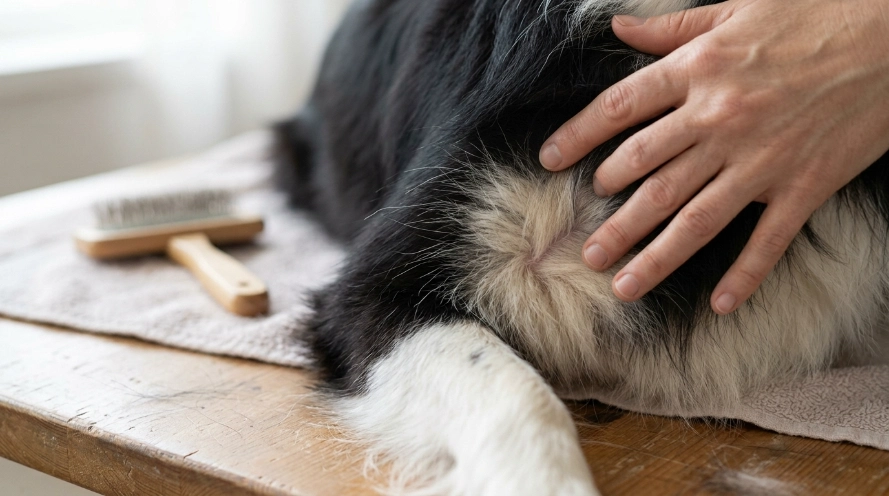
Yes. A rough Border Collie’s outer coat is longer and usually shows more feathering, while a smooth Border Collie’s outer hair is shorter and lies closer to the body.
Both are normal Border Collie coat varieties. Neither coat type means the dog lacks an undercoat.
Rough-Coated Border Collies
The rough coat is the fuller, longer-looking variety many people associate with the breed. Outer hairs are especially noticeable around the neck, chest, tail, and backs of the legs.
- Medium-length to longer visible outer hair
- Noticeable feathering on the chest, legs, and tail
- More areas where burrs and debris can become caught
- Greater chance of tangling in longer feathered sections
- Dense undercoat beneath the visible top layer
The outer hair across the back may feel comparatively smooth and firm. Finer feathering can feel softer even though it belongs to the visible coat.
Smooth-Coated Border Collies
Smooth Border Collies have much shorter visible hair. The coat often follows the body’s outline instead of creating a heavily feathered appearance.
- Shorter outer guard hairs
- Less dramatic feathering
- Dense hair that can still release plenty of loose undercoat
- Lower risk of long-hair tangles
- Regular brushing still needed
A smooth Border Collie may look easier to groom, and in many ways it is. That doesn’t make its coat single-layered or maintenance-free.
The PetMD Border Collie care guide also describes the breed as double-coated and recommends routine brushing to manage loose hair.
What Does a Border Collie’s Outer Coat Do?
The outer coat acts as a working dog’s first protective layer. That role makes sense when you consider the Border Collie’s history of moving livestock outdoors.
Its coat had to cope with changing weather, vegetation, dirt, and long periods of activity. Modern companion Border Collies still carry that practical coat structure.
It Helps Repel Light Moisture
Healthy guard hairs can help rain and light moisture remain nearer the coat’s surface instead of immediately soaking the softer layer underneath. This doesn’t make a Border Collie waterproof.
A soaked dog can still become wet down to the skin. Drying the undercoat fully remains important after bathing or heavy rain.
It Shields the Undercoat and Skin
The outer hairs create a physical barrier against everyday environmental contact. They can reduce direct exposure to dirt, grasses, small debris, and sunlight.
This protective role is one reason I avoid aggressive coat removal. More hair removal isn’t automatically better grooming.
It Helps Carry Dirt Away From the Body
Dried mud often brushes away surprisingly well from a healthy Border Collie coat. The dog’s coat structure helps keep some surface mess from becoming deeply embedded.
- Allow light mud to dry when practical.
- Brush loose dirt from the outer coat.
- Check the undercoat for hidden debris.
- Spot-clean dirty areas when a full bath isn’t needed.
Outdoor dogs still need careful checks after walks. Burrs, grass seeds, ticks, and small plant material can work their way beneath the outer layer.
Does the Outer Coat Change With the Seasons?
Yes, although seasonal changes are often most obvious in the undercoat. Border Collies can shed throughout the year and lose more hair during heavier seasonal shedding periods.
The exact pattern varies with climate, indoor living, daylight exposure, coat density, age, and the individual dog. Not every Border Collie follows an identical calendar.
Why the Coat Looks Different During Heavy Shedding
When loose undercoat builds beneath the surface, the outer coat can look puffier or less smooth. Removing that dead hair lets healthy guard hairs lie more naturally again.
You may notice several signs during a coat change:
- Soft tufts lifting from beneath the outer hairs
- More hair on bedding and furniture
- A thicker feel when you run your hand backward through the coat
- Loose clumps collecting around the hindquarters and neck
- More hair coming out during ordinary brushing
This is why brushing only the surface can be misleading. The visible outer coat may look neat while loose undercoat remains packed underneath.
How Should You Groom a Border Collie’s Outer Coat?
Grooming should preserve the coat’s natural structure while removing loose hair, tangles, and debris. For many Border Collies, regular brushing matters more than frequent bathing.
The ASPCA’s dog grooming guidance notes that brushing removes dirt and loose hair while helping distribute natural oils through the coat.
Brush Through Both Layers
Don’t skim only across the tips of the outer coat. Work gently enough that your grooming reaches loose hair beneath the surface.
- Check first: Feel for knots, burrs, and tender areas before brushing.
- Brush in sections: Work through manageable areas rather than rushing across the entire body.
- Reach beneath the surface: Part longer hair so you can check the undercoat.
- Comb trouble spots: Pay attention behind the ears, under the collar, chest, legs, and tail.
- Finish gently: Brush the outer coat in its natural direction.
AKC guidance suggests brushing Border Collies about once or twice weekly, with more frequent grooming during heavy shedding. Your individual dog may need adjustments based on coat density and lifestyle.
Don’t Over-Bathe the Coat
A bath is useful when your dog is genuinely dirty, oily, or smelly. It isn’t necessary to shampoo the coat after every dusty walk.
When bathing, get water through the outer layer instead of letting it run across the surface. Rinse carefully because shampoo can remain hidden beneath dense hair.
Dry the Undercoat, Not Just the Surface
A Border Collie’s outer hairs can feel dry while moisture remains near the skin. Part the hair and check deeper areas before deciding your dog is completely dry.
This matters most around dense areas such as the chest, neck, hindquarters, and tail base. Rough-coated dogs also need attention around longer feathering.
What Outer Coat Changes Can Signal a Problem?

A healthy outer coat generally looks reasonably clean and feels appropriate for your dog’s natural coat type. Sudden or persistent changes deserve a closer look.
Coat appearance alone can’t diagnose illness. Skin, diet, parasites, grooming practices, environment, and medical conditions can all influence hair quality.
Watch for Changes That Persist
- Unusual hair loss: Especially bald patches or areas that keep expanding.
- Persistent dullness: A coat that changes noticeably without an obvious grooming reason.
- Broken or thinning hair: Particularly when paired with scratching or licking.
- Red skin: Look beneath the outer coat instead of judging only the hair.
- Strong odor: Persistent unusual odor can warrant closer examination.
- Constant itching: Frequent scratching, chewing, or rubbing isn’t normal grooming behavior.
Routine grooming gives you a useful chance to notice changes early. It lets you see skin areas that the dense outer coat normally hides.
Vet note: Persistent hair loss, itching, sores, redness, odor, or major coat changes should be discussed with your veterinarian. The American Veterinary Medical Association emphasizes working with veterinary professionals for individualized preventive and medical care.
Should You Shave or Trim the Outer Coat?
Routine shaving is generally not the normal way to manage a healthy Border Collie’s double coat. Removing protective outer hair doesn’t solve the underlying shedding of the undercoat.
Instead, focus on brushing out loose coat and maintaining healthy skin. Extensive clipping may sometimes be necessary for medical treatment or severe matting under professional guidance.
What About Small Trims?
Limited tidying is different from shaving the body. Some owners neaten excess hair around paws or untidy feathering without removing the dog’s protective coat structure.
Keep trimming conservative unless a professional has a specific reason to do more. Natural Border Collie coats aren’t meant to resemble sculpted single-coated breeds.
Why Shaving for Summer Isn’t a Simple Cooling Fix
A double coat works as a system. Removing the outer layer changes that system instead of simply making the same coat shorter.
For hot weather, concentrate on proven heat-management basics:
- Provide shade and fresh water.
- Avoid hard exercise during the hottest part of the day.
- Keep loose undercoat brushed out.
- Watch your dog for signs of heat stress.
- Ask your vet about individual concerns involving heat tolerance.
Frequently Asked Questions
Is a Border Collie’s outer coat the same as guard hair?
Guard hairs make up much of the Border Collie’s outer coat. They are generally firmer than the soft undercoat and form the visible protective layer over it.
Do smooth Border Collies have an outer coat?
Yes. Smooth Border Collies have shorter outer hairs, but they still have a double coat with an undercoat beneath them. A short coat doesn’t automatically mean a single coat.
Is the outer coat waterproof?
No Border Collie should be considered waterproof. The outer coat can help resist light moisture, but prolonged rain, swimming, or bathing can soak through both layers and reach the skin.
Does the Border Collie outer coat shed?
Yes. Outer hairs are naturally replaced over time, although heavy seasonal shedding often includes large amounts of soft undercoat. Regular brushing helps remove loose hair from both layers.
How often should I brush a Border Collie’s outer coat?
A useful starting point is once or twice weekly, with more frequent brushing during heavy shedding or after messy outdoor activity. Rough coats may need extra attention around feathering and tangle-prone areas.
Can I use human shampoo on a Border Collie’s coat?
It’s better to use a product formulated for dogs unless your veterinarian recommends otherwise. Dog skin and grooming needs differ from ours, and a canine product is the safer routine choice.
Why does my Border Collie’s coat feel soft instead of coarse?
Normal texture varies between individual dogs and across different areas of the body. However, sudden texture changes combined with hair loss, itching, redness, or skin problems deserve veterinary attention.
The main takeaway is simple: your Border Collie’s outer coat is the protective top half of a two-layer system. It isn’t just decorative fur.
Learn to feel the difference between the guard hairs and undercoat when you groom. Once you understand those two layers, brushing, bathing, drying, and shedding management become much easier.
